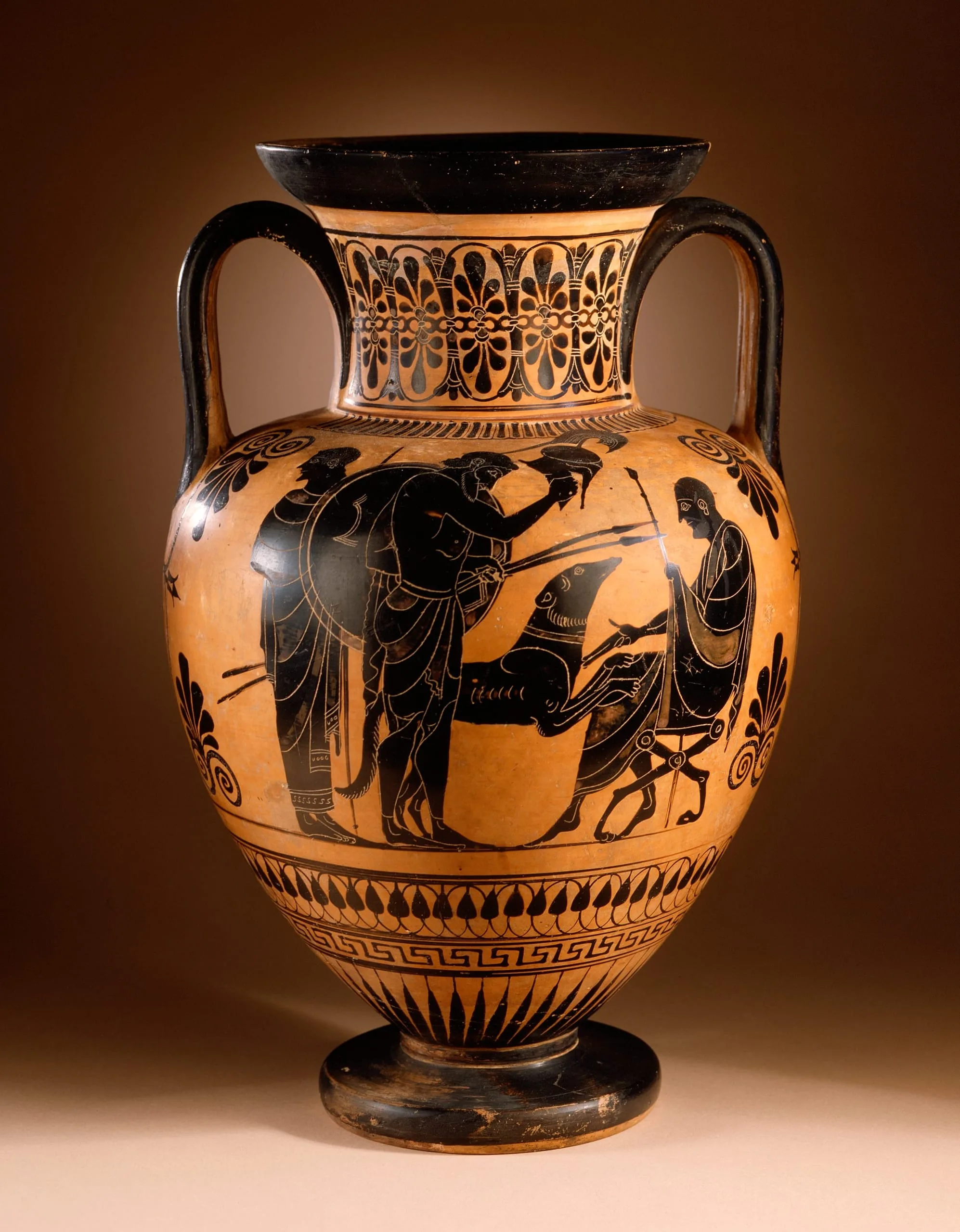
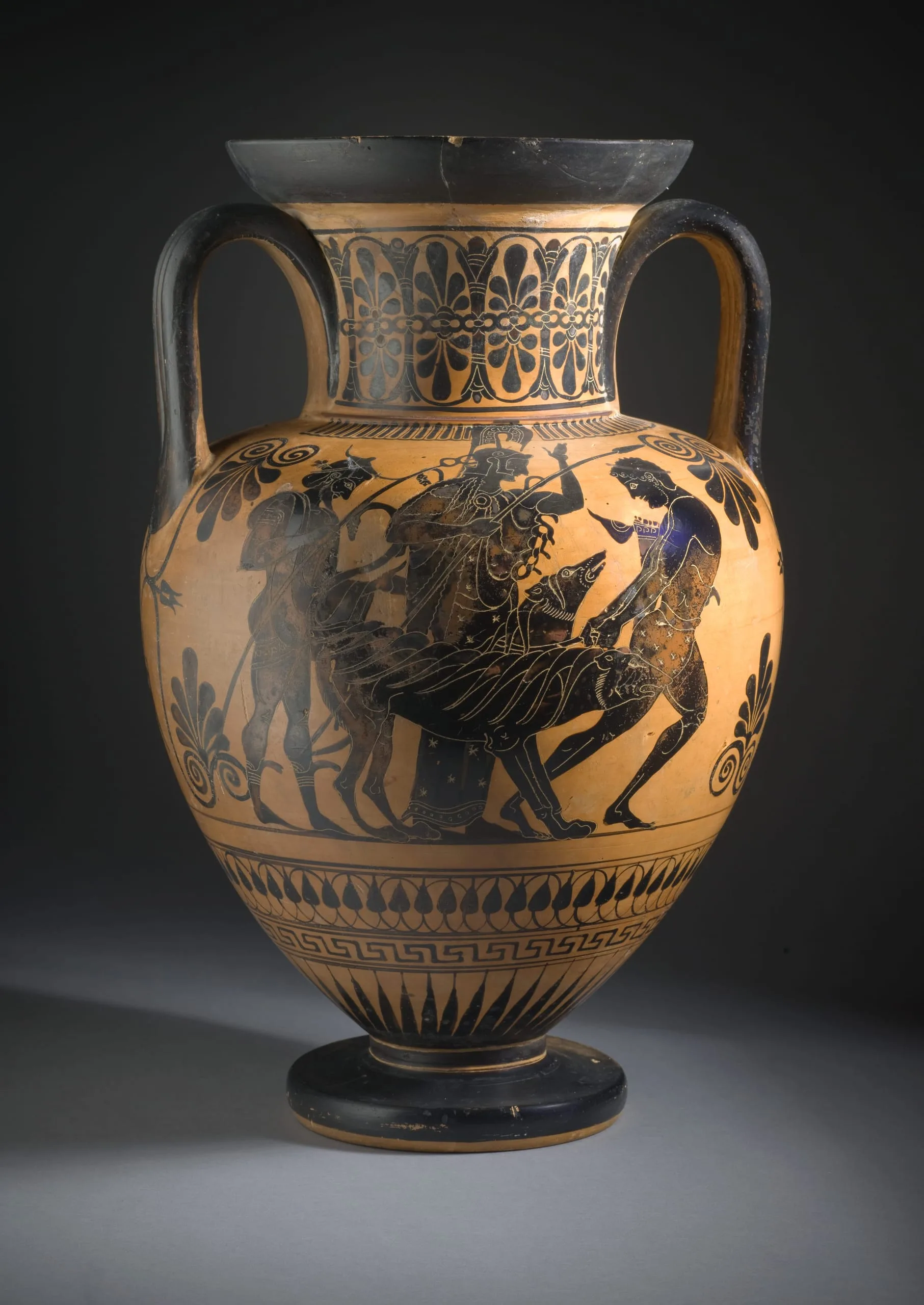
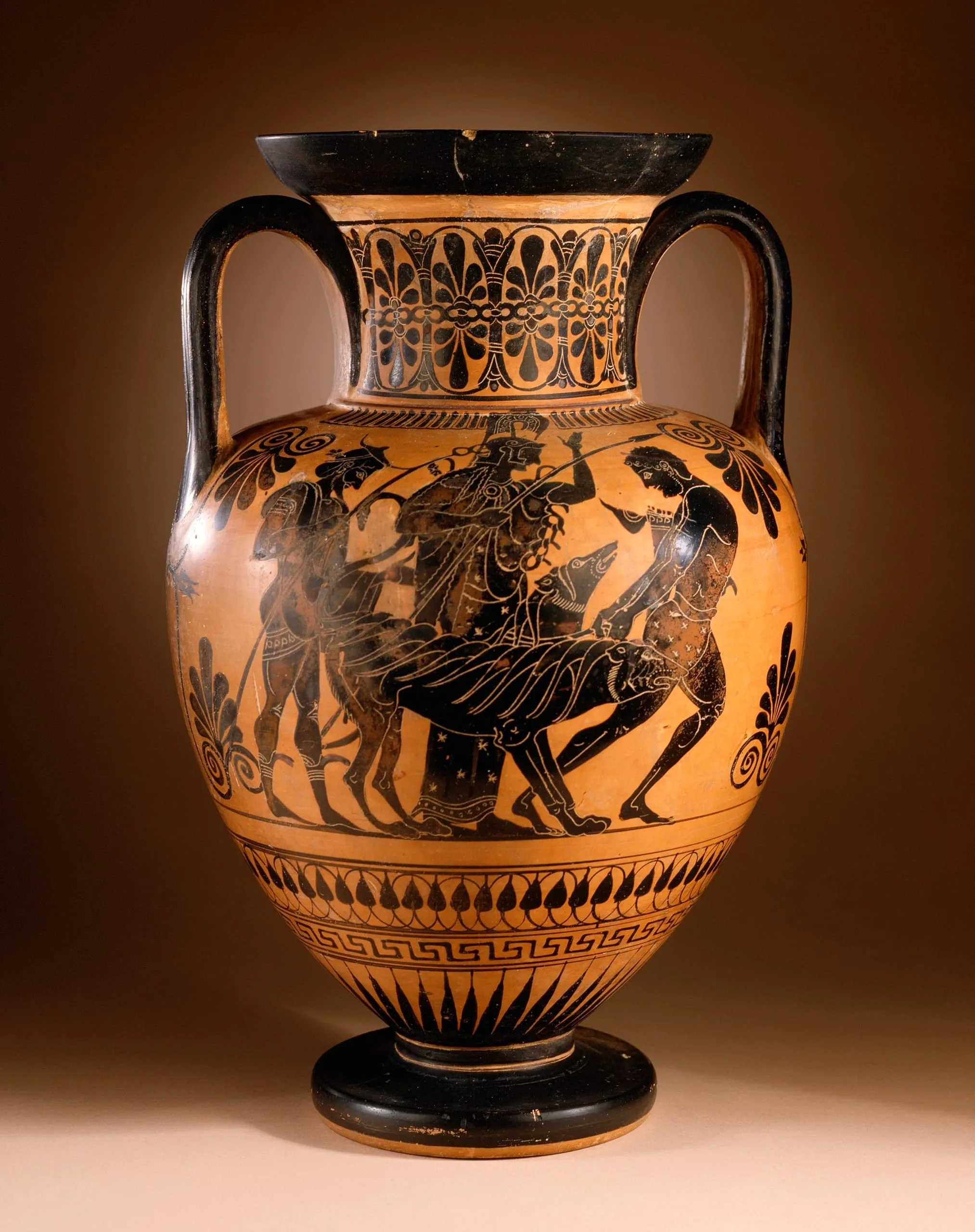
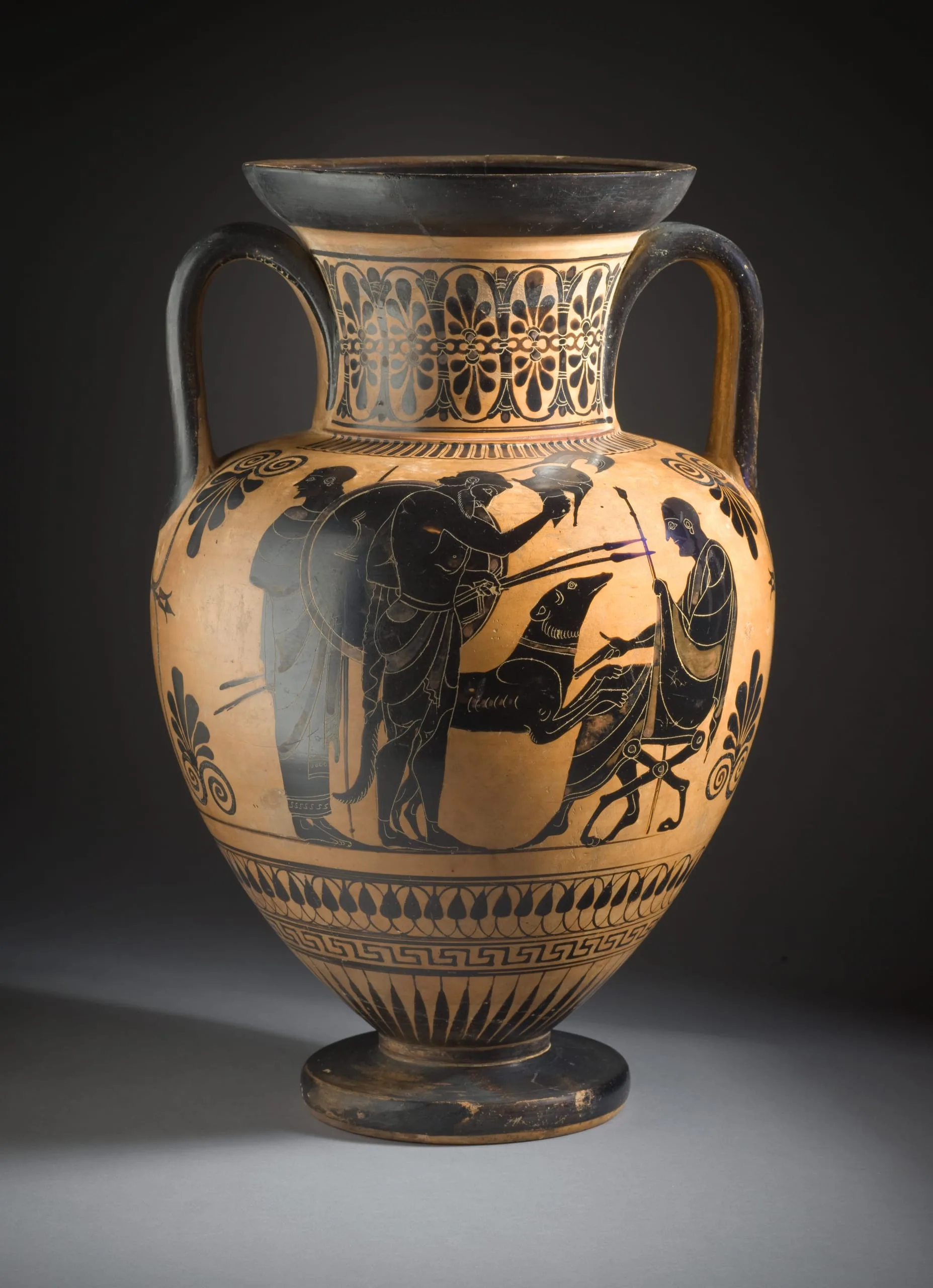
This neck-amphora is decorated in the black-figure technique figures and ornament painted black on the clay ground, with details rendered with incision and additional red and white. The technique was established in Athens by the late seventh century B.C., and continued to be dominant until the beginning of the fifth century B.C. This neck-amphora was produced around 525-500 B.C., an excitingly creative time in the Athenian pottery workshops, when the new red-figure technique was developed. This vase shows that there was still much that could be done with black-figure.
Side A depicts the Greek hero Herakles leading the savage many-headed dog, Kerberos, protector of the Underworld. In order to satisfy the Argive king Eurystheos, Herakles was set twelve labors that required him to face seemingly invulnerable opponents, and often to journey to distant realms of the known world. To retrieve Kerberos, Herakles had to enter the Underworld, the realm of the dead, and to return; truly a task for a super-hero, and Herakles success can be interpreted as a triumph over death. He is depicted on this vase hauling the dog, its front paws stuck firmly on the ground. Athena, Herakles divine supporter, stands by, her hand raised in a gesture of encouragement. At the left, Hermes, identifiable by his winged boots, kerkyeion and travelers hat, lends additional support. He is the god who oversees journeys, including the transition from life to death, and so his presence is appropriate.
The other side of the vase shows a more homely scene - a warriors departure to battle, or perhaps his safe return. The warrior, carrying his large round shield and two spears, raises his helmet as he stands before a man seated on a stool. To judge by his scepter, the seated man may be a king, and the warriors dog bounds forward to paw at his lap. Another man stands by at the left. There are no means of identifying the figures; unlike Herakles, Athena or Hermes on the other side, none has attributes that make them distinctive, nor are there any inscriptions. As is true of many scenes on Athenian vases, there is no clear-cut distinction between the activities of heroes and daily life. But the presence of dogs one aggressive, one affectionate - on either side of the vase encourages a juxtaposition of the two scenes. Just as Herakles survives his encounter with death in his journey to and from the Underworld, so the warriors safe return from battle is a triumph over death or, if his departure is shown, a hope for his safe return.
David Saunders, Ancient Greek & Roman Art, 2008