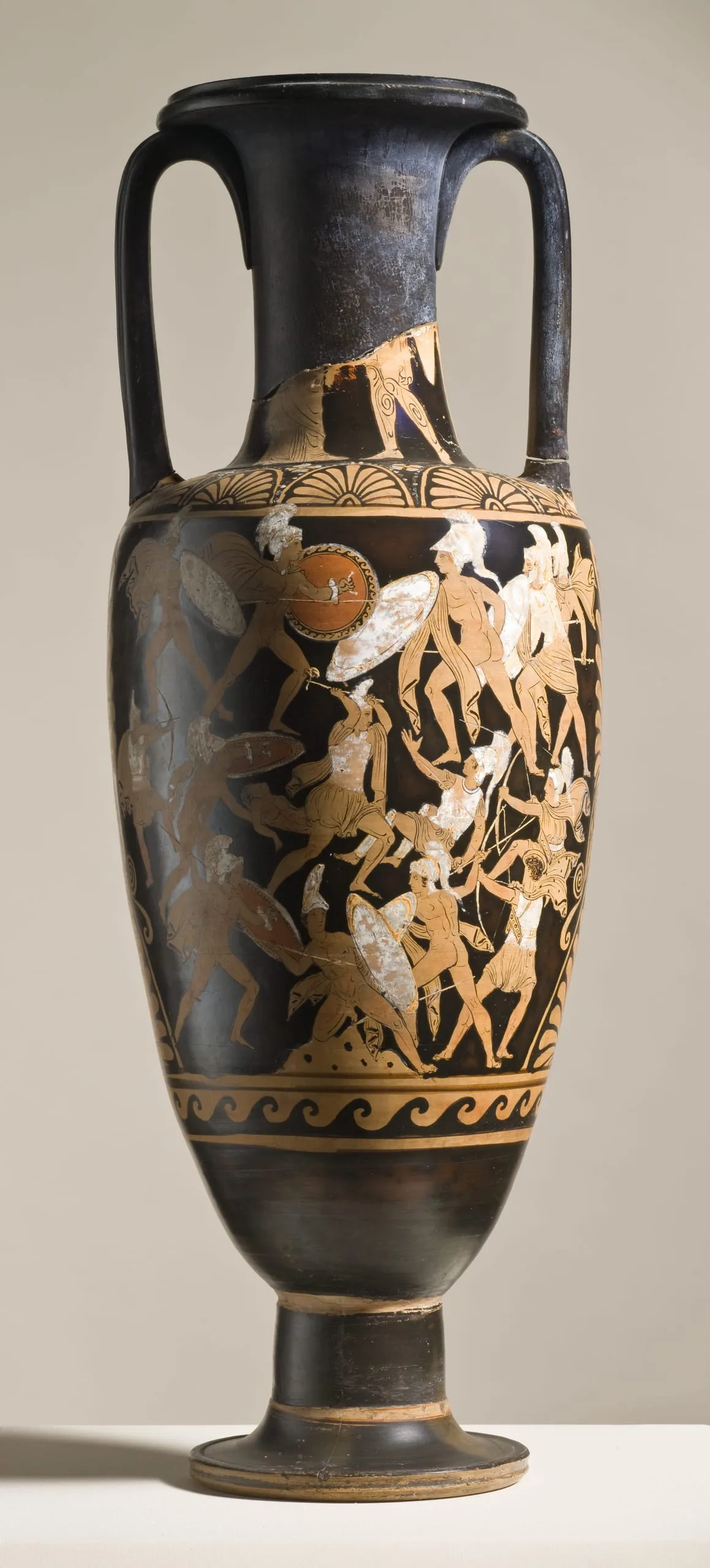
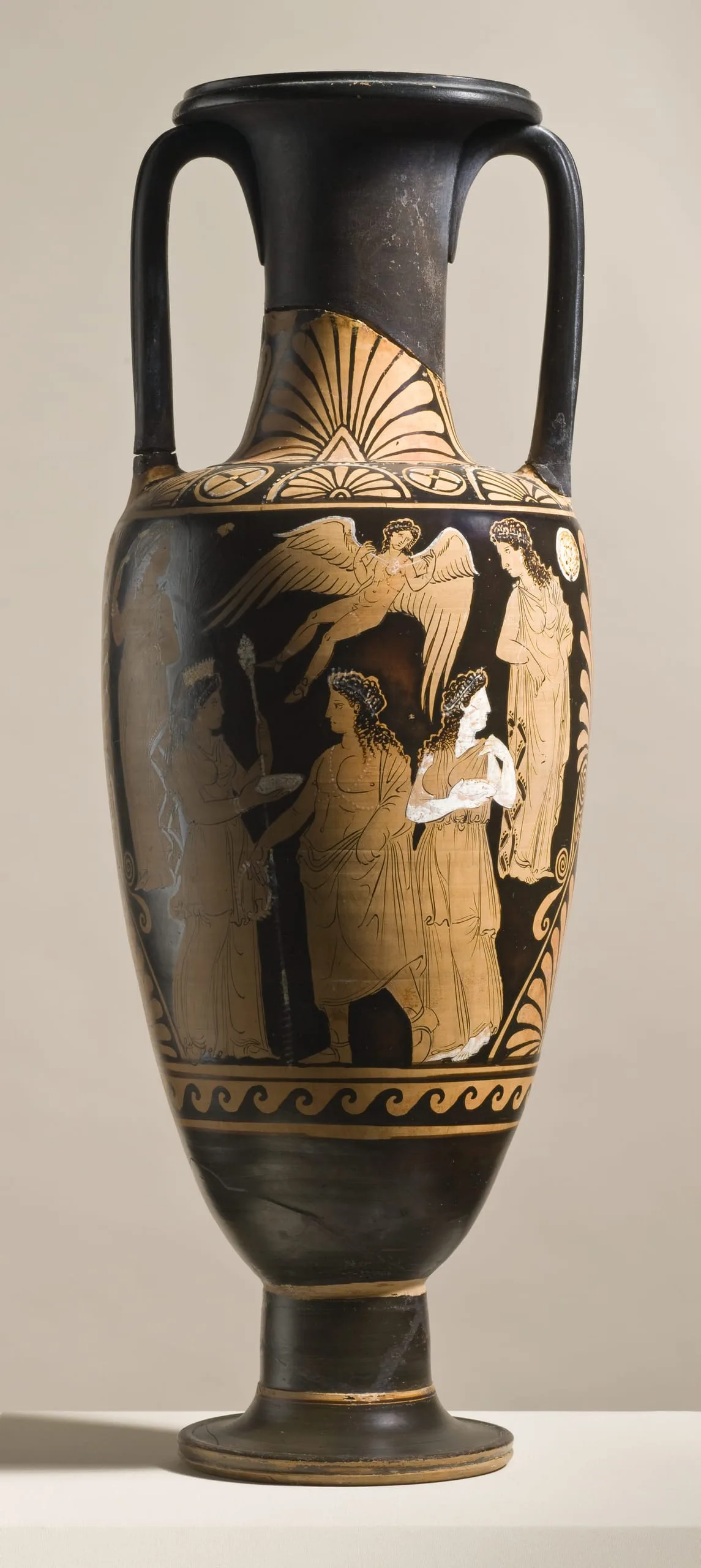
The form of this exquisitely detailed amphora, with its elongated body and tall neck, is typical among those produced by Campanian potters around the Bay of Naples in Italy. However, its extraordinary decorative program sets it apart. The vessel is decorated in the red-figure style, where slip (liquified clay) that turned black during firing was applied to the background and outlines of figures, while the figures themselves were left in the natural red-orange color of the clay. White slip and additional pigments were then added to enhance the drama of the narrative, including red for blood, yellow for decorations, and a red-brown wash for some weaponry. Virtually all of the weapons depicted on the front side have been rendered with applied clay in relief prior to firing, presumably as a base for gilding.
The front side of this amphora depicts the chaos of battle across three registers, featuring fifteen different figures engaged in combat. The warriors wear a wide array of armor and clothing and carry a variety of weapons. In the top register, five figures fight each other, each with a spear, helmet, and shield. In the middle row, at center, a warrior wielding an axe looms over his opponent, who has fallen backward and raises his arm in supplication. Both figures wear helmets, short chitons (tunics), and corslets. Behind the axe-bearer, a warrior, nude except for a cloak, protects the nude corpse of his compatriot. Two archers frame this central register, the left standing and the right crouching. The bottom register of the scene depicts a nude warrior, his right leg kneeling and his left leg pierced by a spear and bleeding. Behind him, two other warriors prepare to engage in battle, while at the far right, an archer takes aim at the figures in the middle row.
On the back side of the vessel, some type of ritual preparation occurs, perhaps for a wedding. The figures are arranged into two registers, and they are larger than those on the front side. In the top row, two chiton-wearing women flank a winged eros. Below, a woman wearing a polos (crown) and wreath carries a phiale (offering dish) and thyrsos and faces a long-haired, youthful male who wears a himation and wreaths. To the right, a second woman carries a phiale and adjusts her peplos.
The Ixion Painter was the foremost Campanian vase painter in the late fourth century BCE, and this amphora is an especially fine example of his work. It features several hallmarks of the painter’s style, particularly the depiction of mythological scenes on a monumental vessel and the free use of colored slips and pigments.