LACMA

ShopMembershipMyLACMATickets
LACMA
Los Angeles County Museum of Art
5905 Wilshire Blvd.
Los Angeles, CA 90036
info@lacma.org
(323) 857-6000
Sign up to receive emails
Subscribe
© Museum Associates 2025

Museum Hours

Monday

11 am–6 pm

Tuesday

11 am–6 pm

Wednesday

Closed

Thursday

11 am–6 pm

Friday

11 am–8 pm

Saturday

10 am–7 pm

Sunday

10 am–7 pm


  • About LACMA
  • Jobs
  • Building LACMA
  • Host An Event
  • Unframed
  • Press
  • FAQs
  • Log in to MyLACMA
  • Privacy Policy
© Museum Associates 2025
Collections

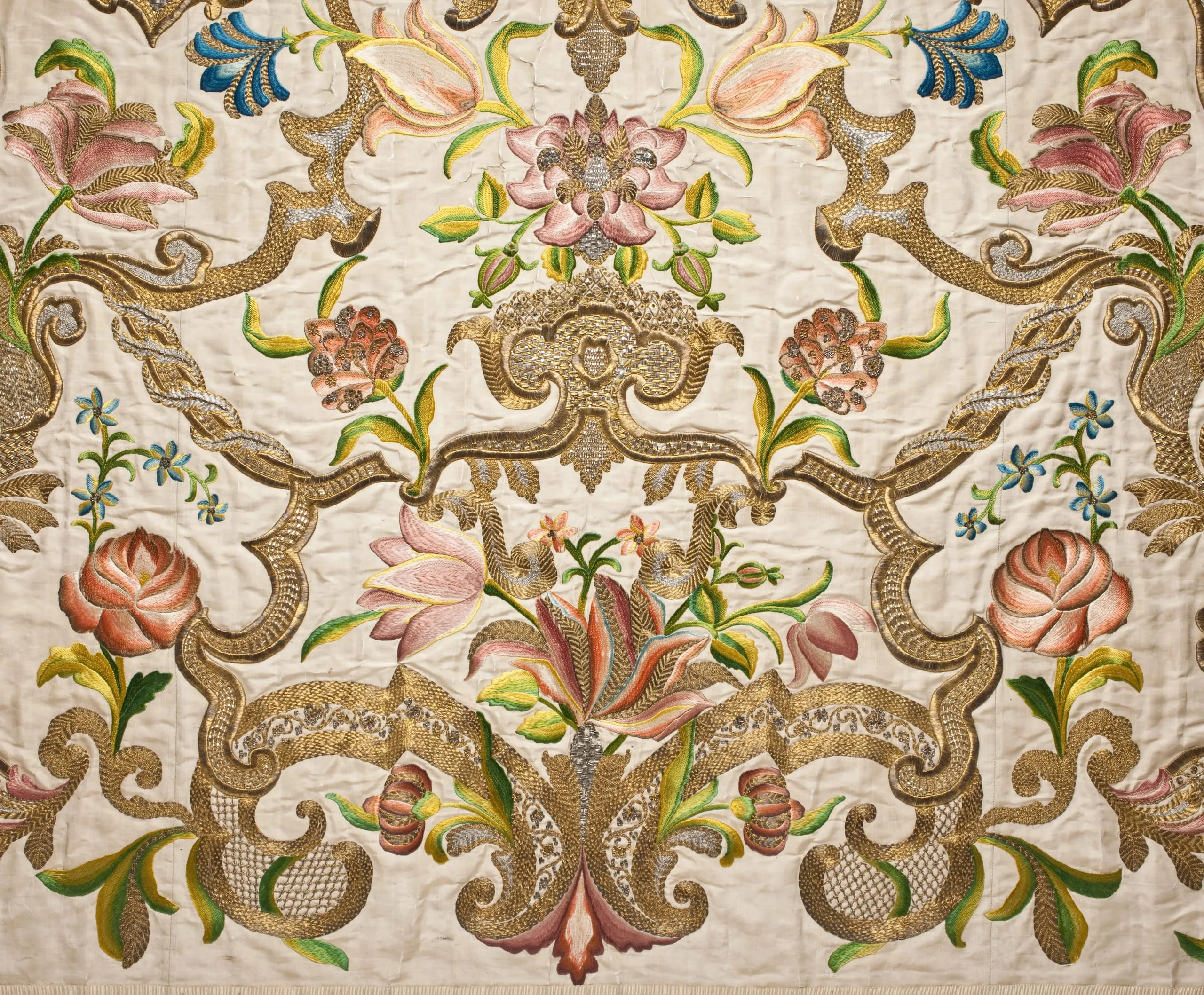
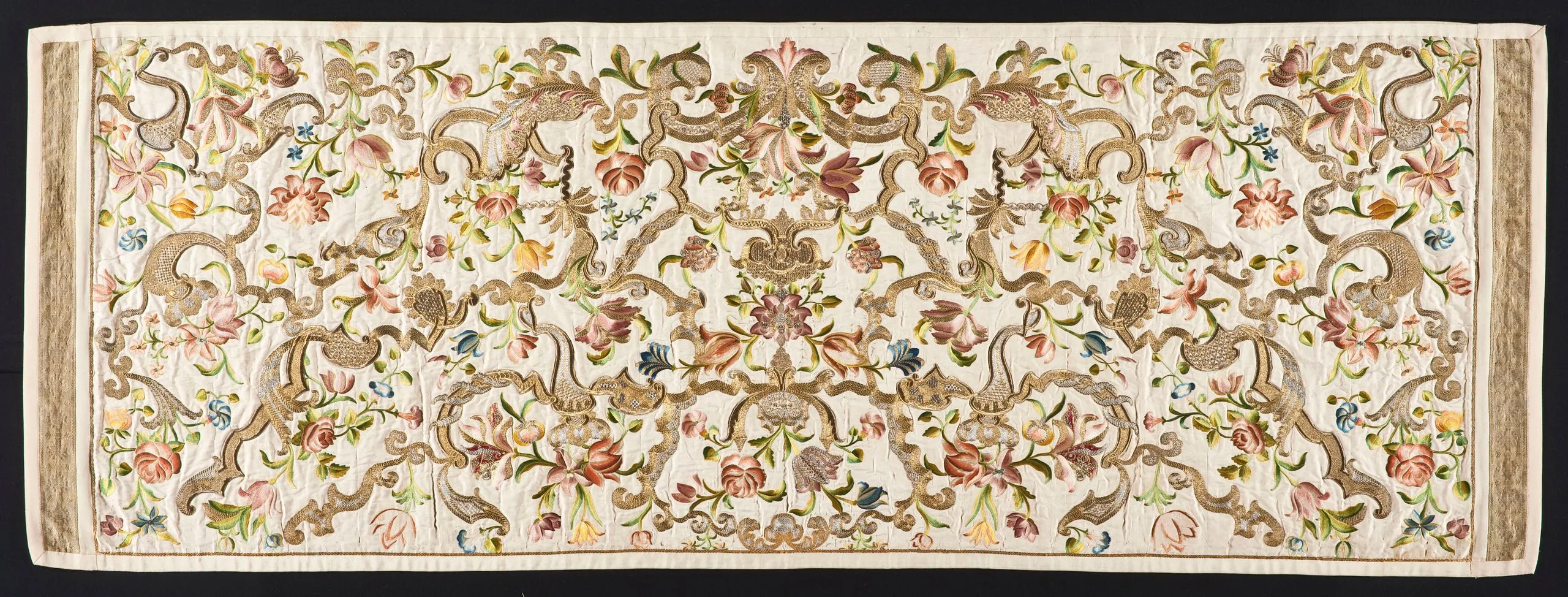
Altar Frontal1730-1740

Not on view
Horizontal embroidered textile panel on cream ground, with symmetrical allover pattern of gold scrollwork, stylized birds, and silk flowers in pink, coral, green, and blue
Silk embroidery on cream ground with symmetrical floral and scrollwork design; gold and silver metallic thread forms elaborate cartouche framing clusters of pink lilies, roses, and small blue flowers, with polychrome silk stitching in shades of pink, green, yellow, and coral.
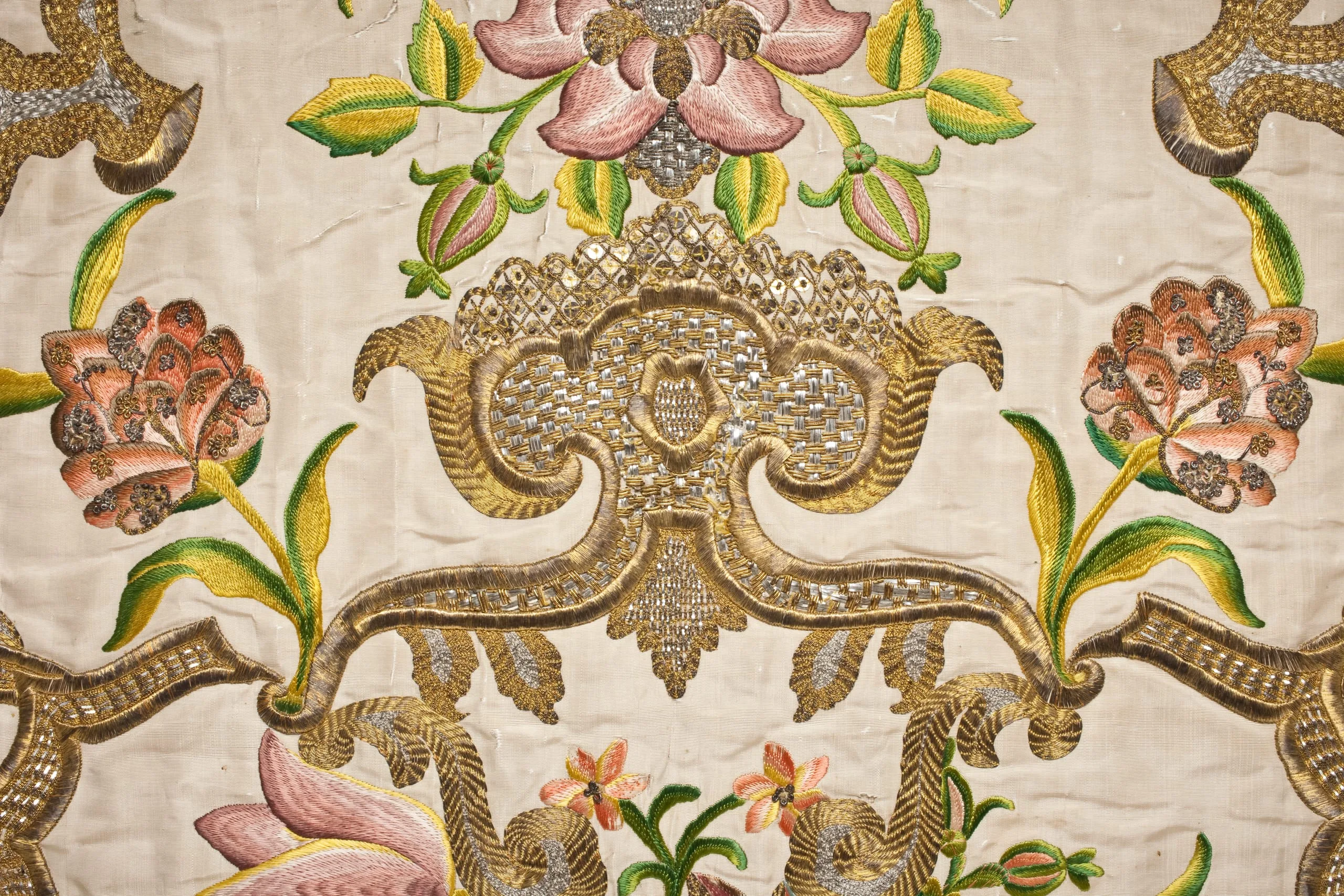
Silk embroidery on cream ground featuring a central cartouche in gold and silver metallic thread with scrolling acanthus volutes, surrounded by pink, coral, and yellow flowers with green leaves in silk satin stitch.
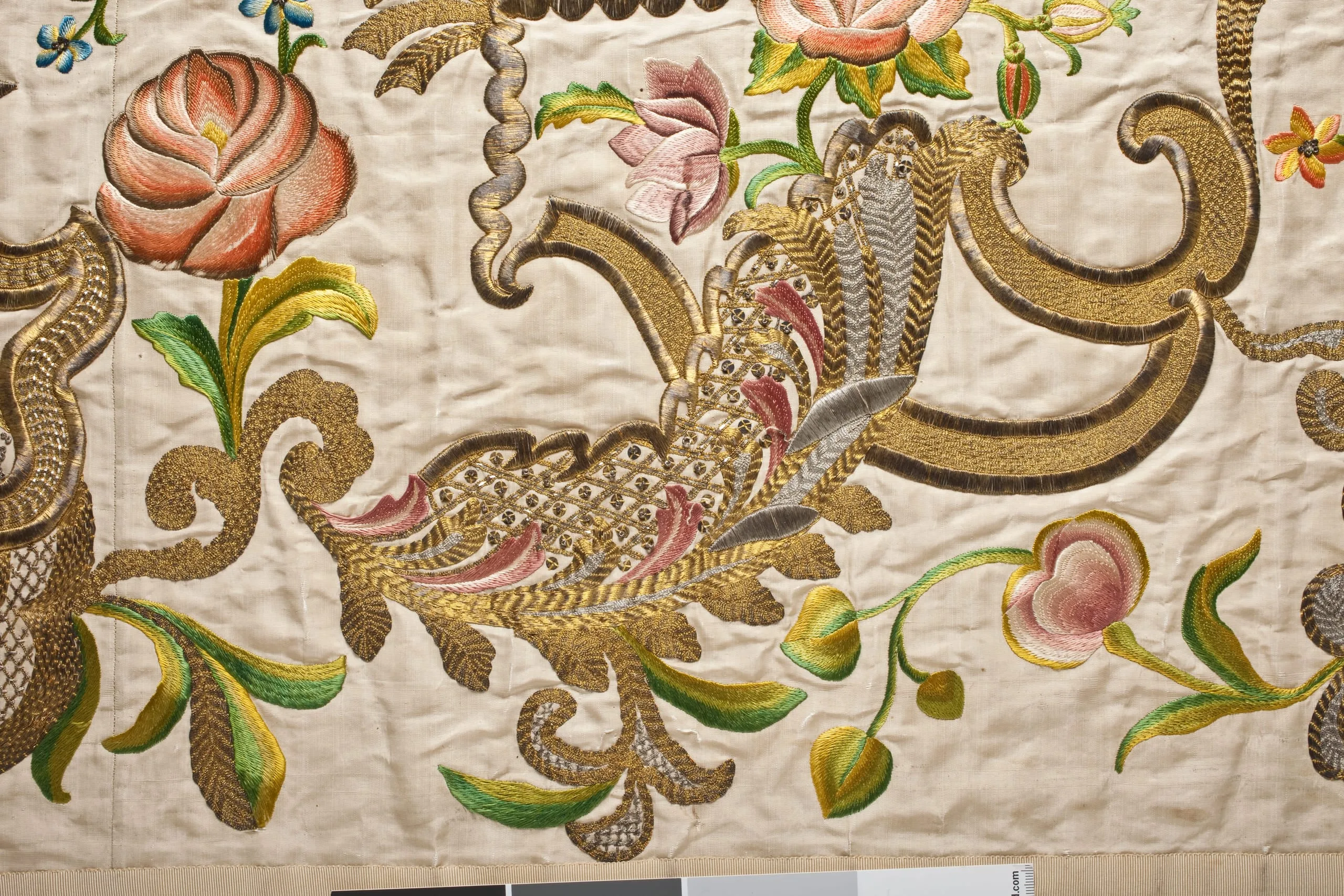
Silk embroidery panel on cream ground, featuring a central bird with gold and pink feathered body amid scrolling acanthus foliage and large roses in coral, pink, and green, worked in dense satin and couched metallic threads.
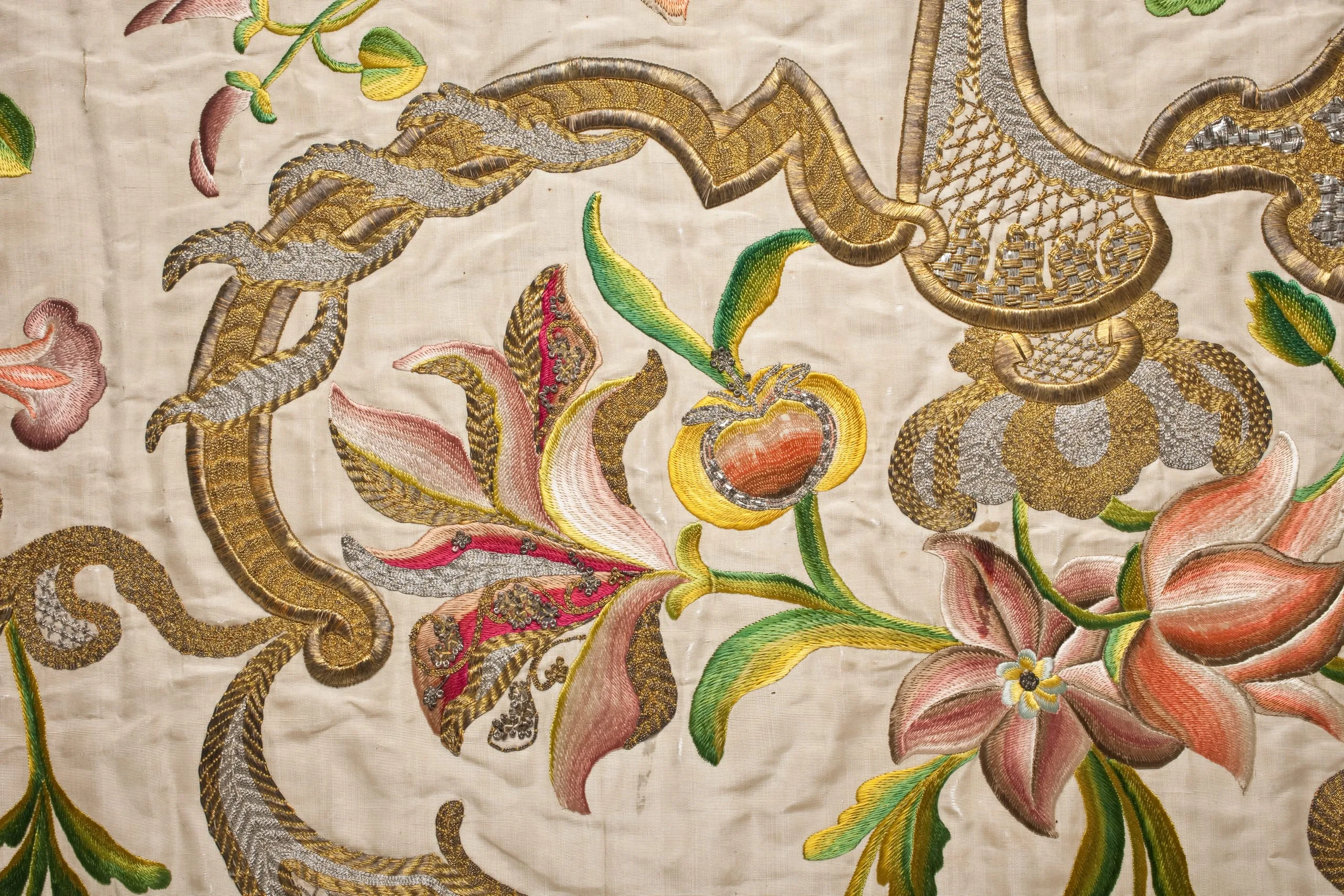
Silk embroidery on ivory ground, dense floral and foliate design with large pink blooms, scrolling gold and silver metallic thread, and a latticed urn in the upper right corner.
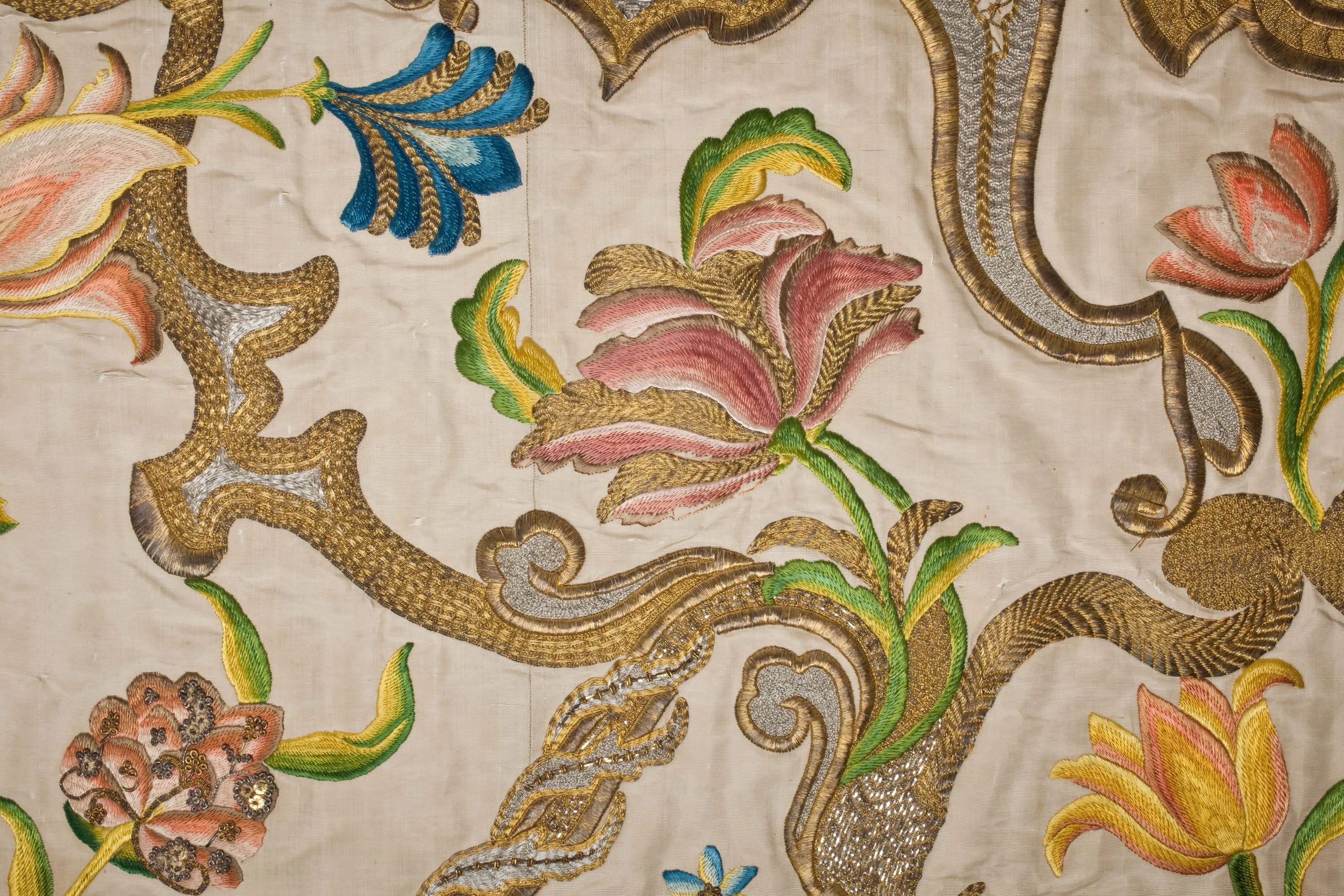
Embroidered textile panel on cream silk ground, featuring densely worked floral and scrolling acanthus motifs in silk and metallic gold thread, with pink tulips, blue and gold fan-shaped blossoms, yellow and coral flowers, and sinuous gilt rococo scrollwork.
Title
Altar Frontal
Place Made
Northern Italy
Date Made
1730-1740
Medium
Silk satin with silk and metallic-wrapped-thread embroidery
Dimensions
Textile: 39 x 108 in. (99.06 x 274.32 cm)
Credit Line
Gift of St. Edmund's Episcopal Church, San Marino, California
Accession Number
M.2009.76
Classification
Textiles
Collecting Area
Costume and Textiles
Curatorial Notes
The art of embroidery in Europe is considered to have reached its highest level of sophistication and technical virtuosity during the eighteenth century; this altar frontal is an example of the remarkable skill of designers and needleworkers who created exquisite vestments and furnishings for the church—ecclesiastical furnishings that reflected, in complex patterns and costly materials, trends in the decorative arts and fashionable dress of the period.
The Catholic Church responded to the austerities of the Reformation with opulence and grandeur in church architecture, processions, and especially in textiles. Silks from France and Italy were embellished with intensely colored floral patterns and encrusted with highlights of gold and silver. With the knowledge and techniques developed over centuries of experience of "painting with the needle" from cartoons designed by painters for ecclesiastical patrons, a new professional class of designers and embroiderers concentrated less on religious figural narratives and created instead elaborate compositions of naturalistic flowers, graceful arabesques, and serpentine meanders typical of rococo ornament. "Exotic" motifs from Asia, introduced a century before in the products brought to Europe by commercial trading companies, filled the pattern designs of chinoiserie that so heavily influenced the decorative arts; the color, wealth of gold and silver thread, and motifs of the altar frontal reflect these various influences.
Incredibly worked floral forms demonstrate the texture and ingenuity of the altar frontal's needlework. From the beginning of the eighteenth century, new advances in the chemistry of dyeing produced vibrant colors that excited the imagination of weavers and embroiderers. Brilliant shades of orange, pink, and yellow, aquamarine and Prussian blue, even a wide range of browns—colors with names such as "hellish blue" or "tobacco"—expanded the color palette for the delicate, naturalistic flowers that so richly ornament this antependium.
Selected Bibliography
  • Takeda, Sharon Sadako and Kaye Durland Spilker. Fashioning Fashion: Deux Siècles de Mode Européenne, 1700-1915. Paris: Arts Décoratifs; Los Angeles: Los Angeles County Museum of Art; Munich; New York: Delmonico Books-Prestel, 2013.
  • Takeda, Sharon Sadako and Kaye Durland Spilker. Fashioning Fashion: European Dress in Detail, 1700-1915. Los Angeles: Los Angeles County Museum of Art; Munich; New York: Delmonico Books/Prestel, 2010.
  • Takeda, Sharon Sadako and Kaye Durland Spilker. Fashioning Fashion: Europäische Moden, 1700-1915. Los Angeles: Los Angeles County Museum of Art; Munich; New York: Prestel, 2012.