Josef Sudek was a renowned Czech photographer whose evocative and atmospheric imagery earned him the sobriquet “the Poet of Prague.” His countryman and contemporary Ladislav Sutnar specialized in graphic design but occasionally branched into product design, including porcelain and glassware. The two collaborated on various projects during the 1920s, for example on sales catalogues for Krásná jizba (Beautiful Room), a famed Prague design shop that promoted modern, functionalist household goods. Sutnar served as the artistic director and designed the catalogues, while Sudek’s photographs highlighted the craftsmanship and modernist aesthetic of the glassware, ceramics, and furniture.
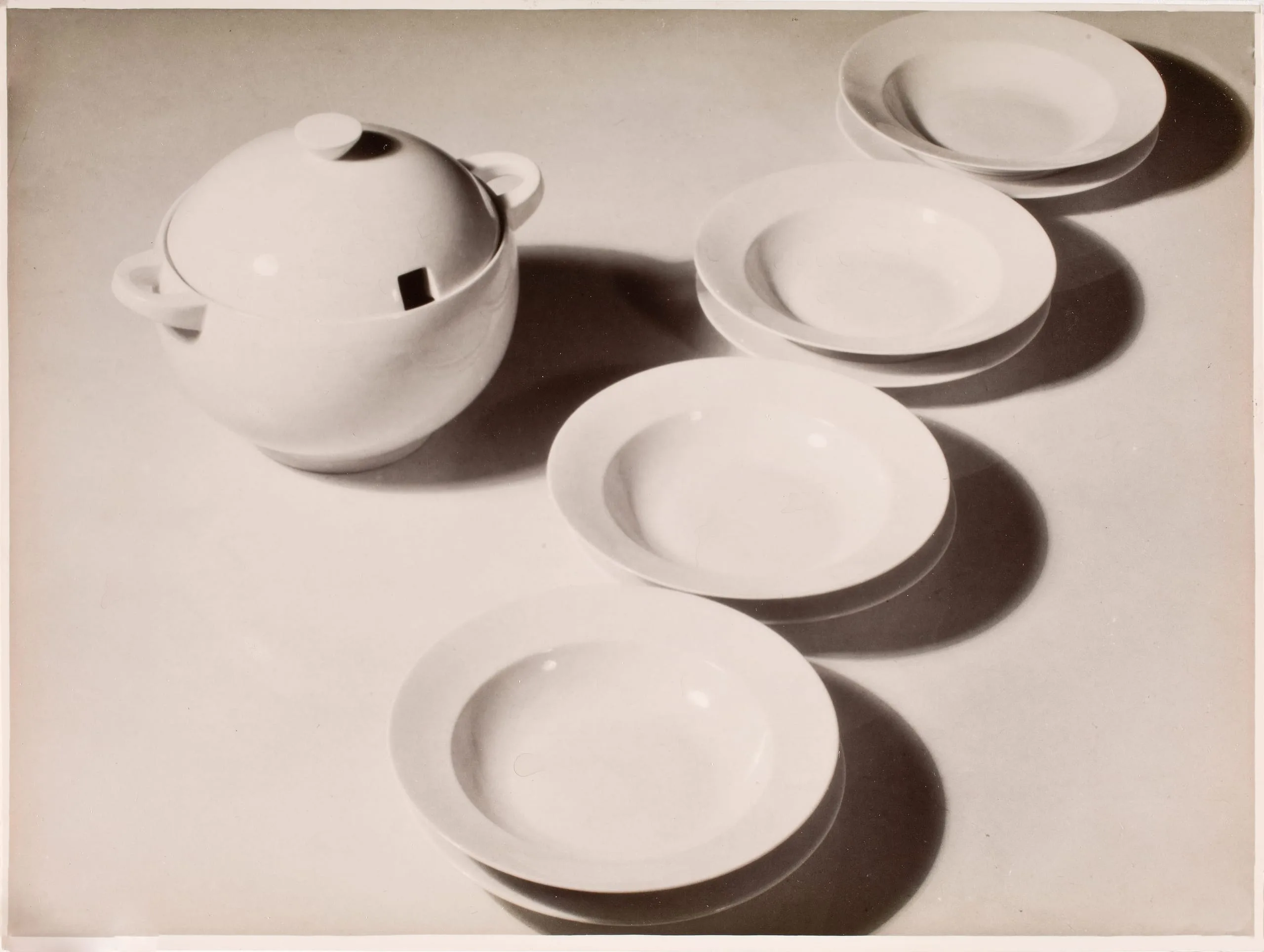
Here, Sudek arranged Sutnar’s line of white dishware—a tureen, soup bowls, and plates—on a white backdrop, emphasizing the shadows created by their circular forms. Unadorned, understated, and geometrically harmonious, these domestic items reflect the Bauhaus and Constructivist principles of creating beautiful yet practical objects for everyday use. Such wares, produced for Krásná jizba by Czech manufacturers like Epiag Karlsbad, were part of a broader movement in interwar Czechoslovakia to integrate modern design into industrial production, helping to establish the country as a leader in applied arts.
Britt Salvesen
2024