Trained as a lawyer and artist, Edward Wheelwright (1824-1900) is known today for his writings on art. He was born into a prestigious Boston family and educated at the finest schools, including Harvard, where he was a classmate of Hunt. Well traveled and erudite, Wheelwright turned to painting, first studying art around 1850 in the Parisian atelier of Eugène Cicéri (1813-1890), a landscape painter. Five years later, inspired by Hunt, he returned to France and persuaded Millet to become his teacher. Their student-teacher association was quite formal, the only one of its kind to be made by an American with Millet. However, Wheelwright never seriously pursued the career of an artist. After his return to the United States, he turned his attention to other aspects of art, becoming a critic for the Atlantic Monthly in the late 1870s. He actively promoted the reputation of Millet in this country, through his article "Personal Recollections of Jean-Franqois Millee", of 1876 in the Atlantic Monthly and through his assisting the Boston Museum of Fine Arts in raising funds for the purchase of paintings by Millet.
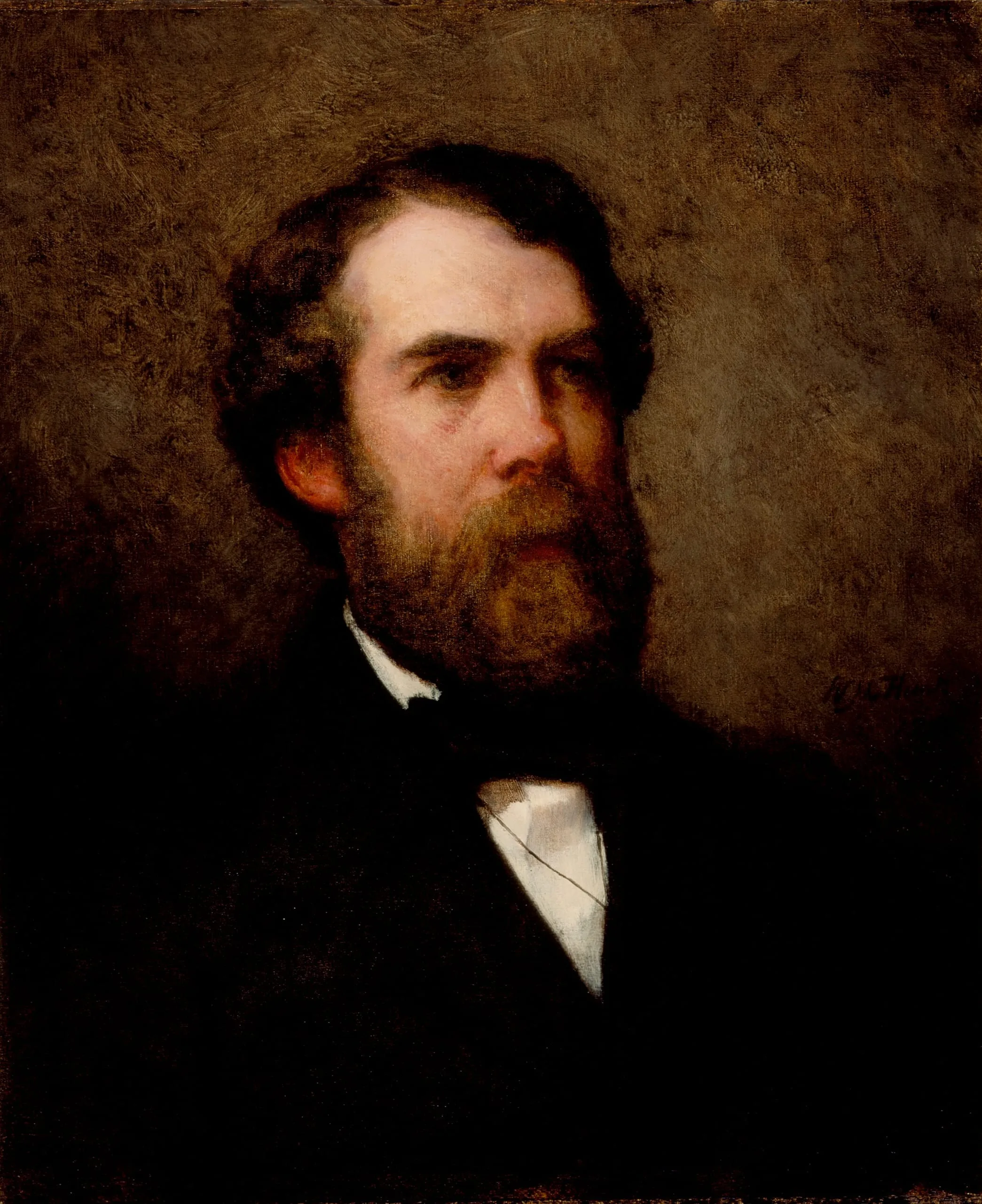
In June 1856 Wheelwright returned home after spending nine months in Barbizon. He joined Hunt at Newport, becoming part of the intimate circle of artists and writers around Hunt and his family. It was at this time that Hunt painted his portrait. With his return to the United States, Hunt entered the field of portraiture, and Wheelwright’s bust is an early example of Hunt’s extensive work in that genre. Some of his best portraits were created during his Newport years. Although he received numerous commissions, he often painted his friends.
Hunt’s handling of the portrait reveals his French training, in particular the influence of Thomas Couture and Millet. The overall effect is one of softness, in contrast to the harsh clarity typical of mid-nineteenth-century American portraits. Hunt built up Wheelwright’s face with light and dark passages of color, including different shades of pinks, roses, and oranges, vigorously applied in small strokes over a warm underdrawing. The head is quite plastic, but its contour is blurred. The warm tonal palette of browns is carried through into the background, although less densely.