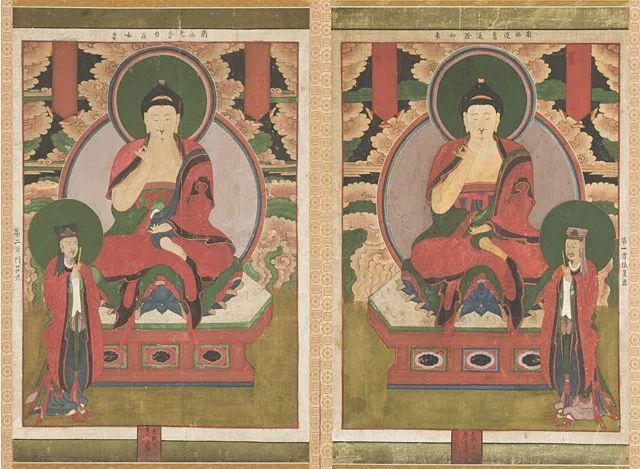
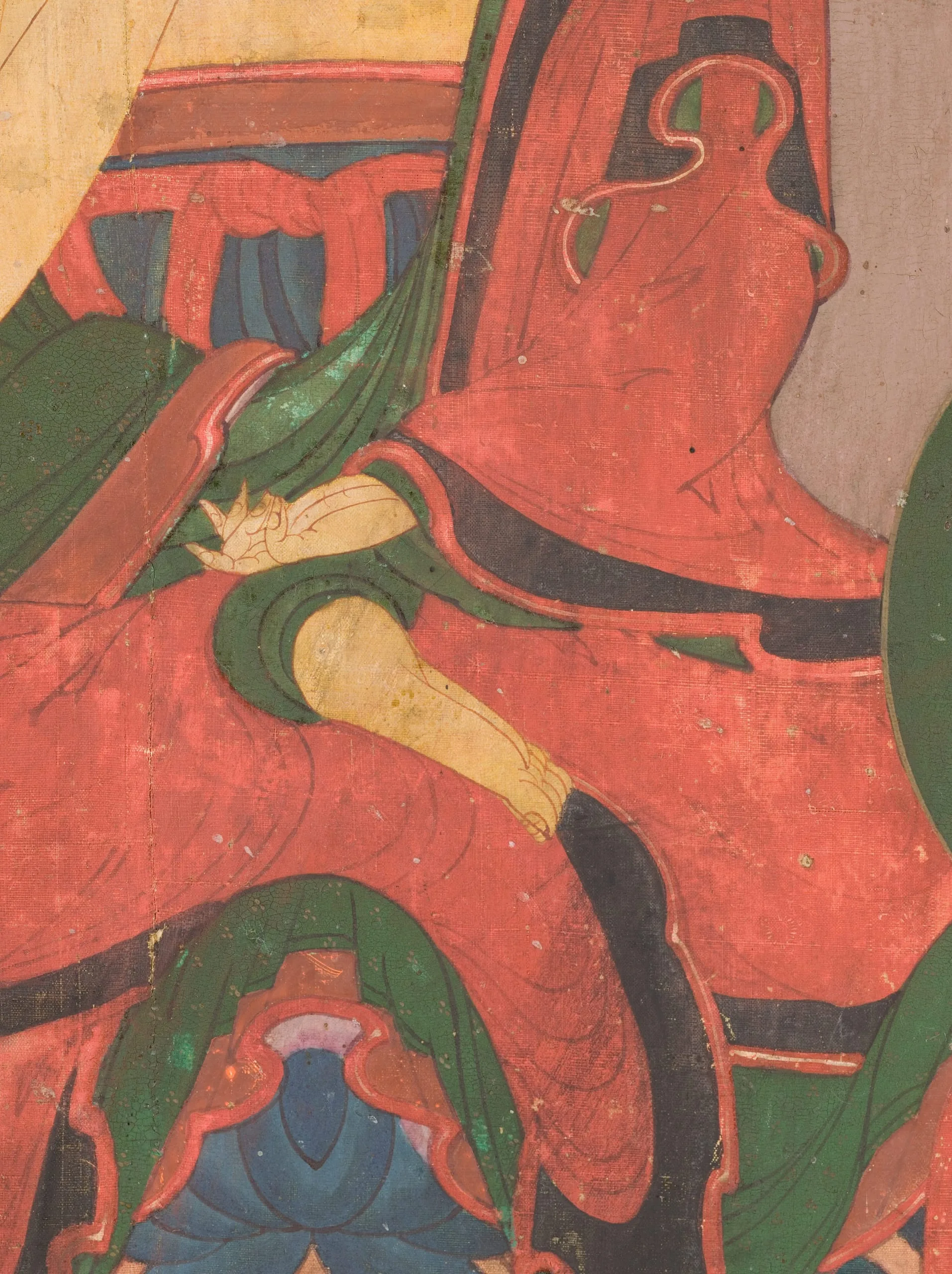
Shining in the night sky, Polaris, or the North Star, has guided travelers since ancient times; it was also personified as a religious figure to which people prayed. In Korea, Polaris was personified as the Buddha of Polaris (Chiseonggwang Yeorae); his attendants, the Buddhas of the Big Dipper (Chilseong Yeorae), are usually shown with him.
Paintings of the Buddhas of the Big Dipper were very popular in Korea. They can be found in almost all Korean Buddhist temples, where they are placed in shrines called the Big Dipper Pavilion (Chilseonggak) or the Three Stars Pavilion (Samseonggak). In Korean folk religion, the Big Dipper guided the sins and mishaps of human beings, was believed to ward off disasters, and was considered a symbol of longevity. It was also said to aid in the conception of a baby boy and, during the Joseon dynasty, the Big Dipper became widely revered by women who desired a son.
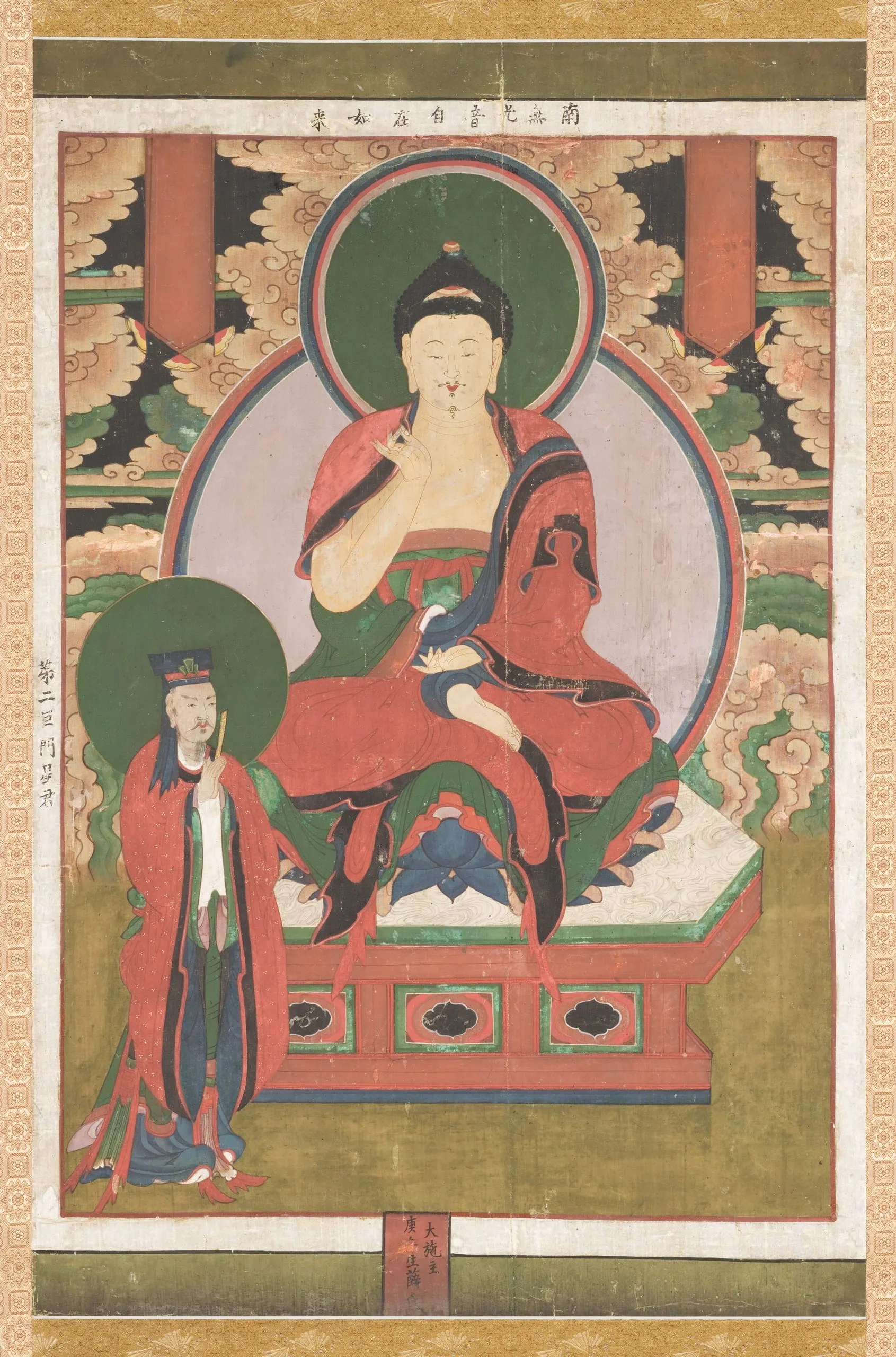
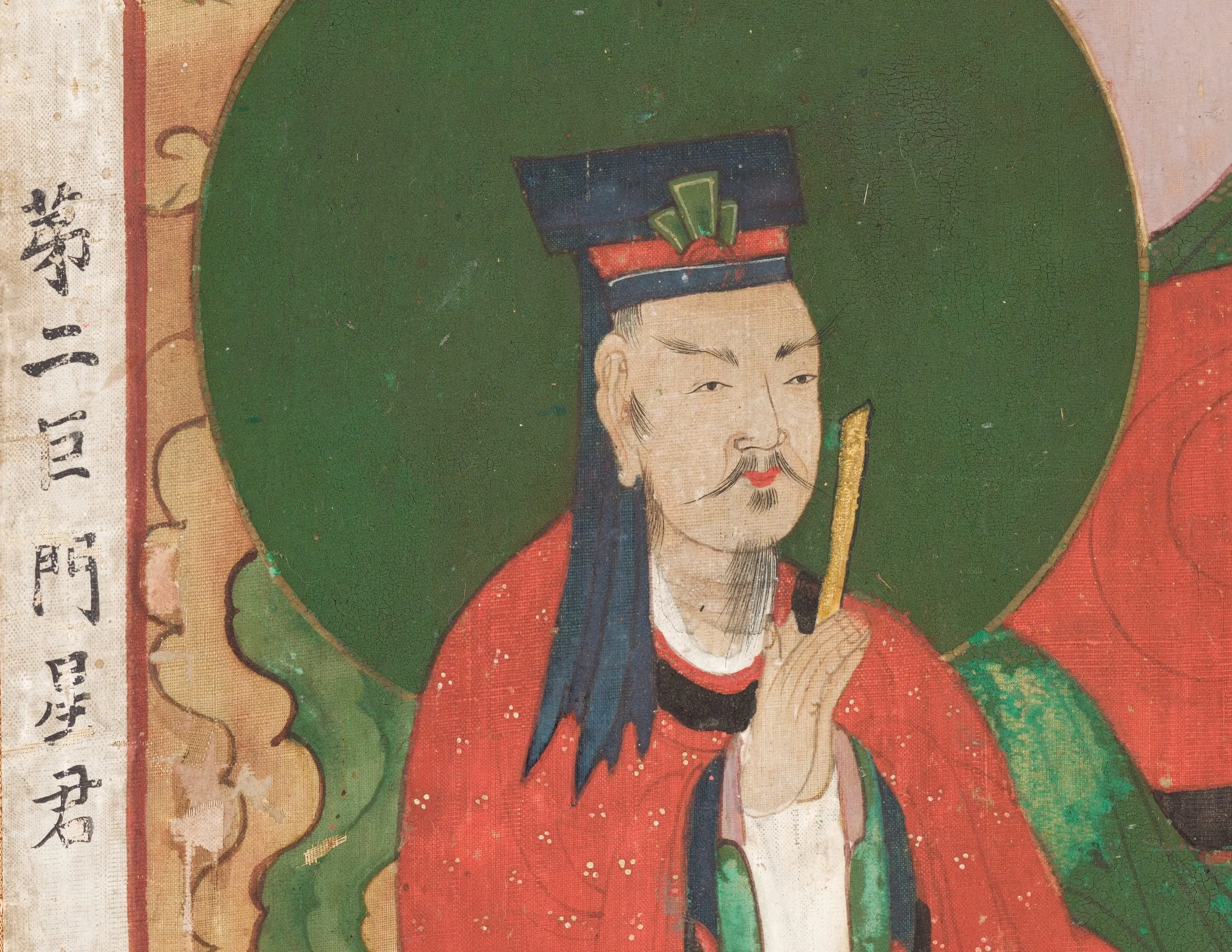
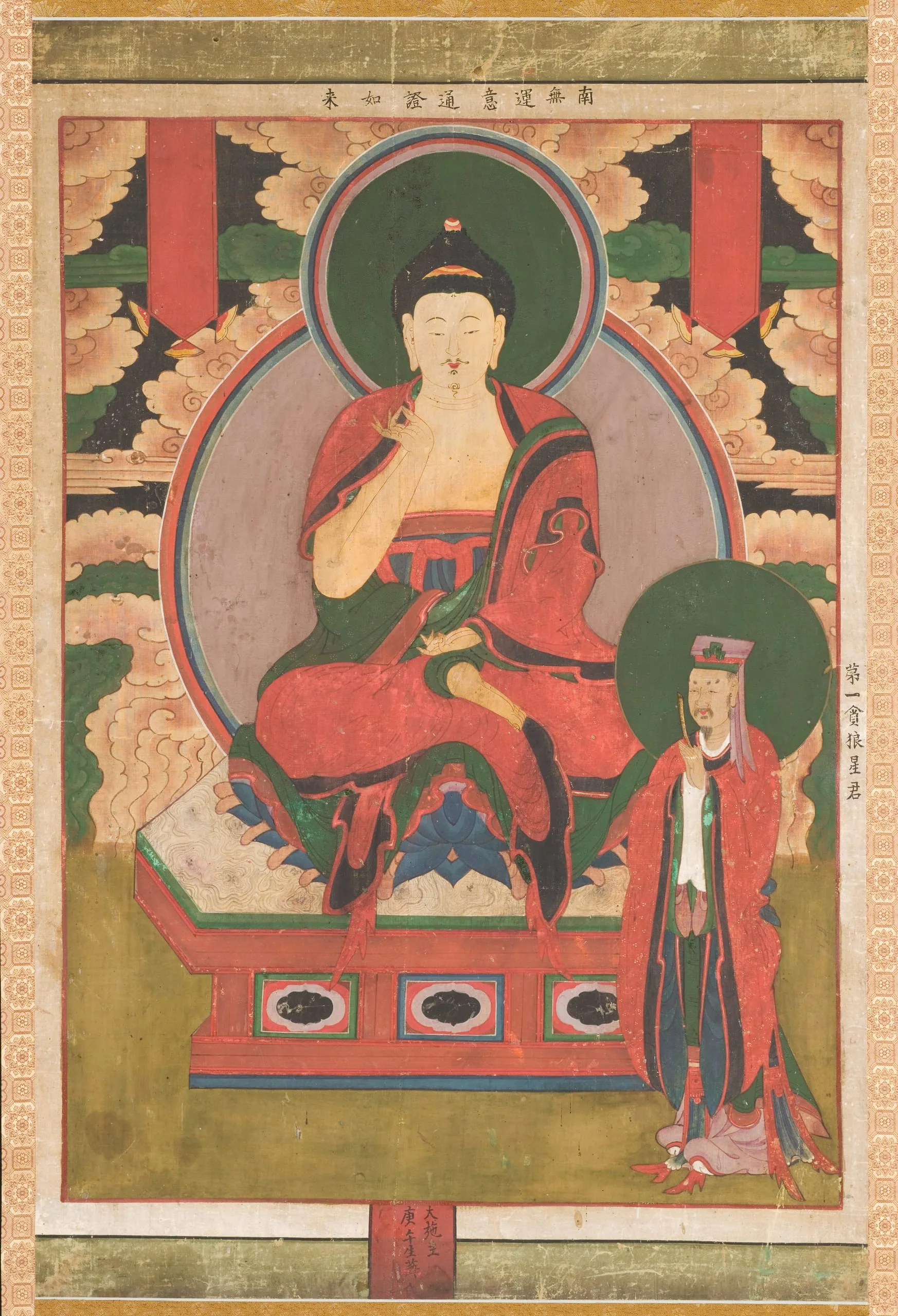
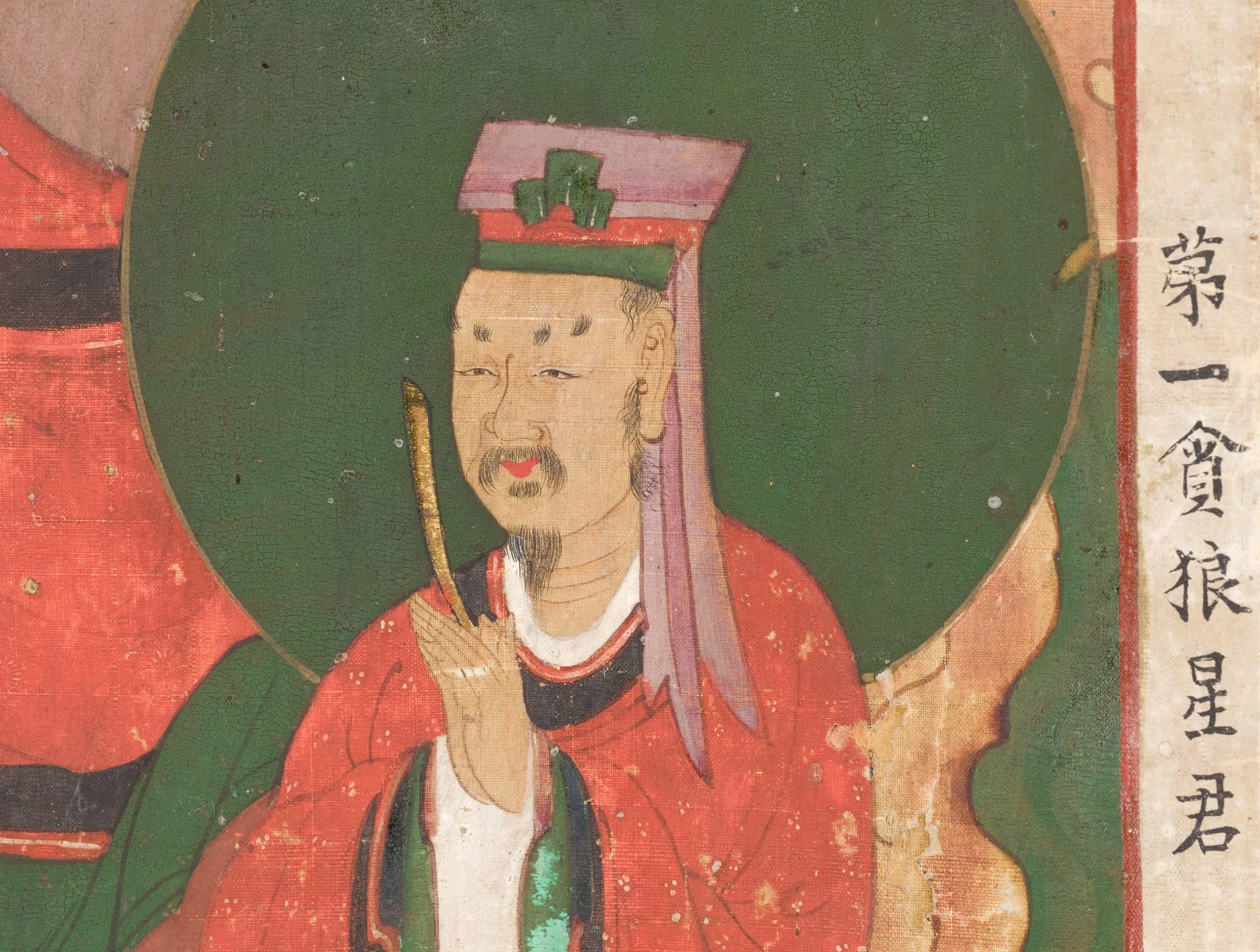
In Korea, there are two standard formats for the depiction of these deities. One format depicts the Buddha of Polaris and all his attendants together in a single painting.[1] The other format[2] features individual paintings for each deity, for a total of eight paintings, with the Buddhas of the Big Dipper arranged on either side of a central painting of the Buddha of Polaris.[3] Occasionally, the sets include an additional figure of a Daoist personification of the Big Dipper (Chilwon seonggun). LACMA’s two scrolls were probably originally part of a set of eight paintings; the other works in the set have been lost. In addition, each of the LACMA paintings includes a representation of a Daoist personification of the Big Dipper, further evidence that these scrolls were part of a set (det.1, 2).
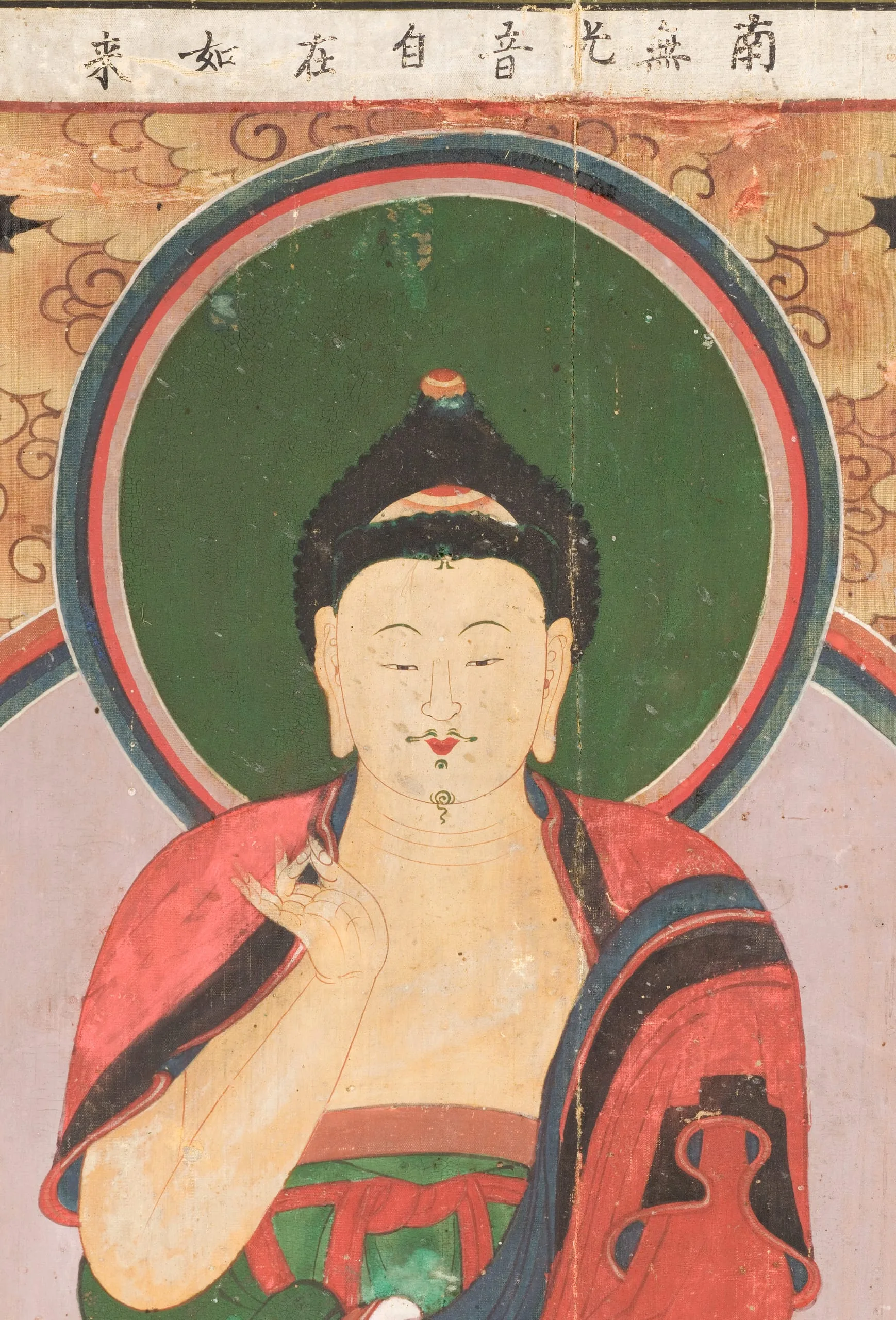
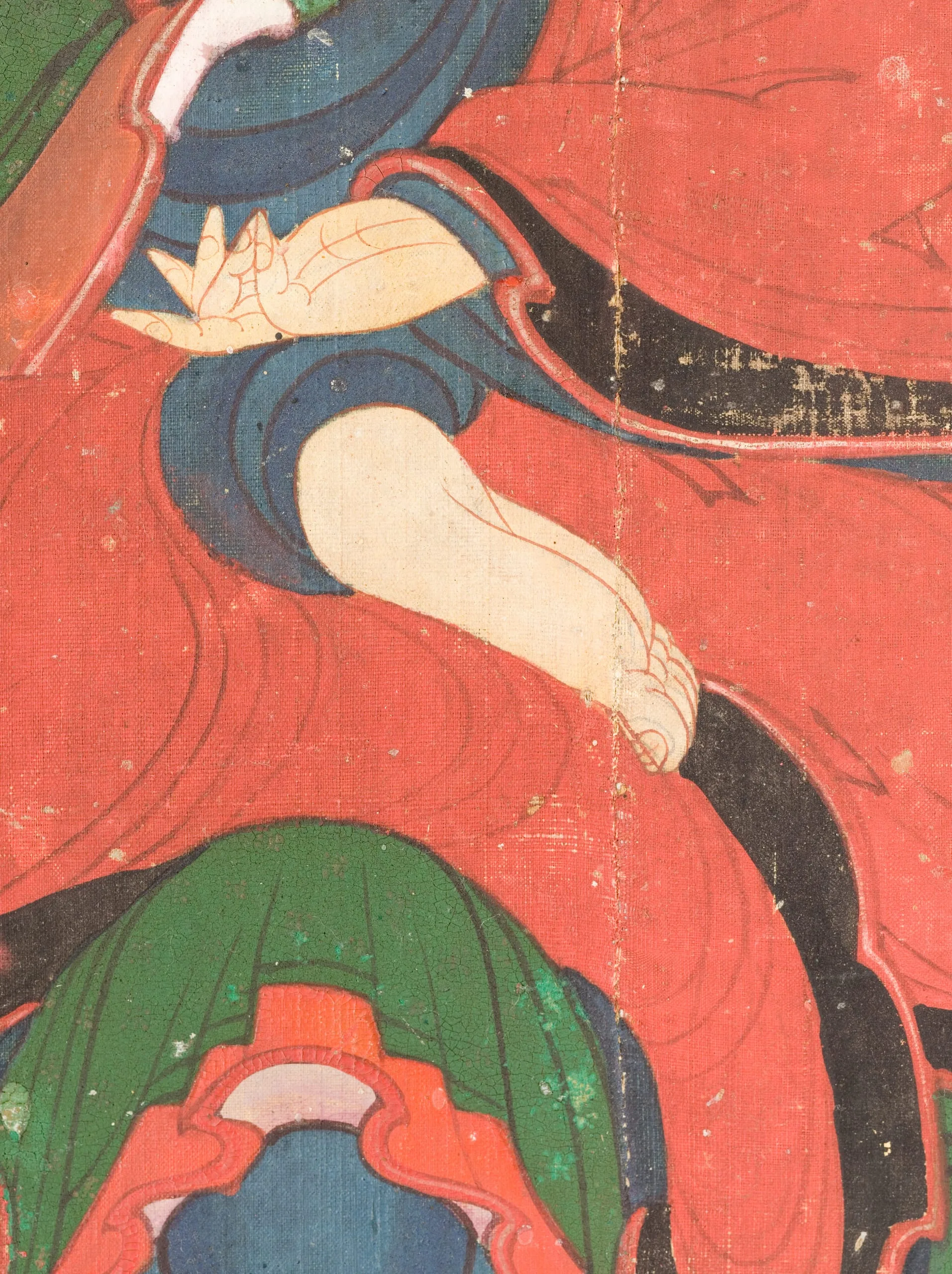
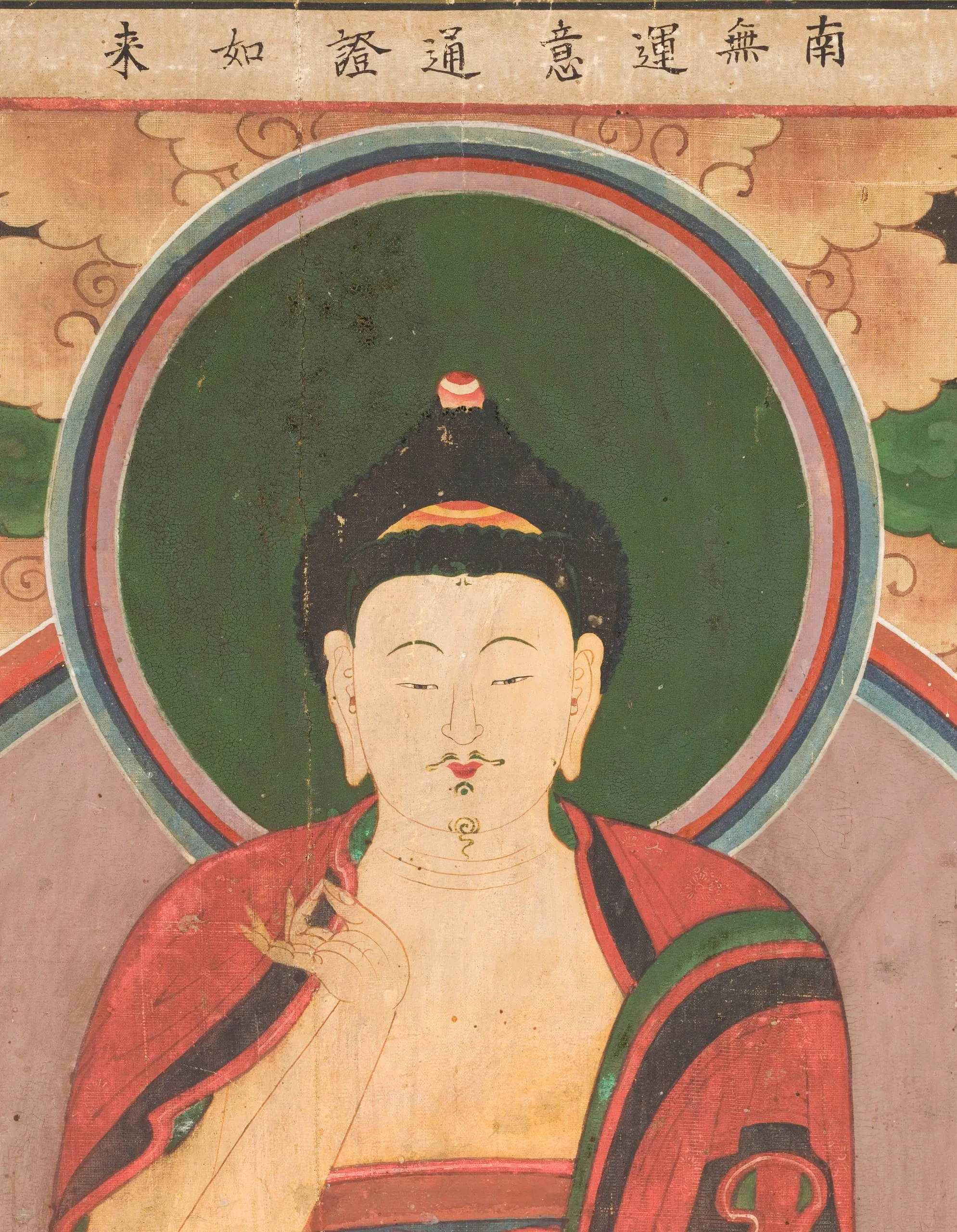
The inscription on the top of each painting gives the name of the Buddha and his role (det. 3, 4). The First Buddha, Uneui Tongjeung Yeorae, is attended by the Daoist deity Tamlang seongun, who grants good fortune to descendants. The Second Buddha, Gwangeum Jajae Yeorae, is attended by the Daoist deity Geomun seongun, who removes obstructions and difficulties. Each attendant wears the hat of an official and has a scepter in his hands, which are held together in a praying position. The Buddhas themselves sit on pedestals in full lotus position; both are making the same hand gestures. When displayed as a set, the painting of the First Buddha, Uneui Tongjeung Yeorae, would been placed on the immediate left of the central painting of the Buddha of Polaris; the painting of the Second Buddha, Gwangeum Jajae Yeorae, would have been placed on the immediate right of the central painting.
The inscription on the bottom of each painting gives the name of the person who commissioned them.[4] It is probable that detailed information about the production of the paintings, such as the date and artists, was included on the set’s central painting of the Buddha of Polaris, now lost. A set of seven Buddhas of the Big Dipper at Donghwa Temple in North Gyeongsang province, very similar to the LACMA paintings, was made in 1850 (fig.1), and the type remained popular between 1850 and 1870. LACMA’s paintings are also presumed to be from the 1850s or a little later, based also on the relatively small stature of the representations of the Daoist personifications of the Big Dipper.[5] Also, yangcheong, a blue pigment in general use in later Korean paintings, was not used on the LACMA paintings.
Footnotes
[1] An example can be found in Hae’in Temple in South Gyeongsang province. See also the LACMA entry for M.2000.15.5 for an example of this format.
[2] An intact example of the eight-painting format, from 1877, is in Cheonggok Temple in South Gyeongsang province.
[3] In general, the set of eight paintings were displayed with the Buddha of Polaris in the center. Paintings of the First, Third, Fifth, and Seventh Buddhas of the Big Dipper were displayed on his left, and paintings of the Second, Fourth, and Sixth Buddhas of the Big Dipper were displayed on his right.
[4] The inscriptions include the surname Seol, and mention that this Seol was born in the year of gyeong’o (approximately 1810).
[5] At the end of the nineteenth century and the beginning of the twentieth century, artists placed much more emphasis on Daoist iconography. Daoist personification of the Big Dipper, or Chilwon seonggun, were portrayed on a level equal to that of the Buddhas of the Big Dipper; in fact, in many cases only the personifications of the Big Dipper were depicted.
Bibliography
Buddhist Cultural Properties Research Institute. Korean Buddhist Painting [Hanguk ui bulhwa], vol. 1-40. Yangsan, Korea: Buddhist Cultural Properties Research Institute, 1996–2006.
Cha, Jaeseon. “A Study of Buddhist Chilseong Paintings in the Joseon Dynasty [Joseonjo Chilseong Taenghwa ui Yeongu].” Master’s thesis, Dongguk University, 1987.
Kang, Mingi, et al. Understanding Korean Art Culture [Hanguk misul munhwa ui ihae]. Seoul: Yegyeong, 1994.
Kang, So-hyeon. “Buddhist Chilseong Paintings of the Joseon Dynasty [Joseon sidae ui Chilseong Taenghwa].” Master’s thesis, Seoul National University, 1998.
Mun, Myeongdae. Korean Buddhist Painting [Hanguk ui bulhwa]. Seoul: Yeolhwadang, 1977.