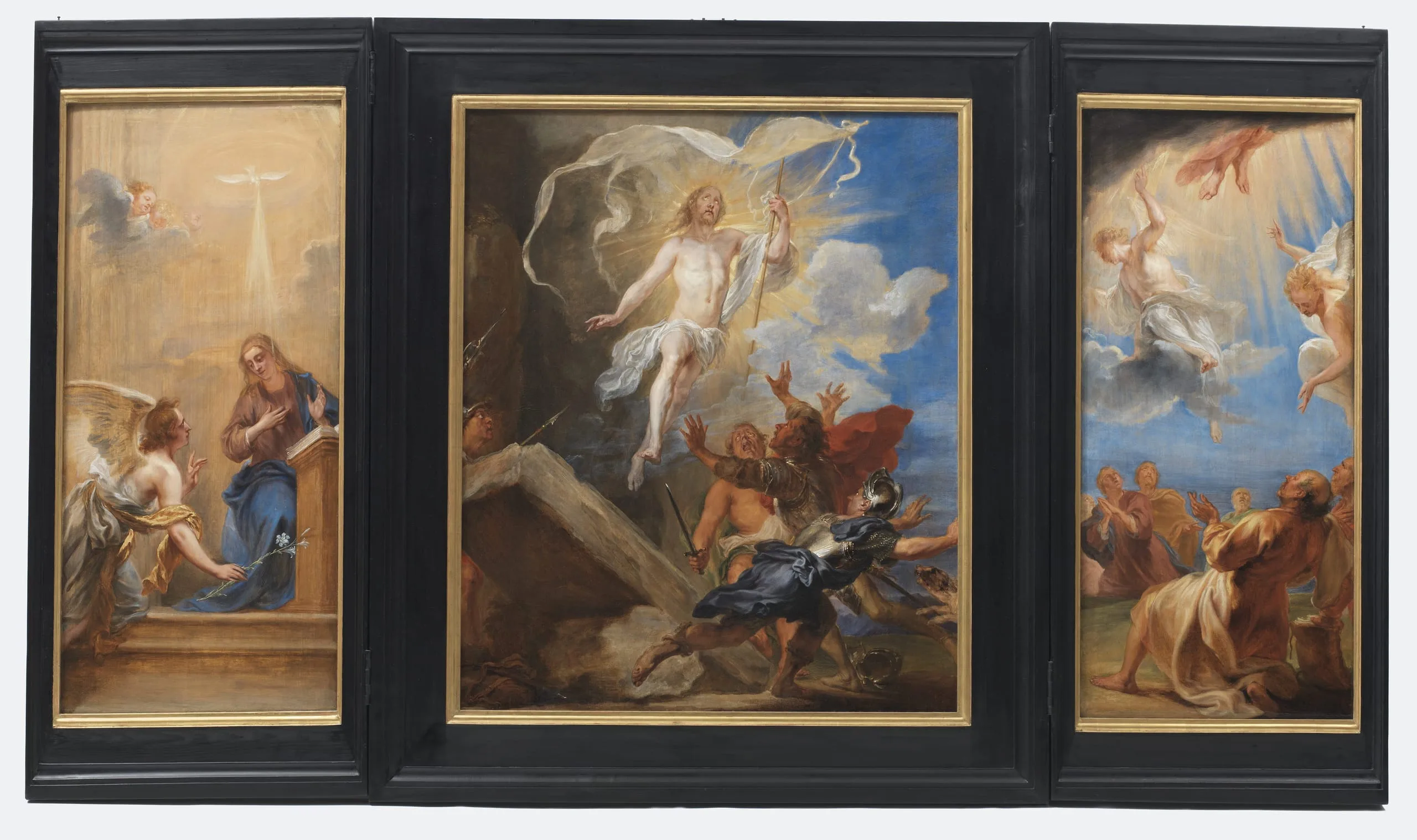
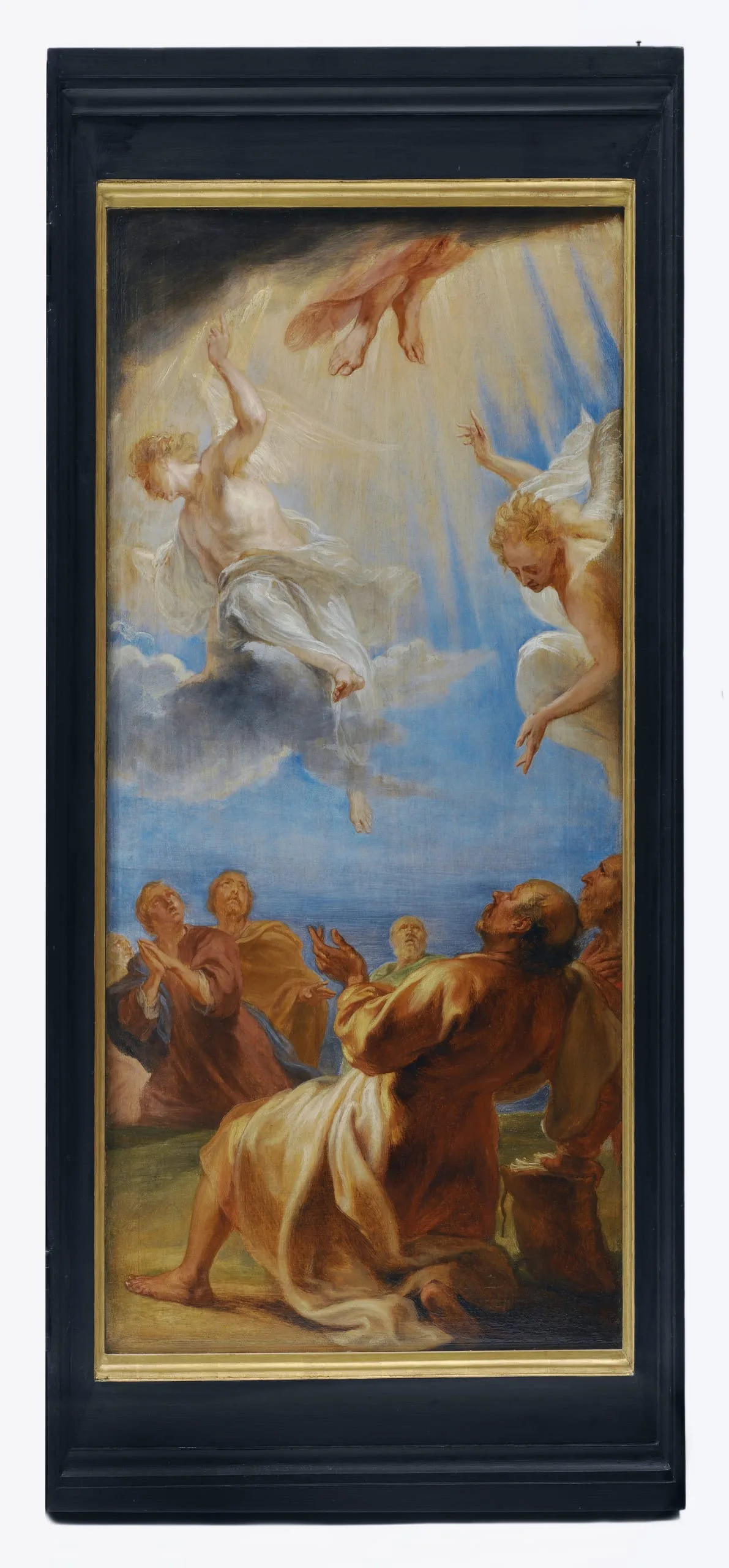
Born in Muenster, Germany, Jan Boeckhorst settled in Antwerp around 1626. He trained with both Jacob Jordaens and Peter Paul Rubens, becoming eventually a close collaborator of the latter. This triptych is one of the artist's most famous works. It was painted as a memorial tribute to Mary Snyders (1588-1659), the sister of Frans Snyders, the famous still-life painter.
The commission illustrates further the links that united the various members of the Rubens circle of which Snyders and Boeckhorst were illustrious members. Mary Snyders was a beguine or nun and the altarpiece was put above her tomb in the church of the Begijnhof where it remained until 1798, at which date the church was sold. The painting however remained the property of the religious community until 2007.
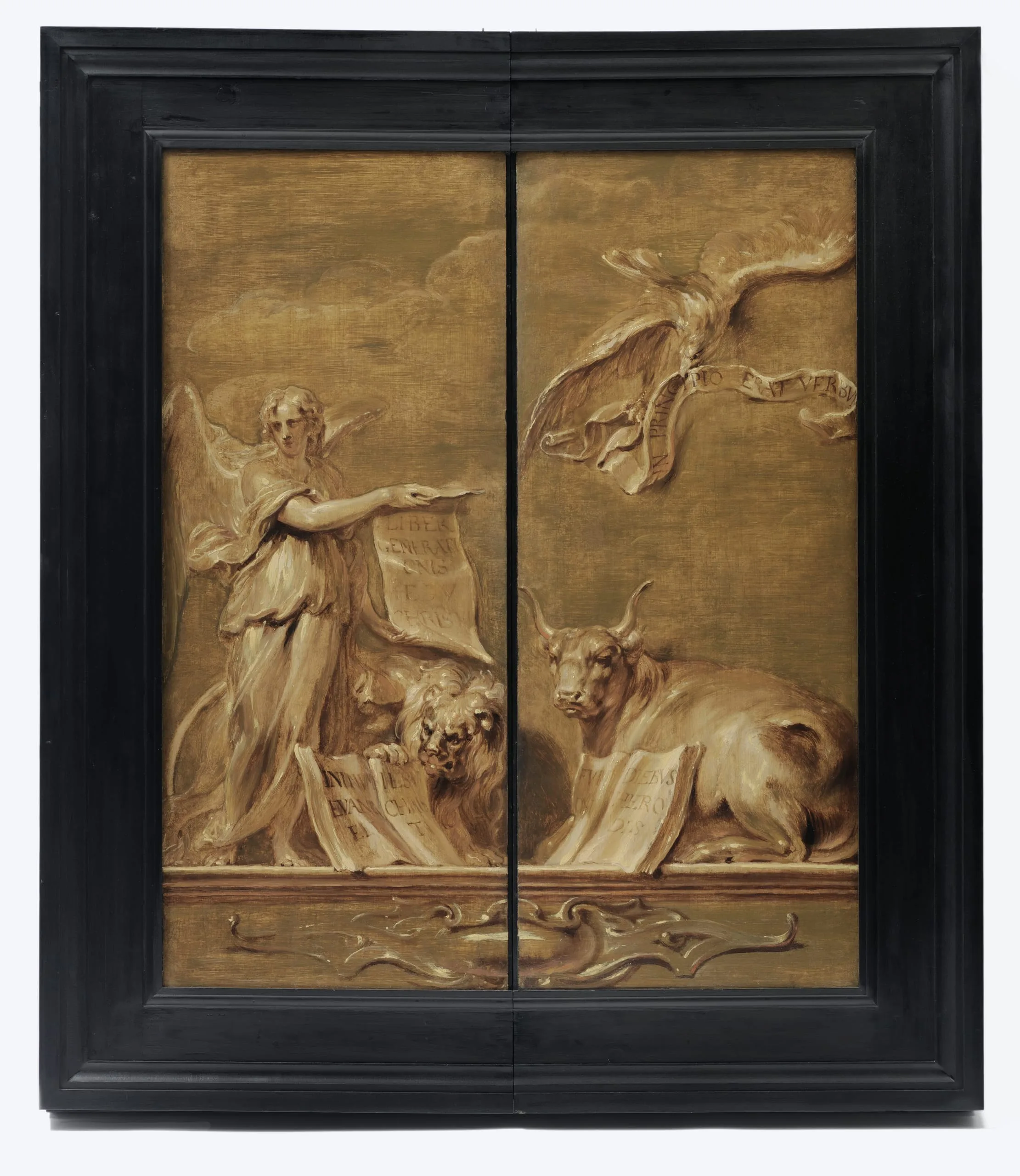
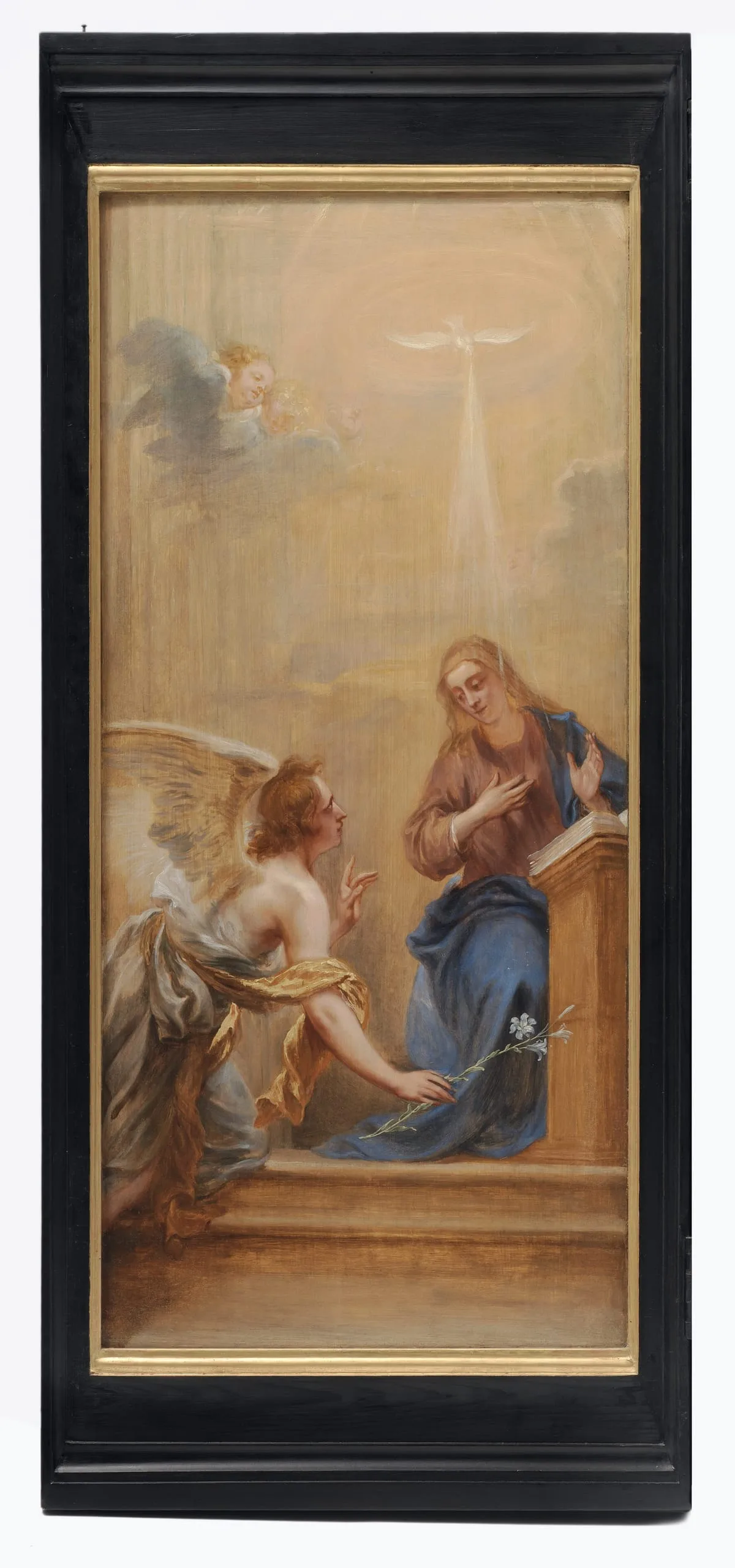
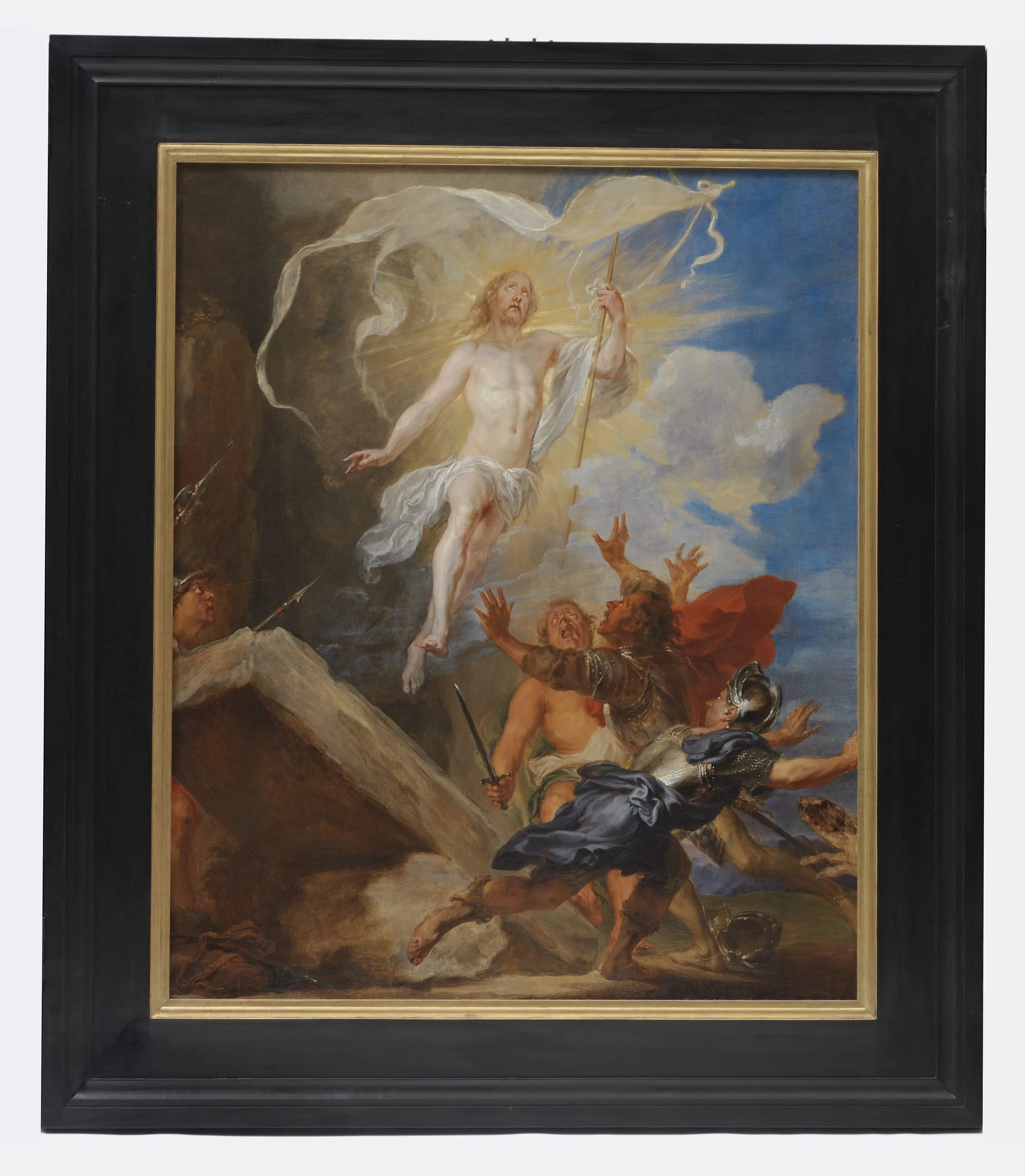
The triptych illustrates the Annunciation on the left panel and two scenes from the Life of Christ: The Ascension on the right panel, and in the center one a grandiose Resurrection. The triptych shows the artist's mature style characterized by an awareness of van Dyck from whom the artist borrows a free brushwork and chromatic brilliance. The reverse of the wings are painted in gold-brown camaieu and show symbols of the four Evangelists, surrounded by decorative arabesques reminiscent of designs executed by contemporary silversmiths.
This triptych joins the museum's collection of Flemish seventeenth century paintings and illustrates with eloquence the close relationship between Rubens, his pupils, and collaborators.