LACMA

ShopMembershipMyLACMATickets
LACMA
Los Angeles County Museum of Art
5905 Wilshire Blvd.
Los Angeles, CA 90036
info@lacma.org
(323) 857-6000
Sign up to receive emails
Subscribe
© Museum Associates 2026
  • About LACMA
  • Jobs
  • Building LACMA
  • Host An Event
  • Unframed
  • Press
  • FAQs
  • Log in to MyLACMA
  • Privacy Policy
© Museum Associates 2026
Collections

Akan Suutz'
Image of K'awiil Chan K'inich, Holy Lord of Dos Pilas741–761 CE

On view:
Geffen Galleries
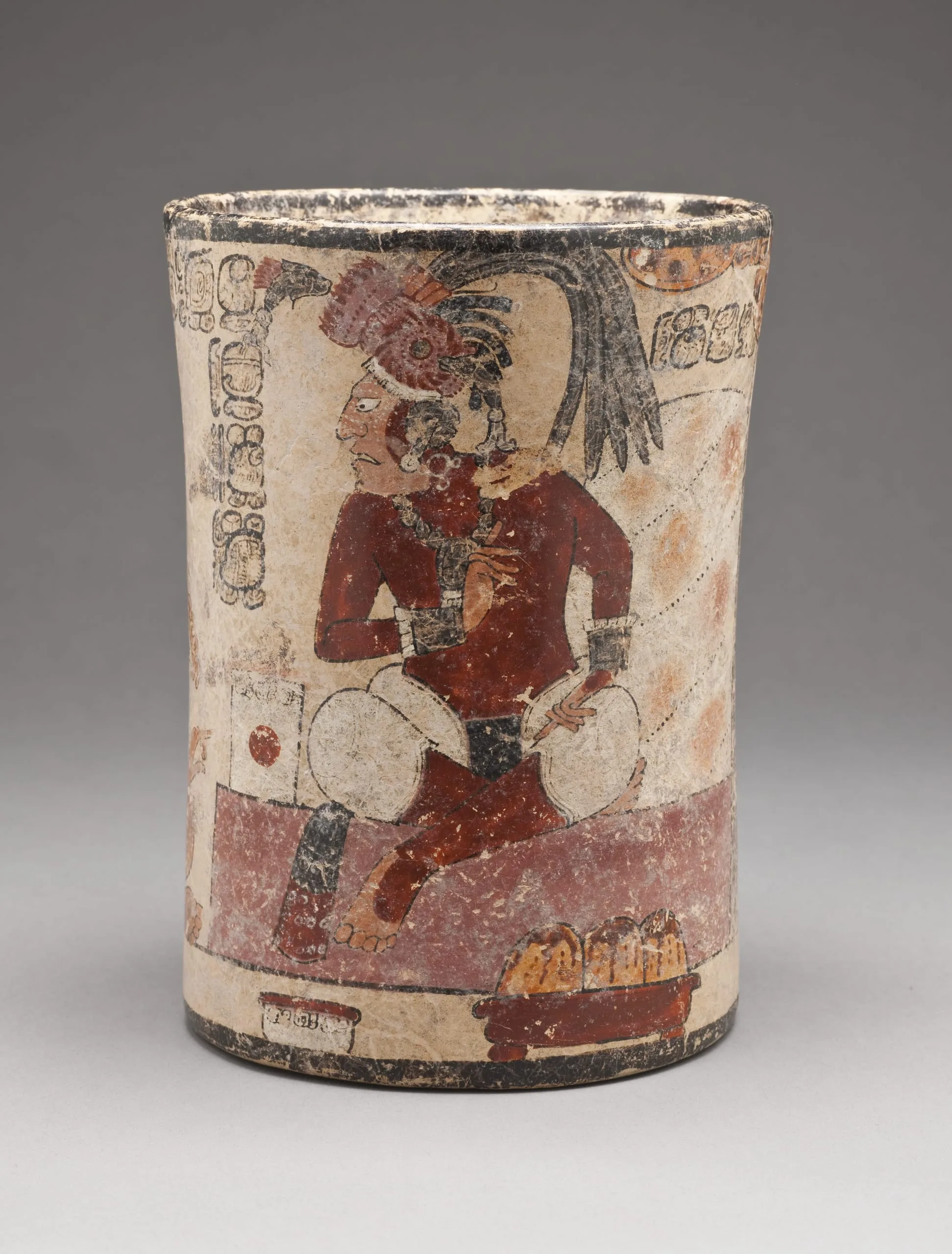
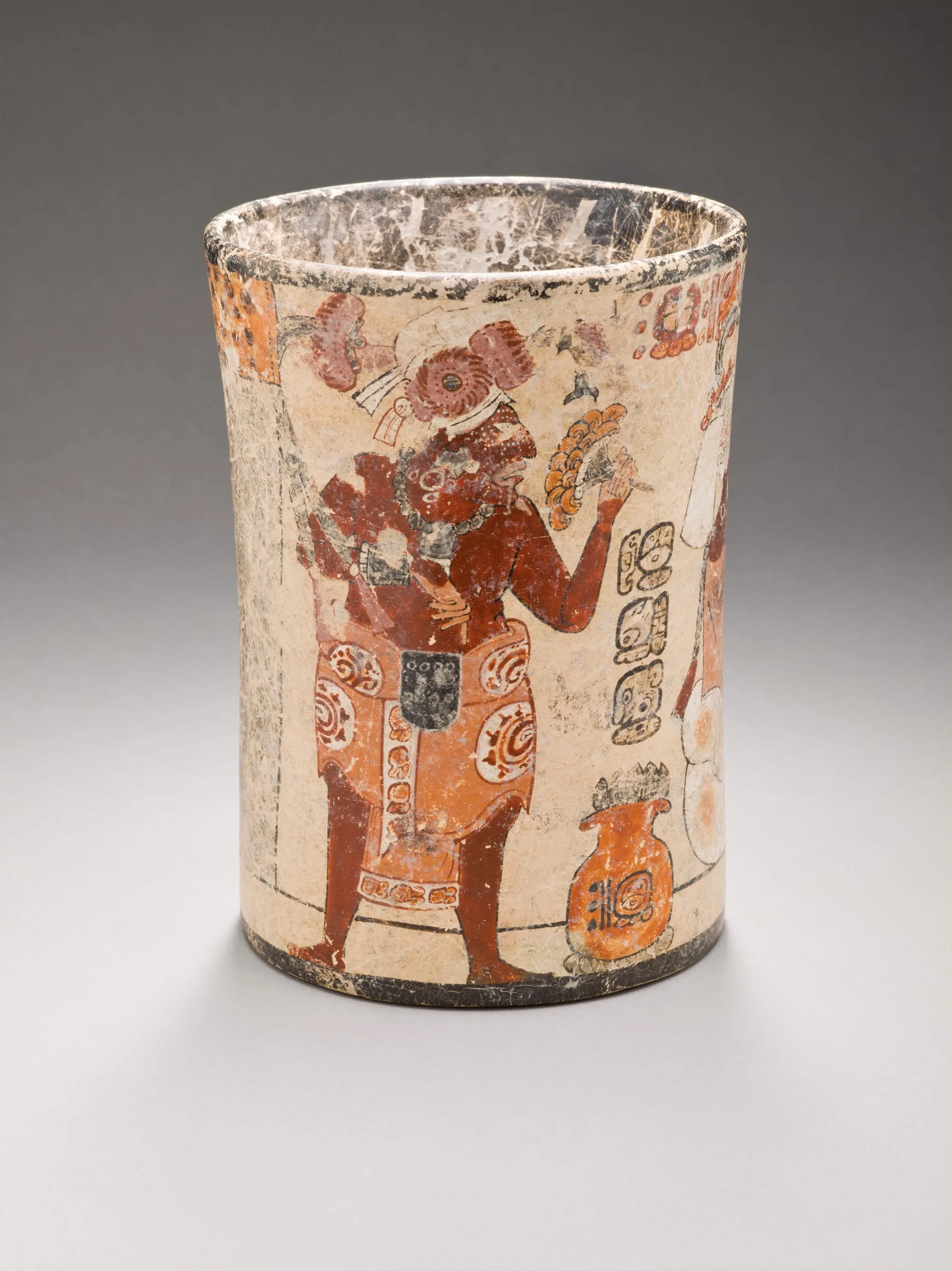
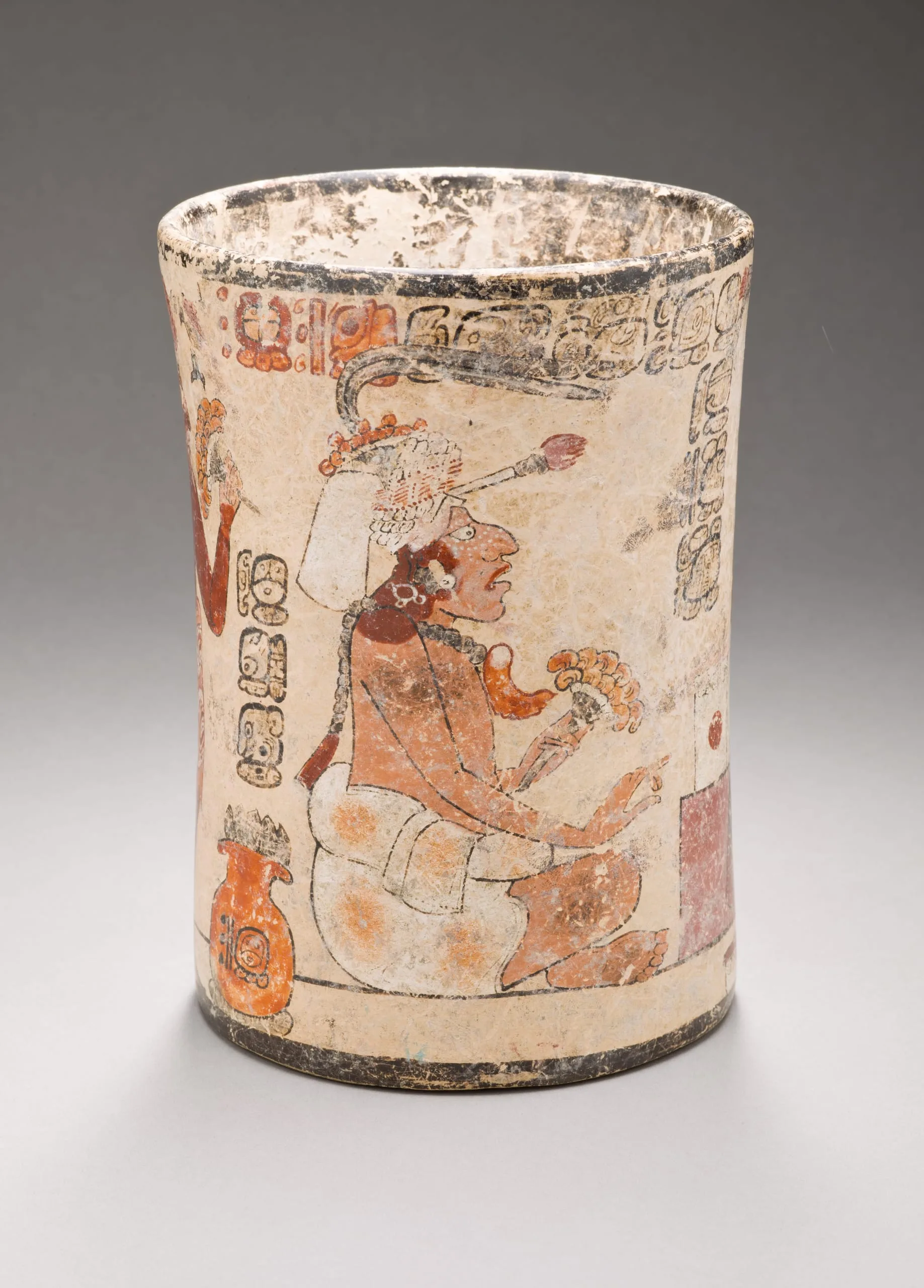
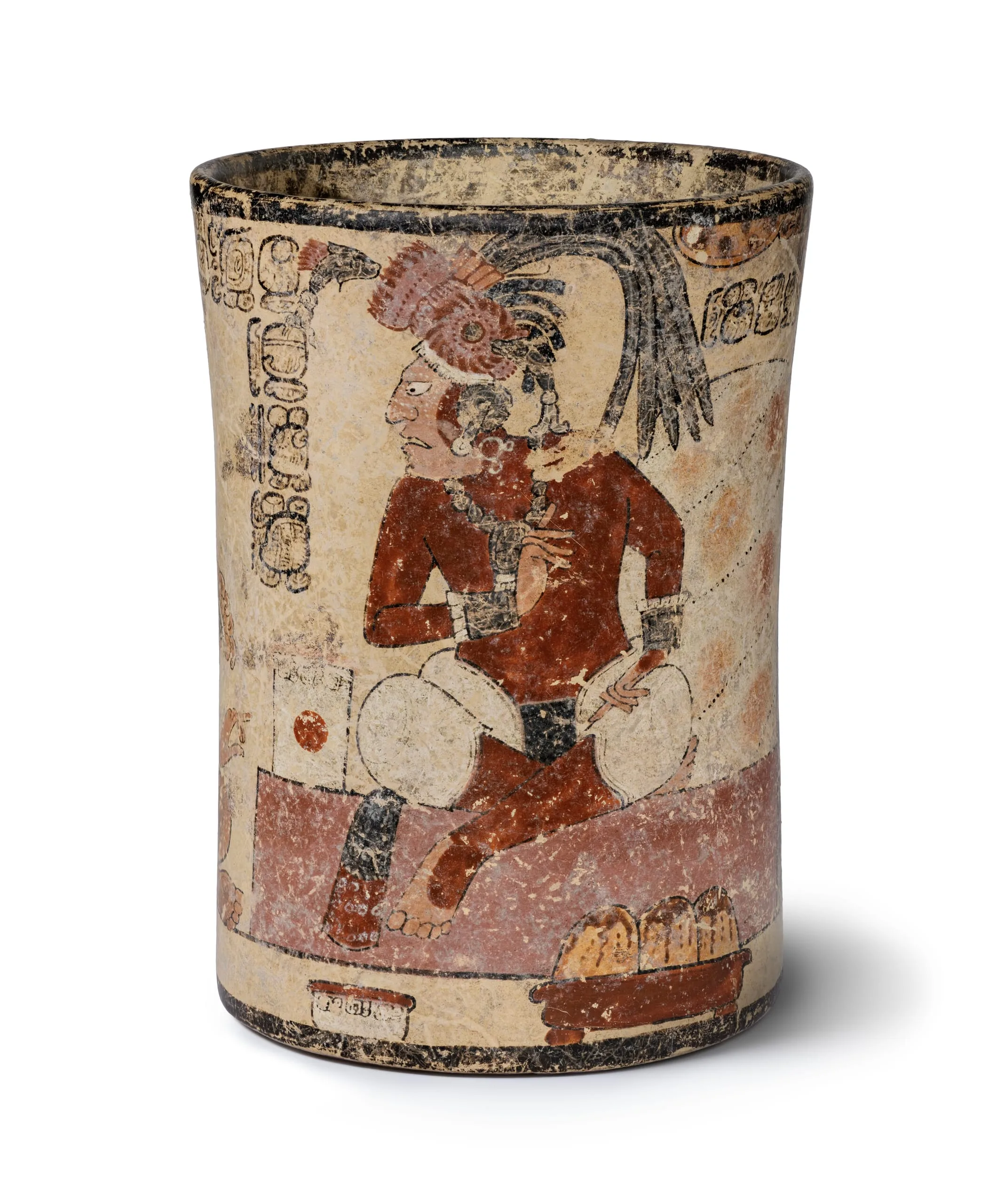
Cylindrical Maya ceramic vessel with polychrome painting of a seated figure in profile wearing a feathered headdress, surrounded by hieroglyphic glyphs
Cylindrical Maya ceramic vessel with painted polychrome decoration; a seated figure in dark red wearing an elaborate feathered headdress and jewelry holds a round drum, flanked by a vertical column of Maya glyphs at left and additional glyphic text along the upper rim.
Maya ceramic cylinder vessel with cream slip ground, painted in red-orange and black with a seated figure wearing an elaborate headdress, surrounded by Maya hieroglyphic glyphs along the upper band and flanking columns.
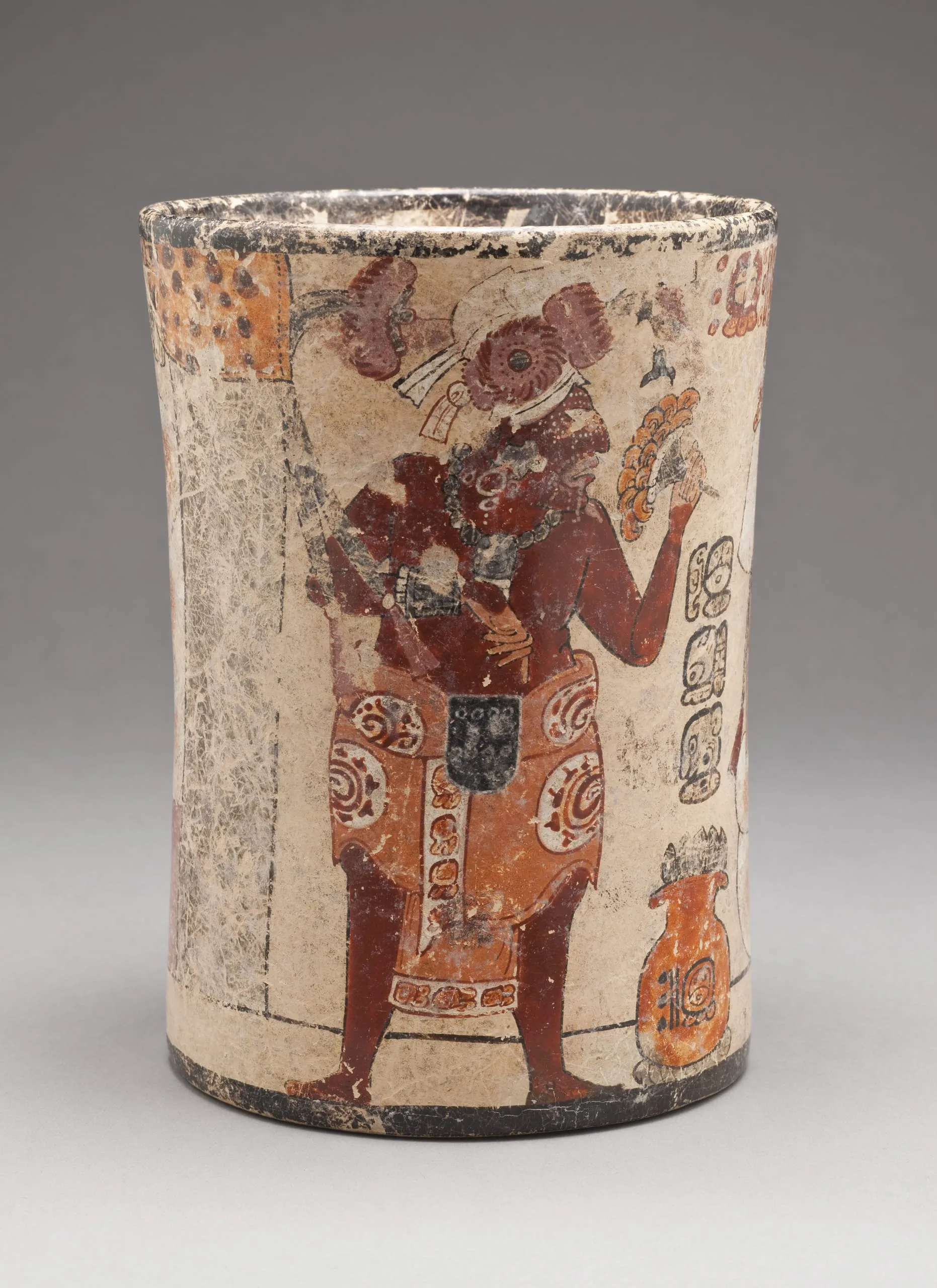
Maya ceramic cylinder vessel with painted slip decoration in red, orange, and black on cream ground, depicting a standing figure in elaborate headdress and decorated garment, with a column of Maya glyphs at right and a small figure at lower right.
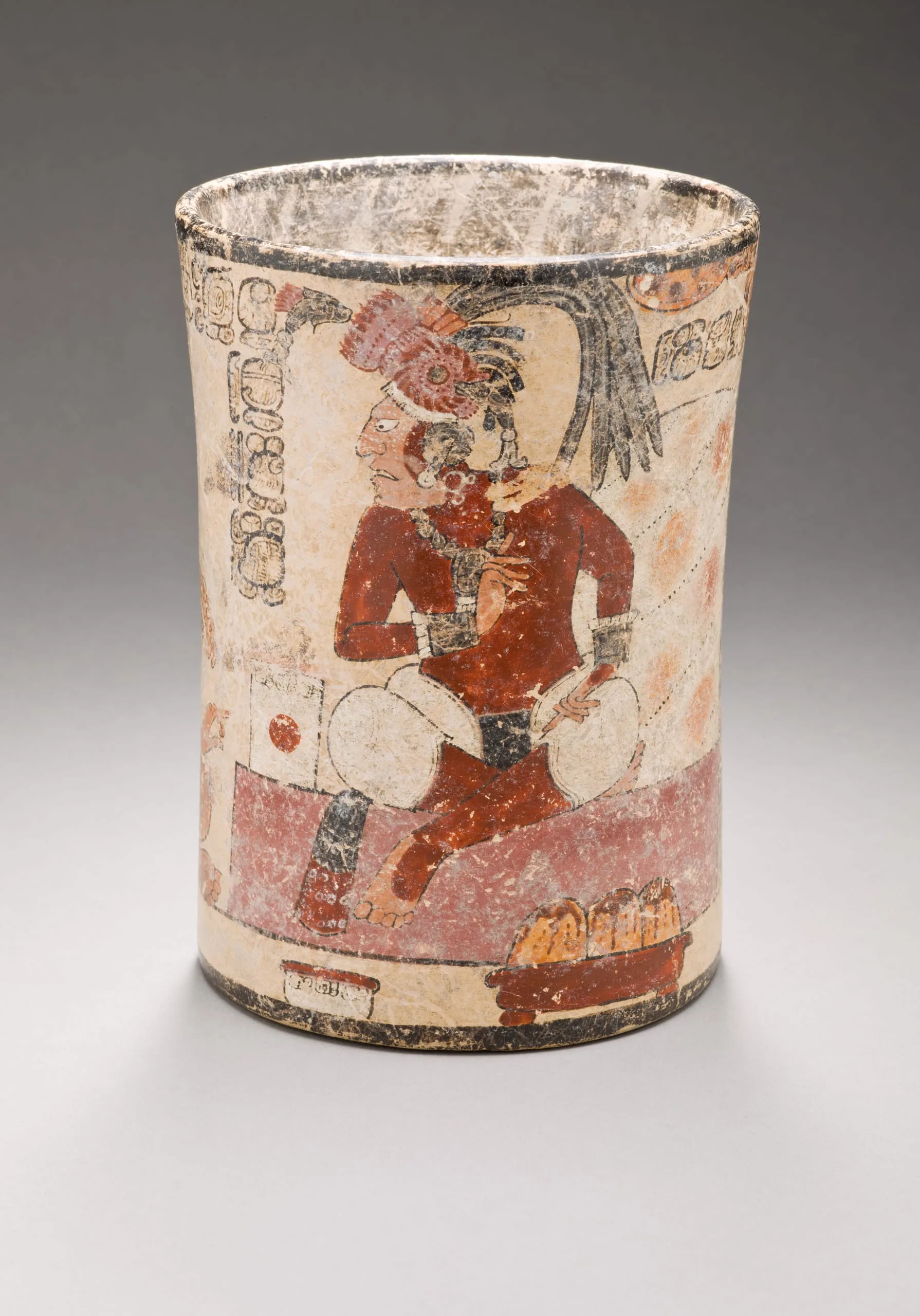
Painted Maya ceramic cylinder vessel with cream slip ground, depicting a seated figure in red body paint wearing an elaborate feathered headdress, surrounded by Maya glyphs along the upper register and base band.
Cylindrical Maya ceramic vessel with polychrome painted decoration; a standing figure in elaborate headdress and orange garment faces a column of Maya glyphs, rendered in red, orange, black, and teal on a cream slip ground, with visible weathering.
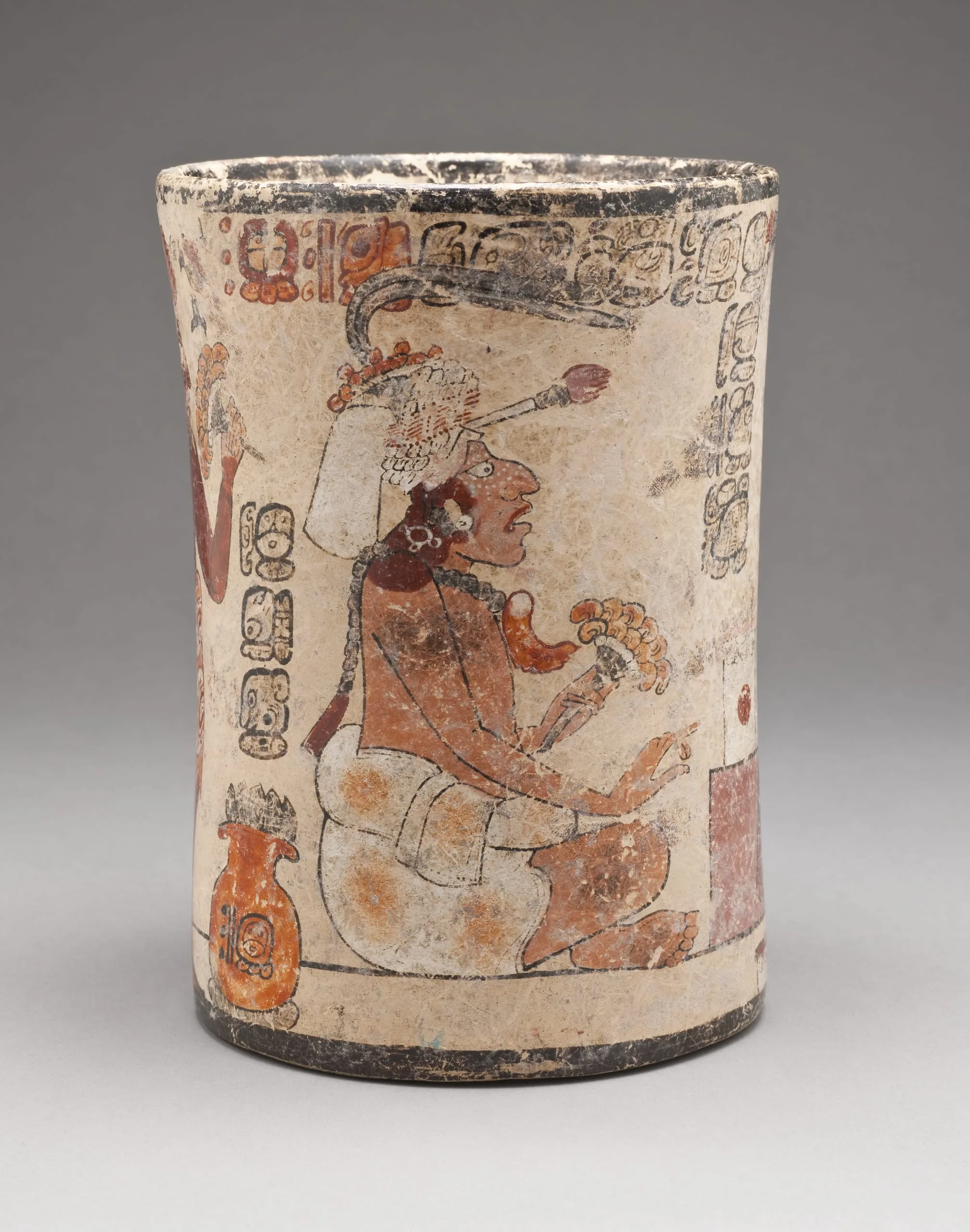
Maya ceramic cylinder vessel with cream slip ground, painted in red-orange and black with a seated figure in elaborate headdress holding an object, flanked by Maya glyphs along the rim and body; surface shows age-related wear and flaking.
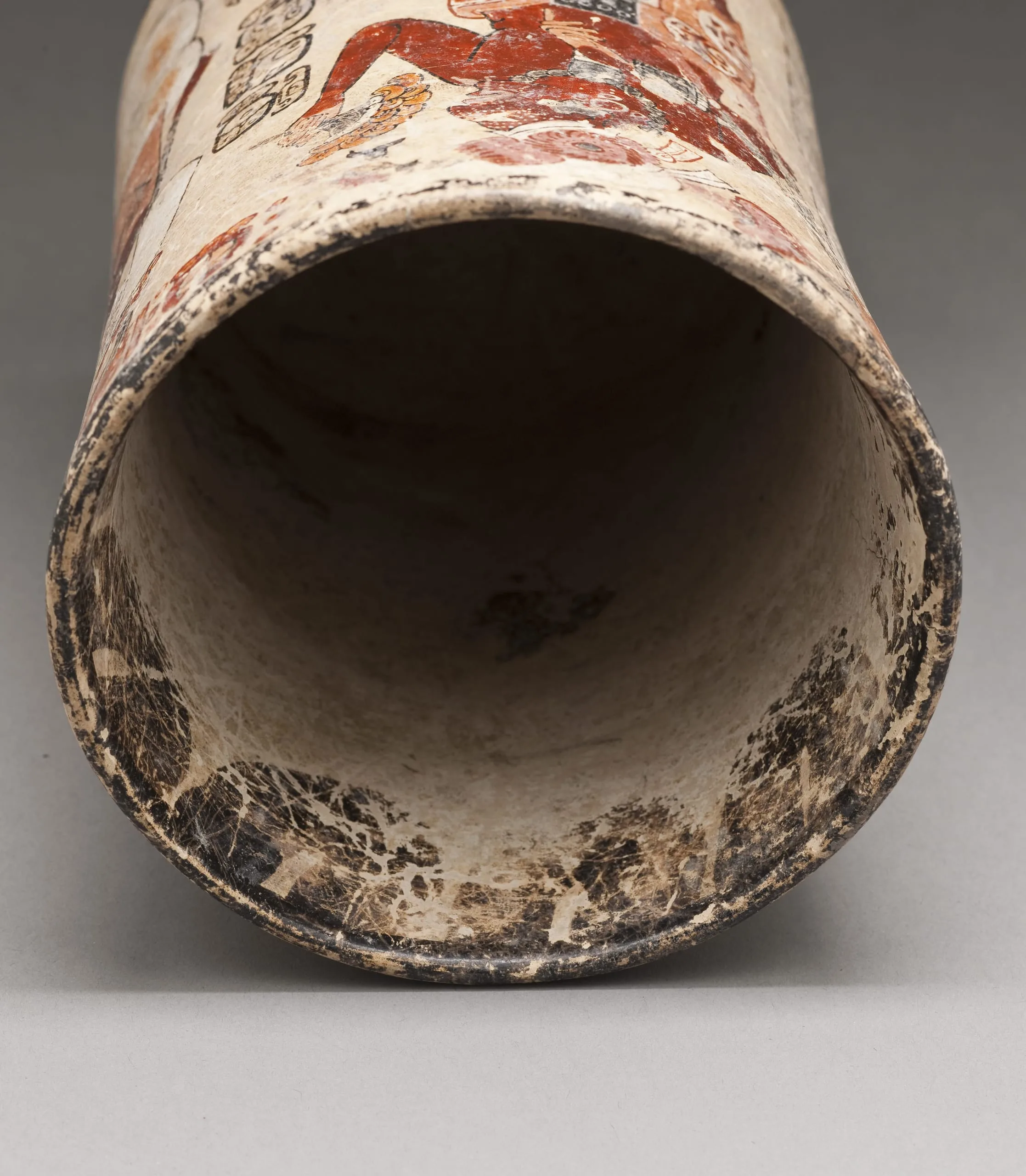
Ceramic cylinder vessel photographed from a low angle showing the open top, with a cream slip exterior painted with red and black figural scenes including a seated figure, partially visible at upper edge; worn surface with flaking paint and darkened rim.
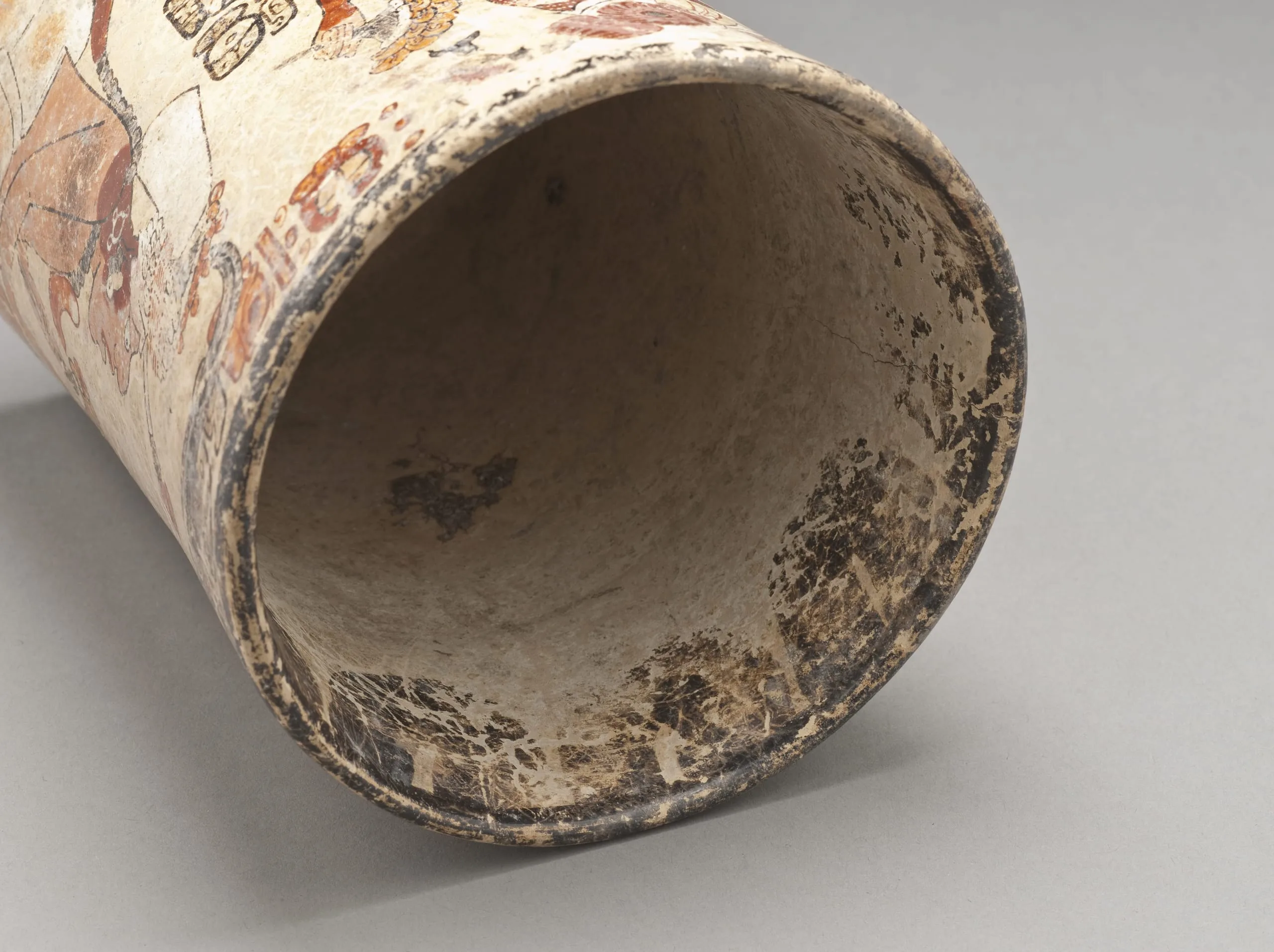
Maya ceramic cylinder vessel photographed on its side, open end facing viewer; cream slip exterior painted with figural scenes and hieroglyphic glyphs in red, orange, and brown; wear and dark pigment loss visible along the rim and base.
Artist or Maker
Akan Suutz'
Maya (Ik'a, now Motul de San José, Guatemala), active 8th century
Title
Image of K'awiil Chan K'inich, Holy Lord of Dos Pilas
Culture
Maya
Place Made
Guatemala, Petén, Motul de San José or vicinity
Date Made
741–761 CE
Style
Ik'
Medium
Engobe-painted earthenware with postfire pigment
Dimensions
Height: 7 1/8 in. (18.1 cm); Diameter: 5 1/8 in. (13.02 cm)
Credit Line
Purchased with funds provided by Camilla Chandler Frost
Accession Number
M.2010.115.12
Classification
Ceramics
Collecting Area
Art of the Ancient Americas
Curatorial Notes

This drinking vase exemplifies the sophisticated polychrome ceramic tradition of the Ik’ polity, a Classic Maya political center likely based at the site of Motul de San José, Guatemala. The interrelated workshops that produced Ik’-style pottery developed a vibrant palette of purples, pinks, reds, and oranges to paint historic events and people with striking realism and depth. Though there is debate regarding where this vessel was produced, its style fits squarely within the Ik’ tradition. It was either made in an affiliated workshop or by an artist intimately familiar with its aesthetic program and techniques.

The vase depicts a coming-of-age ceremony held in honor of K’awiil Chan K’inich, a young lord of either Dos Pilas or Tikal. He sits cross-legged atop a pink throne, bedecked in a headdress of verdant quetzal feathers, his neck and limbs laden with jade jewelry. An artist, adorned with a Spondylus shell palette pendant and a paintbrush in his headwrap, sits facing the young lord; another attendant, bouquet of flowers in hand, stands behind the artist. The three figures share a banquet of food and drink. To the right of the lord’s headdress, a rare artist signature names Akan Suutz’ as the painter of the scene.

Alyce de Carteret

2024
Selected Bibliography
  • Reents-Budet, Dorie. Painting the Maya Universe: Royal Ceramics of the Classic Period. Durham: Duke University Press, 1994.
  • Eberl, Markus. "Real/Fictive Lords/Vessels: a List of MARI Lords on the Newly Discovered Andrews Coffee Mug." In The Maya and Their Central American Neighbors, edited by Geoffrey E. Braswell, 223-42. London: Routledge, 2014.
  • Townsend, Richard. Indian Art of the Americas at the Art Institute of Chicago. Chicago: Art Institute of Chicago, 2016.
  • Reents, Dorie J., and Ronald L. Bishop. "History and Ritual Events on a Petexbatun Classic Maya Polychrome Vessel." In Fifth Palenque Round Table, 1983, edited by Merle Greene Robertson and Virginia M. Fields, 57-63. San Francisco: Pre-Columbian Art Research Institute, 1985.
  • Just, Bryan R. Dancing into Dreams: Maya Vase Painting of the Ik' Kingdom. Princeton: Princeton University Art Museum, 2012.
  • O'Neil, Megan E. Forces of Nature: Ancient Maya Arts from the Los Angeles County Museum of Art. Beijing Shi: Wen wu chu ban she, 2018.
  • Magaloni Kerpel, Diana, and Megan E. O'Neil, editors. The Science and Art of Maya Painted Ceramic Vessels: Contextualizing a Collection. Los Angeles: Los Angeles County Museum of Art, 2022. https://www.archive.org/details/maya-painted-ceramic-vessels (accessed November 21, 2022).
  • Brittenham, Claudia. Unseen Art: Making, Vision, and Power in Ancient Mesoamerica. Austin: University of Texas Press, 2023.
  • Saunders, David, and Megan E. O'Neil, editors. Picture Worlds: Storytelling on Greek, Moche, and Maya Pottery. Los Angeles: J. Paul Getty Museum, 2024.
  • Magaloni, Diana, Davide Domenici, and Alyce de Carteret. We Live in Painting: the Nature of Color in Mesoamerican Art. Los Angeles: Los Angeles County Museum of Art, 2024.