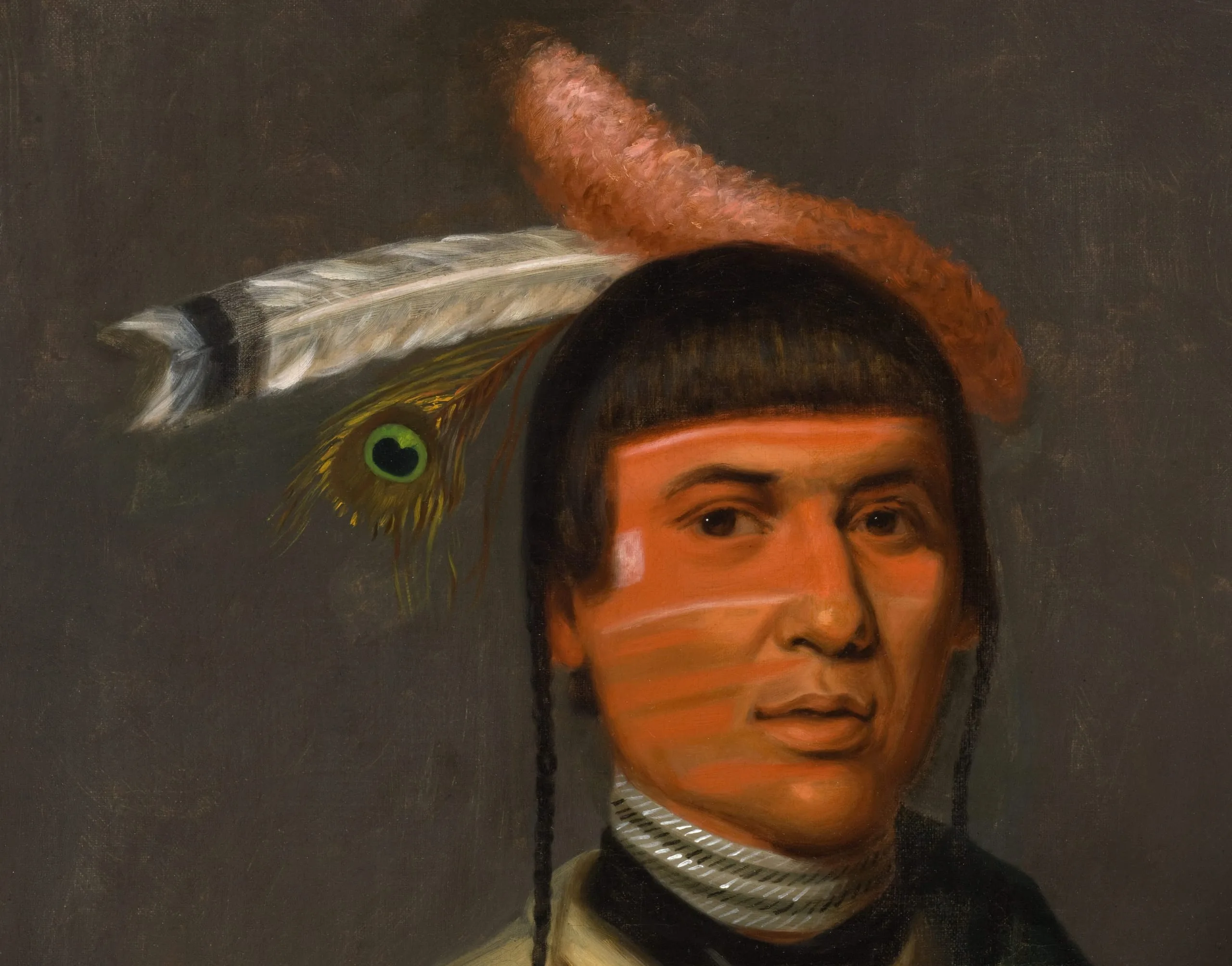
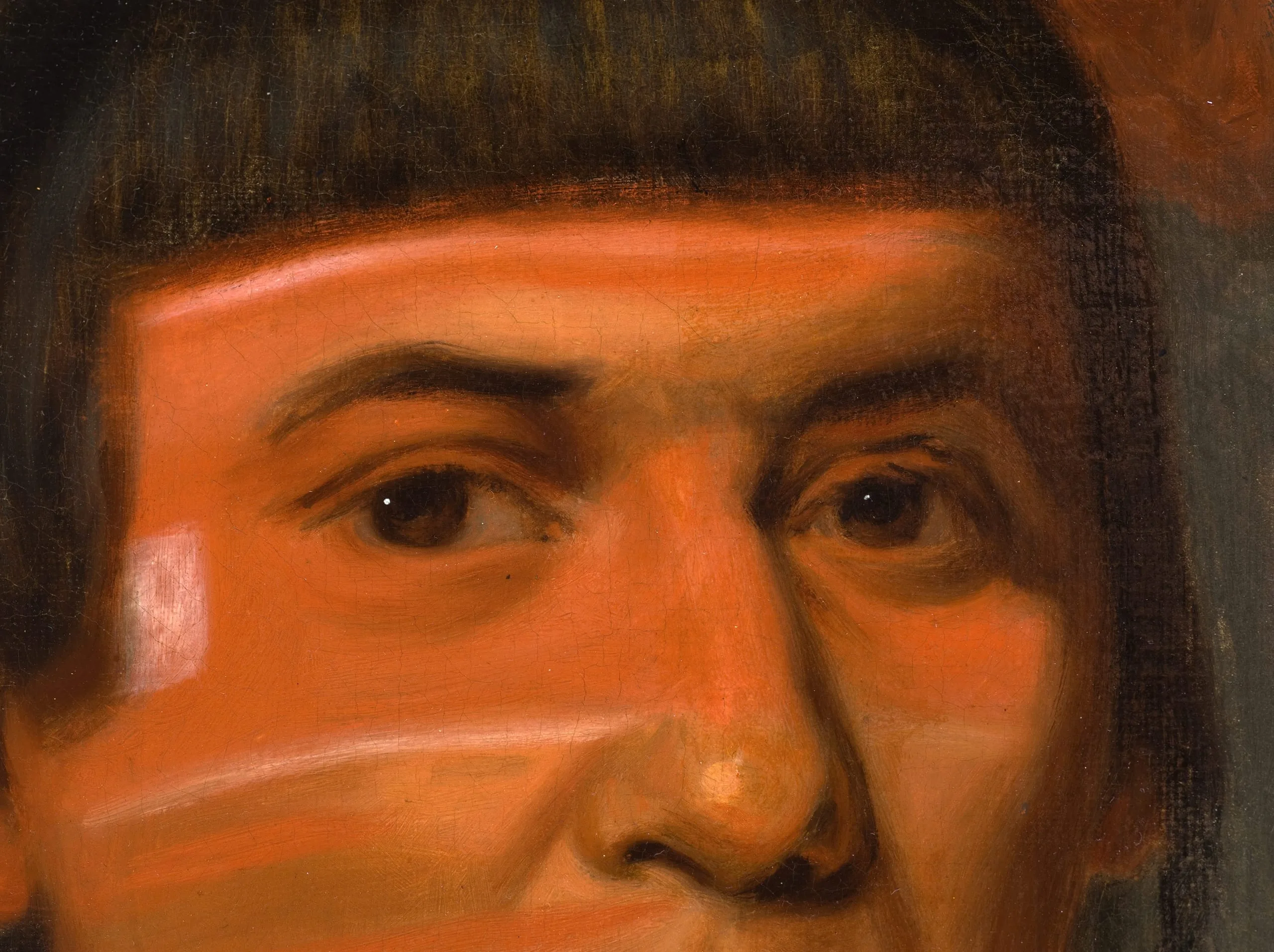
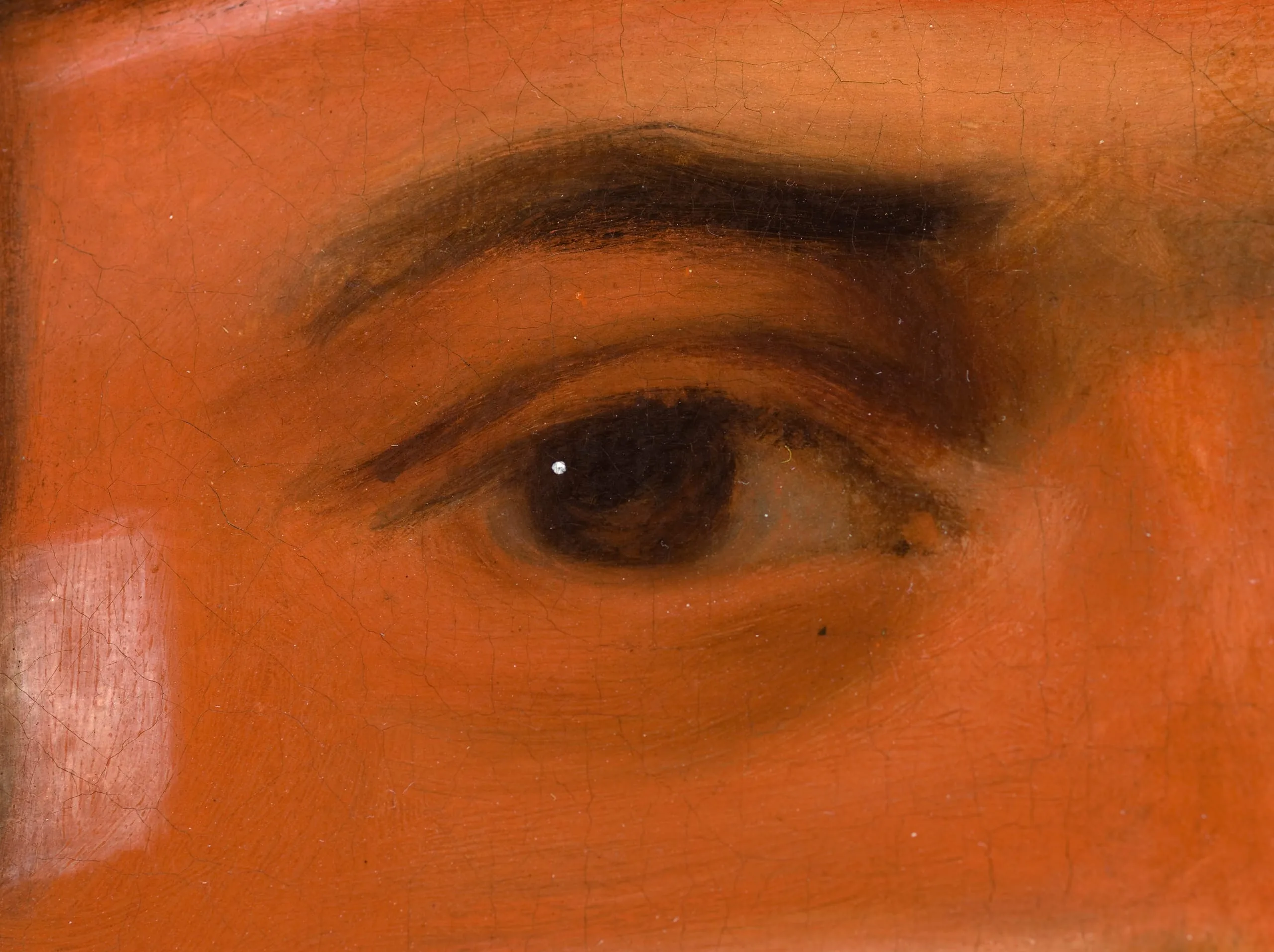
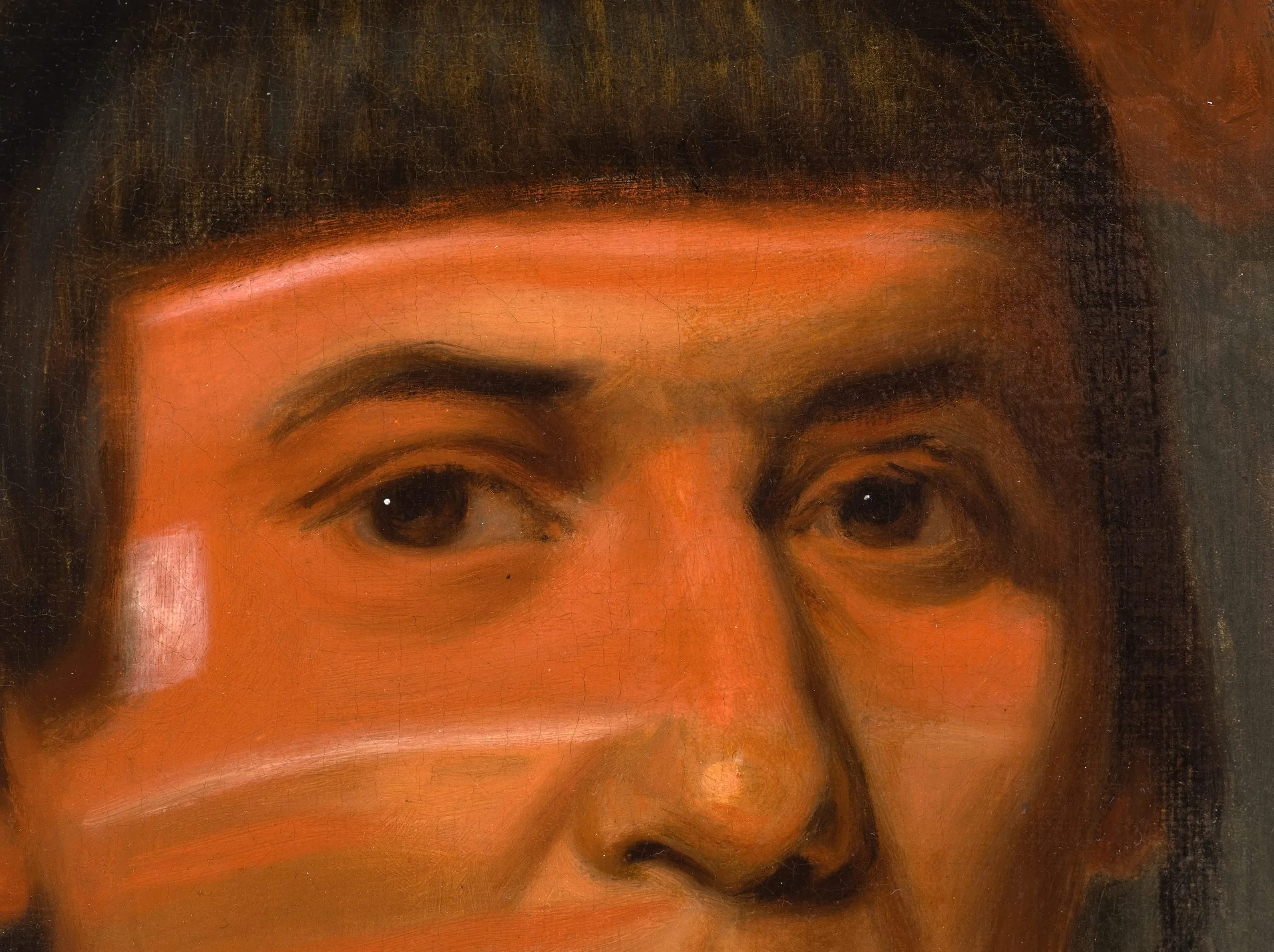
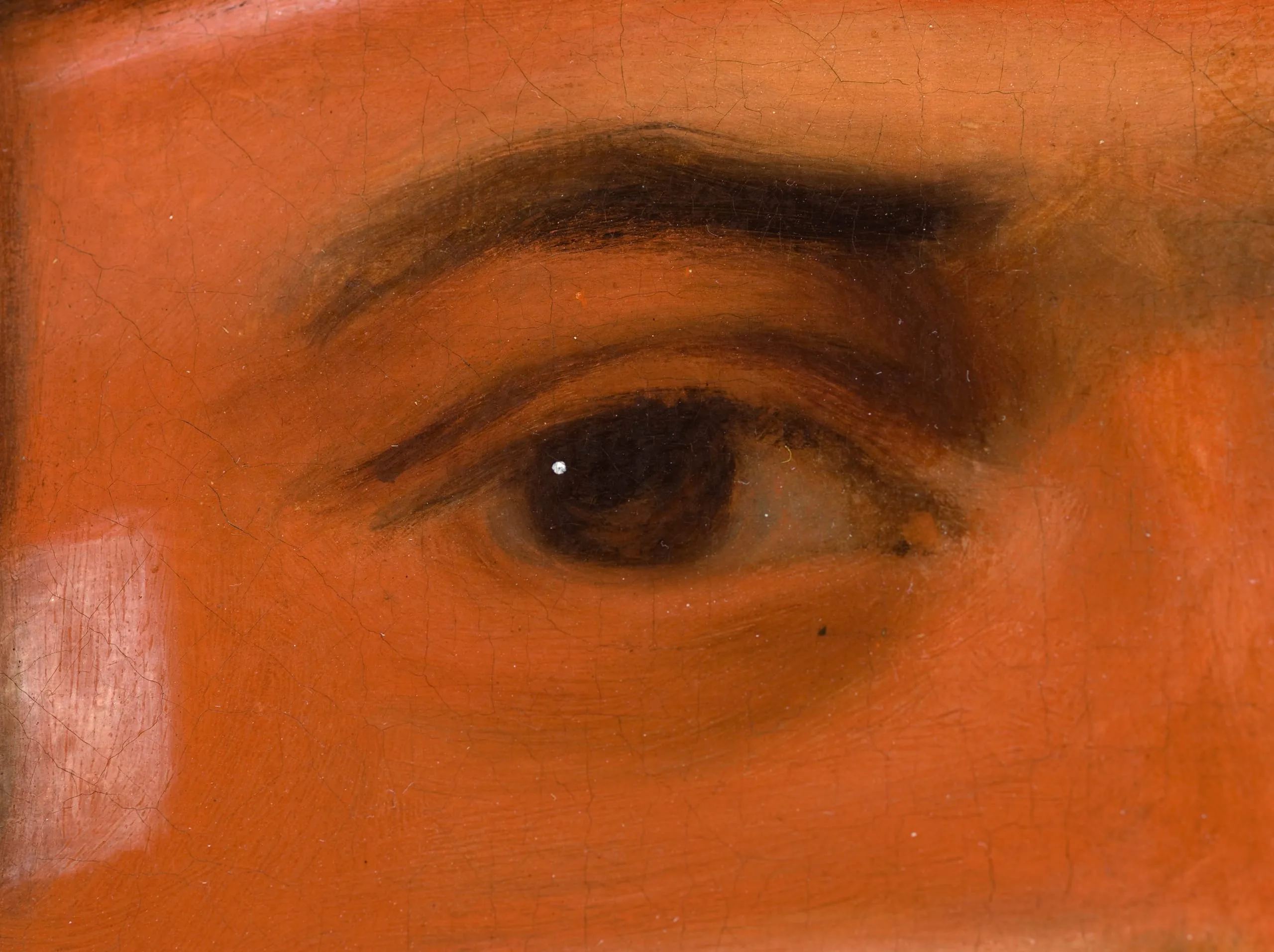
In 1824, Ojibwe leader No-Tin (or Wind) traveled to Washington, D.C., with a delegation of Indigenous leaders in order to fight for their political sovereignty, for the rights of their people, and for the protection of their homelands in the face of violent settler colonialism. No-Tin later recalled meeting “The Great Father,” President James Monroe, during his visit to the capital and, while there, he likely sat for a version of this portrait, though it was artist Charles Bird King, not Henry Inman, who initially sketched his likeness (see M.2008.78). Beginning in 1821, U.S. Superintendent of Indian Trade Thomas McKenney codified the practice of delegation portraiture, regularly commissioning King to paint visiting leaders. Over the next two decades, King produced 143 portraits depicting members of twenty different Native Nations, creating a so-called pantheon of Indigenous leaders in Washington.
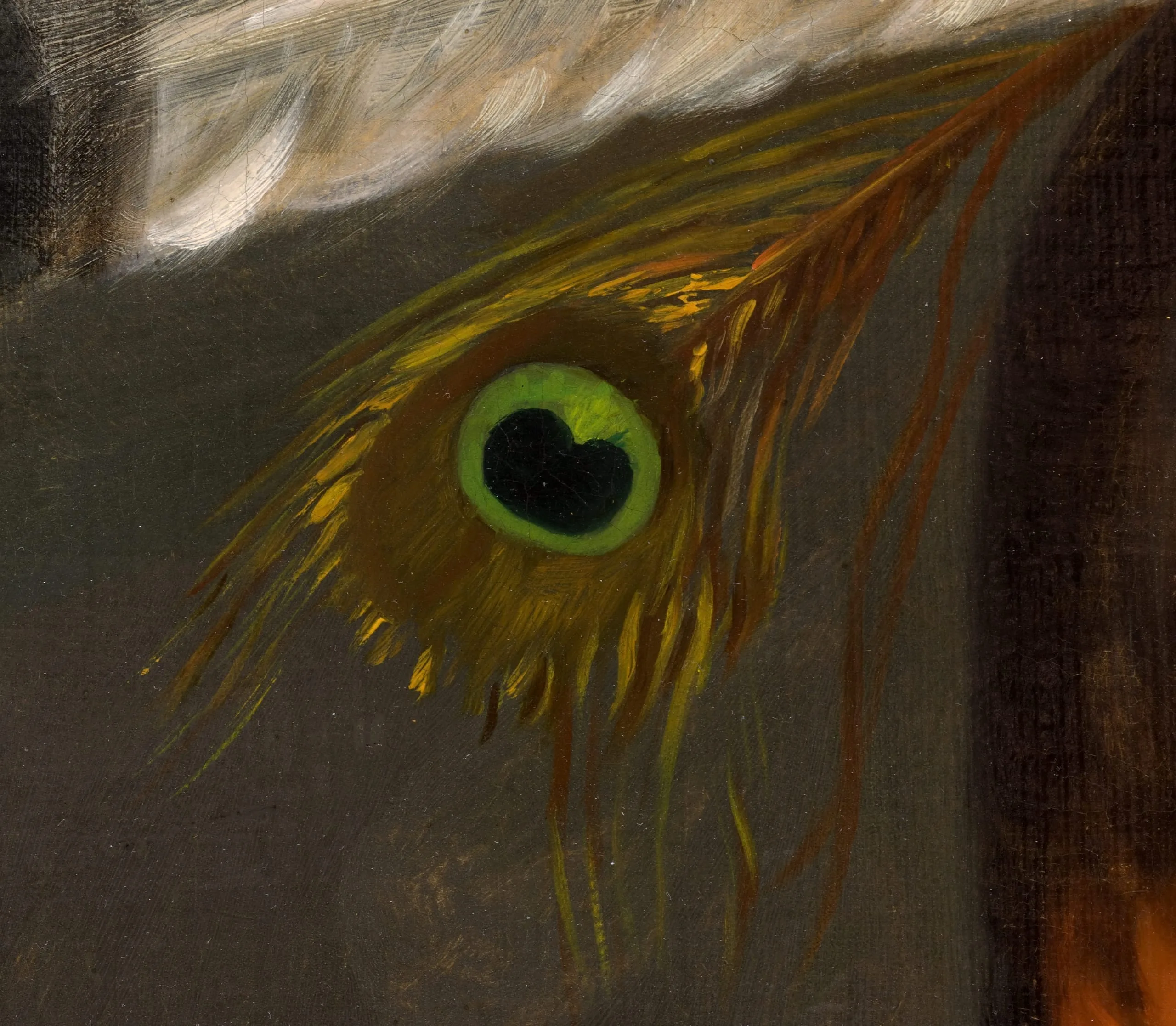
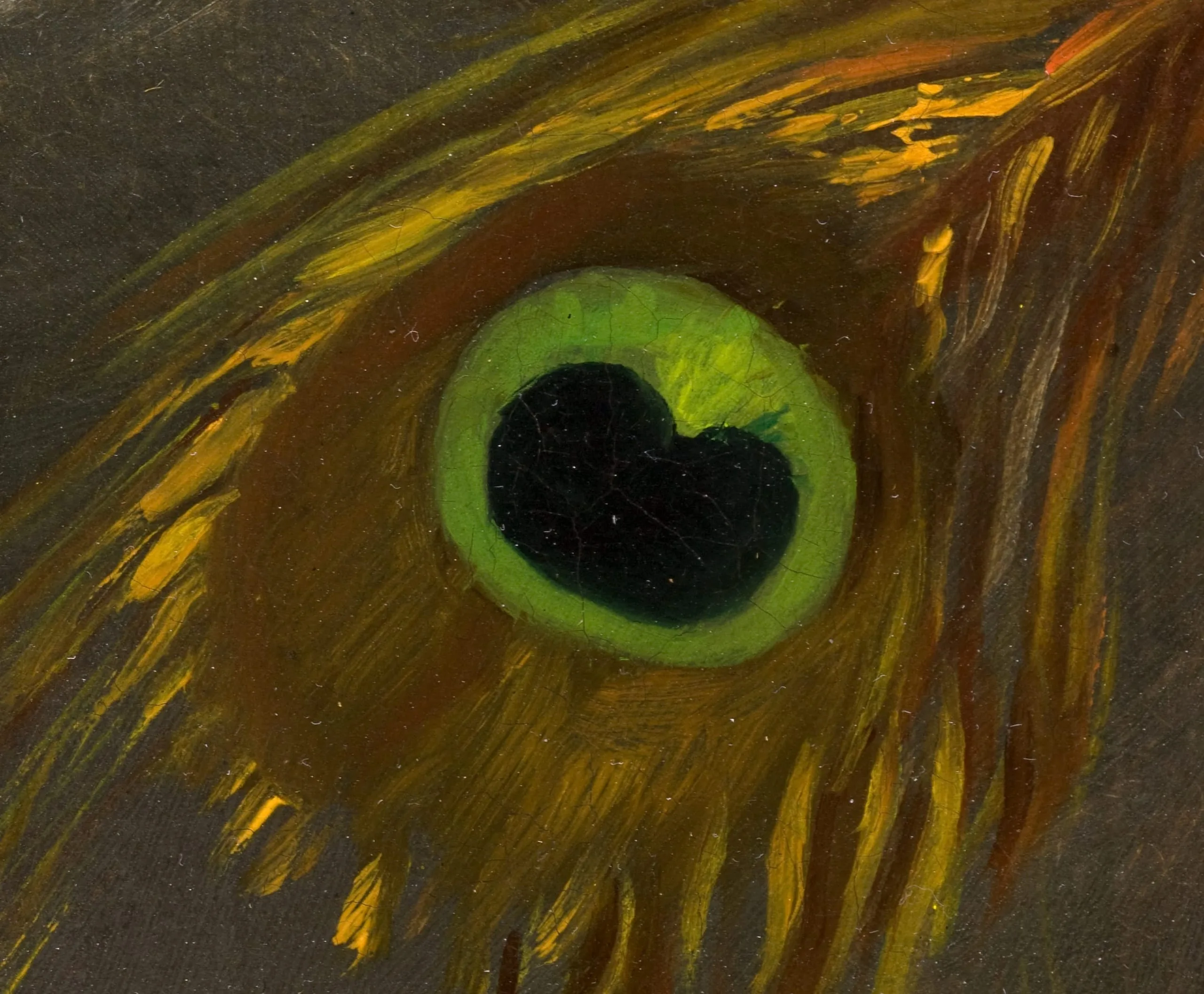
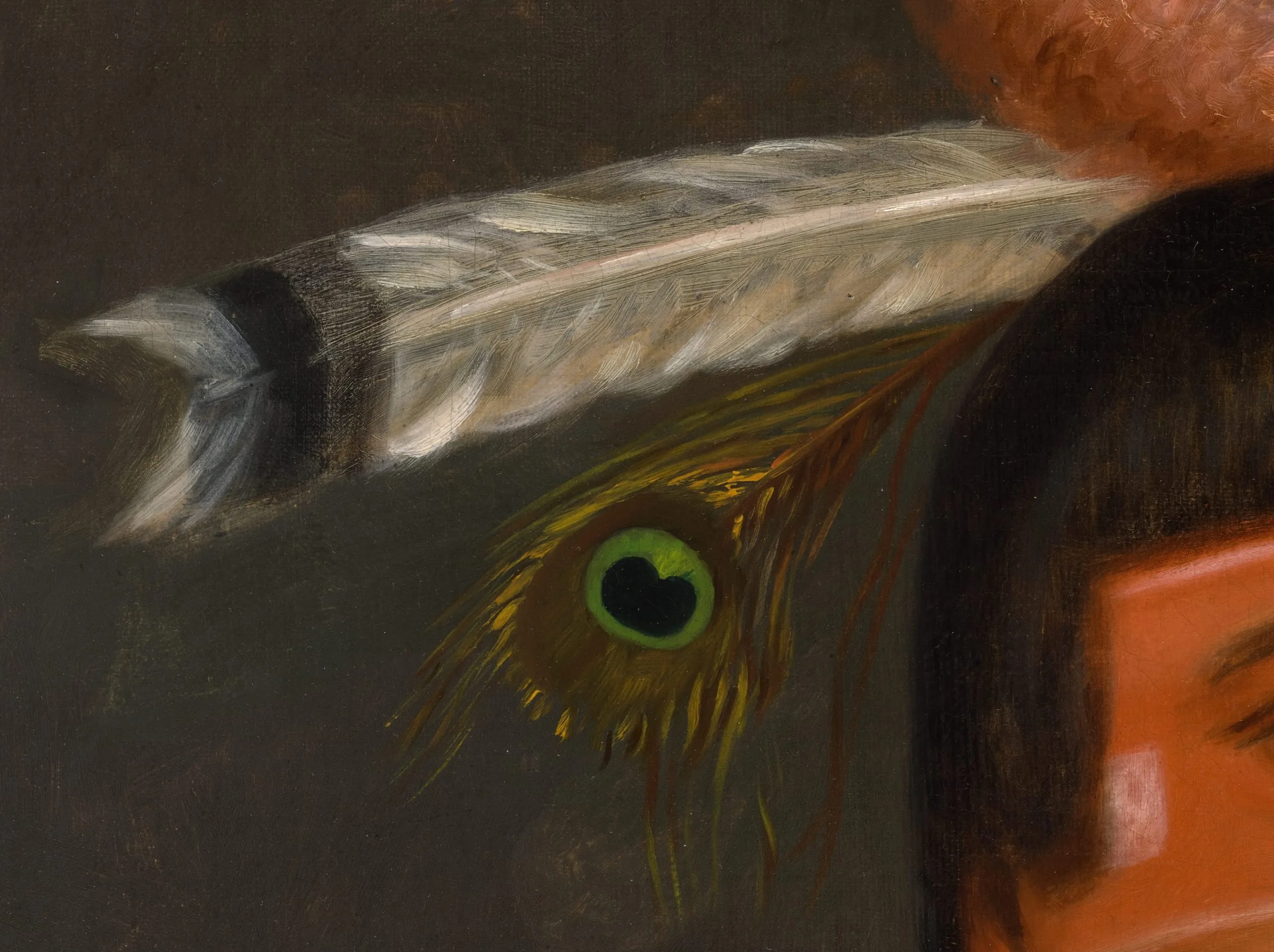
Although almost all of King’s original painted portraits were lost in a fire at the Smithsonian in 1865, many—including LACMA’s portrait of No-Tin—are known today through copies made by Inman. An esteemed portraitist from New York, Inman was hired by McKenney to paint copies of more than 100 of King’s original portraits. These copies served as the basis for color lithographs illustrating McKenney’s three-volume publication The History of the Indian Tribes of North America (1836–44). When creating his copies, Inman often flattened forms and details, simplified backgrounds, and enhanced colors in order to facilitate their transfer from paint to print. Moreover, recent conservation studies undertaken at the Harvard Art Museums have revealed that Inman, who typically painted white sitters, adopted a darker and more restricted palette to enhance the red on flesh tones, thus reinforcing long-held artistic conventions that privileged the “complexity” of a fair complexion over all others.
In the years after sitting for King’s portrait, No-Tin continued to play an important role in diplomatic negotiations between the Ojibwe and the U.S. government. In an 1837 speech addressed to President Martin Van Buren, he condemned the unfair terms of a recent treaty, stating: “None of the warriors from whom you have taken their land can sleep well. When I returned and informed them they wept and the women also.” He was a vocal presence in negotiations at St. Peters in the Territory of Wisconsin in 1837 and signed treaties on behalf of his Snake River Band in 1837 and 1842.
When fire destroyed most of King’s original portraits two decades later, Inman’s copies took on additional importance, as many were the only surviving images of their sitters. No-Tin’s direct and steadfast gaze stands as a testament to his influential role as a leader, as well as the long-lasting legacy of his resiliency and diplomacy in American history.
Selected Bibliography
Gerdts, William H., and Carrie Rebora Barratt. The Art of Henry Inman. National Portrait Gallery, Smithsonian Institution, 1987.
Horan, James D. The McKenney-Hall Portrait Gallery of American Indians. Crown Publishers, 1972.
Hutchinson, Elizabeth. “From Pantheon to Indian Gallery: Art and Sovereignty on the Early Nineteenth-Century Cultural Frontier.” Journal of American Studies 47, no. 2 (2013): 313–37. http://www.jstor.org/stable/24485523.
Morilla, Cristina. “Conservation as Cultural Practice: The Portrait Collection of Indigenous Delegates by Henry Inman.” Studies in Conservation 69, no. 8 (2024): 756–68. https://doi.org/10.1080/00393630.2024.2328383.
Selected Exhibition History
Art Across America, National Museum of Korea, Seoul, 2013.
Faces of America: LACMA Collects, LACMA, January 17−November 8, 2015.