- Title
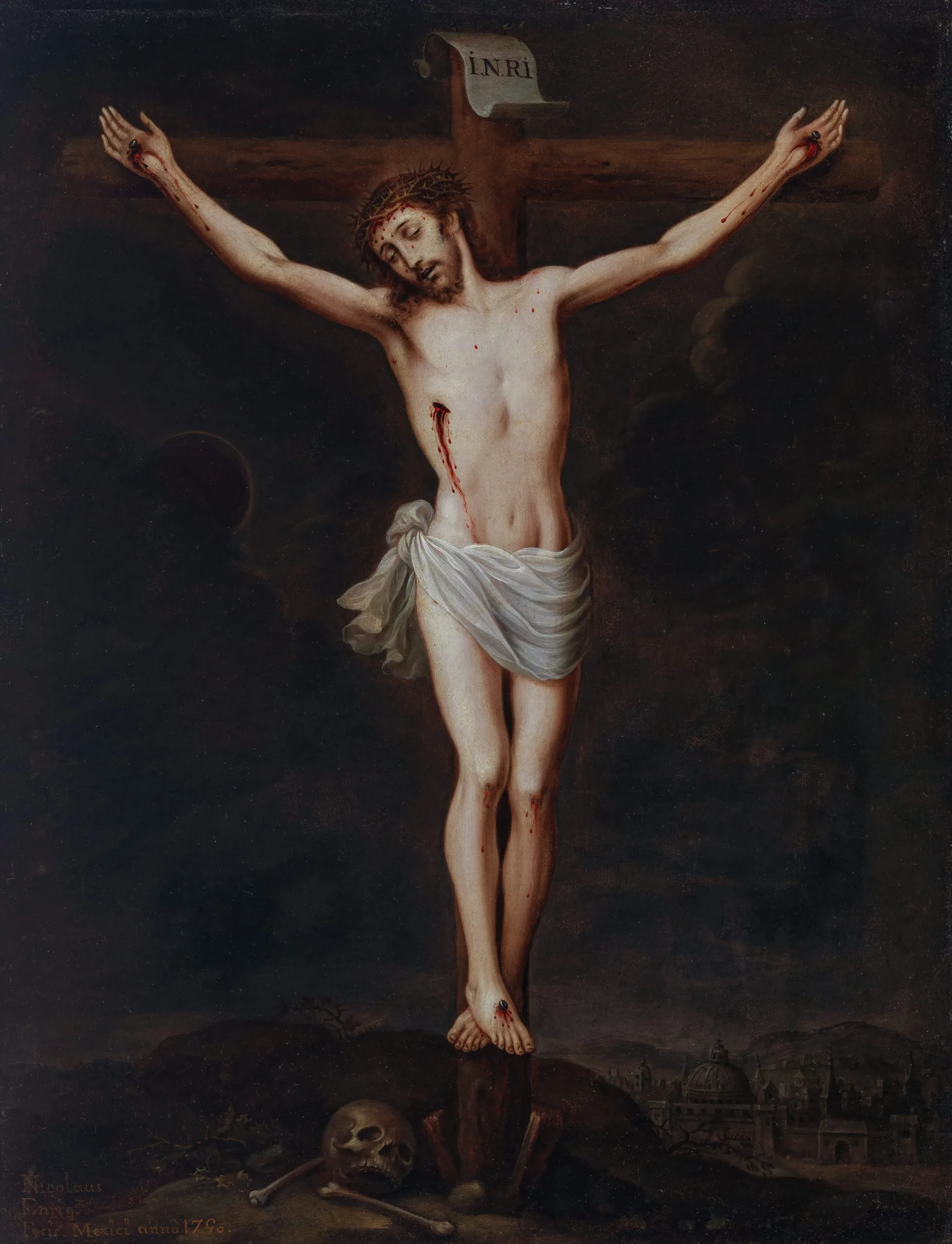
- The Crucifixion (La crucifixión)
- Date Made
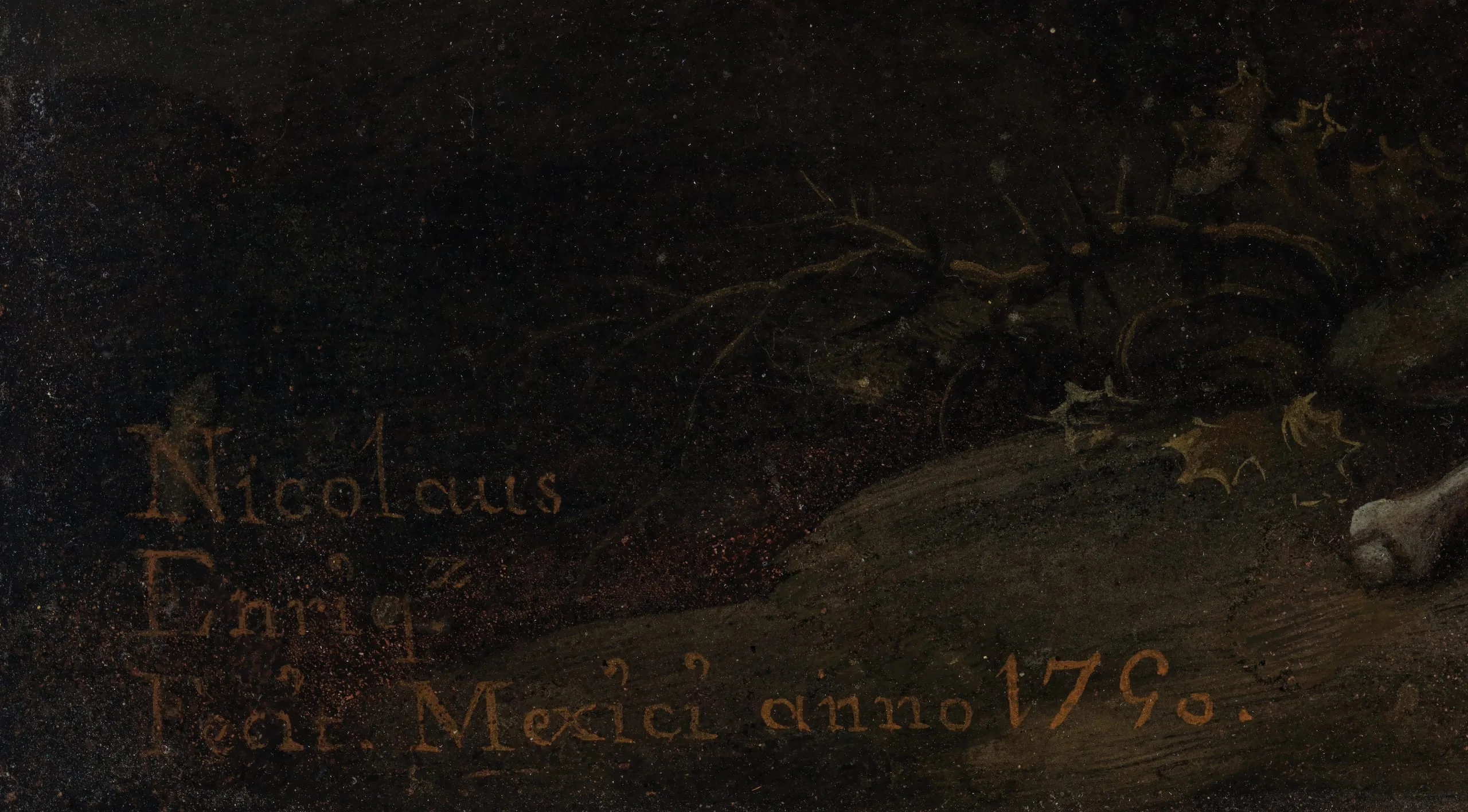
- 1790
- Medium
- Oil on copper
- Dimensions
- Unframed: 16 3/4 × 12 7/8 in. (42.55 × 32.7 cm); framed: 19 1/8 × 15 3/8 × 1 in. (48.5775 × 39.0525 × 2.54 cm)
- Accession Number
- M.2008.33
- Curatorial Notes
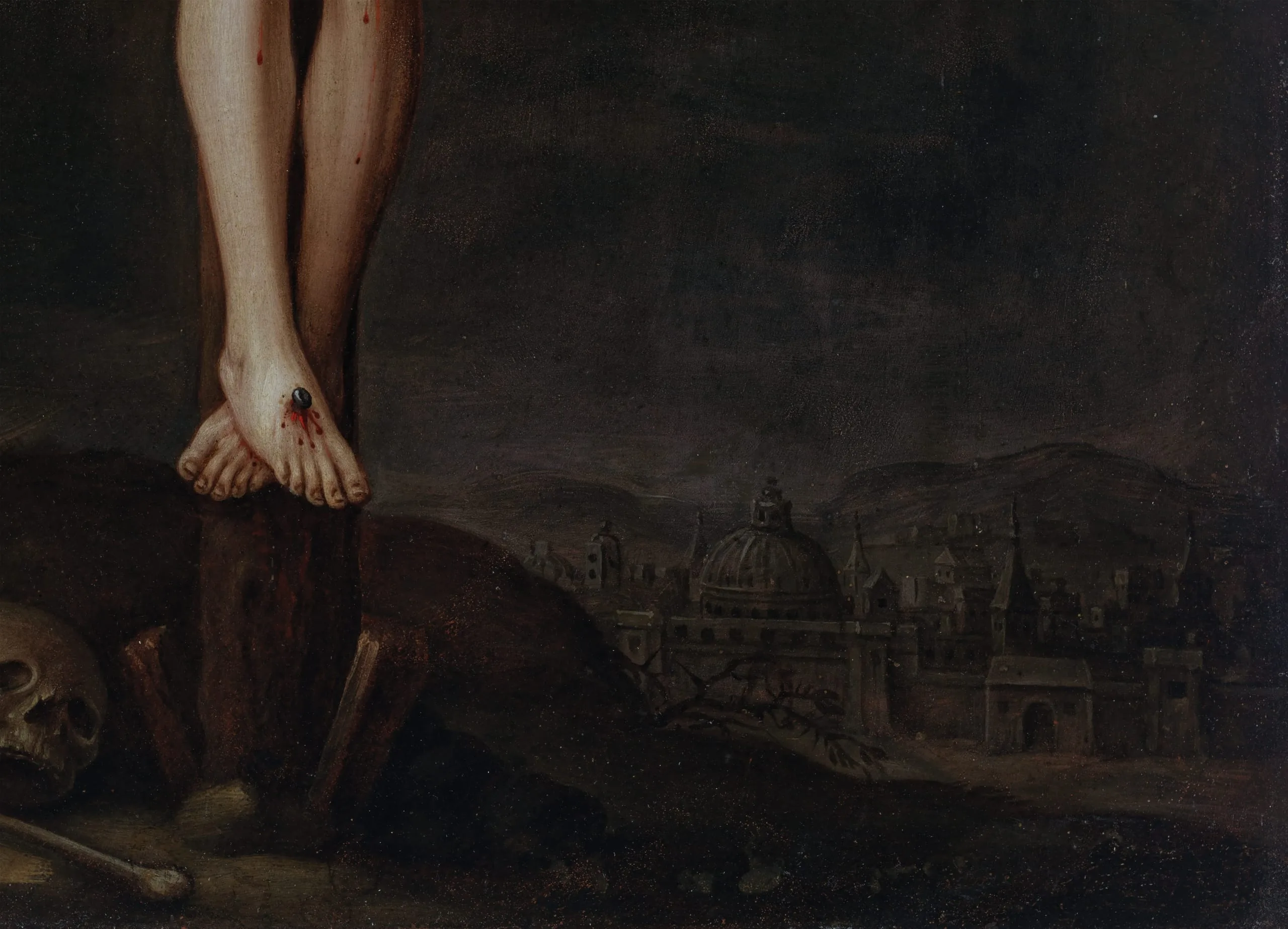
Nicolás Enríquez was part of a sophisticated group of painters in Mexico who organized informal art academies and engaged in discussions about the theory and practice of art. In this small devotional painting of the Crucifixion, Enríquez spotlights the figure of Christ to heighten the sense of pathos. He follows the tradition of the Sevillian artist Sebastián López de Arteaga (1610–1652), who came to Mexico around 1640. Arteaga favored rendering Christ with three nails instead of four as prescribed by the Sevillian painter Francisco Pacheco (1564–1644) in his seminal treatise Arte de la pintura (1649).
Enríquez developed a reputation for his highly finished oil paintings on copper, a support he used extensively throughout his career. The tradition of copper painting first developed in Italy and Flanders in the sixteenth century. It was quickly introduced to New Spain, where it was widely used, especially in the eighteenth century. The smoothness of copper, when properly prepared, allowed for the almost seamless application of paint, imbuing the images with a jewel-like quality that made the material especially attractive to artists and their patrons.
Ilona Katzew
2024
- Provenance
Private collection, London; Nicolás Cortés, London, c. 1960–70; Jaime Eguiguren - Arts & Antiques, Buenos Aires, c. 1999; Caylus Anticuario S.A, Madrid, 2001; LACMA, 2008.