LACMA

ShopMembershipMyLACMATickets
LACMA
Los Angeles County Museum of Art
5905 Wilshire Blvd.
Los Angeles, CA 90036
info@lacma.org
(323) 857-6000
Sign up to receive emails
Subscribe
© Museum Associates 2026
  • About LACMA
  • Jobs
  • Building LACMA
  • Host An Event
  • Unframed
  • Press
  • FAQs
  • Log in to MyLACMA
  • Privacy Policy
© Museum Associates 2026
Collections

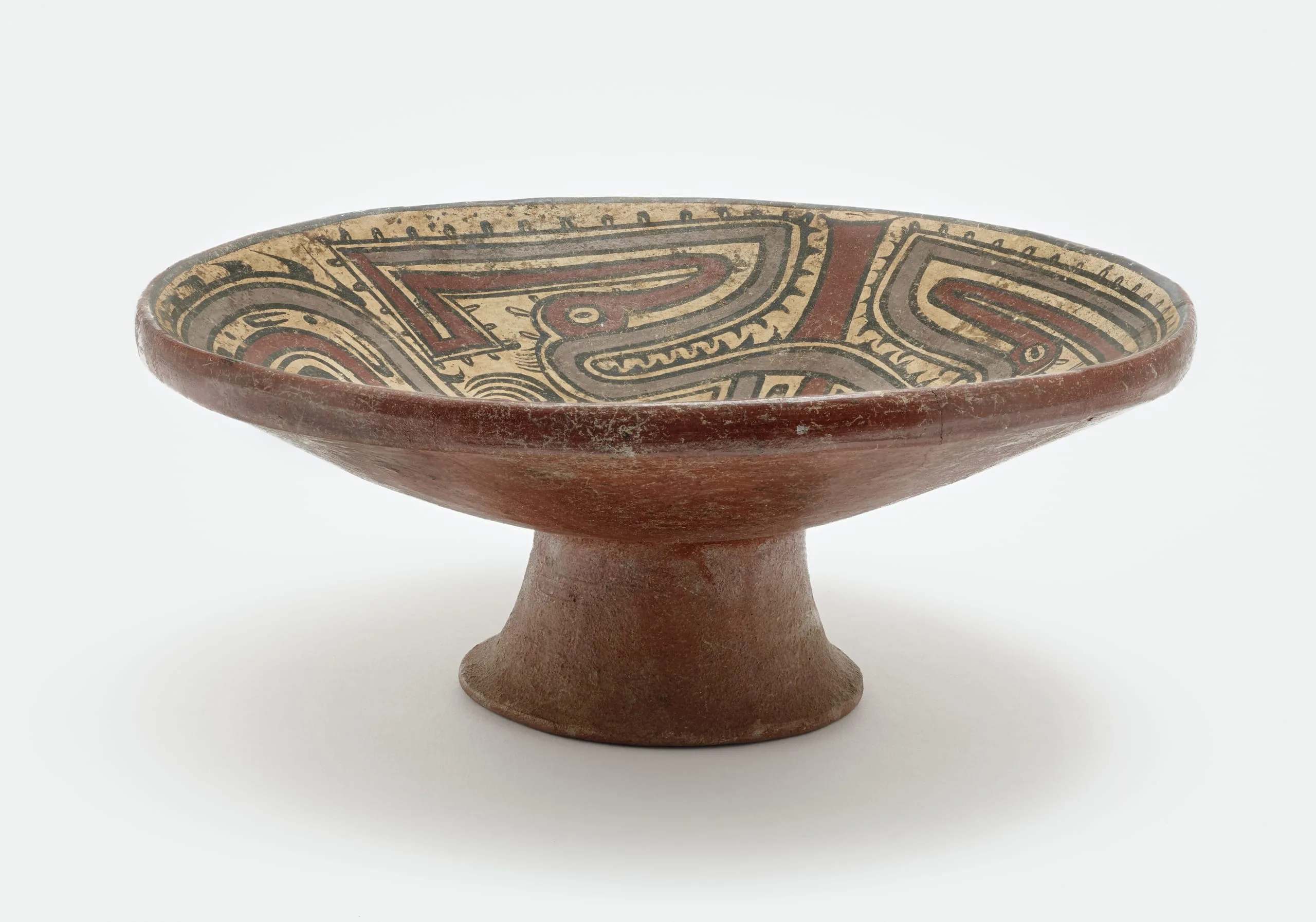
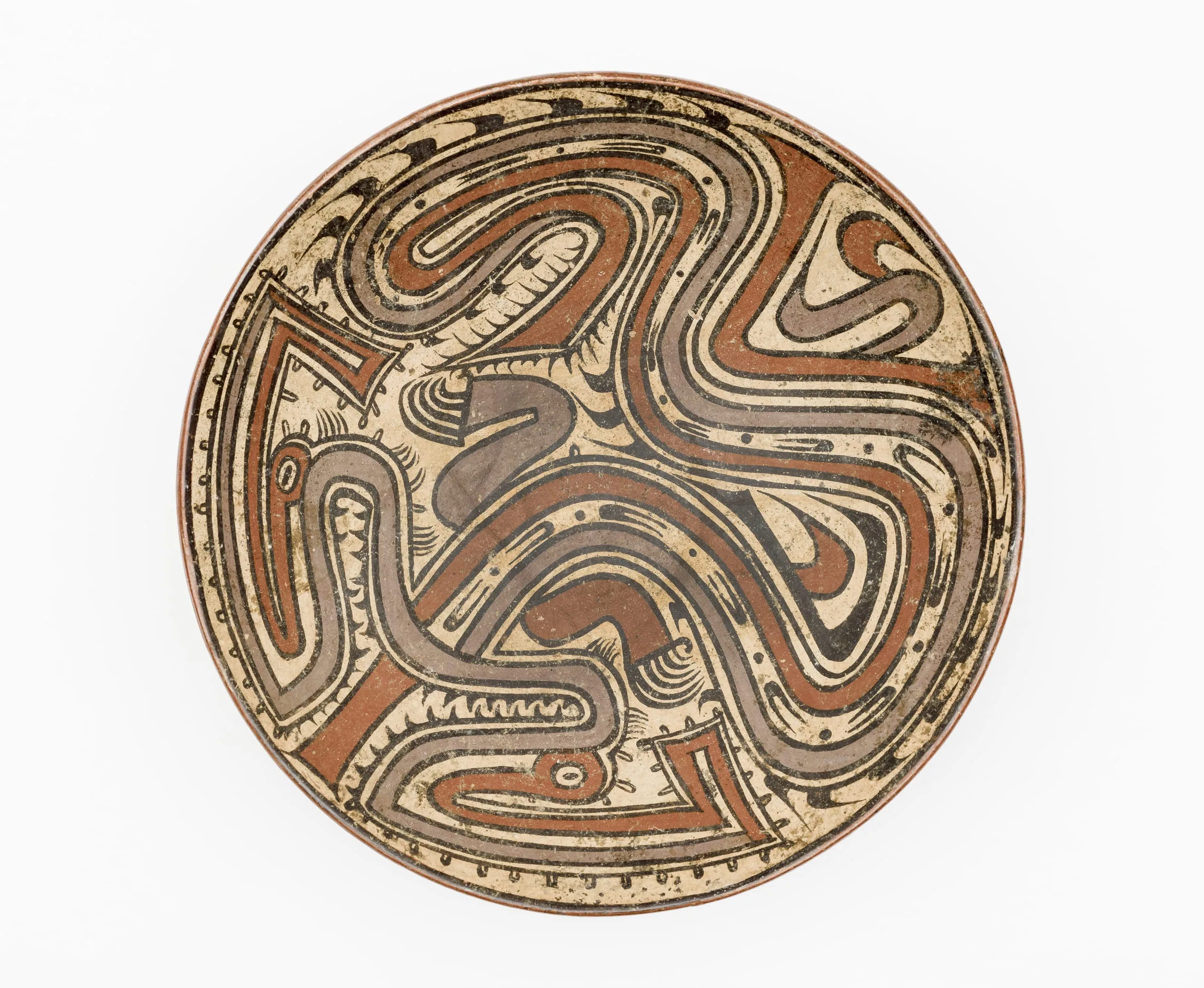
Pedestal Plate with Supernatural Creature1000–1100

On view:
Geffen Galleries
Ceramic footed dish with wide shallow bowl on trumpet-shaped pedestal, brick-red exterior, cream interior painted with interlocking curvilinear designs in dark gray and red
Ceramic shallow bowl viewed from above, with painted curvilinear and serpentine designs in terracotta red, gray, and black on a cream slip ground, the interlocking scrolling forms covering the entire interior surface.
Title
Pedestal Plate with Supernatural Creature
Culture
Greater Coclé
Place Made
Panama, Coclé Province, Conte style
Date Made
1000–1100
Style
Conte
Medium
Engobe-painted earthenware
Dimensions
4 1/2 x 11 1/4 in. (11.43 x 28.58 cm)
Credit Line
Gift of Drs. Alan Grinnell and Feelie Lee
Accession Number
M.2007.227.1
Classification
Ceramics
Collecting Area
Art of the Ancient Americas
Curatorial Notes

Hooked elements coupled with dynamic color alternation are hallmarks of Panamanian ceramic painting. Body parts do not always connect or keep the same color, and thus rarely create continuous, legible figures. The lively design convolutions seen here seem intended to confuse the image as much as reveal it. Comparison with other artworks of the same region and time period indicates that some of these shapes may reference catfish (see M.2016.348.17 and M.2016.348.23), but the split face and armlike limbs of this creature place it firmly in a supernatural category.

Panamanian pedestal plates with their tall, slim stems were produced by ancient artists in the thousands for burial alongside what we assume were elites of their society. Some scholars relate this vessel form to that of the hallucinogenic mushroom, seeing parallels in the long stems and flaring tops. This would lend support to interpretations of the complex imagery often found on them as being representations of shamanic visions and the result of ritual practices involving hallucinogenic substances.

Julia Burtenshaw

2018/2024

Bibliography

Helms, Mary W. Creations of the Rainbow Serpent: Polychrome Ceramic Designs from Ancient Panama. Albuquerque: University of New Mexico Press, 1995.
Related Exhibitions