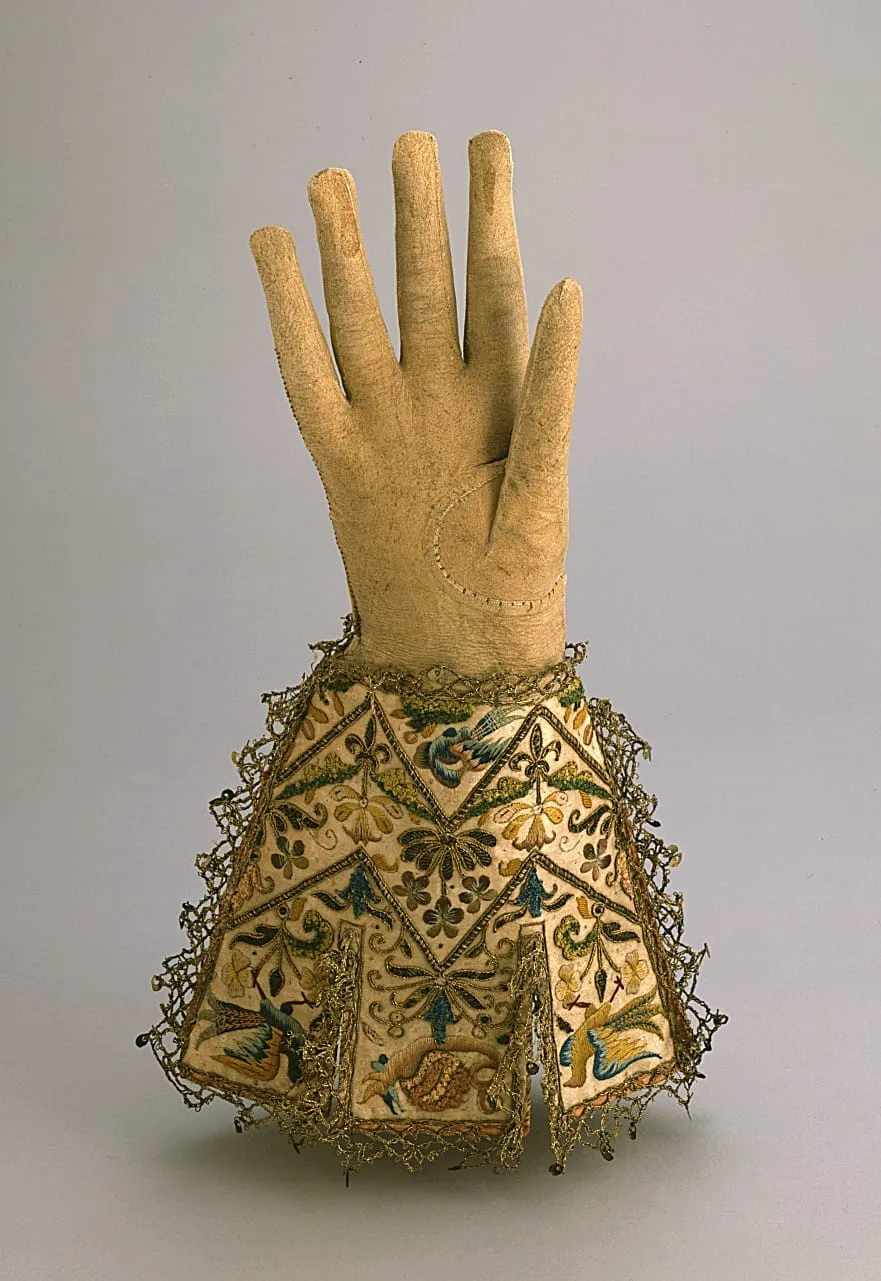
Decorated ceremonial gloves were widely understood symbols of nobility and prestige in Jacobean England (1603—25). The right to wear them, a prerogative of the leisured classes, was eventually protected by sumptuary laws. James I received gifts of gloves from both Oxford and Cambridge authorities when he visited those institutions in the early 1600s. Gloves also served as pledges, challenges to combat, and other signs of status, such as the right to own a hawk.
These splendid gloves originally belonged to Thomas, first Lord Fairfax (1560—1640). Their design and construction disclose their use as courtly attire. The buff leather of the glove hand, a particularly soft goatskin called castor, is plain, but the elaborately decorated cream satin cuffs, or gauntlets, render them impractical for any but ceremonial use. The tabbed cuffs are decorated with colorful patterns of flowers, scrolls, and birds in gold and silk thread embroidery, and gilt lace edging.
Fundamental changes in political and court life hastened the disappearance of such elaborate accessories. Fashions at Charles I's court (1625—49) were much less extravagant than those of Jacobean times, and decorated gloves began to seem dated. The Civil War and Commonwealth years (1642—60), when apparel symbolizing royal favor became dangerous to display, enforced a Puritan-style simplicity in manners and fashion. Even after the Restoration in 1660, English courtly apparel never again attained levels of Jacobean excess.