LACMA

ShopMembershipMyLACMATickets
LACMA
Los Angeles County Museum of Art
5905 Wilshire Blvd.
Los Angeles, CA 90036
info@lacma.org
(323) 857-6000
Sign up to receive emails
Subscribe
© Museum Associates 2026
  • About LACMA
  • Jobs
  • Building LACMA
  • Host An Event
  • Unframed
  • Press
  • FAQs
  • Log in to MyLACMA
  • Privacy Policy
© Museum Associates 2026
Collections

Whistle of Figure Seated on Zoomorphic Throne900–1600

On view:
Geffen Galleries, Ancestral Ceramics from Panama and Colombia
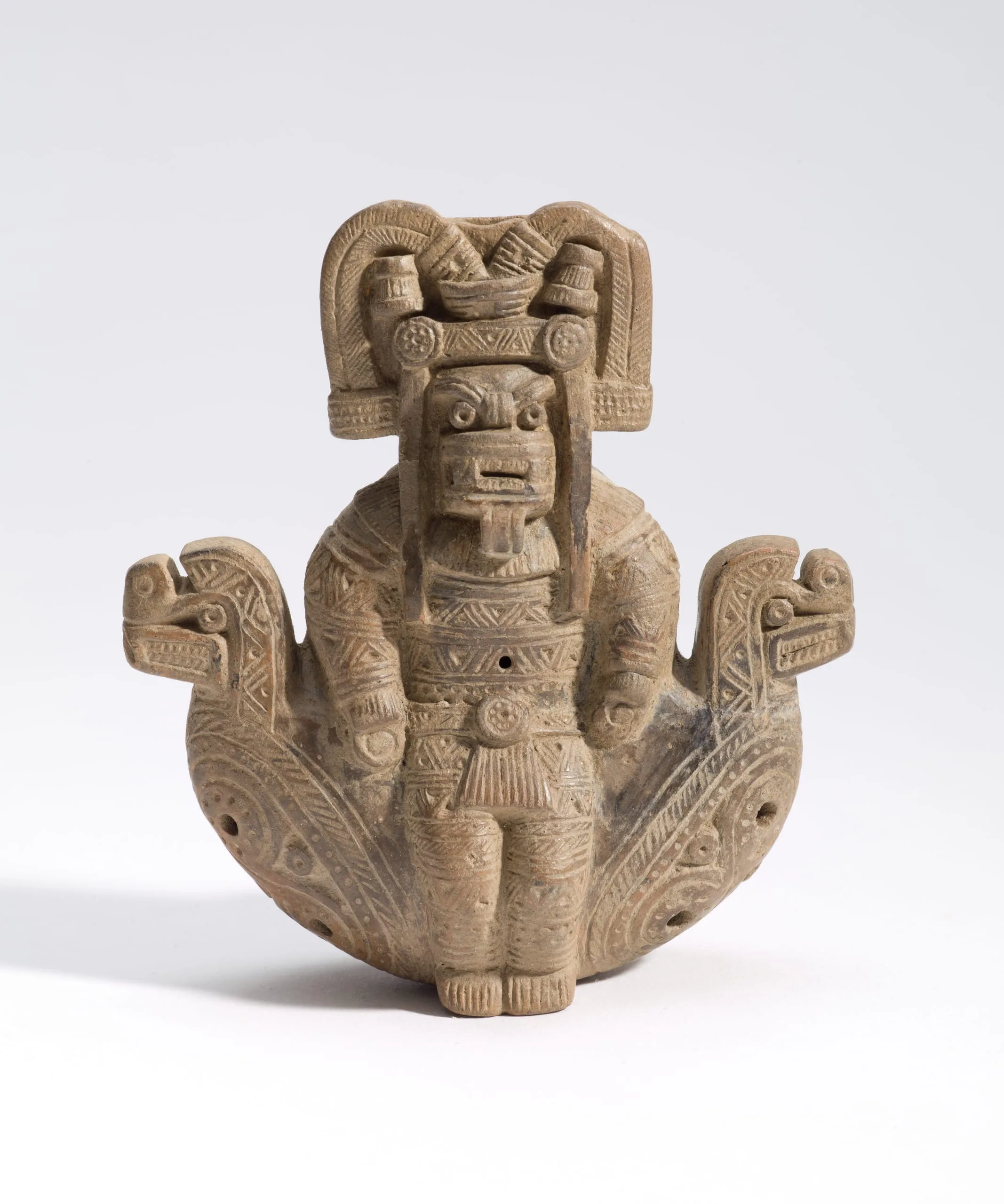
Small stone sculpture of a seated frontal figure with elaborate headdress, flanked by two outward-facing animal heads, covered overall in incised geometric patterns
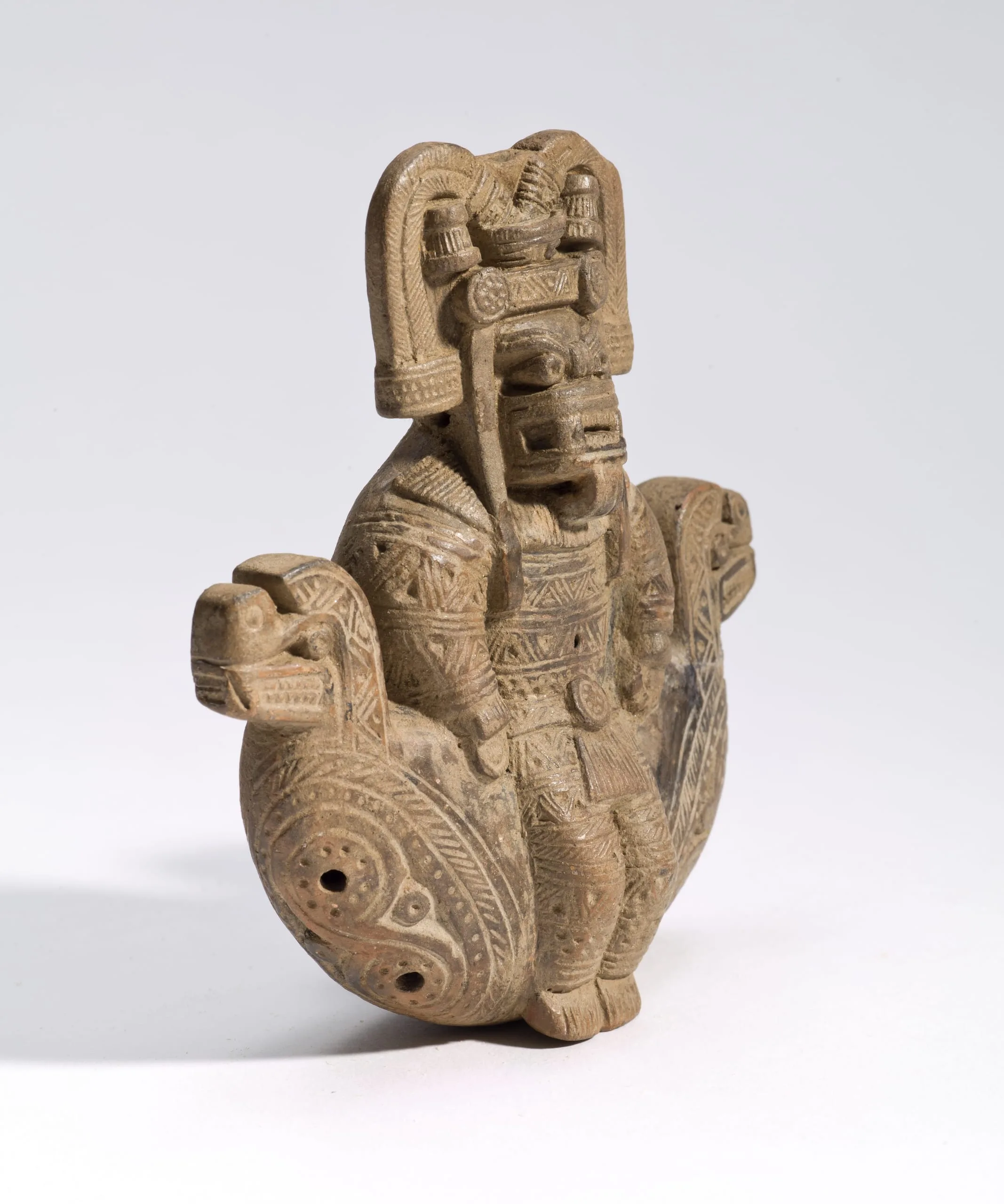
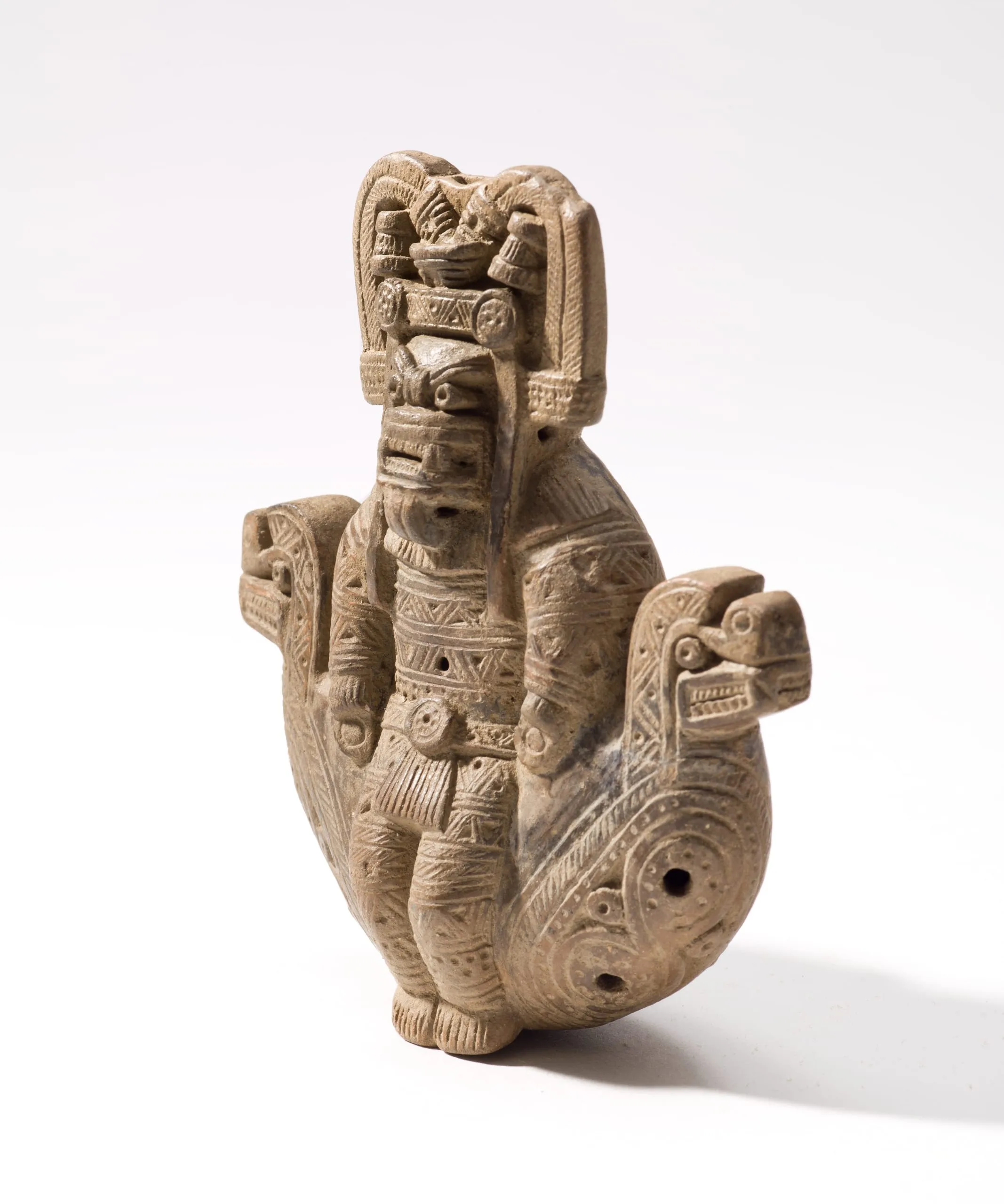
Ceramic figural sculpture, tan-brown earthenware, depicting a elaborately dressed figure seated atop a rounded animal form with a bird-like head. Surface covered in dense incised geometric and curvilinear patterns throughout. The figure wears a large headdress with curved elements. Small perforations visible on the lower body.
Carved stone figure of a human form seated atop a bird-like creature, densely covered in incised geometric and figural patterns, with an elaborate headdress at top; tan-gray stone with small perforations visible on the body.
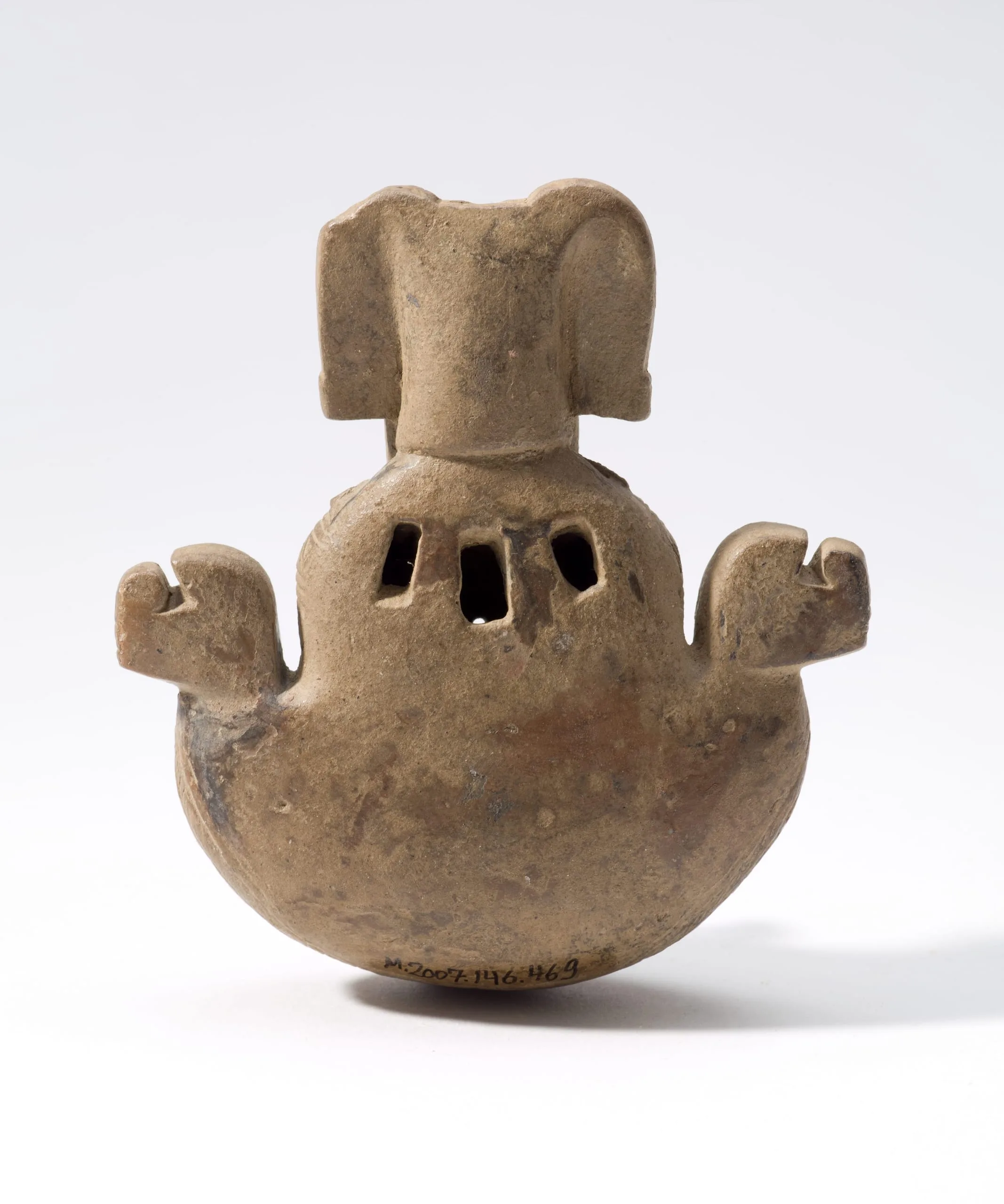
Small ceramic effigy vessel with a rounded body, outstretched arms ending in claw-like hands, three rectangular perforations across the chest, and a flat headdress with two upright projections; unglazed buff-gray clay surface with traces of wear.
Title
Whistle of Figure Seated on Zoomorphic Throne
Culture
Tairona
Place Made
Colombia, Tairona
Date Made
900–1600
Medium
Earthenware
Dimensions
4 × 3 3/4 × 1 in. (10.16 × 9.53 × 2.54 cm)
Credit Line
The Muñoz Kramer Collection, gift of Camilla Chandler Frost and Stephen and Claudia Muñoz-Kramer
Accession Number
M.2007.146.469
Classification
Ceramics
Collecting Area
Art of the Ancient Americas
Curatorial Notes

This ocarina shows a figure centrally seated on a symmetrical, double-headed serpent or crocodile throne. The face, with a prominent toothy snout and beady eyes, indicates that this is a being either in transformation or wearing a mask (wooden masks are traditional items in the region and still used by Kaggaba ritual specialists today). A supernatural or transformative aspect is common on these kinds of items (see M.2007.146.448). In Indigenous Colombia, rulers and religious leaders are responsible for managing interactions and relationships that sustain life—with the earth, other people, plant and animal communities, weather phenomena, and supernatural beings. This can require transformation or the acquisition of animal traits. Furthermore, the leader is positioned at the very center of the universe, an axis mundi who maintains balance. As explained by Arhuaco elder Mamo Camilo, “In creation there are energies of all kinds; good, bad, neutral. Energetic power is to bring order.”

The finely incised design is limited to the front. In addition to the finger holes on the front, there are three separate mouthpieces on the plain burnished back. This complex triple-whistling mechanism, capable of producing separate or concurrent sounds, is found on other Tairona ocarinas (see M.2007.146.462 and .466; also M.2007.146.10, .445, .447, and .452).

Julia Burtenshaw

2025