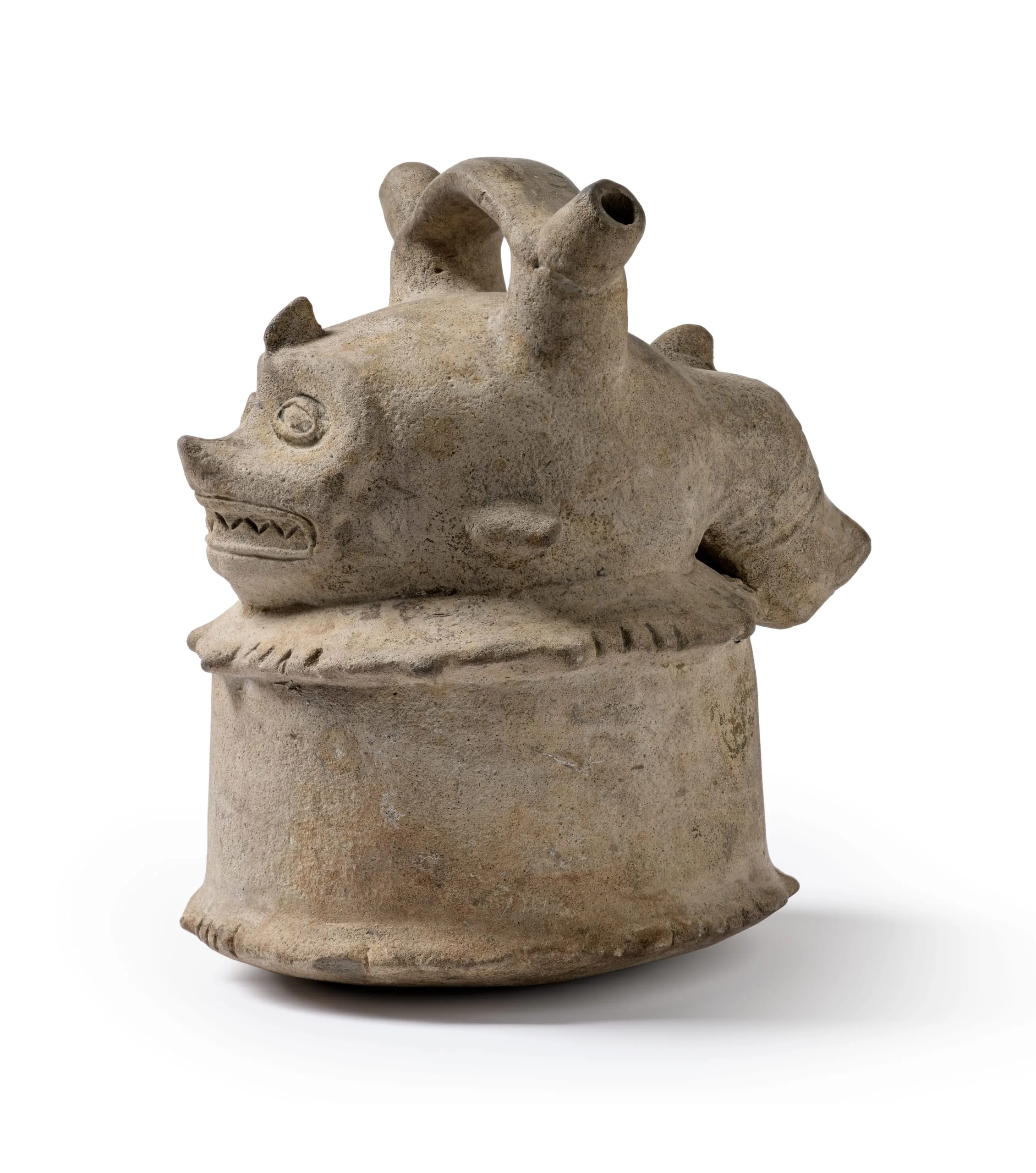
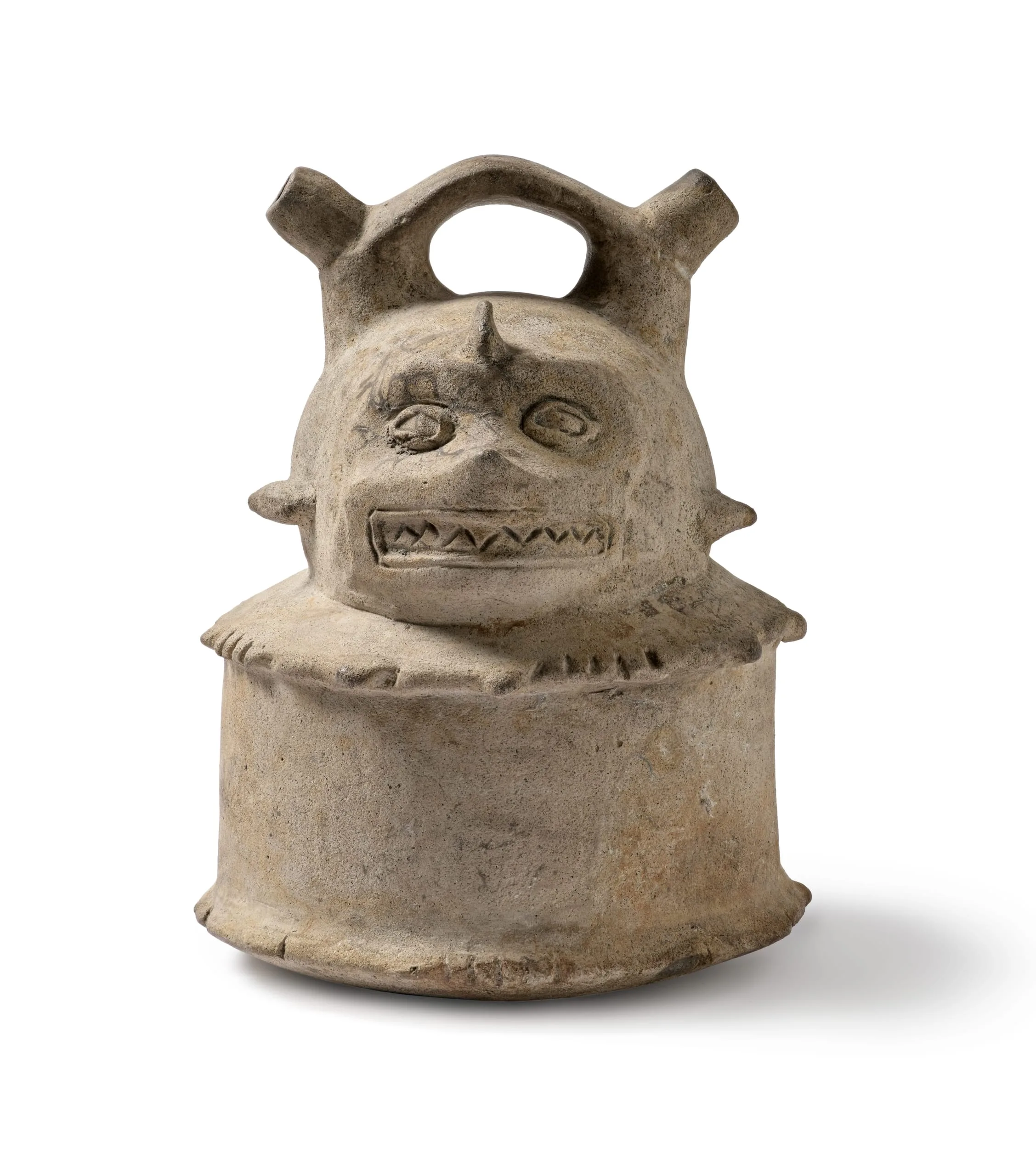
A grinning mouth full of sharp, triangular teeth indisputably identifies this animal as a shark. Although its iconic back-fin has been reduced to a tiny appendage atop the head and its body altered to fit the needs of the double-spouted vessel form (called an alcarraza), the shark’s attributes remain largely naturalistic. Other examples show sharks wearing headdresses or adornments (see M.2007.146.538) and likely relate to a mythology that is now lost. Alongside farming and fishing the canal-camellón systems constructed throughout their coastal territory, the Tumaco-La Tolita people were reliant on marine resources as a staple food source, but whether they practiced maritime navigation is unknown. Curiously, we know of no representations of seafaring canoes or boats in their material culture.
Today, shark fishing is at the heart of conservation concerns along Colombia’s Pacific coastline. In 2020, President Iván Duque announced a total ban on shark fishing in Colombia’s waters. The move polarized Indigenous communities, artisanal fishers, researchers, and citizens around the world, some hailing Colombia as a shark sanctuary, others decrying the loss of their livelihood. Creative solutions will depend on dialogue with the local communities that have relied on these marine resources for millennia.
Julia Burtenshaw
2024