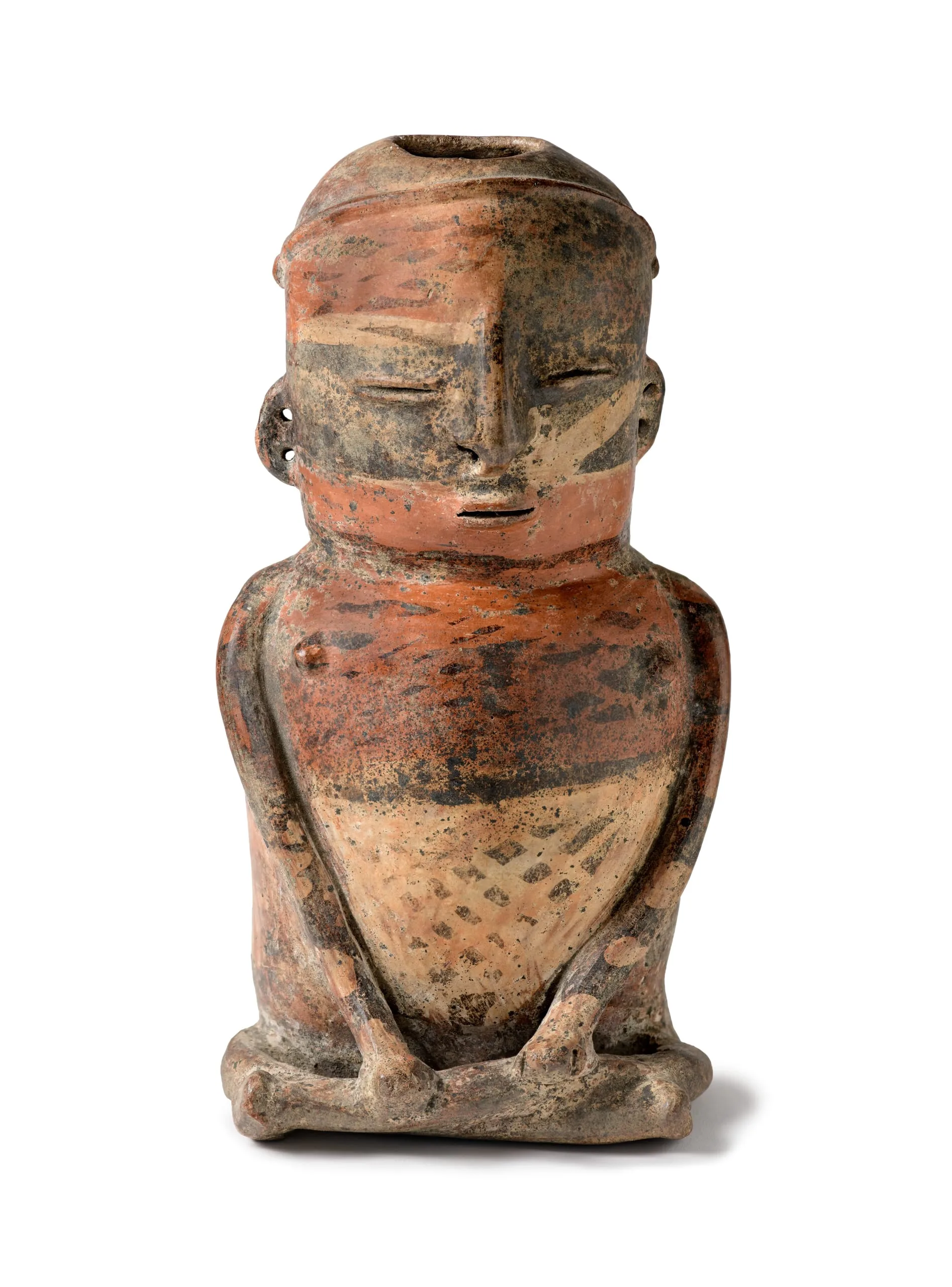
Sitting cross-legged, eyes half-closed as if deep in thought, this figure and others like it produced in ancient Colombia have been interpreted as “thinkers” (pensadores in Spanish). They show male and female figures seated in pensive poses, some chewing coca leaves (see M.2007.147.101, .105, .126). Pensadores represent spiritual leaders who achieve deep contemplation or trance through meditation or with the help of potent plant substances, a practice that remains widespread among the Indigenous communities of Colombia. These knowledgeable persons are responsible for conceiving, understanding, and maintaining balance in the world. In the words of Arhuaco elder Jaison Pérez Villafaña, “To sit is an invitation to the synchrony of energies.”
Although the purpose of LACMA’s sculpture is unknown, it is easy to imagine as a guardian or spirit guide made for the tomb of a deceased individual. The hollow body is decorated all over with geometric designs painted using a negative resist technique. Holes in the ears and nose would once have been adorned with real metal jewelry, probably separated from the ceramic figure by the original looter who found it somewhere in the highlands of southern Colombia long before it made its way into the museum’s collection.
Julia Burtenshaw
2024