LACMA

ShopMembershipMyLACMATickets
LACMA
Los Angeles County Museum of Art
5905 Wilshire Blvd.
Los Angeles, CA 90036
info@lacma.org
(323) 857-6000
Sign up to receive emails
Subscribe
© Museum Associates 2026
  • About LACMA
  • Jobs
  • Building LACMA
  • Host An Event
  • Unframed
  • Press
  • FAQs
  • Log in to MyLACMA
  • Privacy Policy
© Museum Associates 2026
Collections

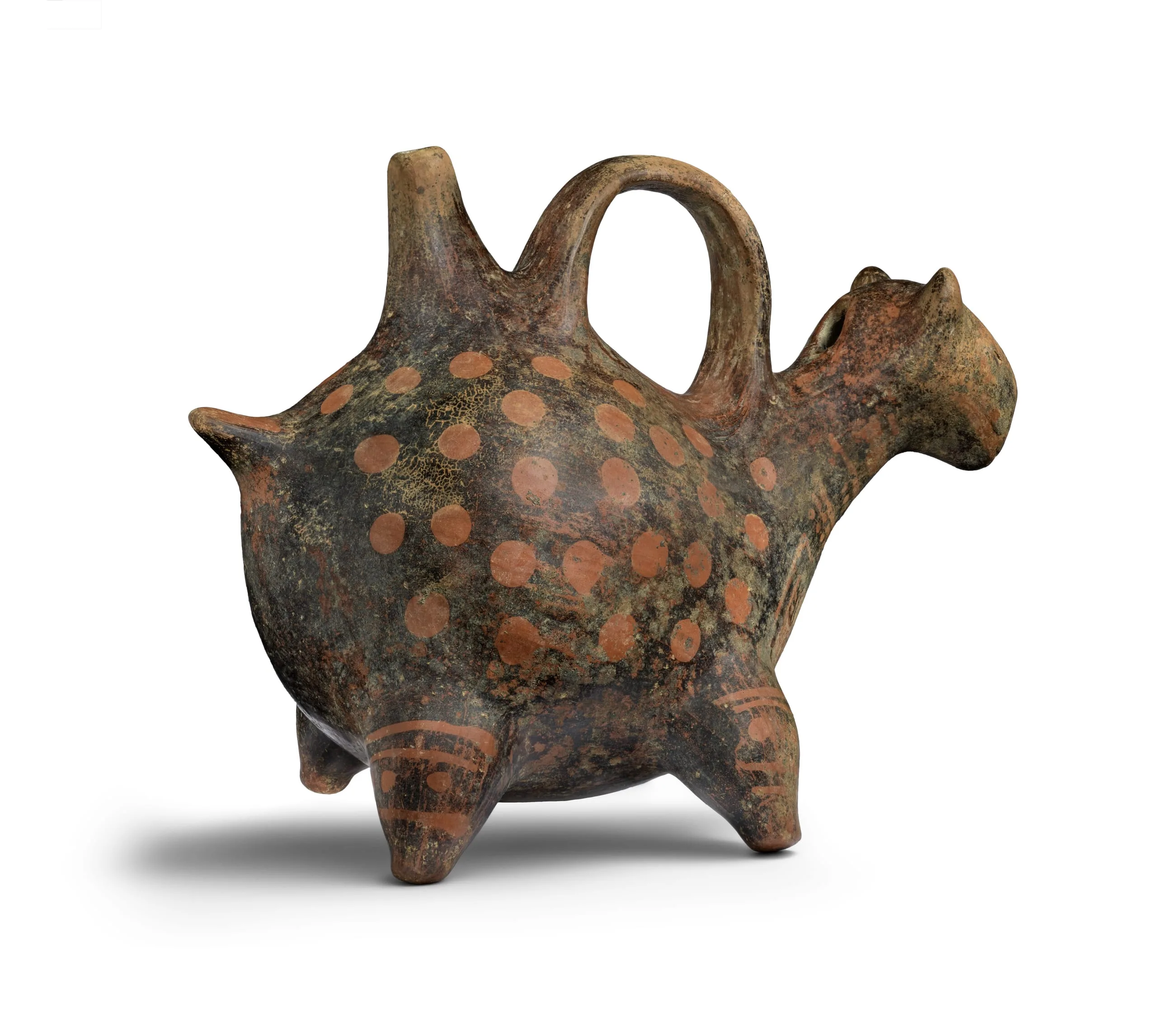
Spotted Animal Whistling Vessel100 BCE–800 CE

On view:
Geffen Galleries
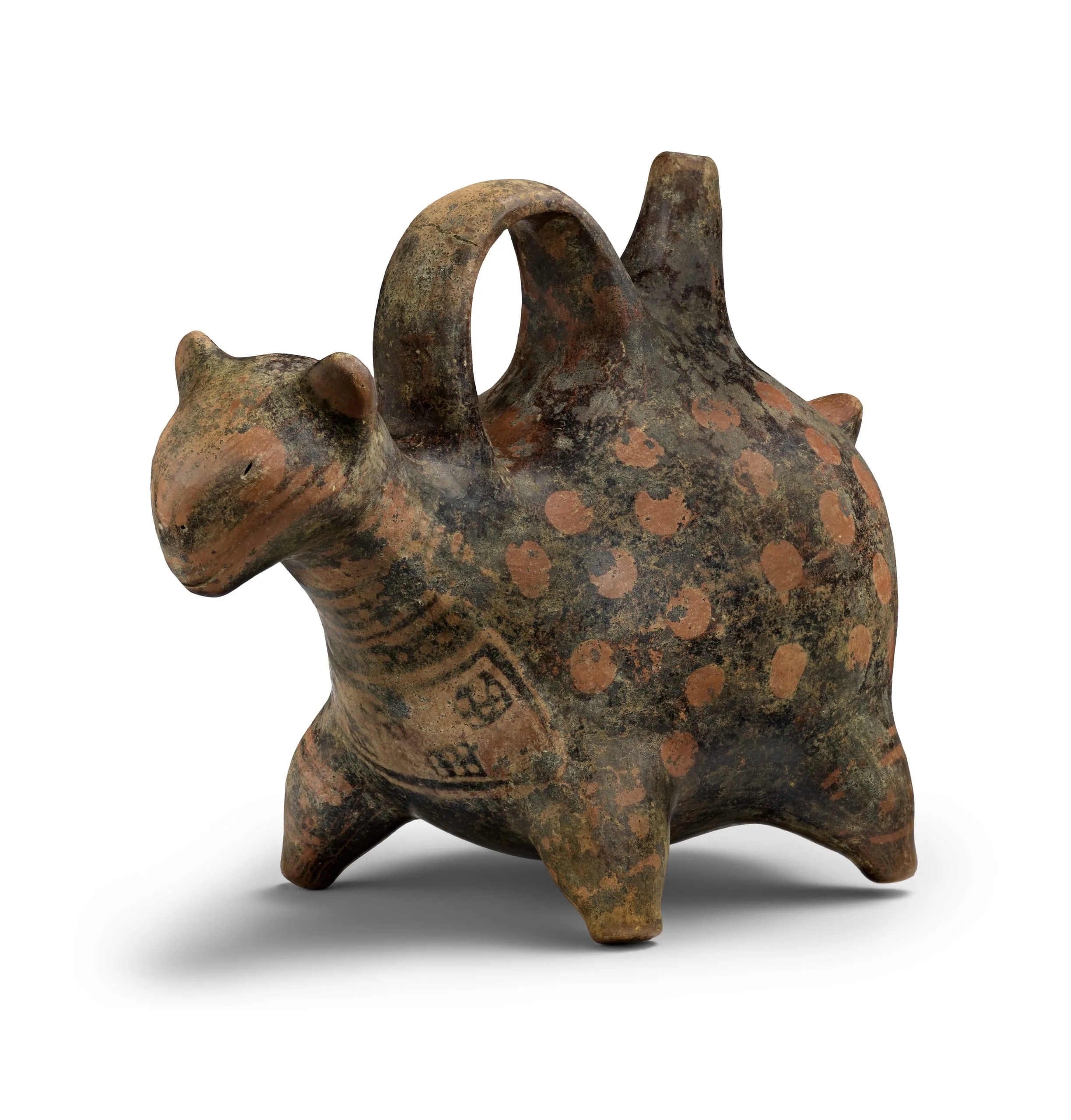
Ceramic animal-form vessel with four legs, arched loop handle, and short spout, decorated with terracotta spots on dark slip and geometric painted designs
Ceramic effigy vessel in the form of a four-legged animal with a modeled head at one end and a spout at the other, connected by an arched handle. Dark slip ground decorated with large terracotta-red spots across the body, with painted band details on the legs.
Title
Spotted Animal Whistling Vessel
Culture
Calima Yotoco
Place Made
Colombia, Calima Region (Yotoco Period)
Date Made
100 BCE–800 CE
Medium
Earthenware with resist-painted slip
Dimensions
7 1/4 × 9 1/2 in. (18.4 × 24.1 cm)
Credit Line
The Muñoz Kramer Collection, gift of Camilla Chandler Frost and Stephen and Claudia Muñoz-Kramer
Accession Number
M.2007.146.283
Classification
Ceramics
Collecting Area
Art of the Ancient Americas
Curatorial Notes

Judging by its stylistic attributes, this vessel was made in the Calima region during the Yotoco period, sometime between 100 BCE and 800 CE. The quadruped animal’s spotted pelt, created using a resist painting technique, is suggestive of the jaguar; however, the long head, short tail, and small, closed, fangless mouth are more like those of a tapir or capybara. Drawing from and contributing to their diverse ecological surroundings, as well as their rich mythology and spiritual practices, Calima artists represented and invented a range of mammalian, reptilian, and avian beings, in both metalwork and ceramic (see also M.2007.146.335 and .336).

A whistling mechanism (window and blade) is built into the vessel at the back of the animal’s head, and blowing into the spout still produces a single high note. Whistling vessels like this can also produce sound when they are partially filled with liquid and then tipped backward and forward.

Julia Burtenshaw

2025
Selected Bibliography
  • Burtenshaw, Julia, Héctor García Botero, Diana Magaloni, and María Alicia Uribe Villegas. The Portable Universe = El Universo en tus Manos: Thought and Splendor of Indigenous Colombia. Los Angeles: Los Angeles County Museum of Art, 2022.