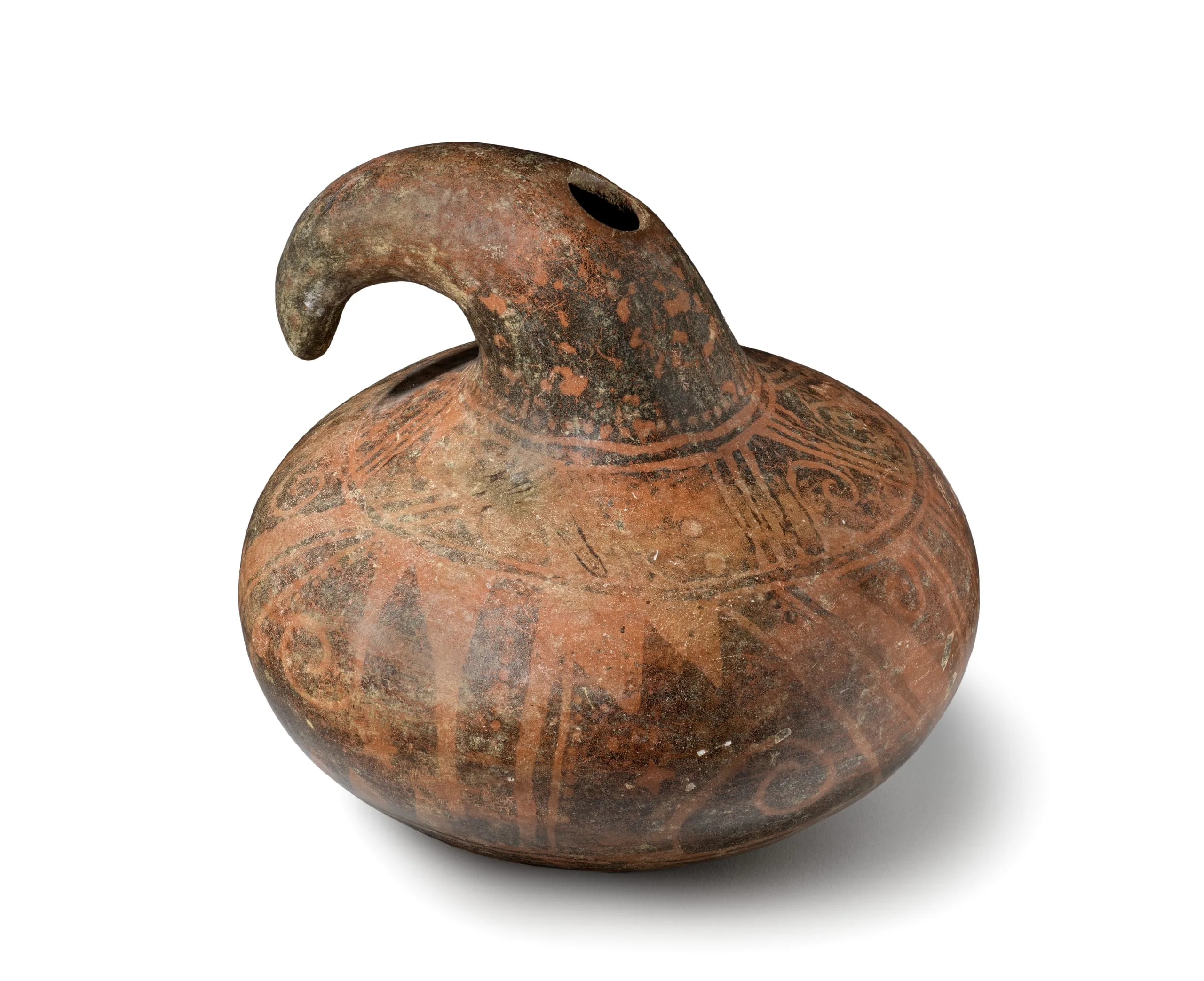
Gourds are believed to be among the first cultivated plants in the Americas, and their use as vessels predates ceramics in some areas. In Indigenous communities, dried gourds served both domestic and ritual purposes, for storing food, liquids, and sacred substances and pouring libations (see also M.2007.146.2 and .257). For example, the traditional poporo, formed from a dried gourd, is the container for the lime powder used to enhance the absorption of the alkaloid stimulants in coca leaves. Indigenous people of the Sierra Nevada de Santa Marta in northern Colombia still use gourd poporos in the traditional way, continuing a highly spiritual practice that is thousands of years old. Among Arhuaco men, a poporo is often seen as a representation of a woman.
LACMA’s beautiful ceramic container mimics the shape of a perfectly symmetrical gourd. The pattern of lines, triangles, and spirals covering the surface was created with a resist painting technique. The labor and expertise required to carefully sculpt, decorate, and fire a “gourd” container from clay indicate the value and importance placed on gourds as vessels.