LACMA

ShopMembershipMyLACMATickets
LACMA
Los Angeles County Museum of Art
5905 Wilshire Blvd.
Los Angeles, CA 90036
info@lacma.org
(323) 857-6000
Sign up to receive emails
Subscribe
© Museum Associates 2026
  • About LACMA
  • Jobs
  • Building LACMA
  • Host An Event
  • Unframed
  • Press
  • FAQs
  • Log in to MyLACMA
  • Privacy Policy
© Museum Associates 2026
Collections

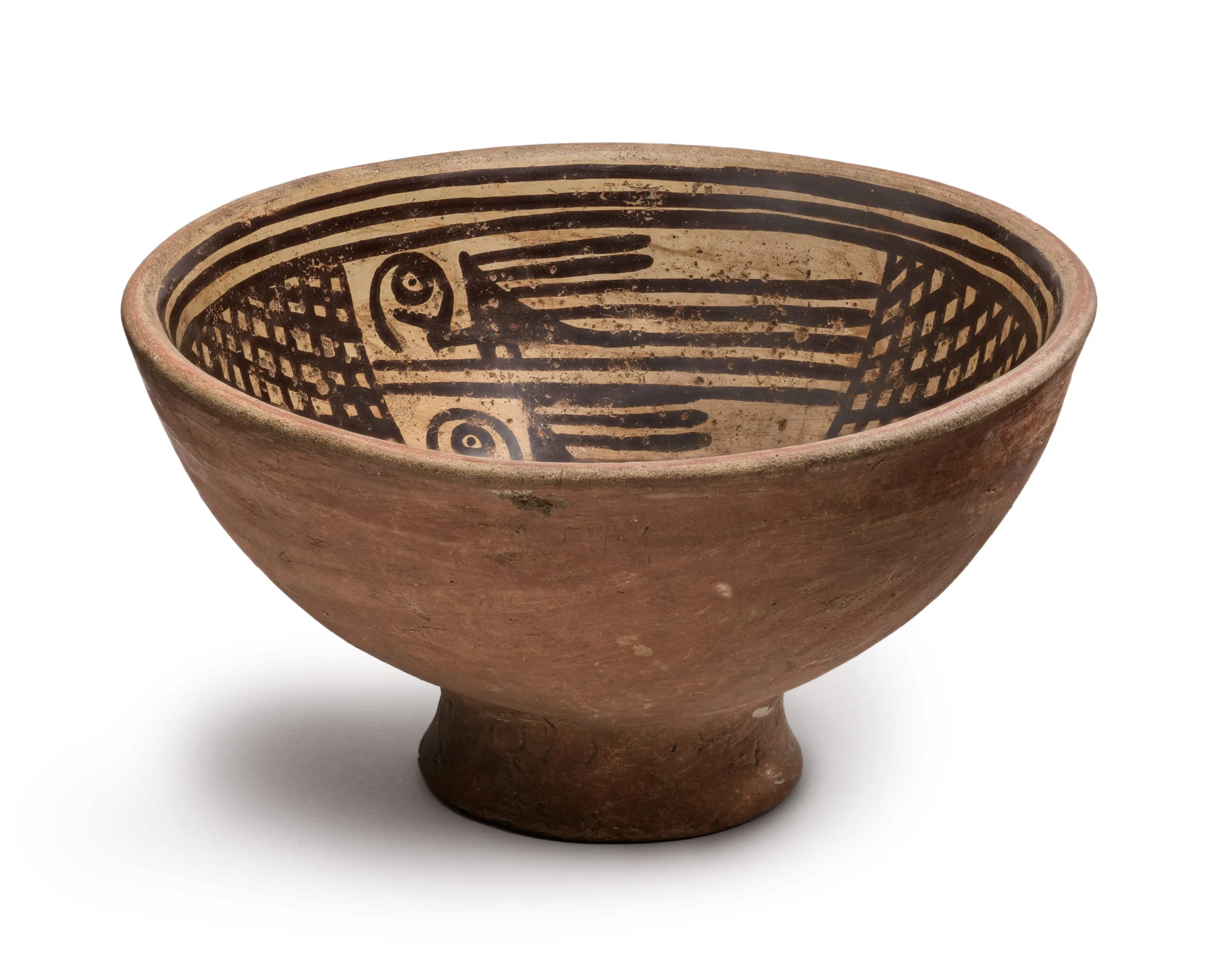
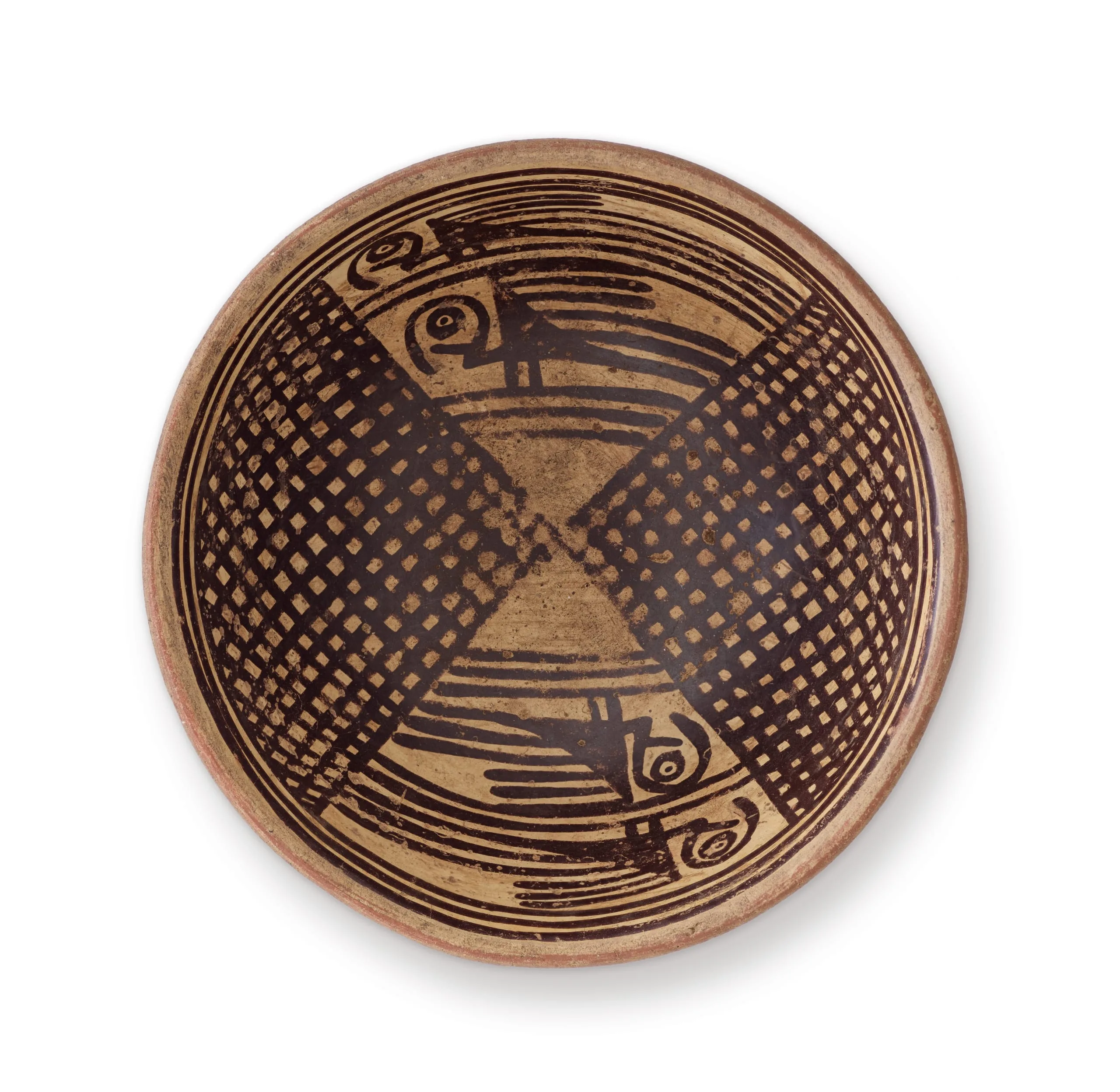
Footed Bowl with Parrots1250–1600

On view:
Geffen Galleries, Ancestral Ceramics from Panama and Colombia
Terracotta bowl with pedestal foot, buff interior slip painted with dark brown schematic bird design featuring spiral eyes, horizontal bands, and crosshatch patterning
Ceramic bowl viewed from above, with a buff ground painted in dark brown. Interior decoration features a central triangle framed by concentric lines, flanked by crosshatch-filled quadrants and spiral motifs at the rim.
Title
Footed Bowl with Parrots
Culture
Nariño or Carchi
Place Made
Colombia, Nariño Highlands
Date Made
1250–1600
Style
Tuza
Medium
Slip-painted earthenware
Dimensions
H: 4 in. (10.2 cm); D: 7 1/2 in. (19.1 cm)
Credit Line
The Muñoz Kramer Collection, gift of Camilla Chandler Frost and Stephen and Claudia Muñoz-Kramer
Accession Number
M.2007.146.182
Classification
Ceramics
Collecting Area
Art of the Ancient Americas
Curatorial Notes

Footed bowls like this were typical of the Nariño region of southern Colombia (and also Carchi in what is now northern Ecuador). In this example, an artist used dark brown slip paint to decorate the perfectly smooth, burnished interior, dividing the space into four equal slices—two featuring stylized parrots, the others filled with crosshatching. Skillfully made and showing no sign of wear, this bowl would not have been a utilitarian serving or dining vessel but was probably created as a funerary offering and for ceremonial practices.

Birds are one of the most common figurative motifs found on Nariño ceramics and, while stylized, it is sometimes possible to distinguish broad types such as parrots in contrast to others such as wading birds (see M.2007.146.173, .176, .185, .197, and .206). In Andean cosmology, parrots, particularly macaws, carried significant symbolic weight. Macaw feathers were traded across long distances, linking the Amazonian rainforest, the Cordillera, and the remote Pacific coast. Their bright plumage was used to decorate elaborate textiles that were markers of great distinction for elites powerful and connected enough to commission them (see M.74.49, M.77.70.12, M.77.70.13, and M.80.71.4). Still today, colorful feathers are essential in the ceremonial costumes and tools of ritual specialists, and particular birds continue to hold very specific meanings. The Airo-Pai of the Peruvian Amazon, for example, view green parrots as representing living women.
Selected Bibliography
  • Burtenshaw, Julia, Héctor García Botero, Diana Magaloni, and María Alicia Uribe Villegas. The Portable Universe = El Universo en tus Manos: Thought and Splendor of Indigenous Colombia. Los Angeles: Los Angeles County Museum of Art, 2022.