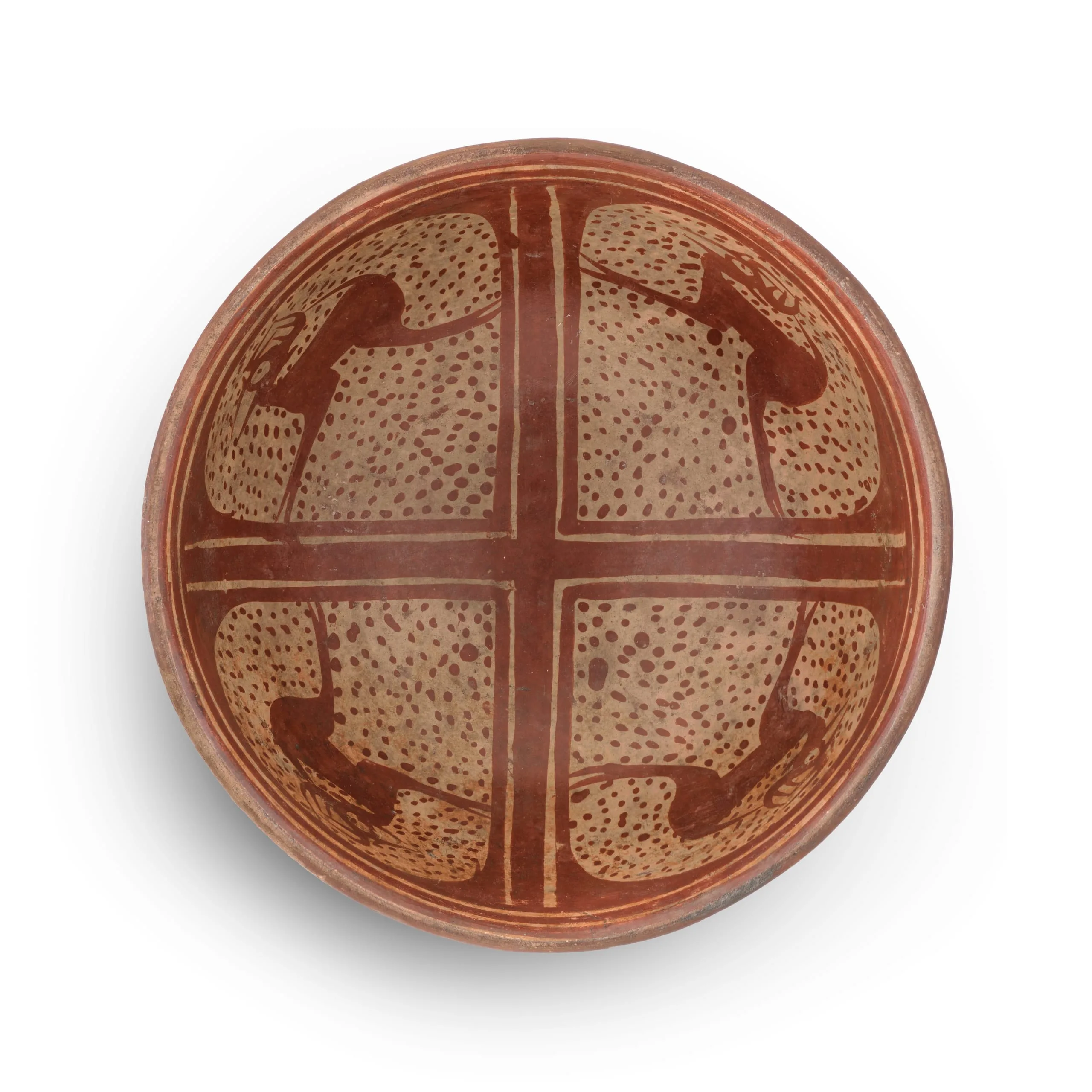
Footed bowls like this are typical of the ceramics made by people living in the Nariño region of what is now southern Colombia (and also Carchi in what is now northern Ecuador). In this example, an artist used red slip paint to decorate the perfectly smooth, burnished interior, dividing the space into four equal slices and painting a beautifully stylized deer in each. The arrangement of figurative motifs into symmetrical, geometric patterns is a hallmark of these ceramics, although there are exceptions (see M.2007.146.191).
Deer were hunted as food and for their hides, but undoubtedly also held symbolic meaning as they do in other areas of the Americas. With the annual shedding of their antlers, deer can be associated with fertility, renewal, and the changing of the seasons. Creating representations of deer was a way to honor their life-giving role as sustenance and to express gratitude to the Creators. Skillfully made and featuring sacred designs or stories, bowls like this would not have been utilitarian serving or dining vessels, but were created as funerary offerings and for ceremonial practices, possibly as mnemonic devices for storytelling, calendrical records, and keepers of cultural knowledge.