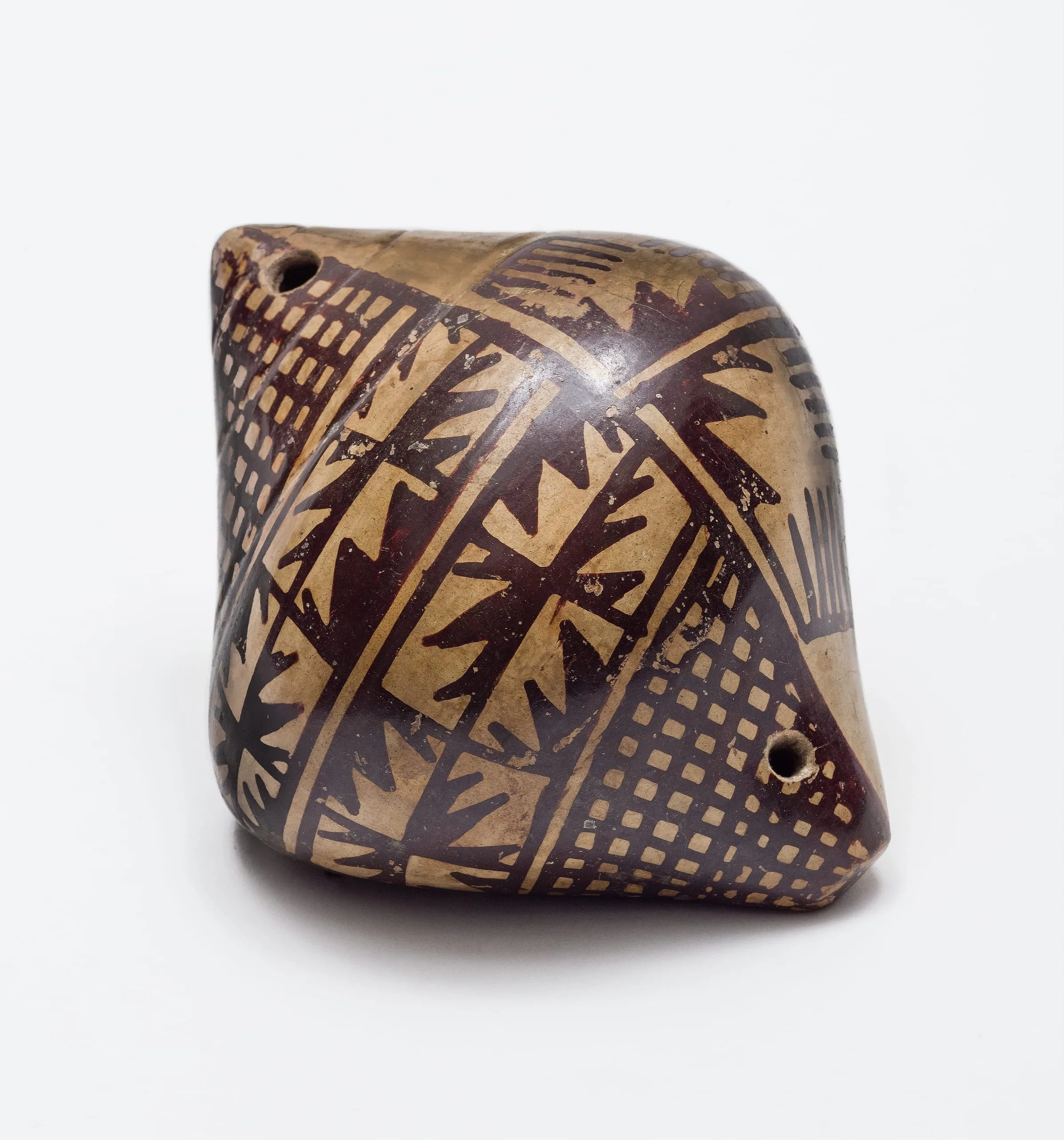
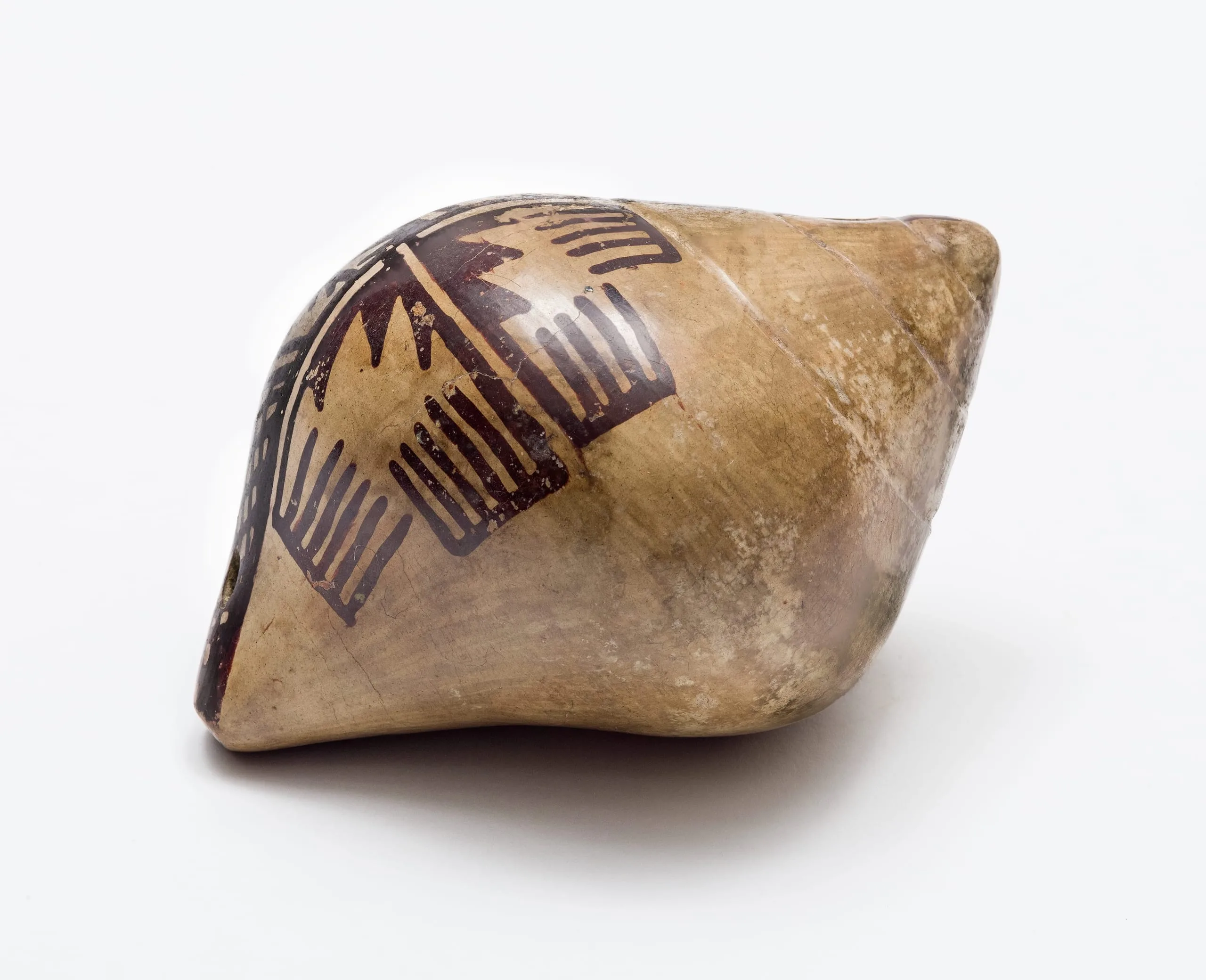
Burnished to a high sheen and painted with geometric motifs using a saturated, dark brown slip, the exterior of this small object does not immediately reveal its many functions and meanings. Shell-form ocarinas like this one are testimony to the extraordinary artistic and technological achievements of Nariño potters. An X-ray (pictured below) reveals its construction and that the maker painstakingly modeled the precise internal structure of a real seashell. Clearly, these pieces were not made merely to mimic the appearance of a shell—they were created as real shells, inside and out. One purpose of this exactitude was to facilitate the object’s function as an instrument, in the same way that a real shell works. However, during a recent LACMA project focused on ancient Colombia, Arhuaco elder Jaison Pérez Villafaña explained a larger purpose reflecting Indigenous worldviews. Works created by ancestral makers in clay or metal—whether depicting animals, plants, or other beings—constitute human contributions to the richness and diversity of the world, made in reciprocity, “to give back for what we take in order to live on this planet.”
Produced in highland regions far from the ocean, shells embody a connection to marine life and the interconnectedness of ecosystems across geographic barriers. They are also functional musical instruments, part of a much broader South American tradition of ceramic ocarinas and real shell instruments. Ocarinas were likely suspended from a string (looped through a hole at the tip) and worn around the neck. They were both personal and communal items, played at gatherings or to communicate across a valley or through dense vegetation. The shell-form ocarinas in LACMA’s collection show very little wear and tear, thus it is unlikely they saw much use before being deposited in a burial context, which is where most of them were found.
Julia Burtenshaw
2025
X-ray of M.2007.146.142
JB has hi-res file