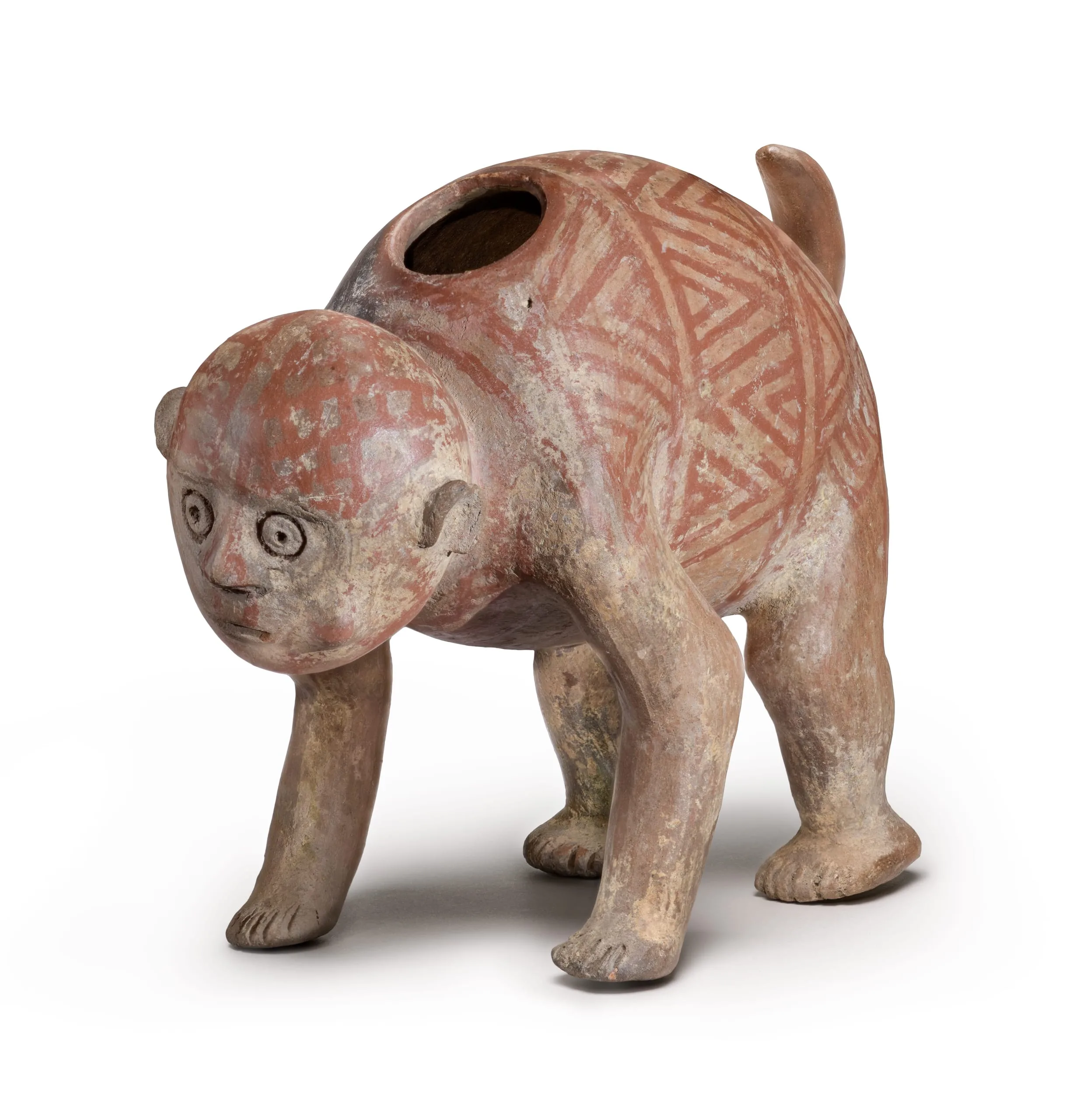
Monkeys are a common motif on Nariño-style ceramics and goldwork, but to have one depicted as a three-dimensional sculpture is highly unusual. The left cheek shows the telltale bulge of a quid of coca leaves, indicating that this monkey is partaking in the ritual activity of chewing the sacred plant. This relates it to the far more common human coqueros (coca-chewers) that were modeled by Nariño potters (see M.2007.146.101, .105, and .126). Given its unusual form, LACMA conservators sent a sample drilled from this monkey for thermoluminescence testing, and the result confirmed that the piece was made between 700 and 1150.
The prevalence of monkeys on painted bowls, earrings, and pendants reflects the importance accorded these animals by the people living in the mountainous region that now comprises southern Colombia and northern Ecuador. A number of small monkey species inhabit this area, such as the Colombian gray night monkey (Aotus vociferans) and the gray-bellied night monkey (Aotus lemurinus). The particular significance of night monkeys is recorded in a myth of the Miraña people currently living in the Colombian Amazon, wherein the actions and movements of these nocturnal animals parallel the movements of the Orion constellation across the sky, thereby recording astronomical—and in turn calendrical—information (for more on this myth, see M.2007.146.4).
Julia Burtenshaw
2025