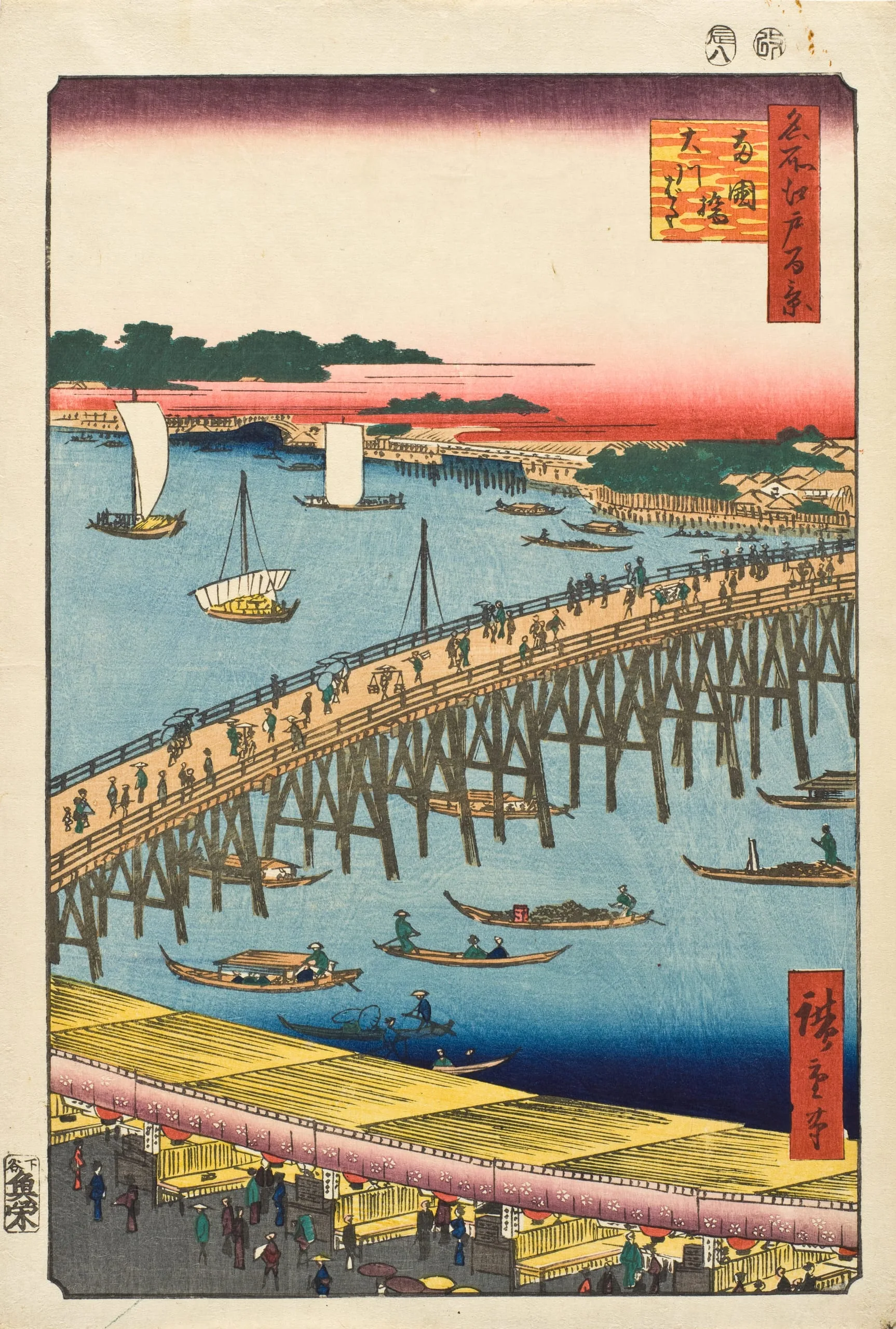
Utagawa Hiroshige lived his entire life in the capital city of Edo (present-day Tokyo). Between roughly 1835 and 1855, following the success of his first print series, there was great popular demand for Hiroshige’s views, in particular scenes of Edo and of the Tōkaidō. This print, from the artist’s final series Meisho Edo hyakkei (One Hundred Views of Edo), shows the Ryōgoku Bridge over the Sumida River. The largest bridge in Japan at the time of its completion in 1660, it connected the provinces of Musashi and Shimosa. At either end of the bridge were a host of eateries, shops, and amusements such as tea and food stalls, theaters, storytellers, and street entertainers. The entire area teemed with activity as pedestrians and travelers traversed the bridge, boats with cargo and passengers plied the river below, and people gathered to eat, shop, and be entertained. In the warm weather, firework displays over the bridge were much anticipated events.
Another iteration of this scene, in horizontal format, was published in the series Ehon Edo miyage (Picture Book of the Souvenirs of Edo). Hiroshige created the designs for the first seven volumes, published between 1850 and 1857. Each of the colored illustrations bears an inscription describing the view, and here Hiroshige called the Ryōgoku Bridge “the liveliest place in the Eastern capital . . . day and night, the amusements never cease.”
2024