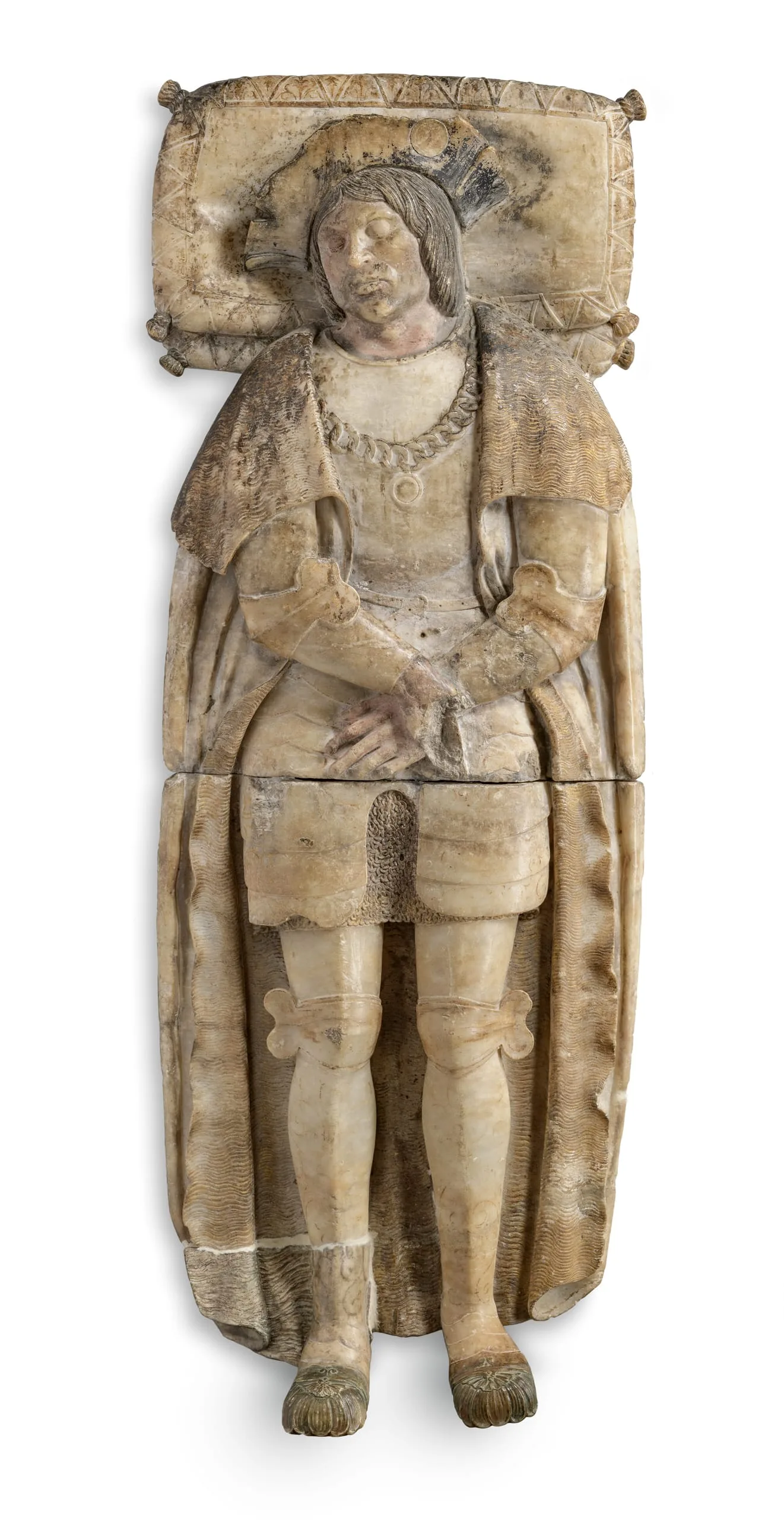
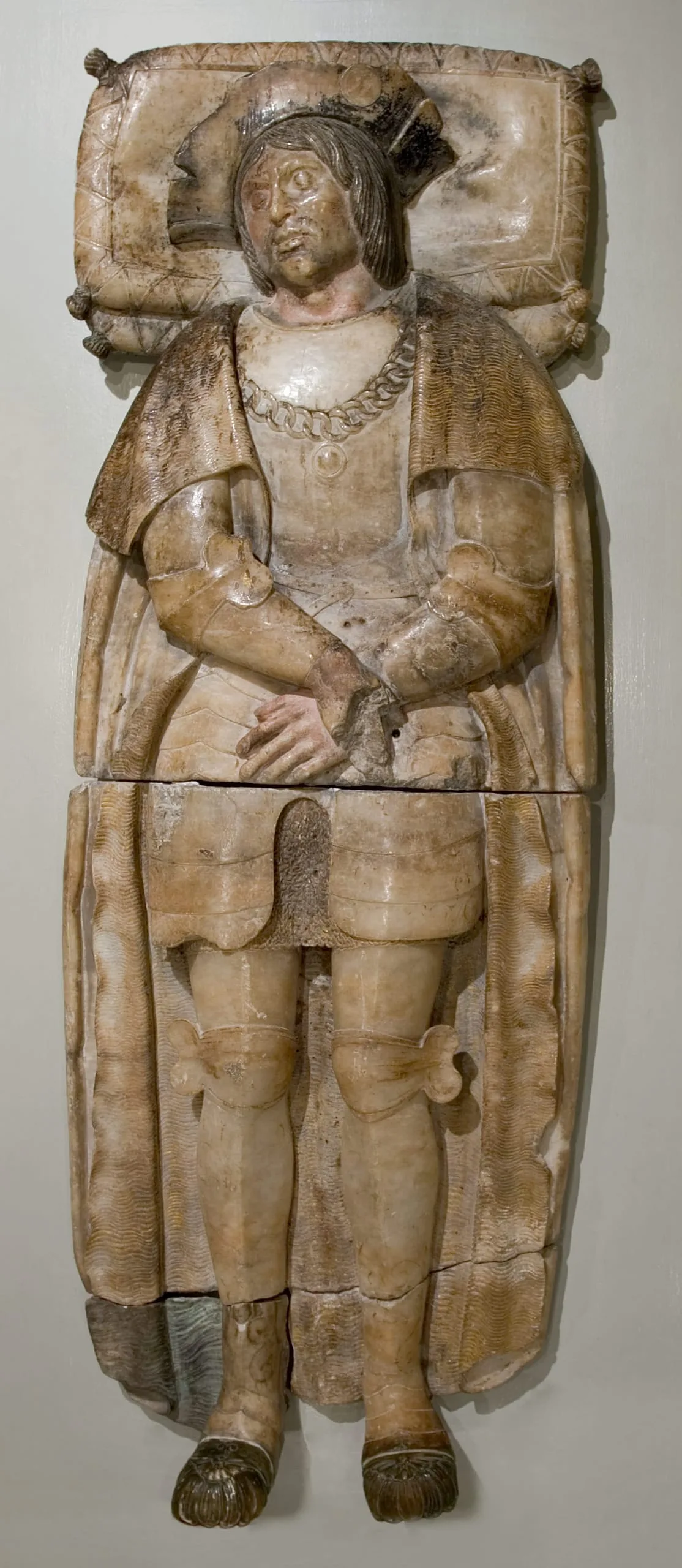
An unknown knight, his head on a pillow, hands crossed and eyes closed, rests in eternal sleep. Carved from alabaster, this sculpture once topped a funerary monument. Recumbent effigies were common elements in tomb decorations for the wealthy and aristocratic during the medieval and Renaissance periods. These objects functioned not only as sites of remembrance for friends and family but as displays of the deceased’s social status. Here, the man is dressed in scroll-engraved armor with chain mail under a fur-lined cloak. The brim of his fashionable wide cap is turned up, revealing a decorative round badge. A medallion hangs from the linked chain around his neck. While any painted or carved details on the medallion have been lost, it once would have indicated the deceased’s membership in a knightly chivalric order or possibly his familial heraldry, although his armor makes the former more likely.
Alabaster aligns the knight with the ruling class. Despite a resemblance to marble, it is a softer stone, thus easier to carve. Sourced locally, it was a favored material for members of the Spanish court, used for both personal devotional objects and public monumental sculptural programs, like the royal tombs of John II of Castile and Isabella of Portugal in the Cartuja de Miraflores in Burgos. An early sale catalogue lists this tomb’s origin as Navarra, Spain, an area that saw territorial disputes and partial control by Castile during the early sixteenth century. The details added to the tomb monument allowed the knight to live on in the memories of his community and encouraged the faithful to pray for his soul.
2024