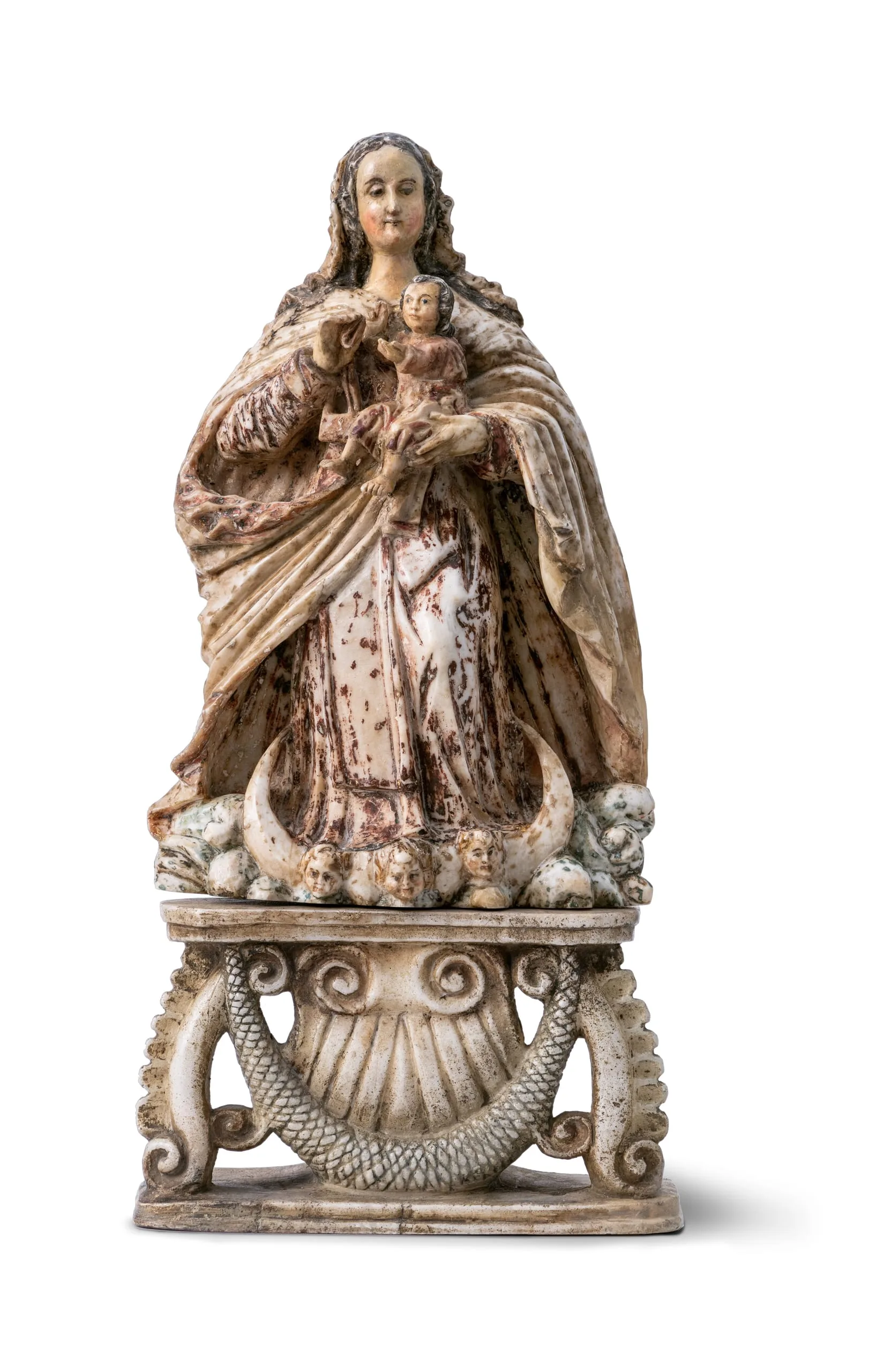
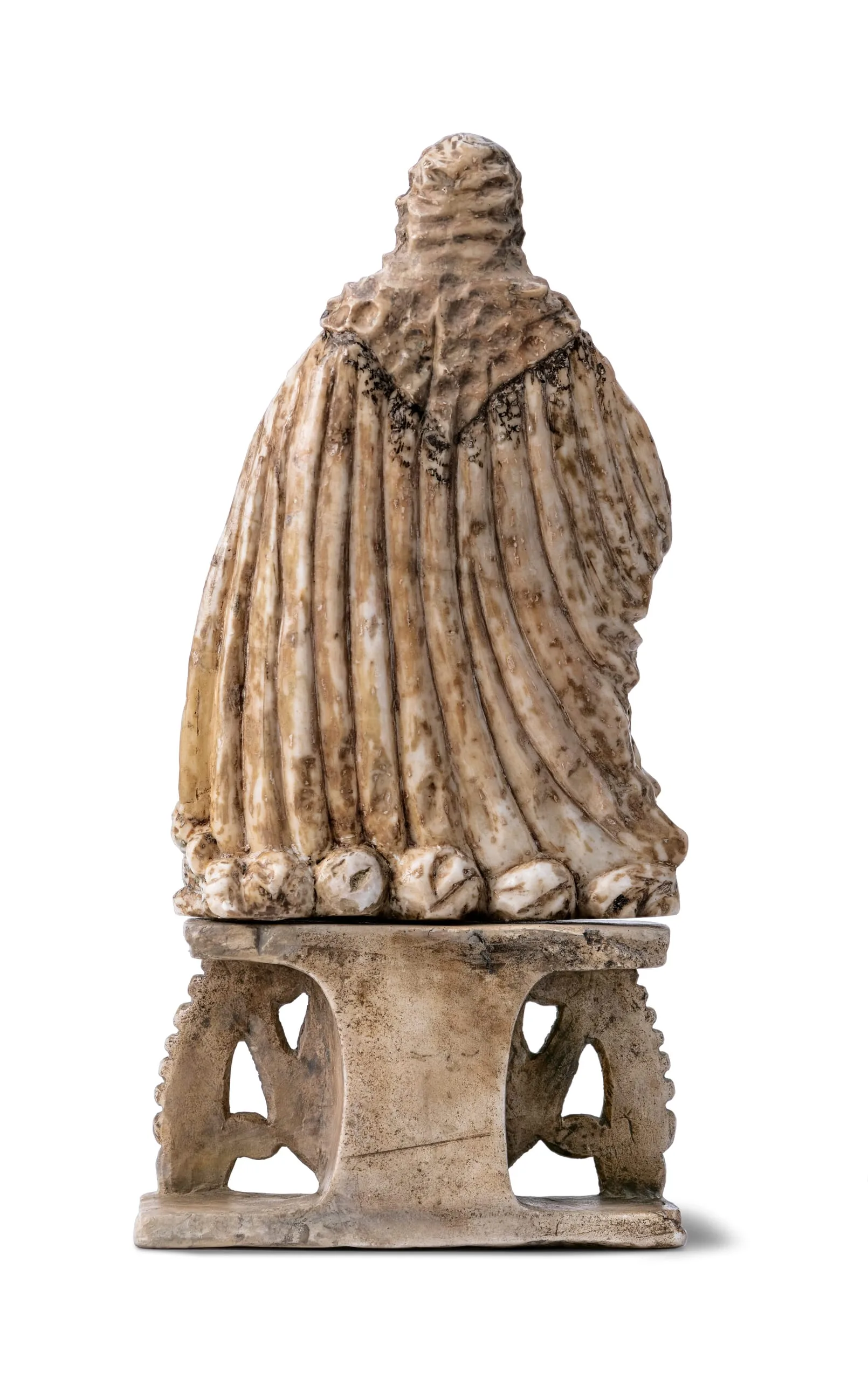
Following the establishment of San Juan de la Frontera de Huamanga (present-day Ayacucho, Peru) in the second half of the sixteenth century, the region became known for its beautifully crafted sculptures and reliefs made of huamanga, a type of alabaster abundant in the area. By the eighteenth century, images made with the translucent, soft material were widespread for ecclesiastical and private use. This exquisitely carved image of the Virgin of Carmen with the Christ Child still retains some of its original polychromy.