LACMA

ShopMembershipMyLACMATickets
LACMA
Los Angeles County Museum of Art
5905 Wilshire Blvd.
Los Angeles, CA 90036
info@lacma.org
(323) 857-6000
Sign up to receive emails
Subscribe
© Museum Associates 2026
  • About LACMA
  • Jobs
  • Building LACMA
  • Host An Event
  • Unframed
  • Press
  • FAQs
  • Log in to MyLACMA
  • Privacy Policy
© Museum Associates 2026
Collections

Woman's Dress (Robe à transformation)circa 1865

Not on view
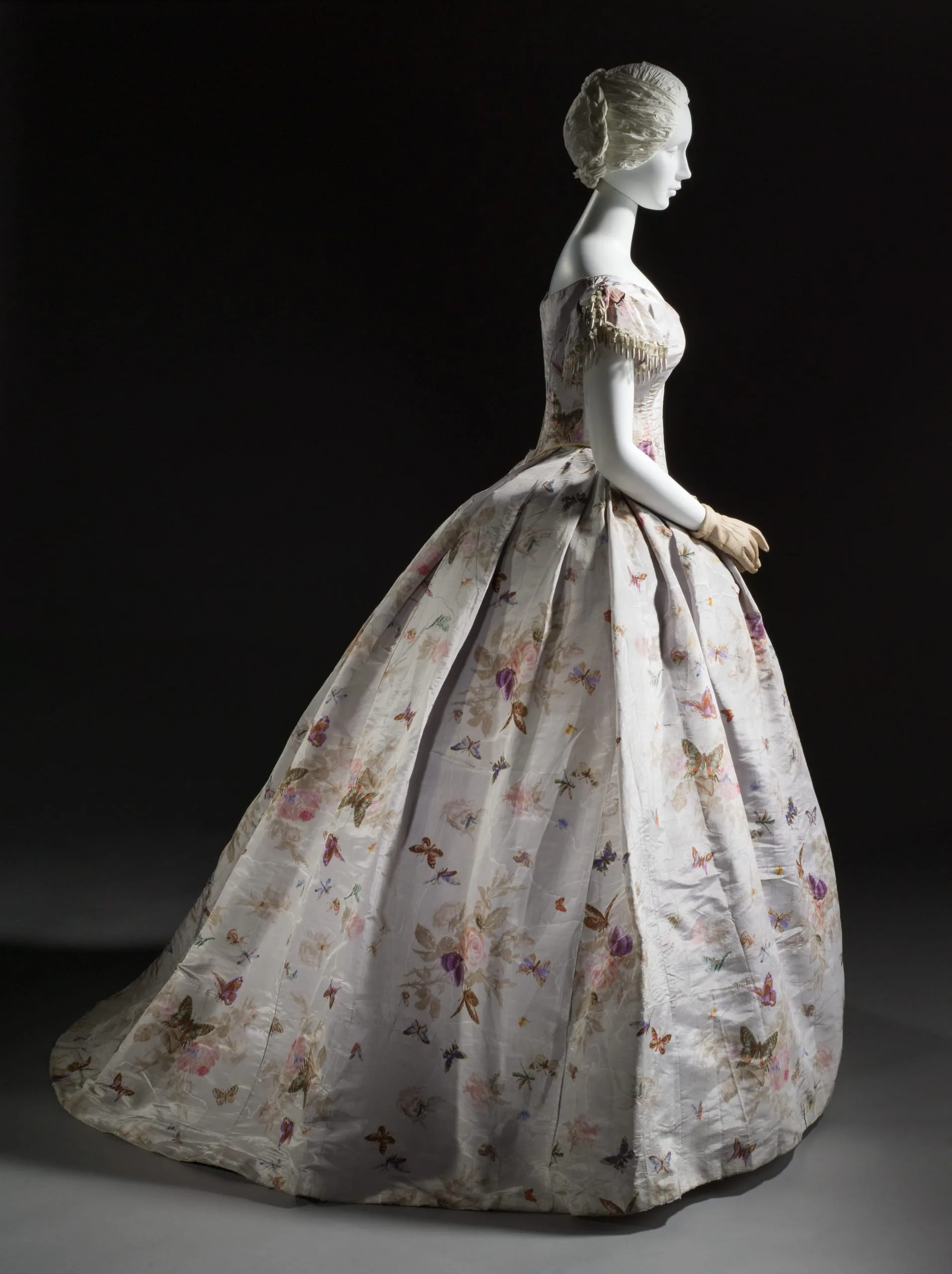
Ball gown on a white mannequin in profile, pale silk fabric printed with scattered roses and butterflies, dome-shaped crinoline skirt with off-the-shoulder fringe-trimmed bodice
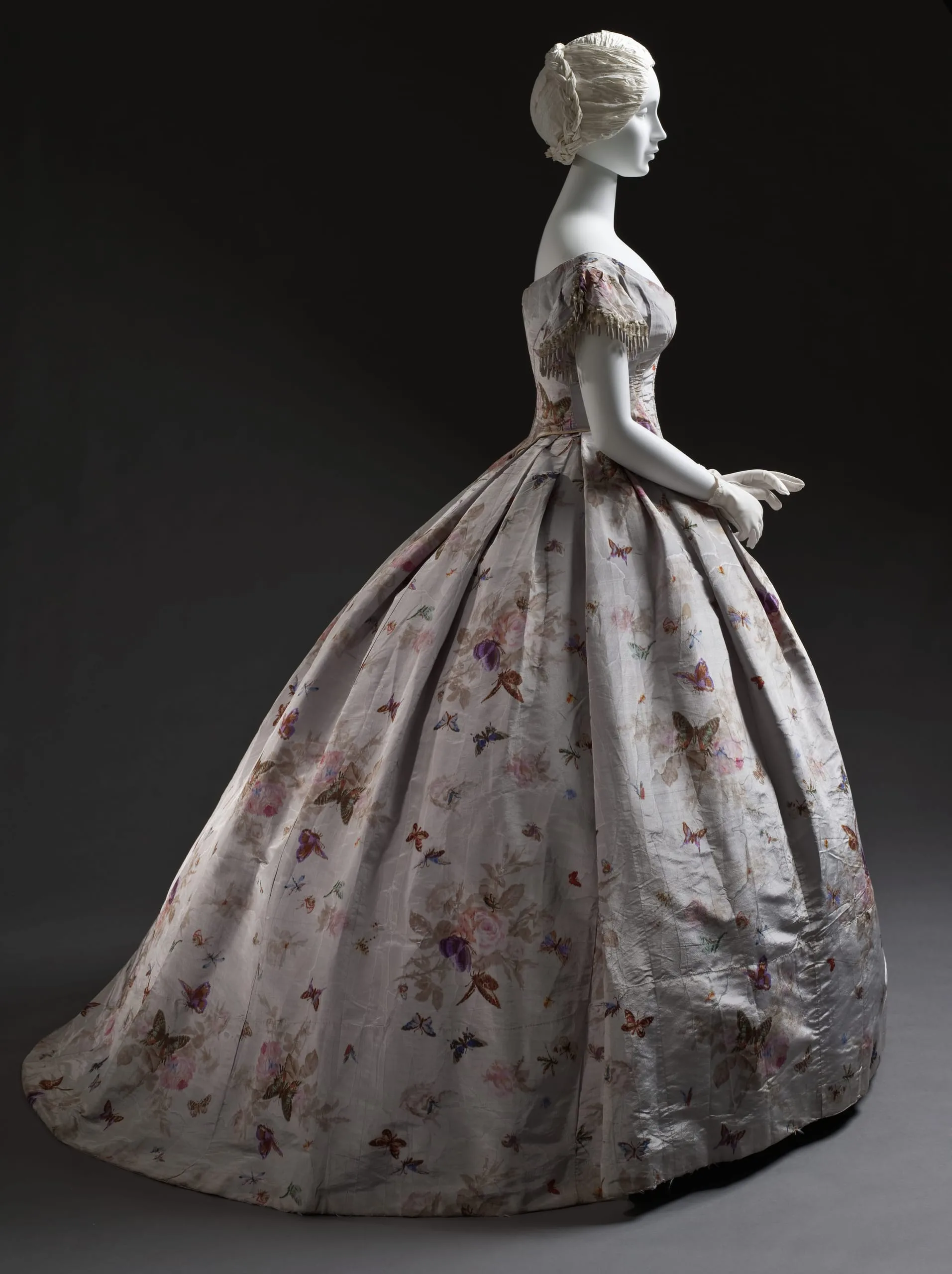
Mid-19th-century ball gown displayed on a white mannequin, photographed in three-quarter profile against a dark background. Full crinoline silhouette in pale silk printed with scattered flowers, butterflies, and insects in pink, purple, green, and gold. Off-the-shoulder neckline with fringe trim at the sleeves.
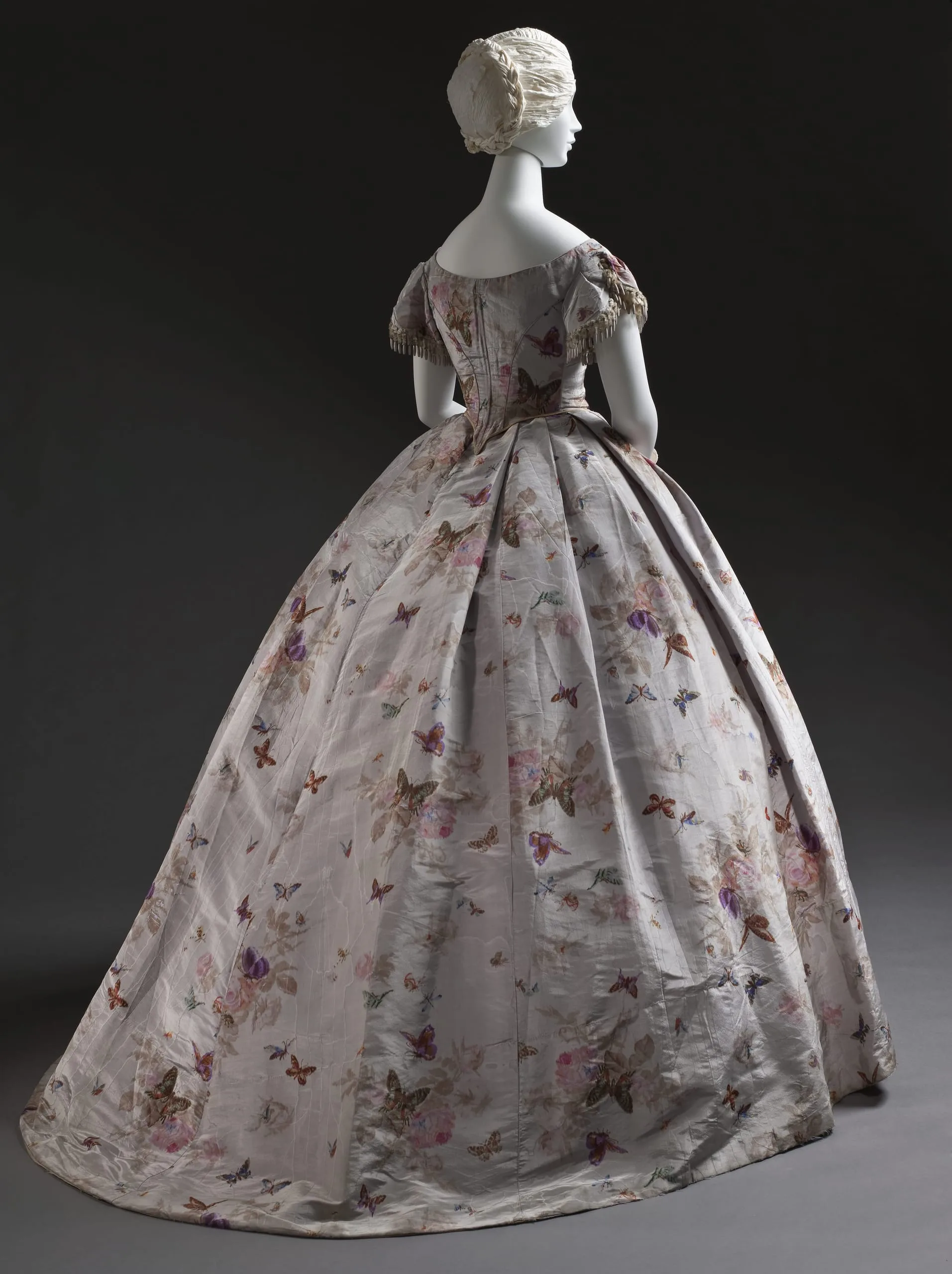
Mid-19th-century ball gown displayed on a mannequin, rear view; pale silk fabric with printed butterflies and flowers in pink, purple, and brown; wide crinoline skirt, off-shoulder bodice with short puffed sleeves, and matching bonnet.
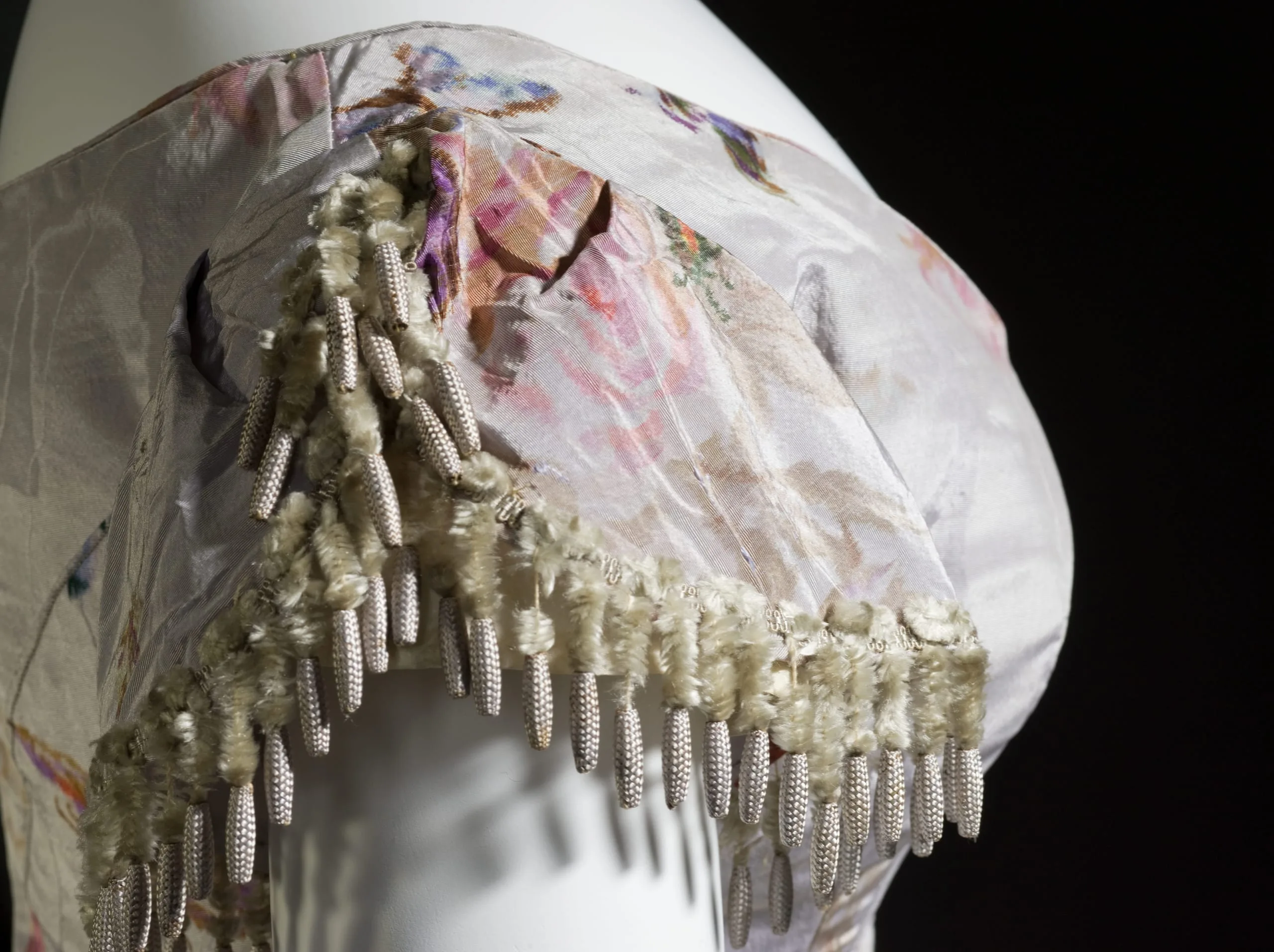
Close-up detail of a garment shoulder on a mannequin; sheer white fabric with soft multicolored floral print, overlaid with a triangular epaulette of looped fiber and dangling silver beaded fringe, against a black background.
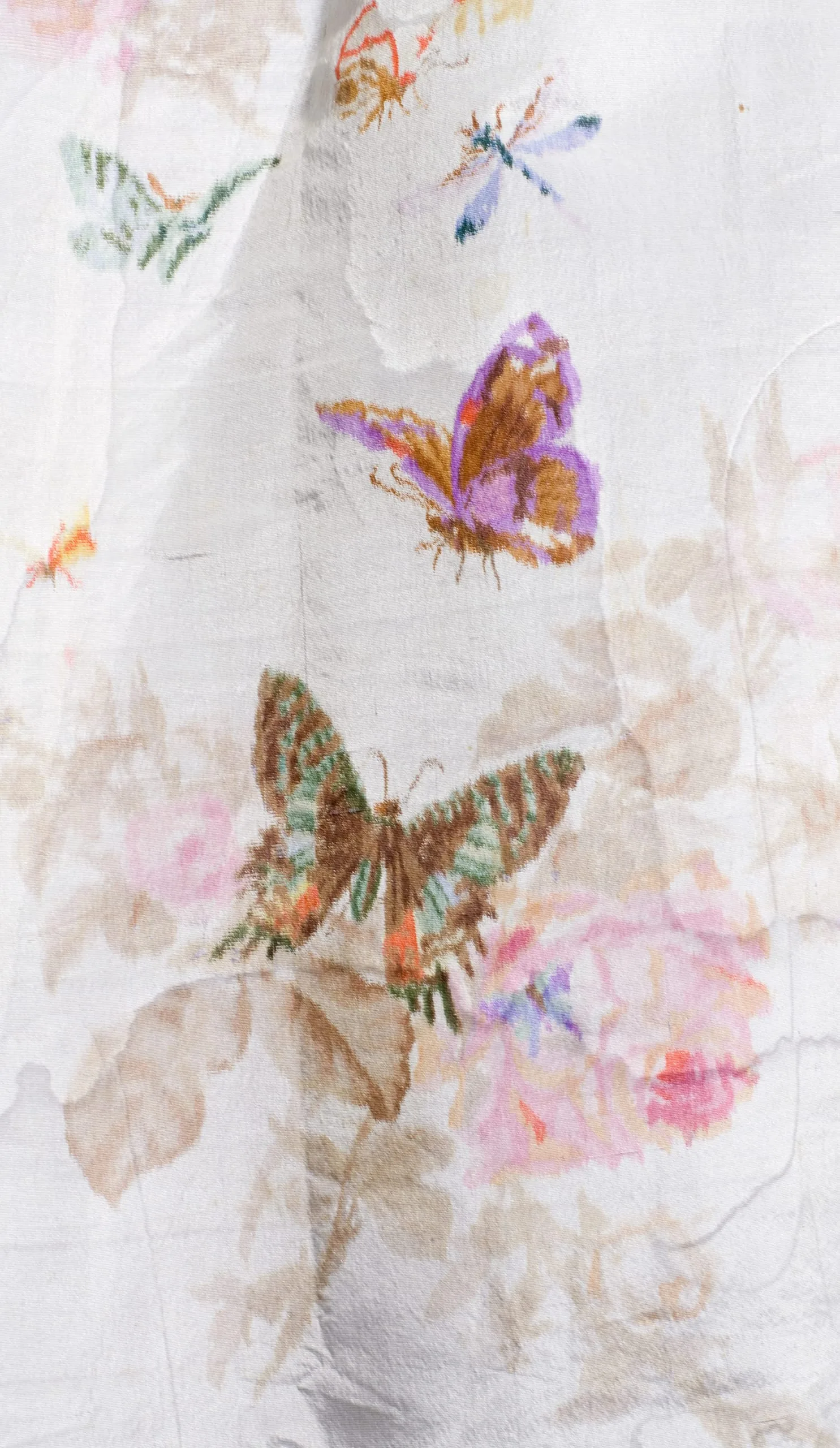
Detail of sheer white textile with printed and painted decoration; butterflies in purple, brown, and green-teal wings scattered across a ground of soft pink roses and gray-green foliage, with a small blue dragonfly near the top.
Title
Woman's Dress (Robe à transformation)
Place Made
France
Date Made
circa 1865
Medium
Silk plain weave (taffeta) with printed warp, moiré finish
Dimensions
a) Jacket center back length: 17 3/4 in. (45.09 cm); b) Bodice center back length: 11 3/4 in. (29.85 cm); c) Skirt center back length: 46 1/2 in. (118.11 cm)
Credit Line
Purchased with funds provided by Suzanne A. Saperstein and Michael and Ellen Michelson, with additional funding from the Costume Council, the Edgerton Foundation, Gail and Gerald Oppenheimer, Maureen H. Shapiro, Grace Tsao, and Lenore and Richard Wayne
Accession Number
M.2007.211.943a-c
Classification
Costumes
Collecting Area
Costume and Textiles
Curatorial Notes

In the second half of the eighteenth century, France was a leader in producing warp resist-dyed silks (chiné à la branche) inspired by Central Asian ikats (textiles in which the warp and/or weft yarns have been resist-dyed before weaving). The characteristic hazy, impressionistic patterns were popular for dress and upholstery. By 1837, a mechanical process of roller-printing warps (shadow printing) created textiles simulating chiné à la branche but with the capability of producing realistic pictorial patterns, such as the Japanese-inspired butterfly-and-flower motif on this two-piece dress. The blurriness of the design is underscored by the watery effect of the moiré (watered) finish.

Selected Bibliography
  • Takeda, Sharon Sadako and Kaye Durland Spilker. Fashioning Fashion: Deux Siècles de Mode Européenne, 1700-1915. Paris: Arts Décoratifs; Los Angeles: Los Angeles County Museum of Art; Munich; New York: Delmonico Books-Prestel, 2013.
  • Takeda, Sharon Sadako and Kaye Durland Spilker. Fashioning Fashion: European Dress in Detail, 1700-1915. Los Angeles: Los Angeles County Museum of Art; Munich; New York: Delmonico Books/Prestel, 2010.
  • Takeda, Sharon Sadako and Kaye Durland Spilker. Fashioning Fashion: Europäische Moden, 1700-1915. Los Angeles: Los Angeles County Museum of Art; Munich; New York: Prestel, 2012.