- Title
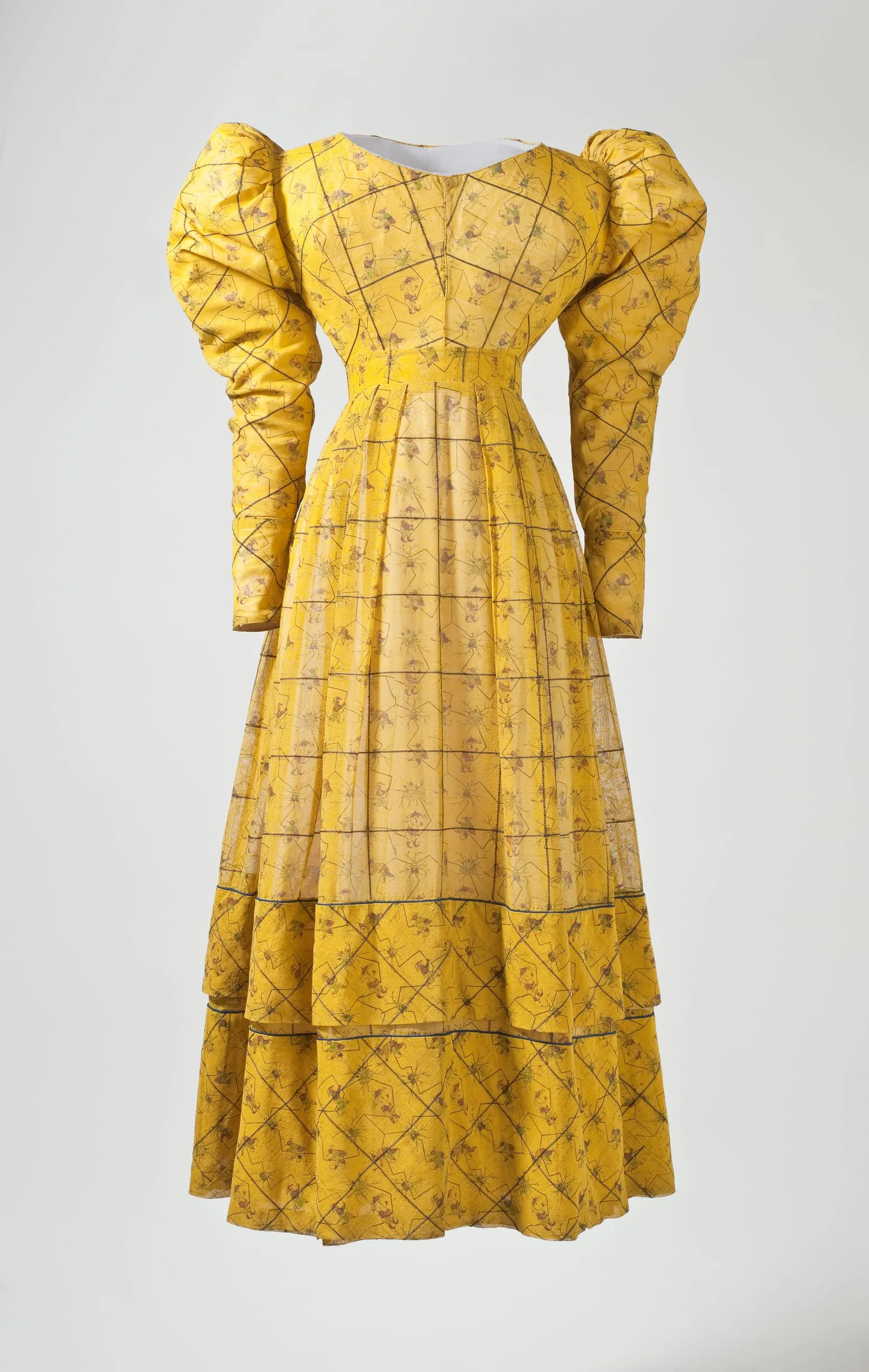
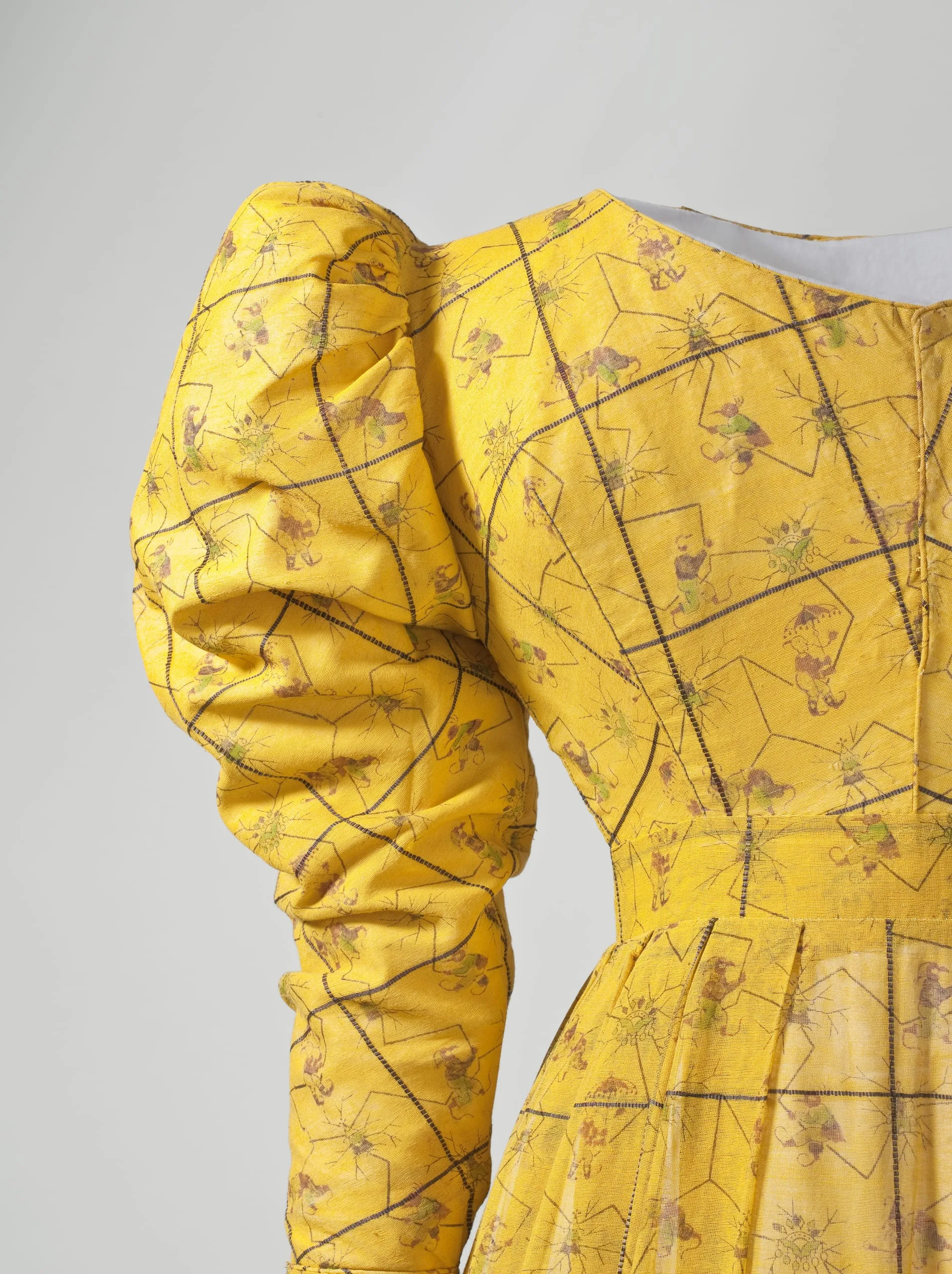
- Woman's Dress
- Date Made
- circa 1827
- Medium
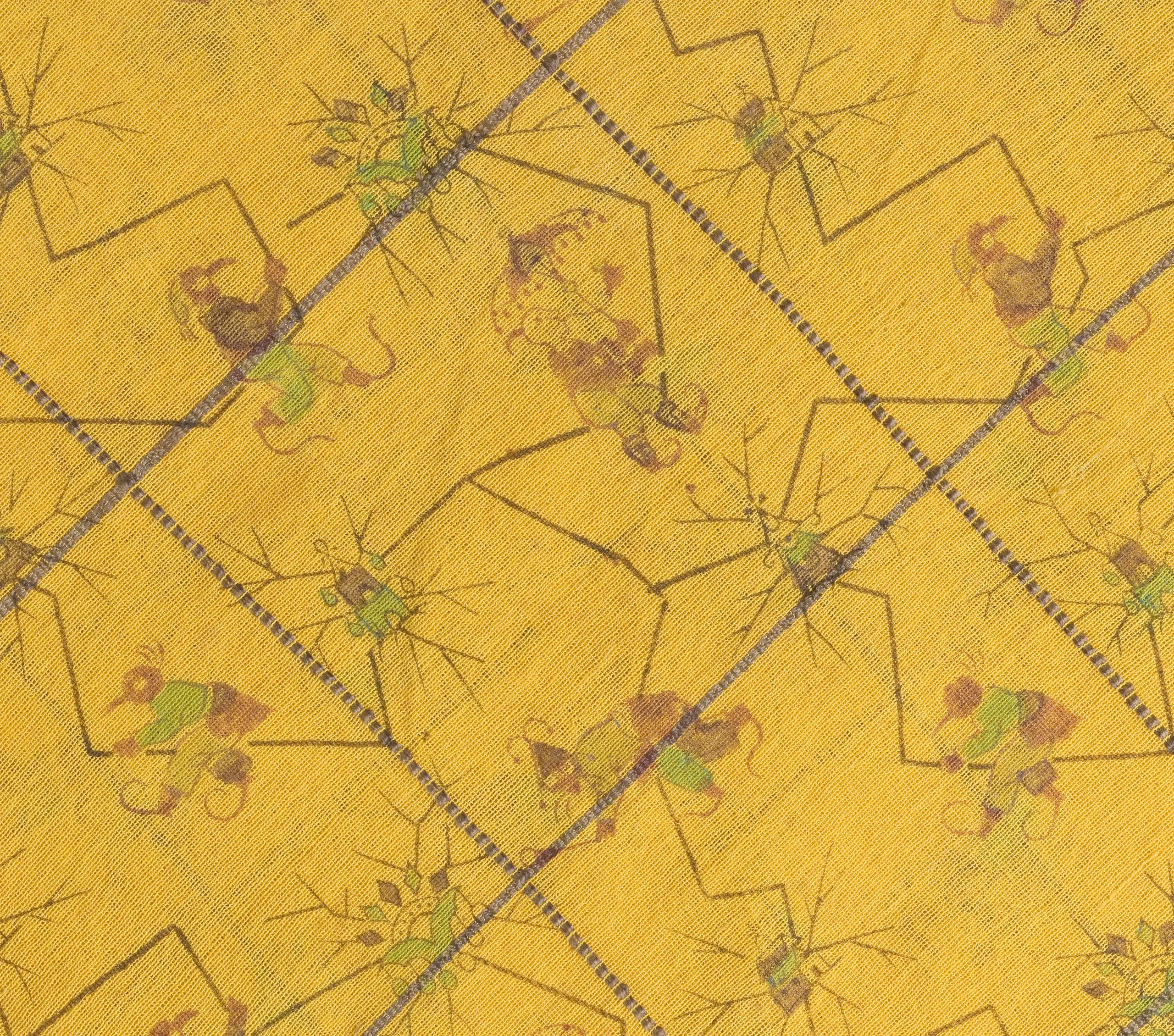
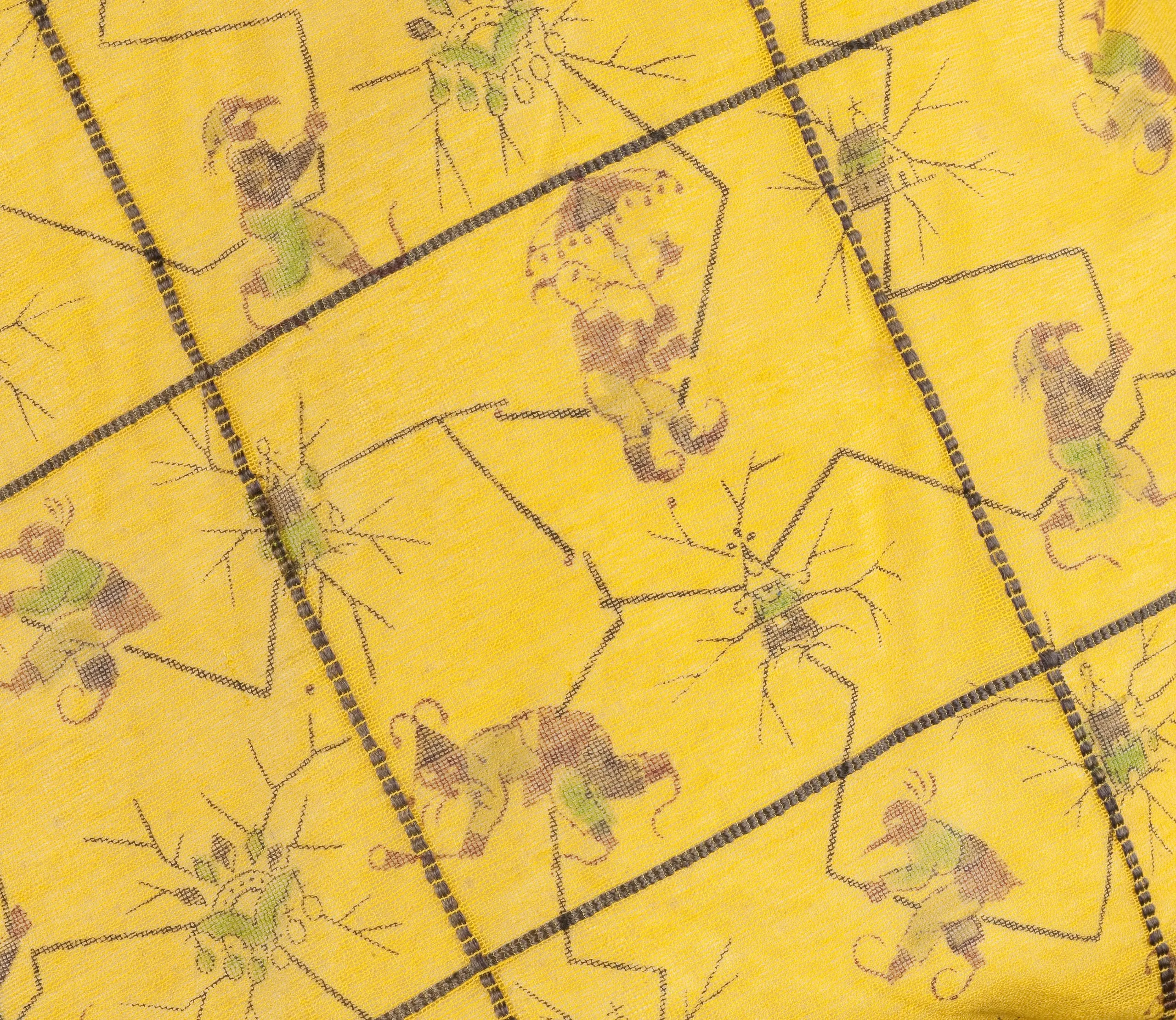
- Silk and cotton gauze with silk supplementary warp and weft patterning, block-printed
- Dimensions
- Center back length: 49 in. (124.46 cm)
- Accession Number
- M.2007.211.937
- Collecting Area
- Costume and Textiles
- Curatorial Notes
Advances in dye chemistry in the early nineteenth century included the discovery of chrome yellow, green, and orange, derived from the chromate of lead. This vivid yellow, introduced in Alsace in 1819, was an extremely popular color in Europe during the 1820s. Also a common aspect of chinoiserie for its association with royalty, yellow was a recurrent background for fanciful (and stereotypical) dancing figures with pigtails, pipes, and parasols.
- Selected Bibliography
- Takeda, Sharon Sadako and Kaye Durland Spilker. Fashioning Fashion: Deux Siècles de Mode Européenne, 1700-1915. Paris: Arts Décoratifs; Los Angeles: Los Angeles County Museum of Art; Munich; New York: Delmonico Books-Prestel, 2013.
- Takeda, Sharon Sadako and Kaye Durland Spilker. Fashioning Fashion: European Dress in Detail, 1700-1915. Los Angeles: Los Angeles County Museum of Art; Munich; New York: Delmonico Books/Prestel, 2010.
- Takeda, Sharon Sadako and Kaye Durland Spilker. Fashioning Fashion: Europäische Moden, 1700-1915. Los Angeles: Los Angeles County Museum of Art; Munich; New York: Prestel, 2012.