LACMA

ShopMembershipMyLACMATickets
LACMA
Los Angeles County Museum of Art
5905 Wilshire Blvd.
Los Angeles, CA 90036
info@lacma.org
(323) 857-6000
Sign up to receive emails
Subscribe
© Museum Associates 2026
  • About LACMA
  • Jobs
  • Building LACMA
  • Host An Event
  • Unframed
  • Press
  • FAQs
  • Log in to MyLACMA
  • Privacy Policy
© Museum Associates 2026
Collections

Albert Gleizes
Brooklyn Bridge1915

On view:
Geffen Galleries, floor 1
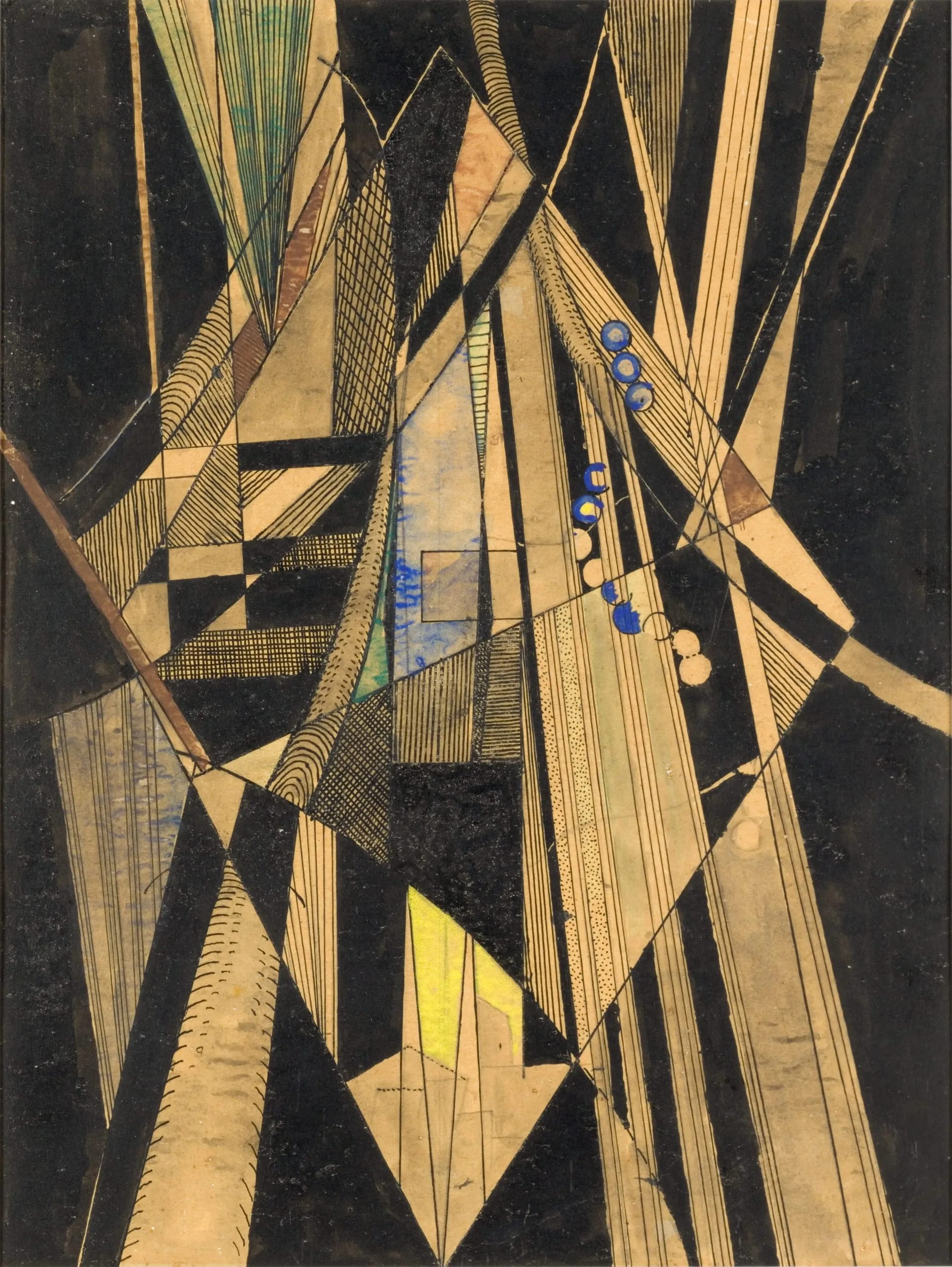
Vertical abstract drawing with radiating angular planes in inked hatching over a parchment ground against a black background, with small accents of cobalt blue, yellow, and pale blue
Artist or Maker
Albert Gleizes
France, also active United States, 1881-1953
Title
Brooklyn Bridge
Date Made
1915
Medium
Pen and ink and black wash, gouache, watercolor, and charcoal on thin paper laid down on cardboard
Dimensions
9 13/16 × 7 1/2 in. (25 × 19 cm) Frame: 23 1/4 × 20 5/8 × 1 3/4 in. (59.06 × 52.39 × 4.45 cm)
Credit Line
Purchased with funds provided by the Joseph B. Gould Foundation
Accession Number
M.2007.86
Classification
Drawings
Collecting Area
Prints and Drawings
Curatorial Notes

Albert Gleizes was a French painter, theorist, and key figure in the development of Cubism. Born in Paris, he was a cofounder of the movement and authored, with Jean Metzinger, Du Cubisme (1912), one of the first theoretical texts on the radical new style. His work emphasized geometric abstraction and dynamic compositions, often incorporating rhythmic patterns and vibrant colors. Gleizes participated in major exhibitions, including the Salon des Indépendants and the groundbreaking 1913 Armory Show in New York. With the onset of World War I, he served briefly in the army. When his military service ended in 1915, he and his wife left France for New York. There, at a distance from the war, the influence and energy of America took hold, and his art was filled with the landmarks and nightlife of the city, notably in several depictions of the Brooklyn Bridge. Completed in 1883 and celebrated as a triumph of engineering and symbol of urban progress, the Brooklyn Bridge was known for its distinctive Gothic-style towers and sweeping steel cables. In Gleizes’s abstract rendition, it is a skein of curved and straight ink lines, floating over a black, nocturnal background.

Britt Salvesen

2024
Related Unframed

The Sound of . . .
The Sound of . . .
  • October 17, 2008