LACMA

ShopMembershipMyLACMATickets
LACMA
Los Angeles County Museum of Art
5905 Wilshire Blvd.
Los Angeles, CA 90036
info@lacma.org
(323) 857-6000
Sign up to receive emails
Subscribe
© Museum Associates 2025

Museum Hours

Monday

11 am–6 pm

Tuesday

11 am–6 pm

Wednesday

Closed

Thursday

11 am–6 pm

Friday

11 am–8 pm

Saturday

10 am–7 pm

Sunday

10 am–7 pm


  • About LACMA
  • Jobs
  • Building LACMA
  • Host An Event
  • Unframed
  • Press
  • FAQs
  • Log in to MyLACMA
  • Privacy Policy
© Museum Associates 2025
Collections

Adolf Loos
Clock1906-1907

On view:
Geffen Galleries, Responses to Industrialization
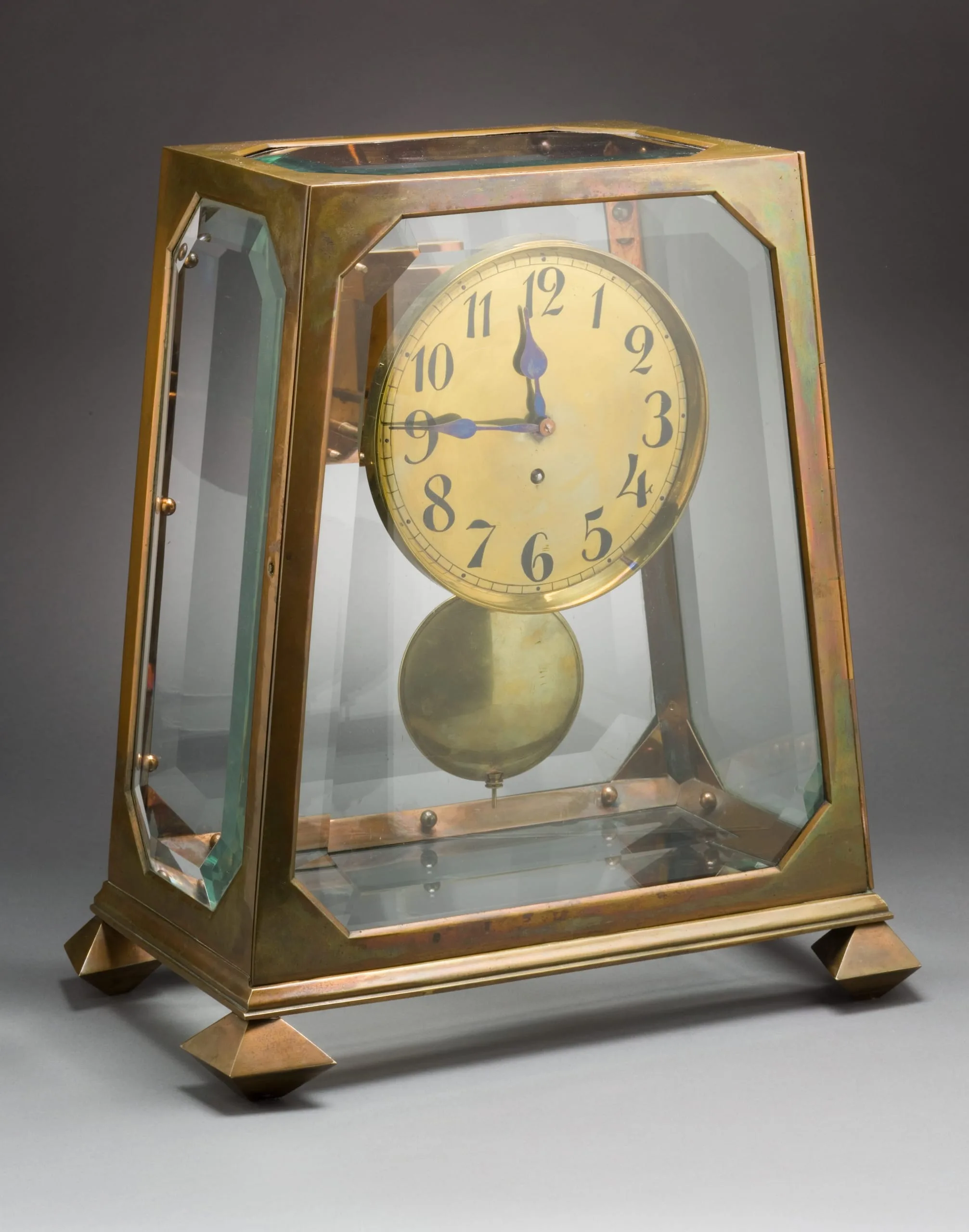
Brass mantel clock with beveled glass panels on all sides, round gold-toned Arabic numeral dial, blue steel hands, and visible pendulum bob
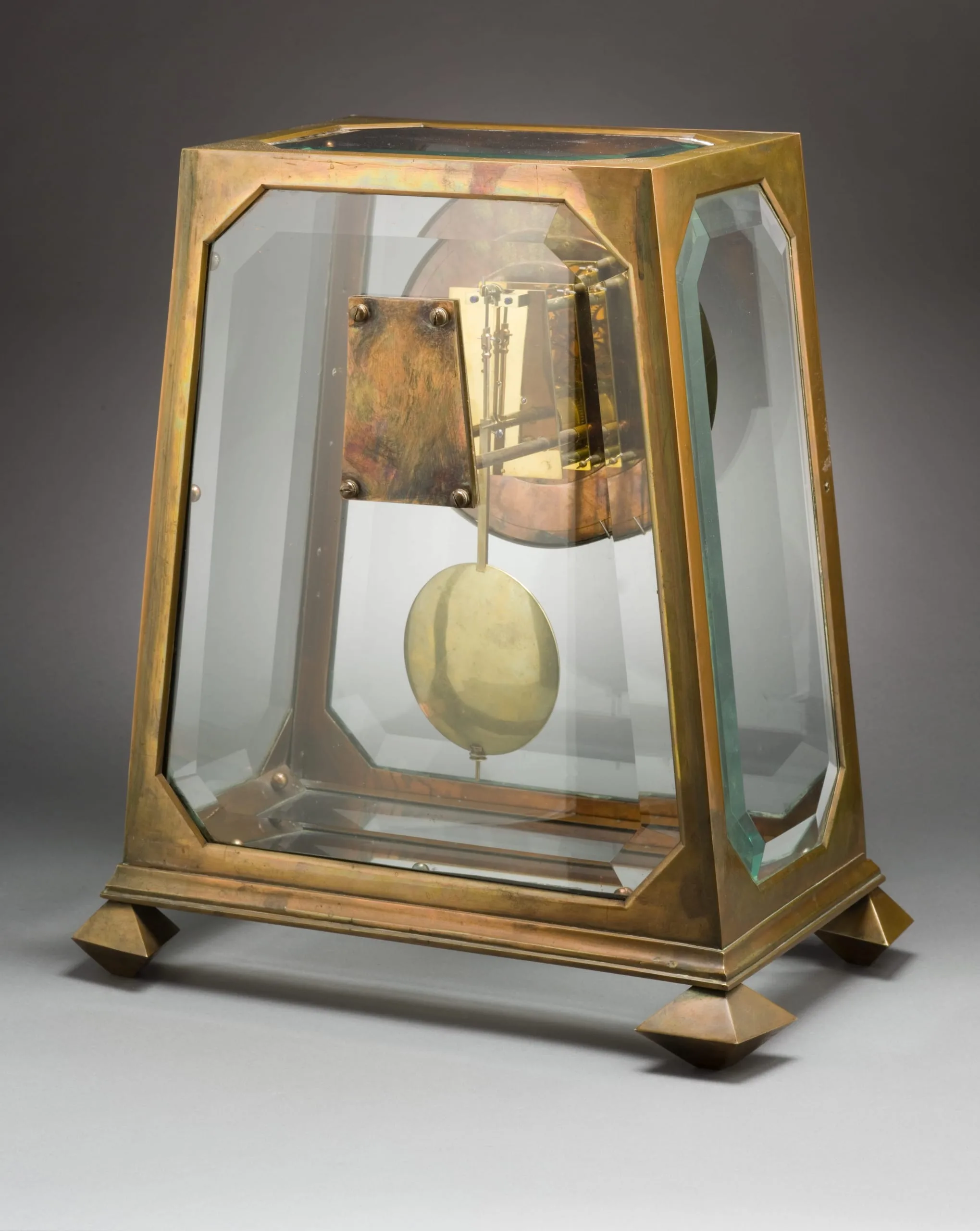
Brass and beveled glass mantel clock with open interior revealing movement, pendulum with oval brass bob, and escapement mechanism; trapezoidal case on four bracket feet, with chamfered glass panels on all sides.
Artist or Maker
Adolf Loos
Title
Clock
Place Made
Austria
Date Made
1906-1907
Medium
Brass, bronze and glass
Dimensions
a) Clock: 18 3/4 x 17 1/4 x 10 1/4 in. (47.63 x 43.82 x 26.04 cm); b) Pendulum length: 10 1/8 in. (25.72 cm); b) Pendulum diameter: 4 1/4 in. (10.8 cm)
Credit Line
Purchased with funds provided by Mark and Debbie Attanasio, and Max Palevsky and Jodie Evans
Accession Number
M.2007.97a-b
Classification
Furnishings
Collecting Area
Decorative Arts and Design
Curatorial Notes
With its lack of ornamentation, and clear glass revealing its mechanism, this recently acquired Clock epitomizes the design philosophy of the Viennese architect Adolf Loos. Loos rejected innovation for its own sake. He believed in either using traditional vernacular forms for furnishings, or, having produced a "pure" form determined by function, in altering it only slightly over time. Although Loos was active at the same time as the Wiener Werkstätte, the design collaborative that elevated decorative arts to the status of fine arts, his aesthetic was based on abolishing all embellishment in the name of purity, truth, and functionality. Clock, made for the Vienna apartment of factory owner Arthur Friedmann between 1906 and 1907, is the first object to enter LACMA's collection that represents this contrasting approach to modernism.