- Title
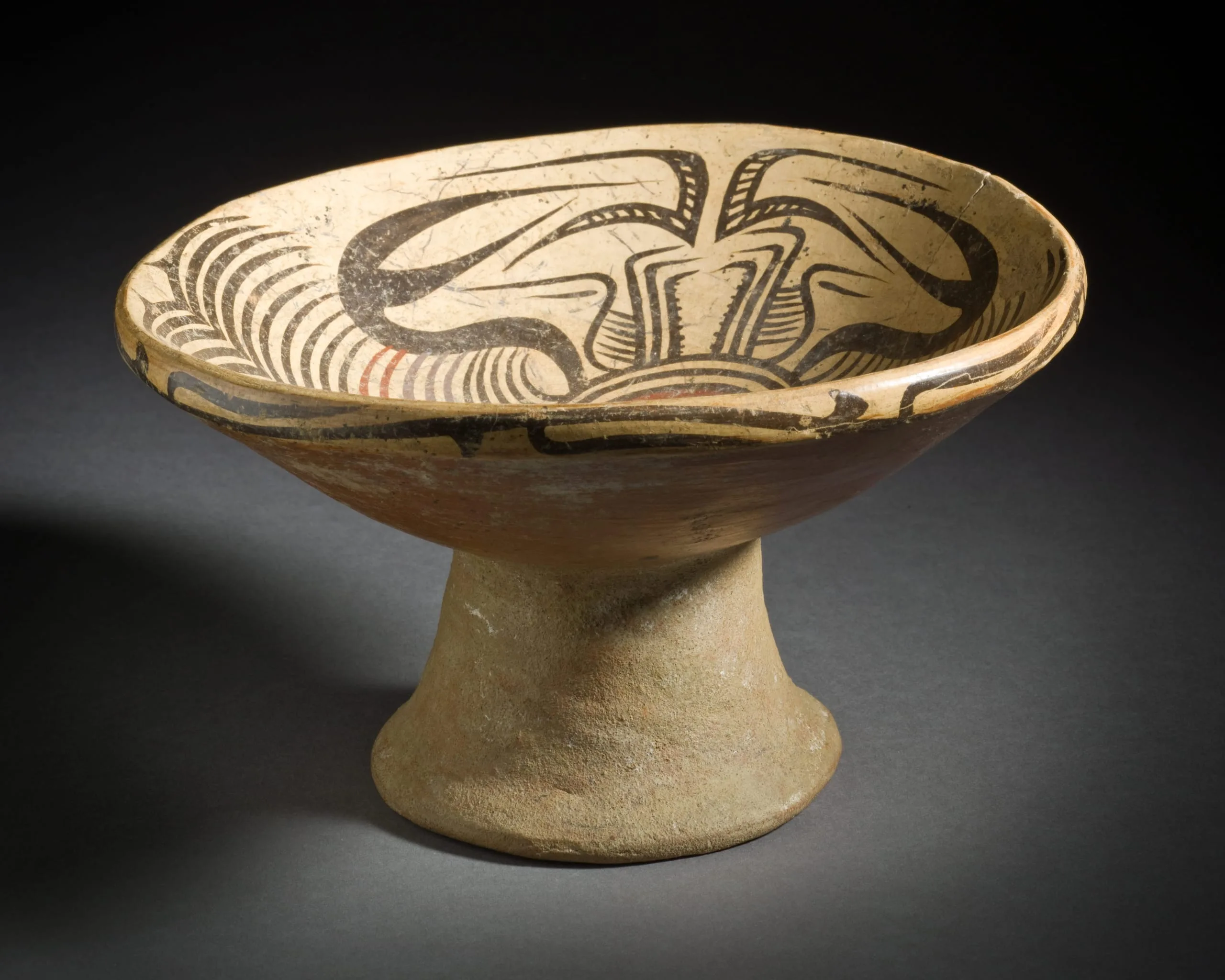
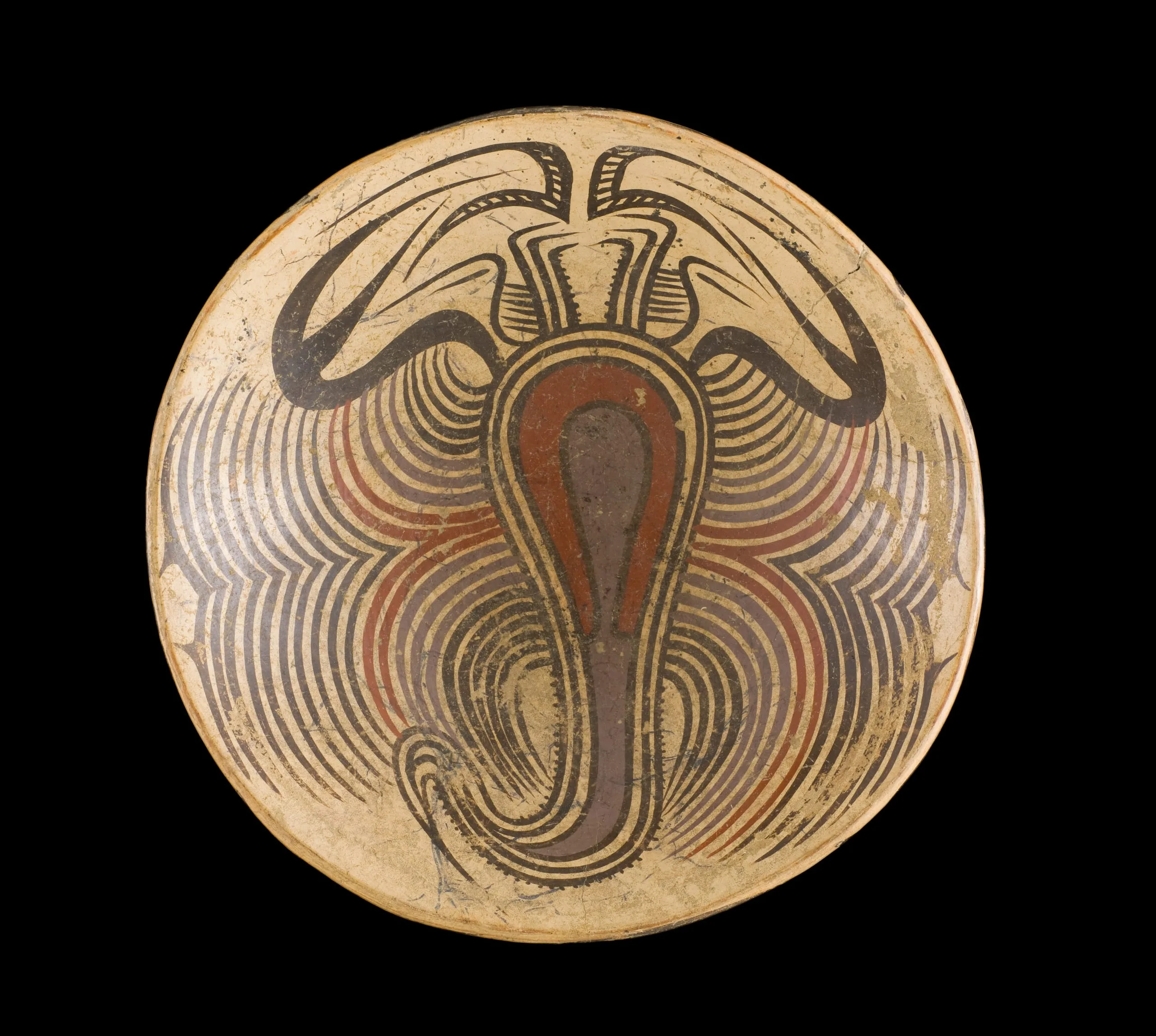
- Pedestal Bowl with Scorpion
- Date Made
- 650–1100 CE
- Medium
- Slip-painted ceramic
- Dimensions
- Height: 4 1/4 in. (10.8 cm); Diameter: 7 7/8 in. (20 cm)
- Accession Number
- M.2006.170.1
- Curatorial Notes
This rather naturalistic representation of a scorpion rendered in the distinctive Joaquín style contrasts sharply with the abstraction and hybridization of creatures painted in other regions of Panama during the same time period. From this we can deduce that it was made in the southern part of the Azuero Peninsula sometime between 650 and 1100.
Chronicles from sixteenth-century Mexico describe an ointment made of tobacco, snakes, spiders, and scorpions that was applied to shamans’ bodies, causing hallucinogenic visions as toxins were absorbed through the skin. Scorpions may have been similarly used in ancient Panama. The circular bands radiating from the body of the scorpion depicted here signal its power. The two appendages extending from its mouth represent pectines, physiological features the inclusion of which indicates close observation of the arachnid.
Julia Burtenshaw
2018/2024