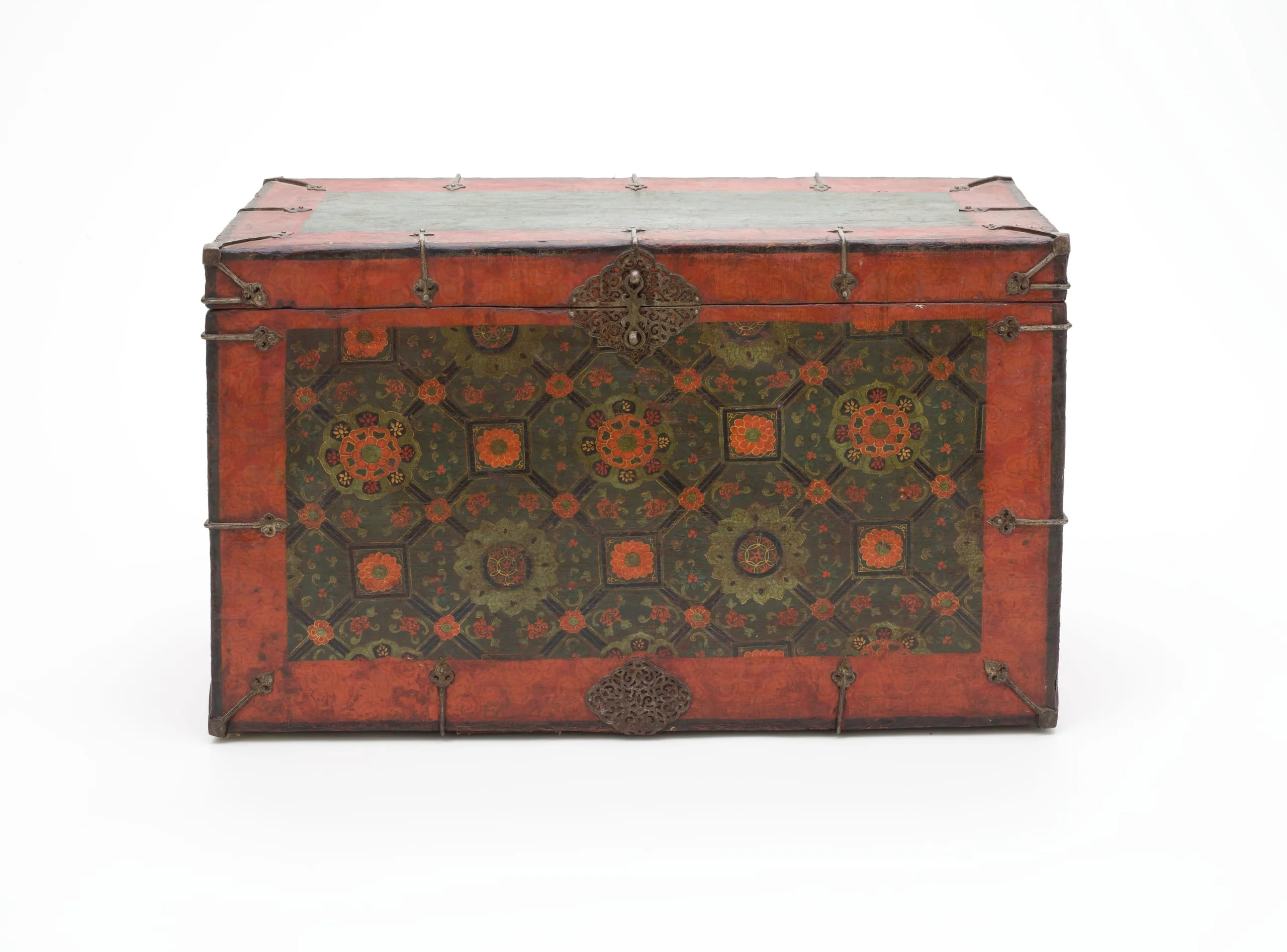
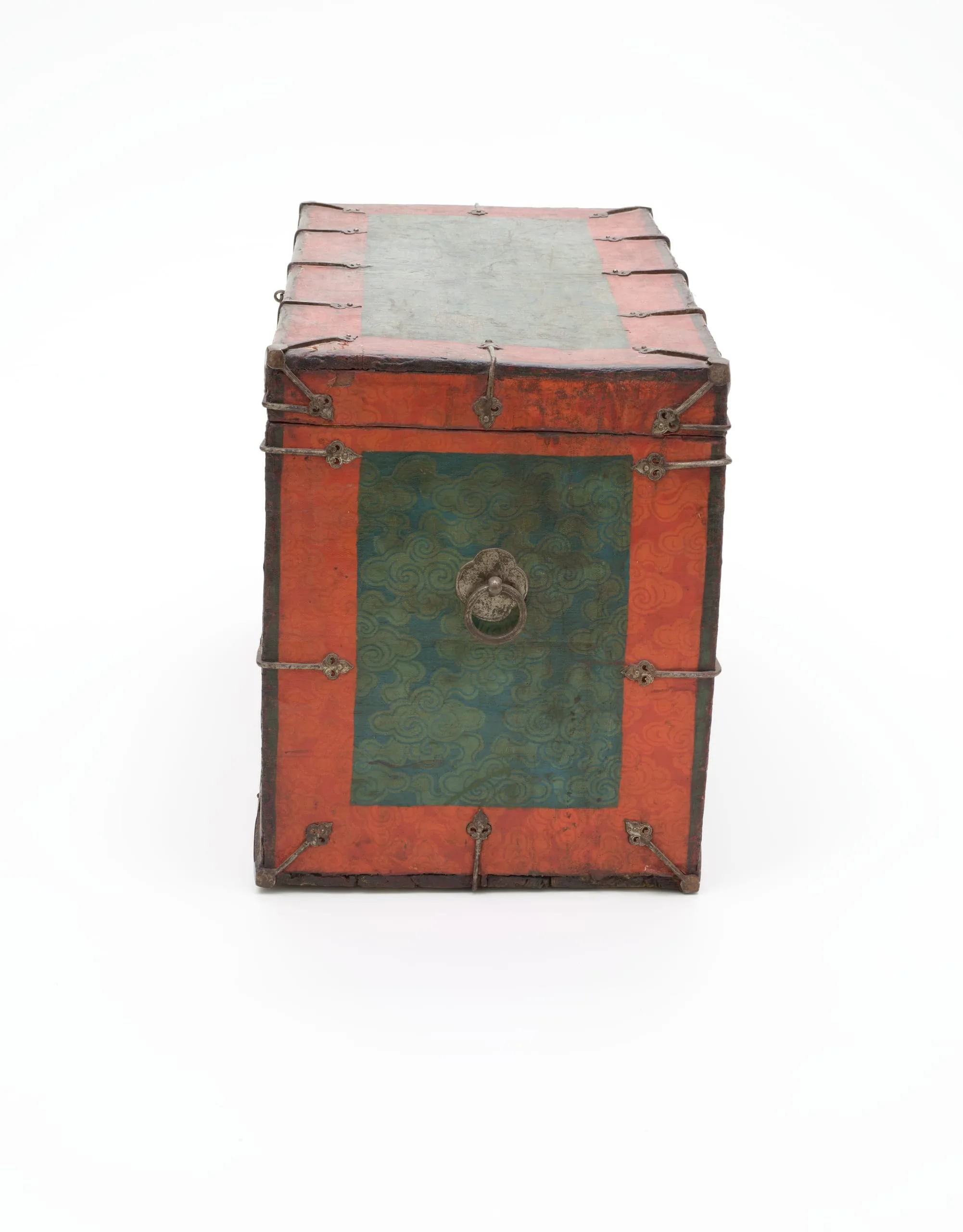
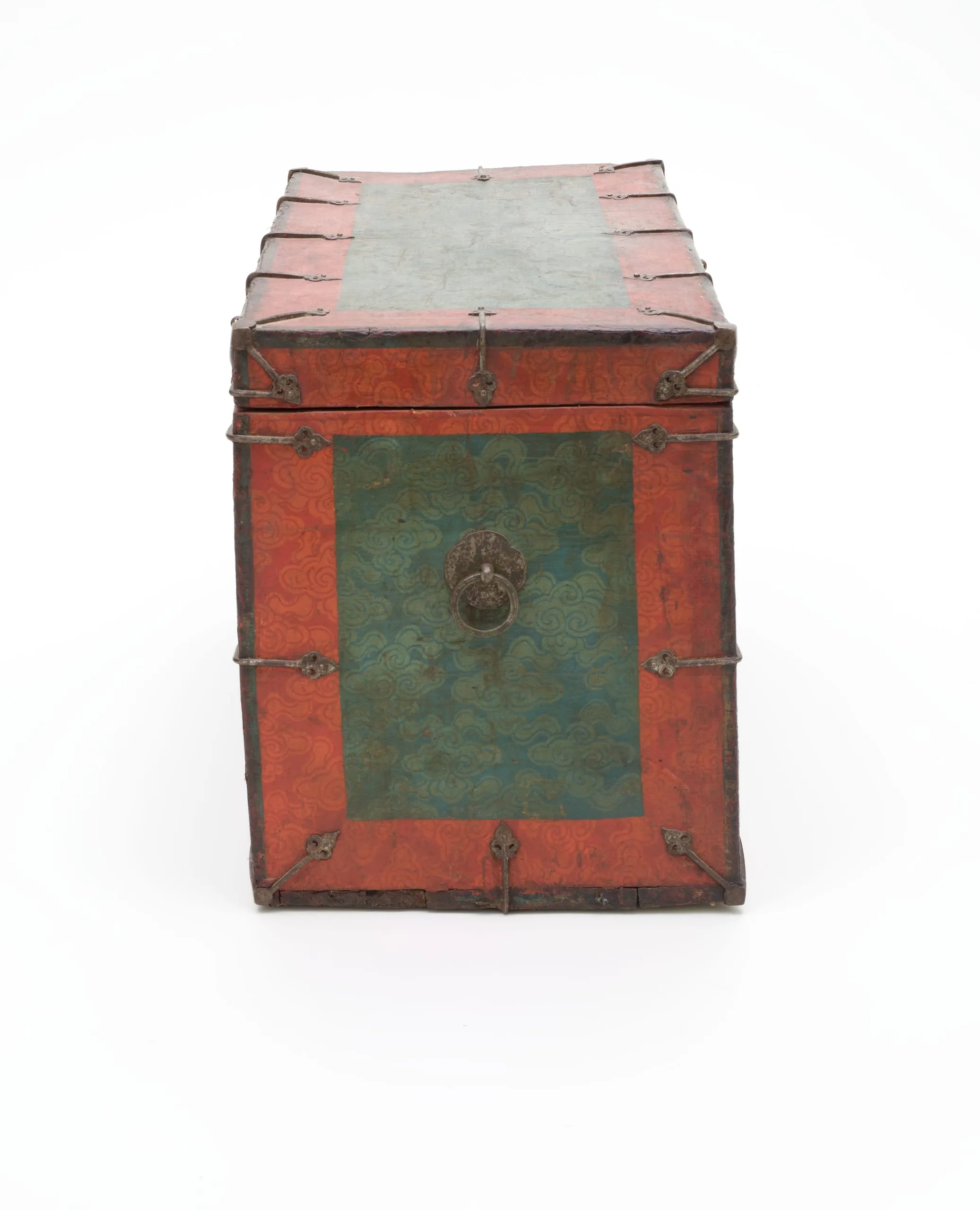
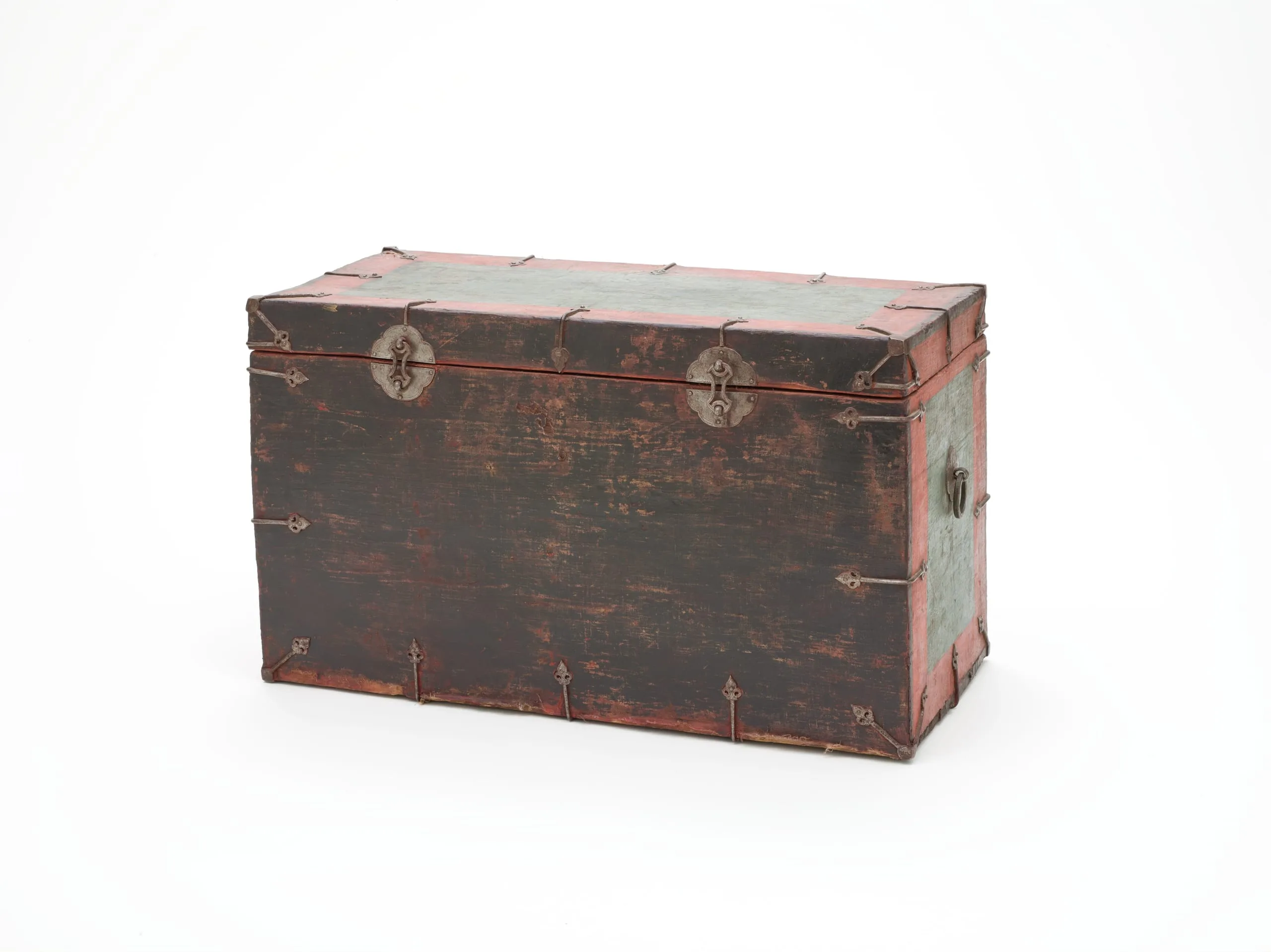
The painted decoration on the exterior of Tibetan furniture is often determined by the intended function of the particular piece of furniture. For example, the painted renditions of intricate textile designs found on some trunks suggests that they were used to store luxury textiles imported from China, India, and Europe. One of the most important textile designs is a latticework motif called kati rimo (brocade), which can be traced back to the Mongol culture of the Yuan Dynasty in China (1279-1368) and even earlier in the western Islamic world. This exquisite trunk is embellished with painted kati rimo designs on the front and puffy cloud panels on the top and ends that derive from Ming Dynasty (1368-1644) cloud-patterned damask textiles (see M.86.404). It has been fitted with extensive metal fittings and handles. See also M.2006.156.3a-b and M.2013.183.1.
See Dale Carolyn Gluckman, "A Multifaceted Relationship: Textiles and Tibetan Painted Furniture," in David Kamansky, ed., Wooden Wonders: Tibetan Furniture in Secular and Religious Life (Pasadena: Pacific Asia Museum and Chicago: Serindia Publications, 2004), pp. 77-79 and p. 256, no. 77.