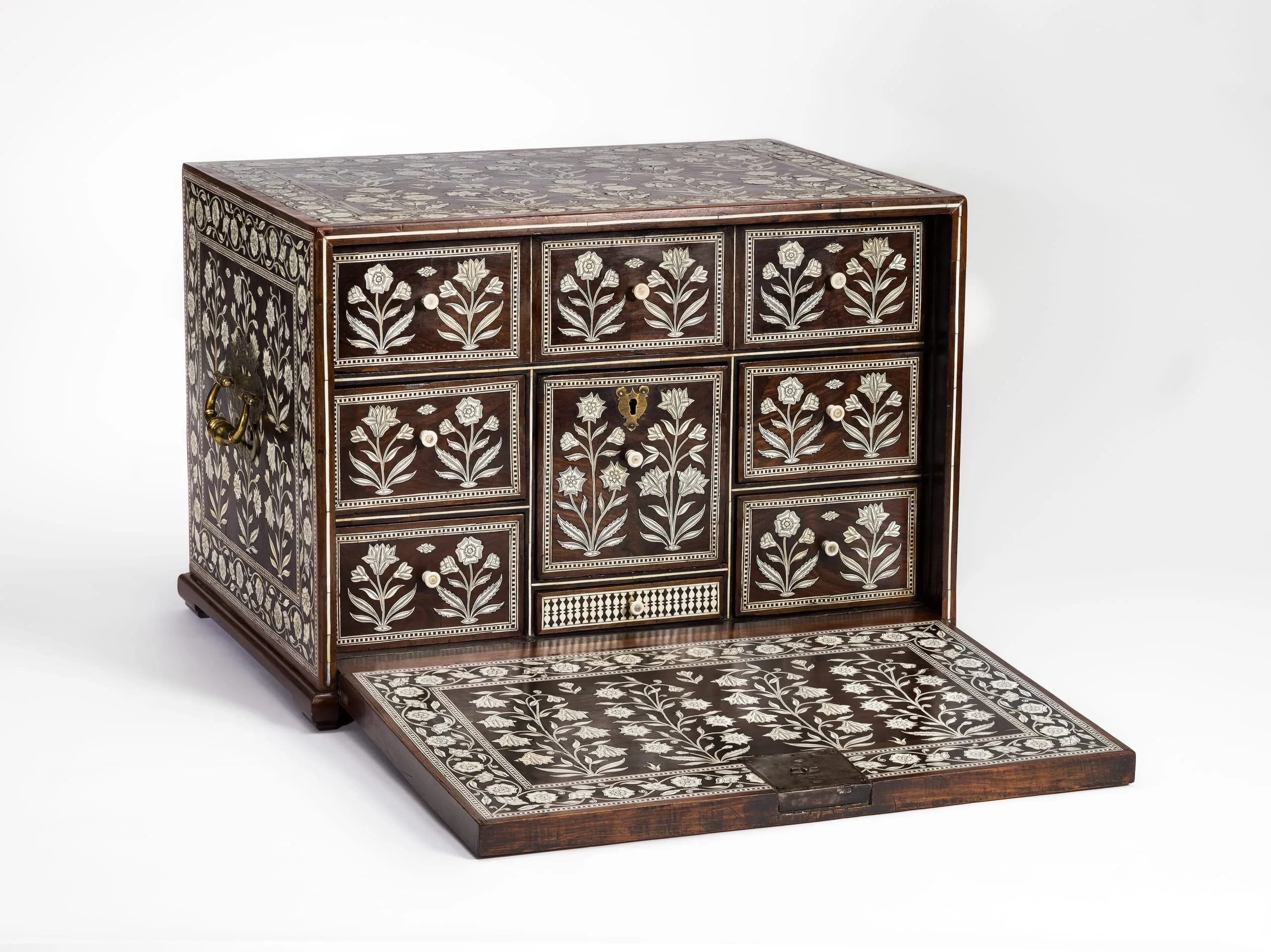
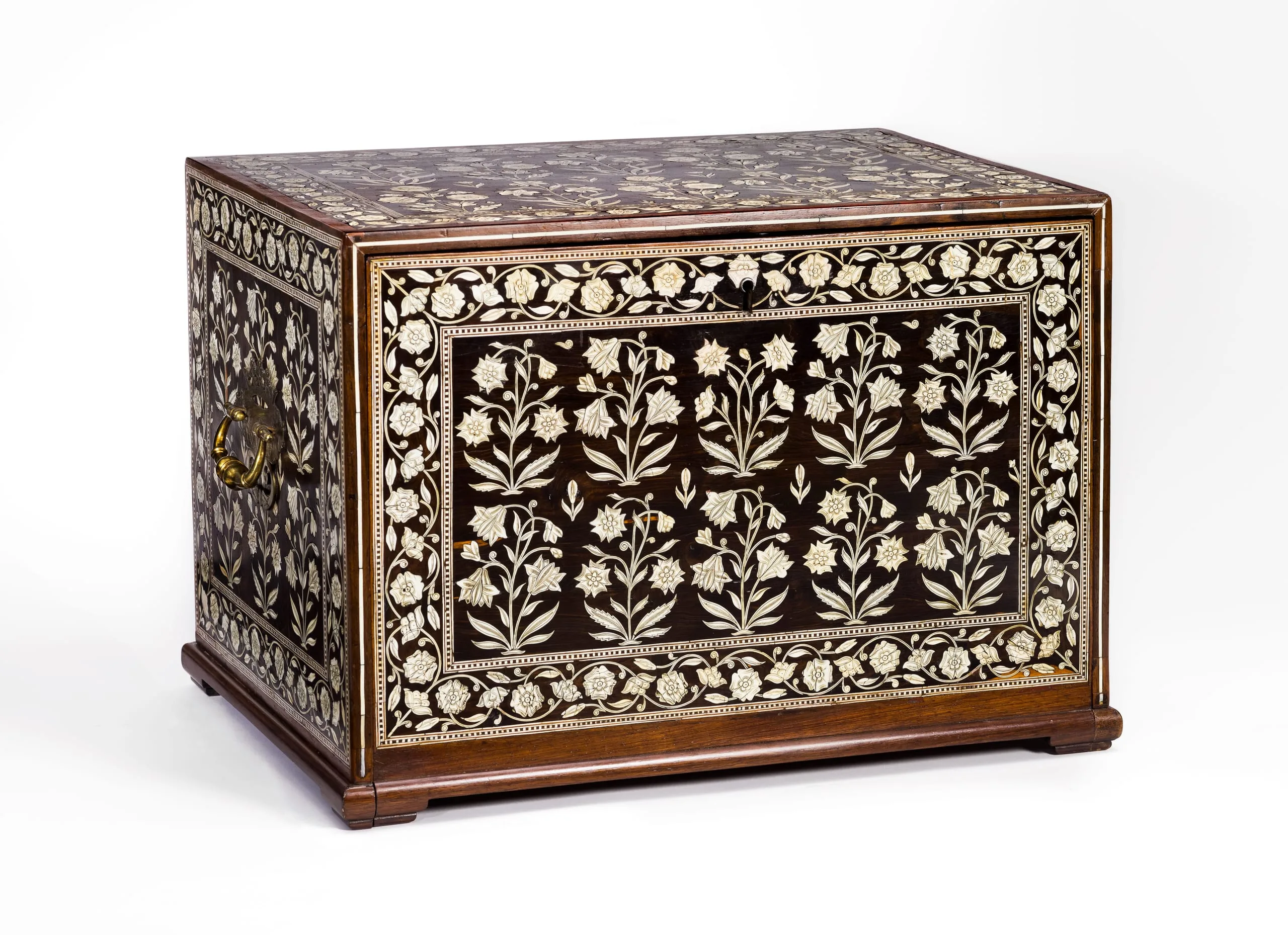
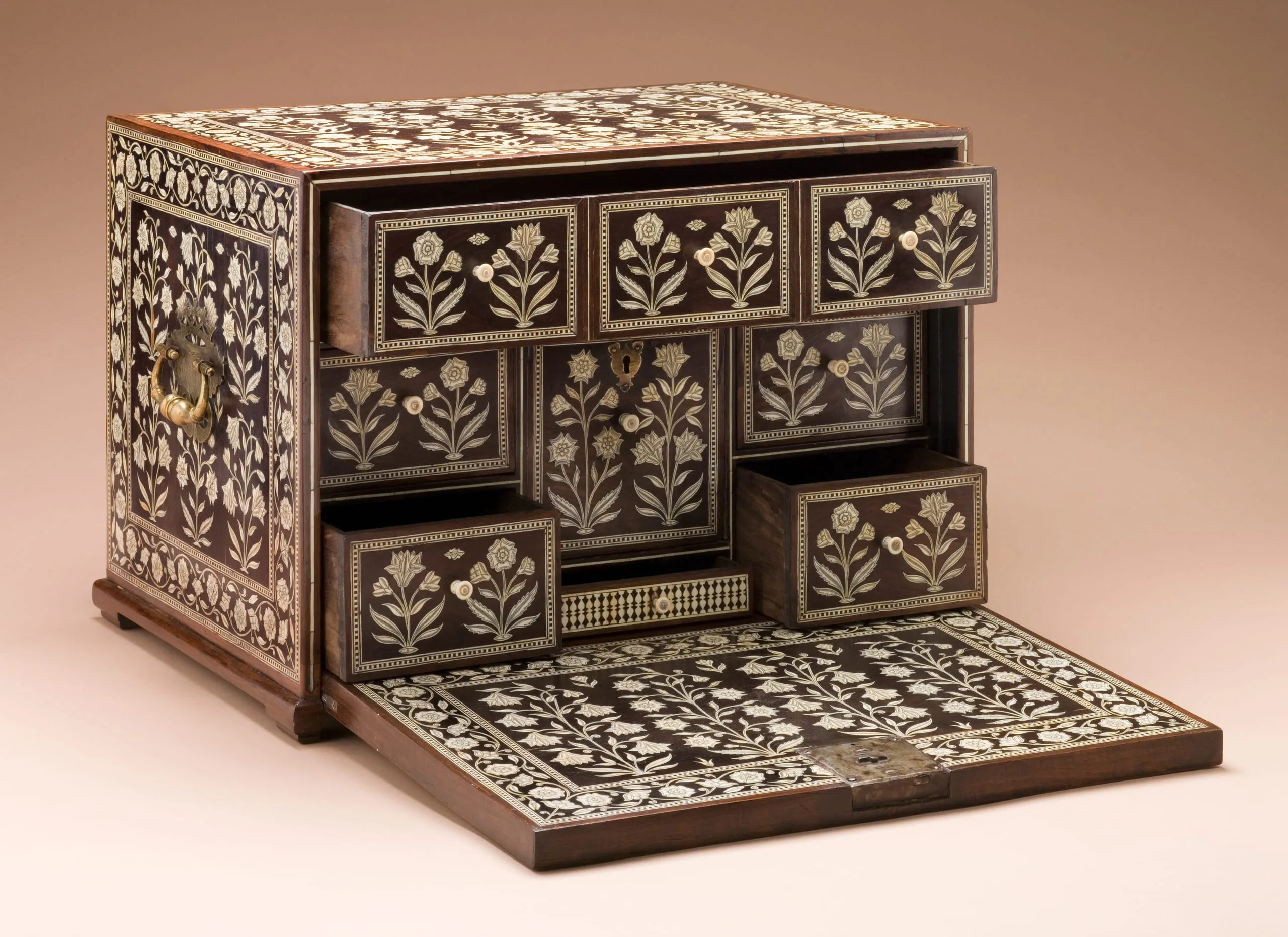
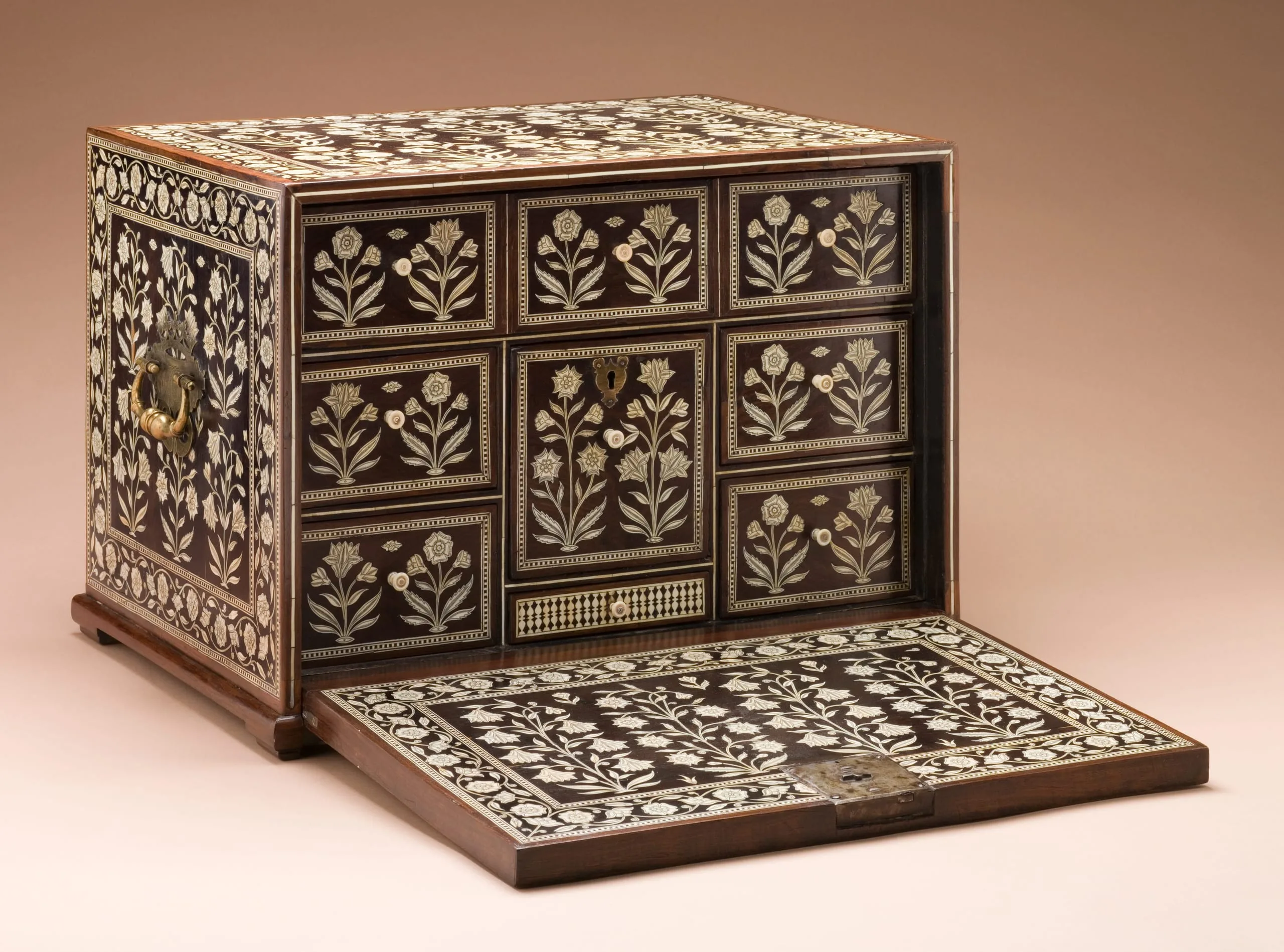
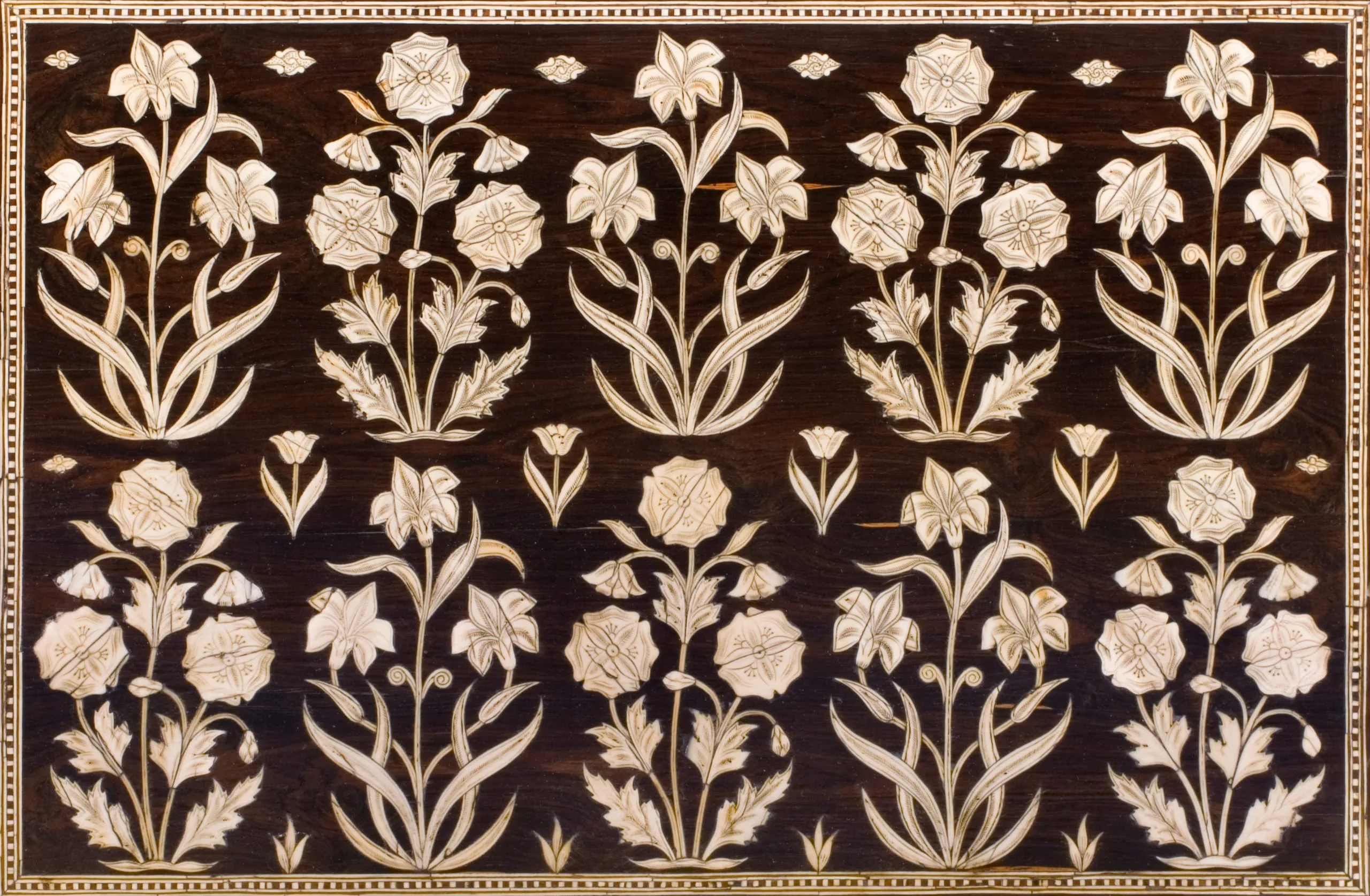
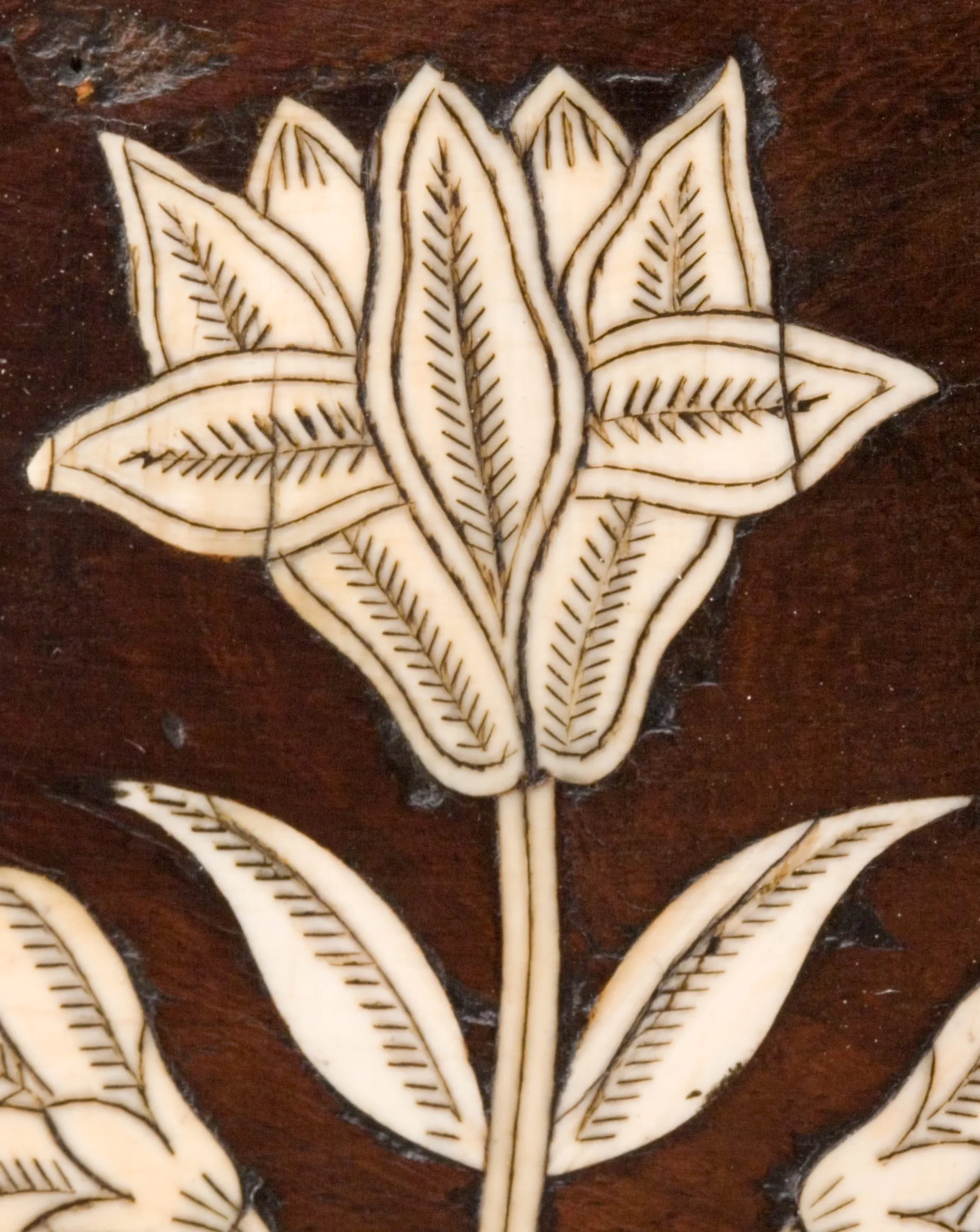
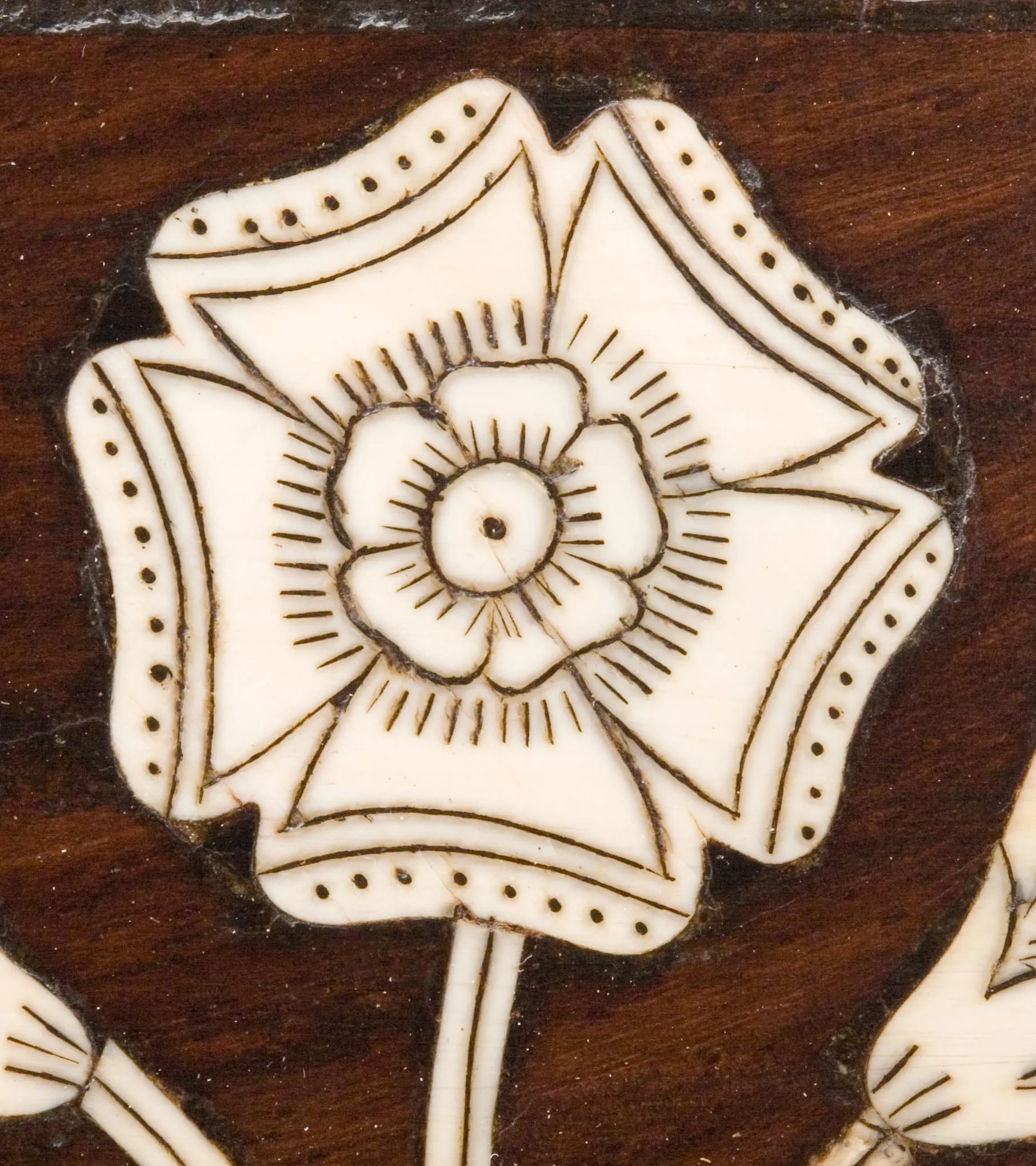
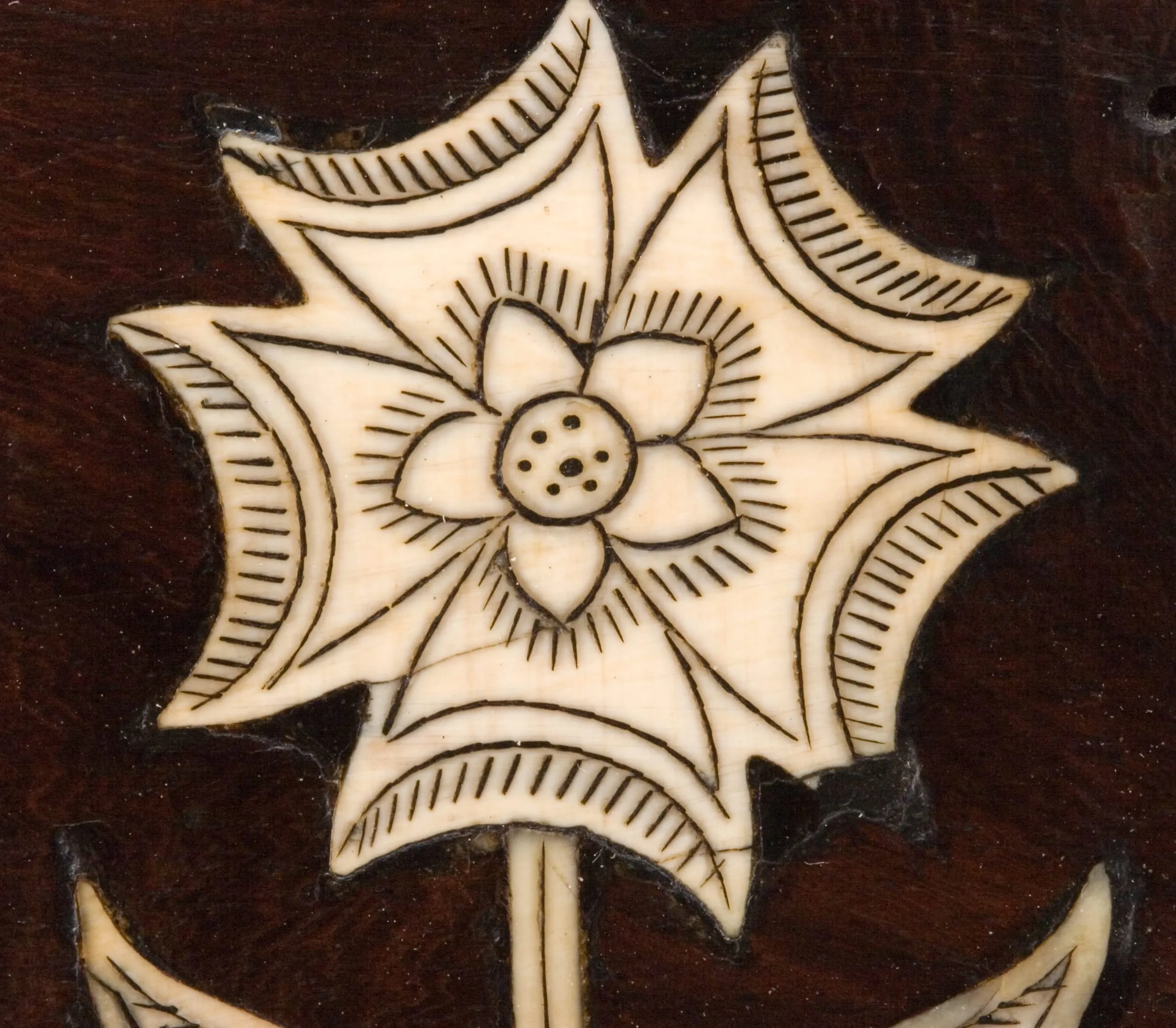
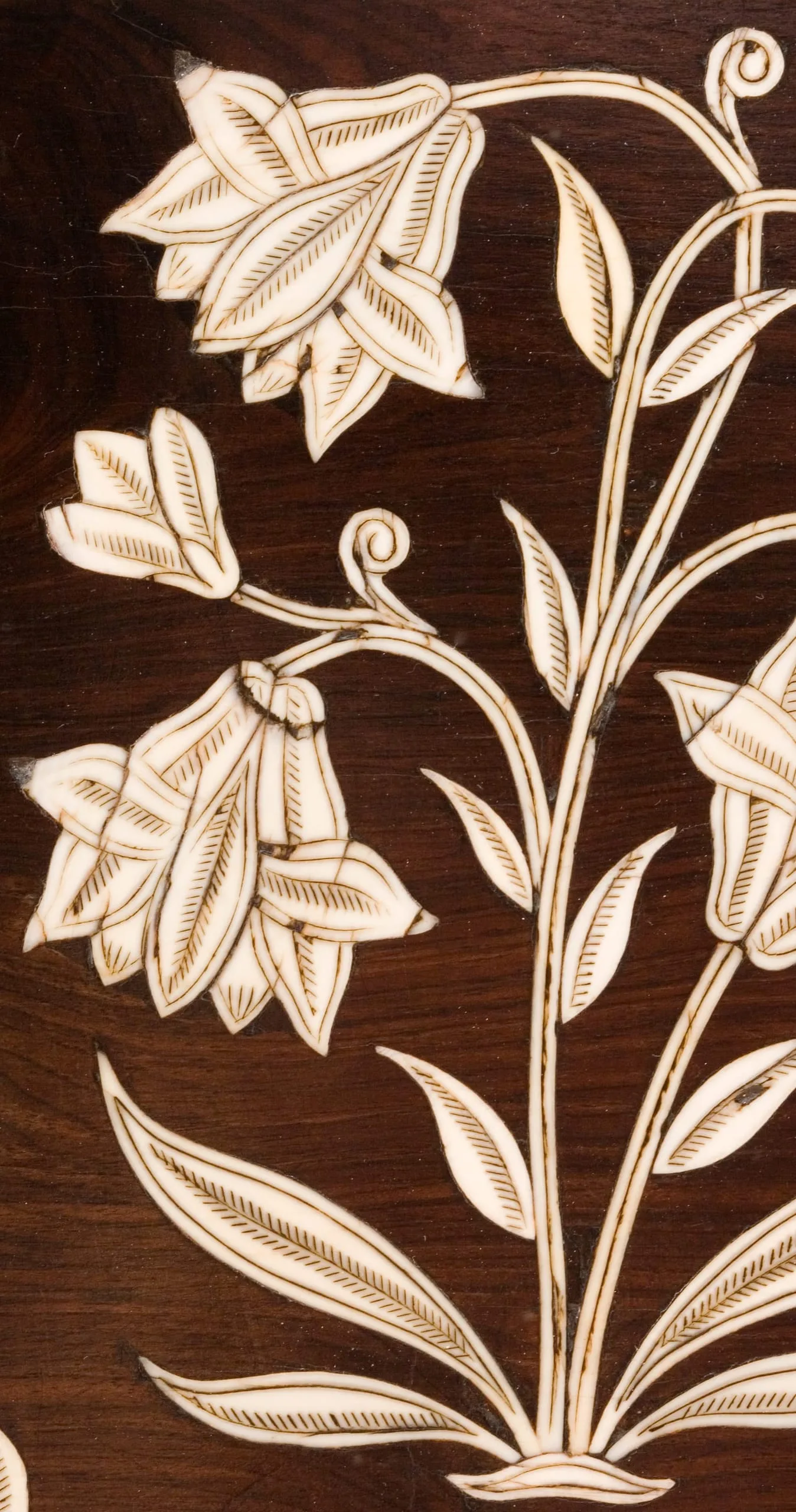
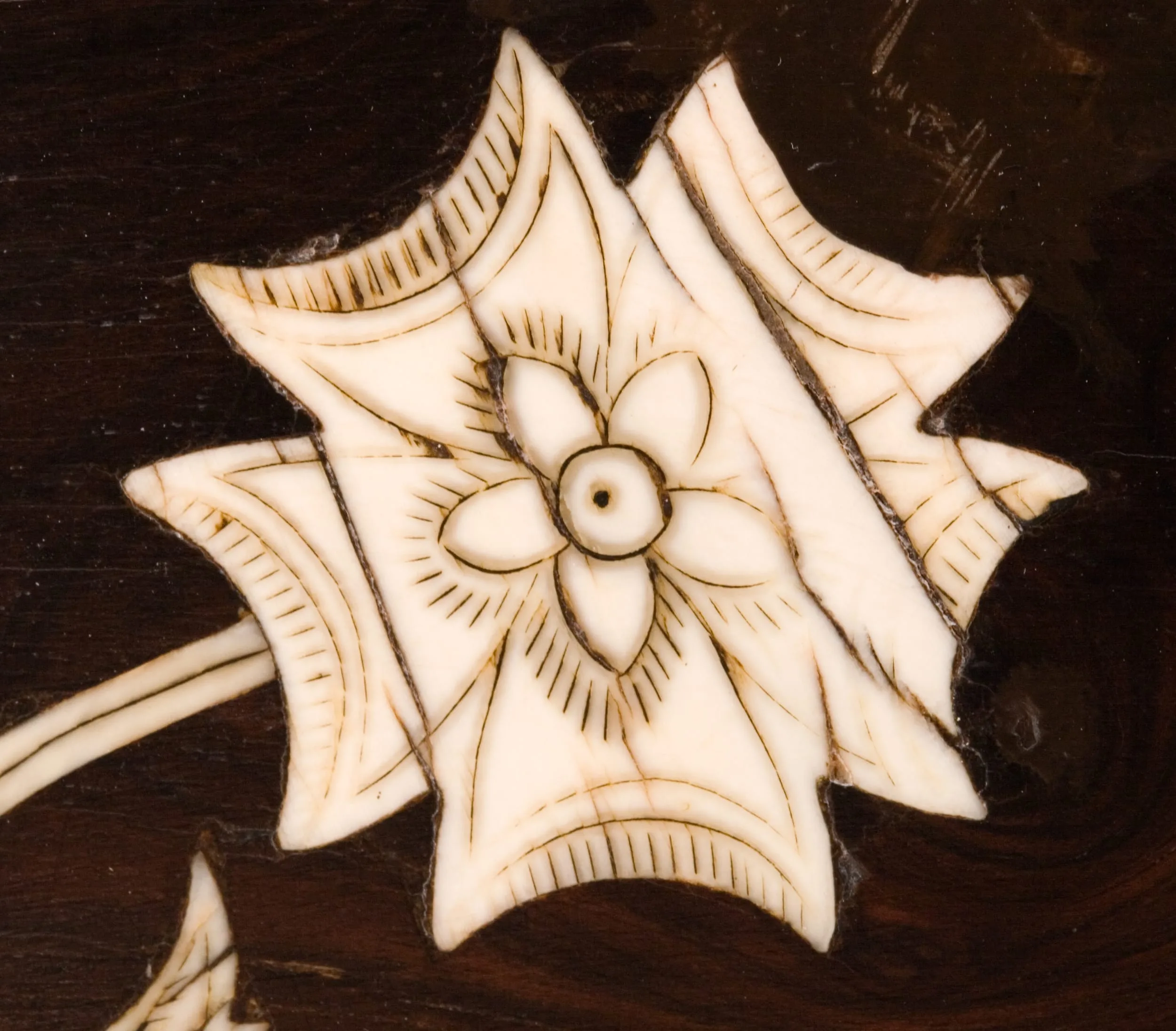
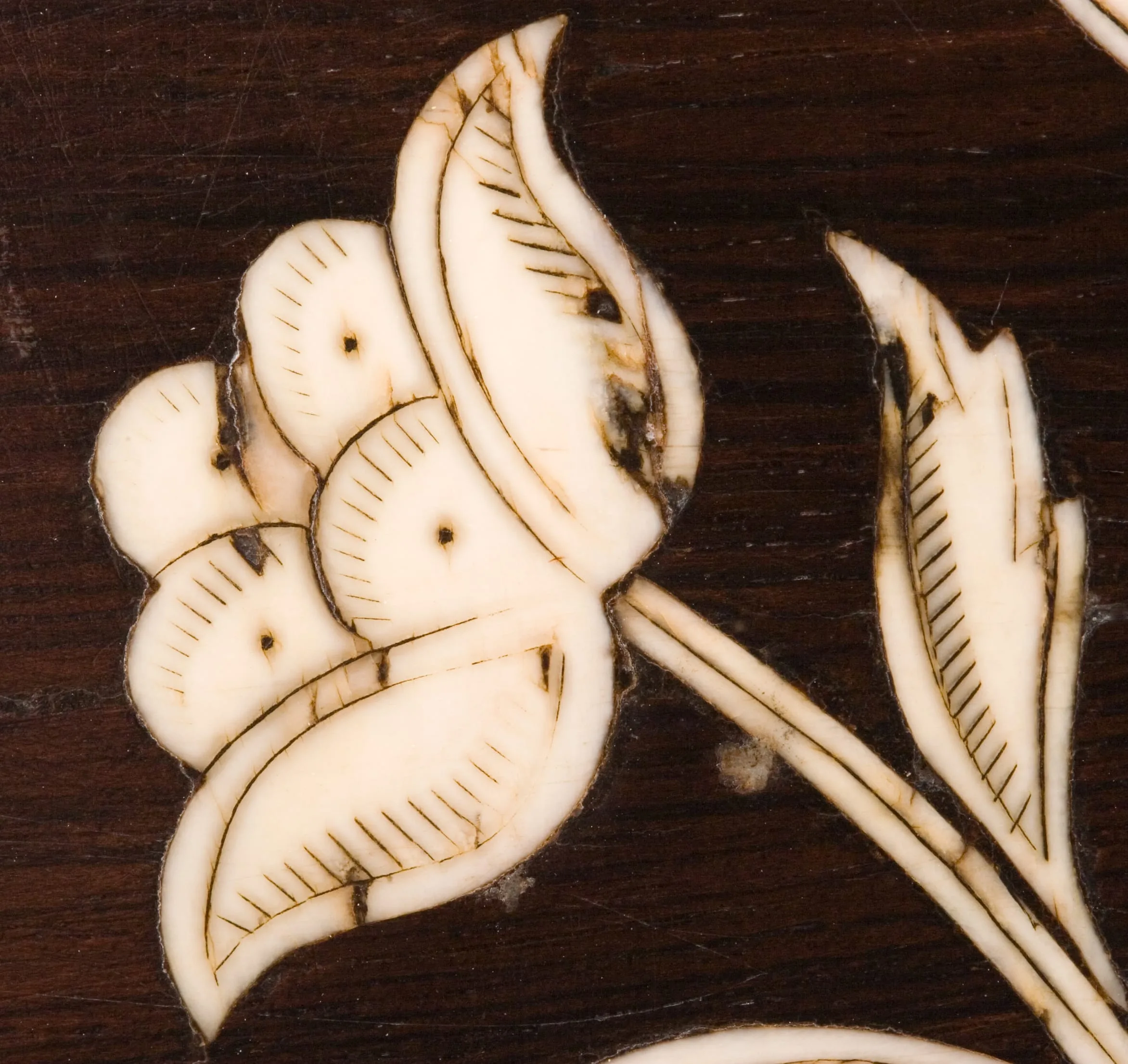
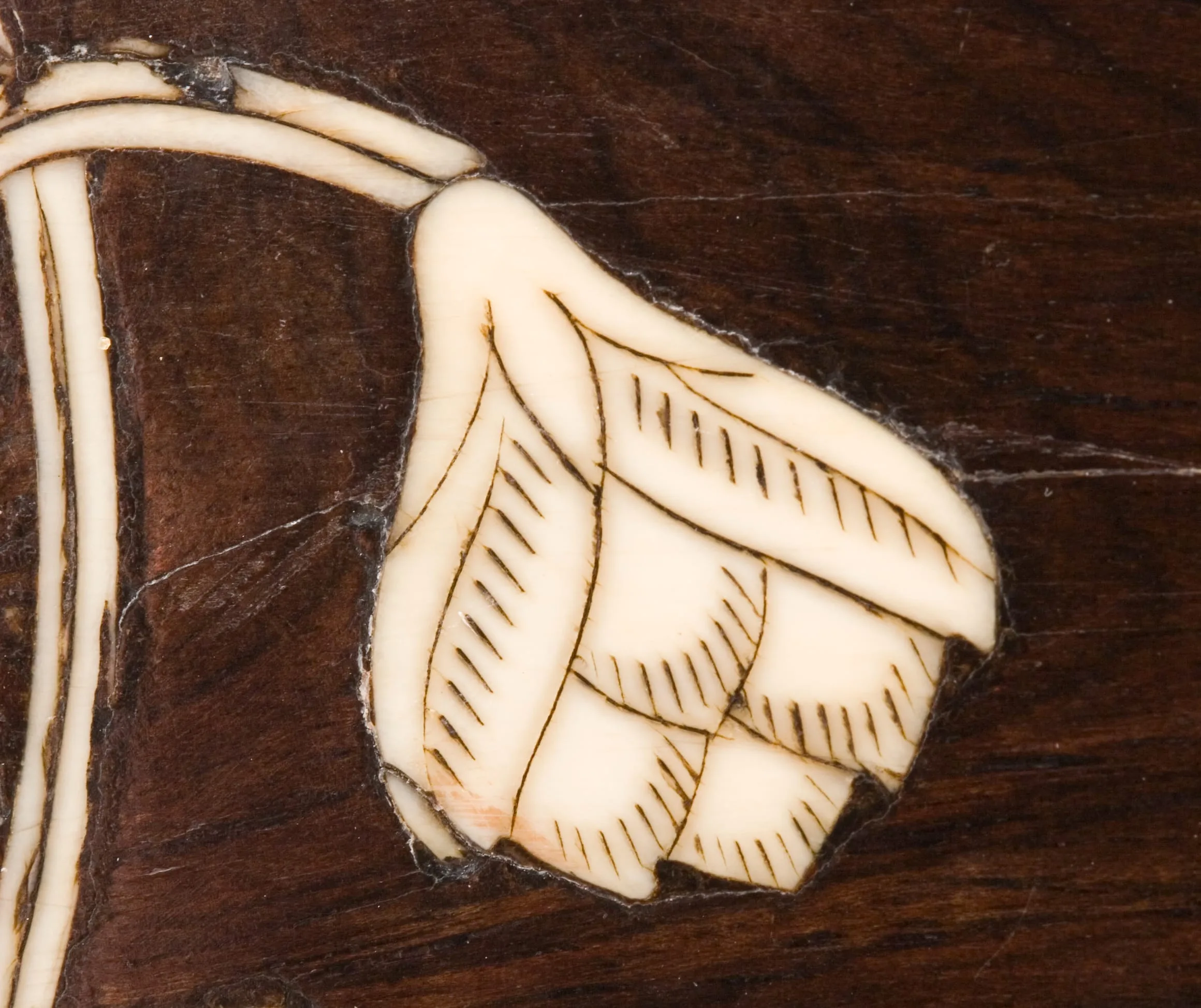
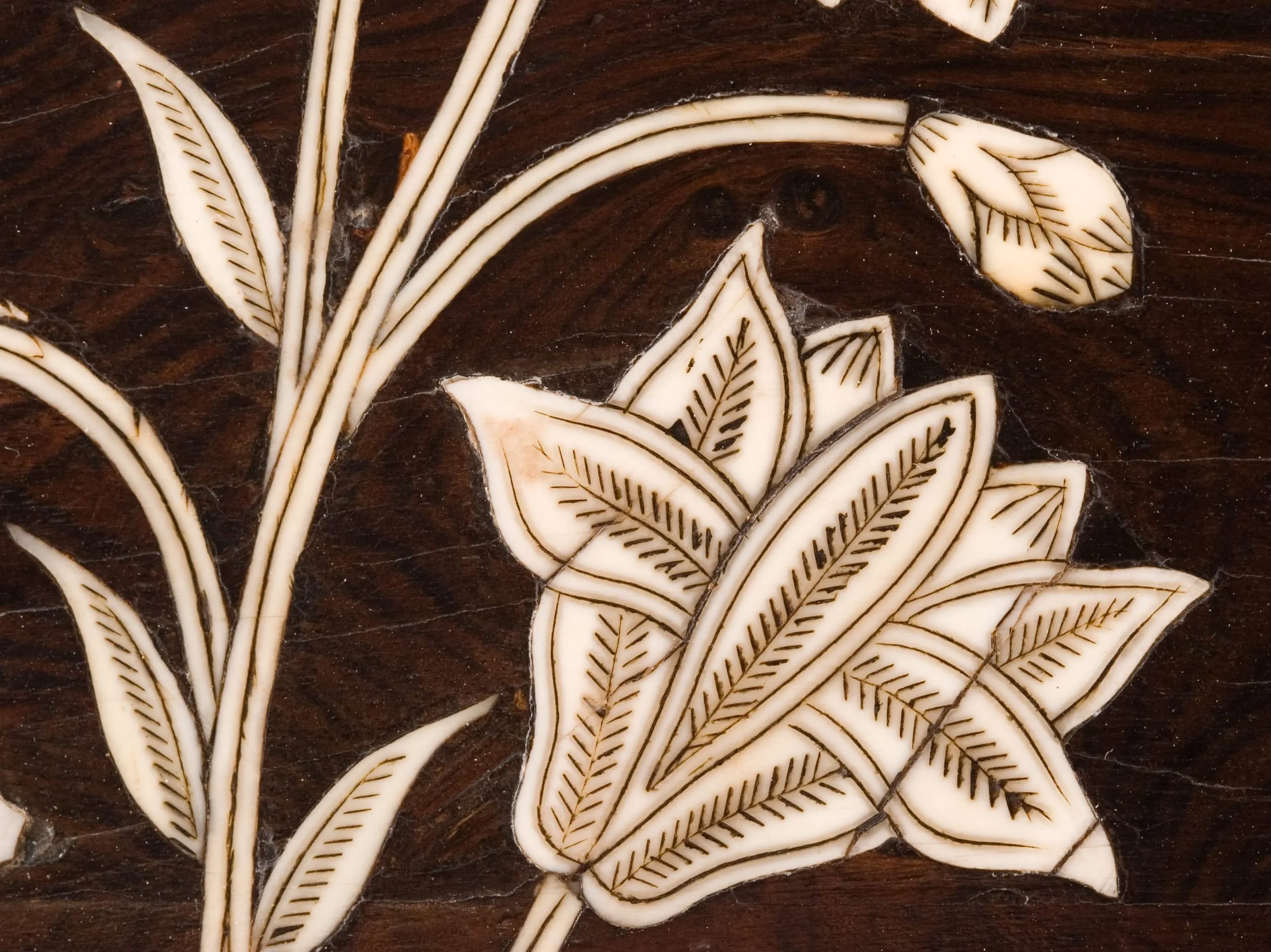
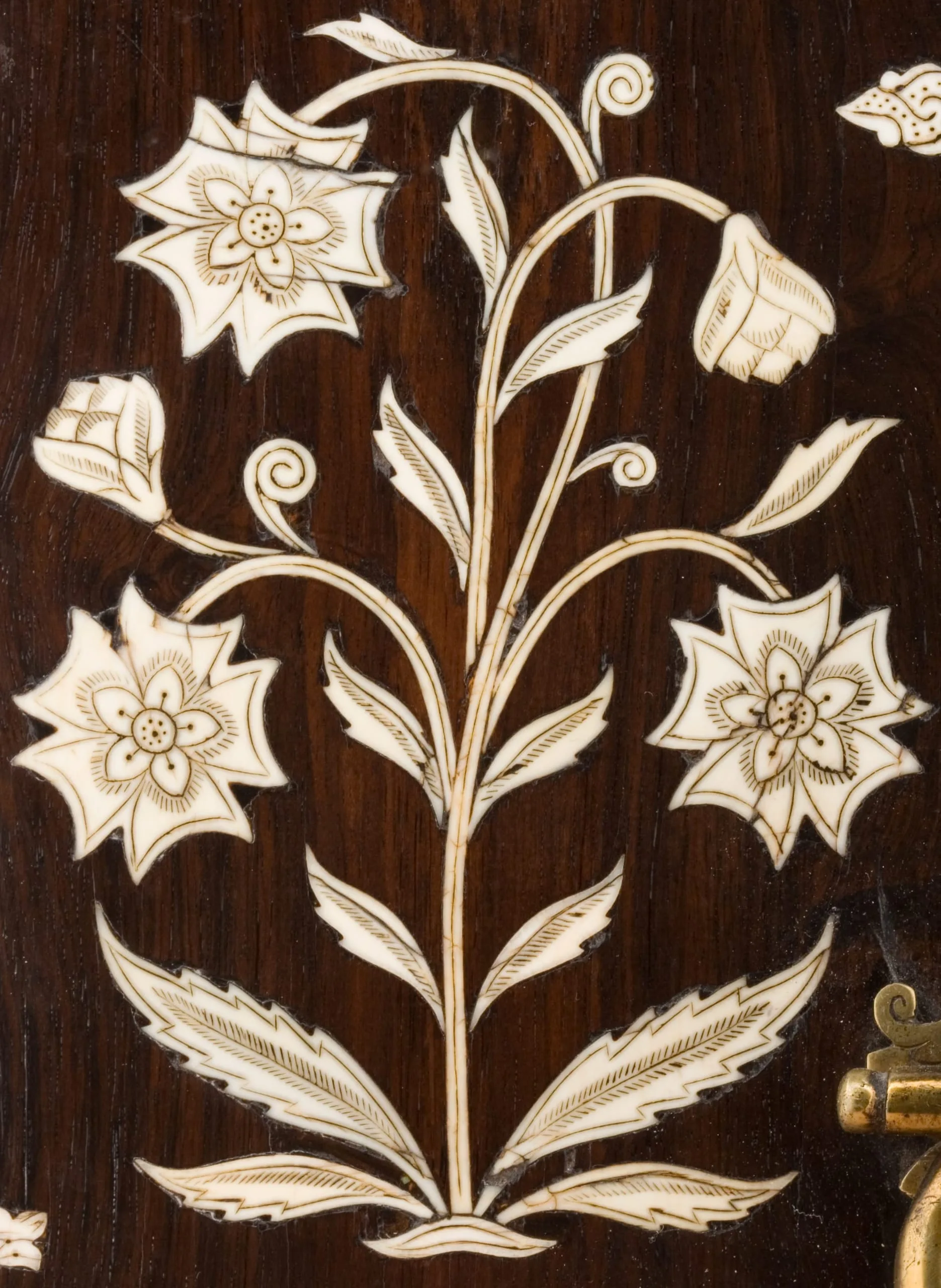
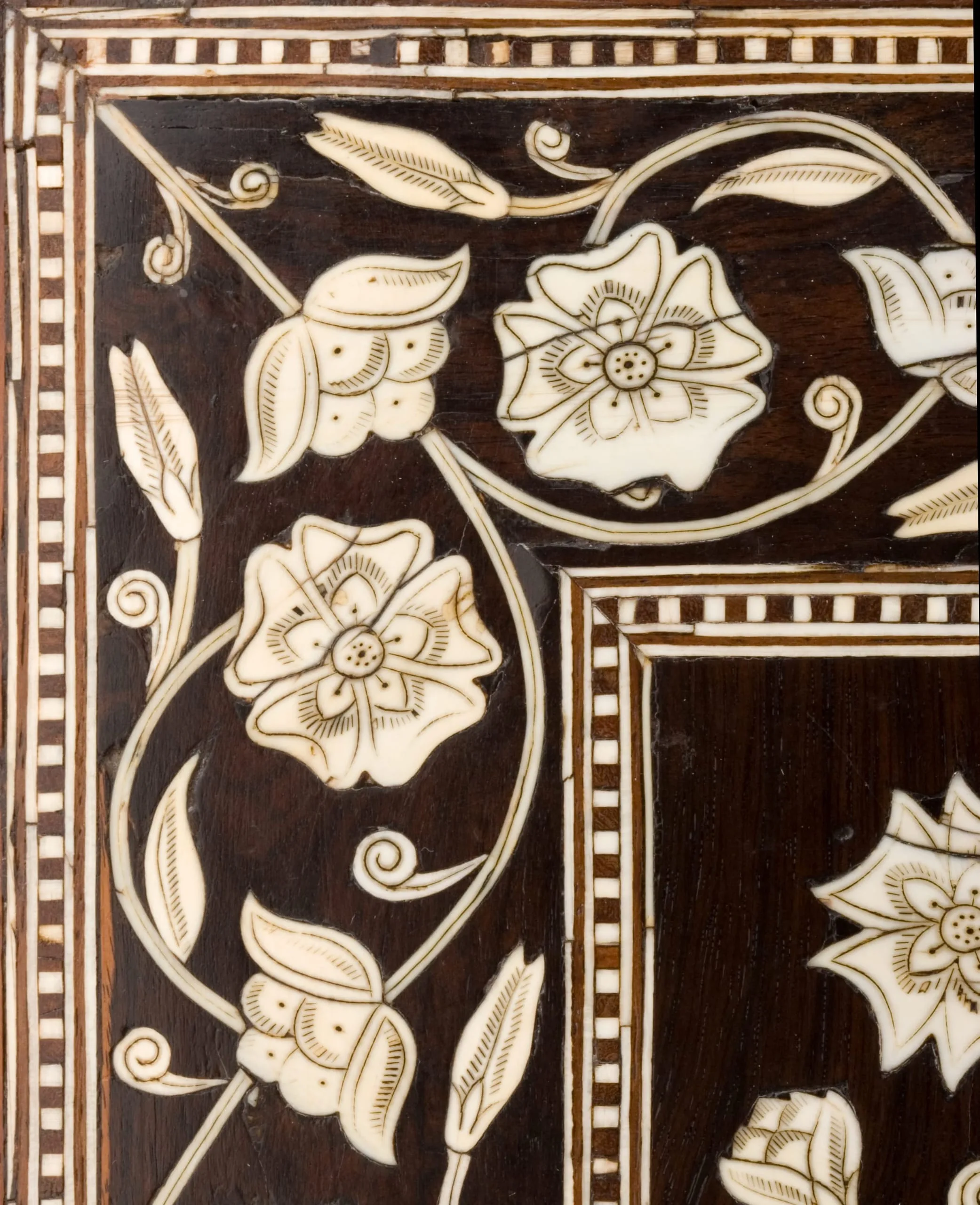
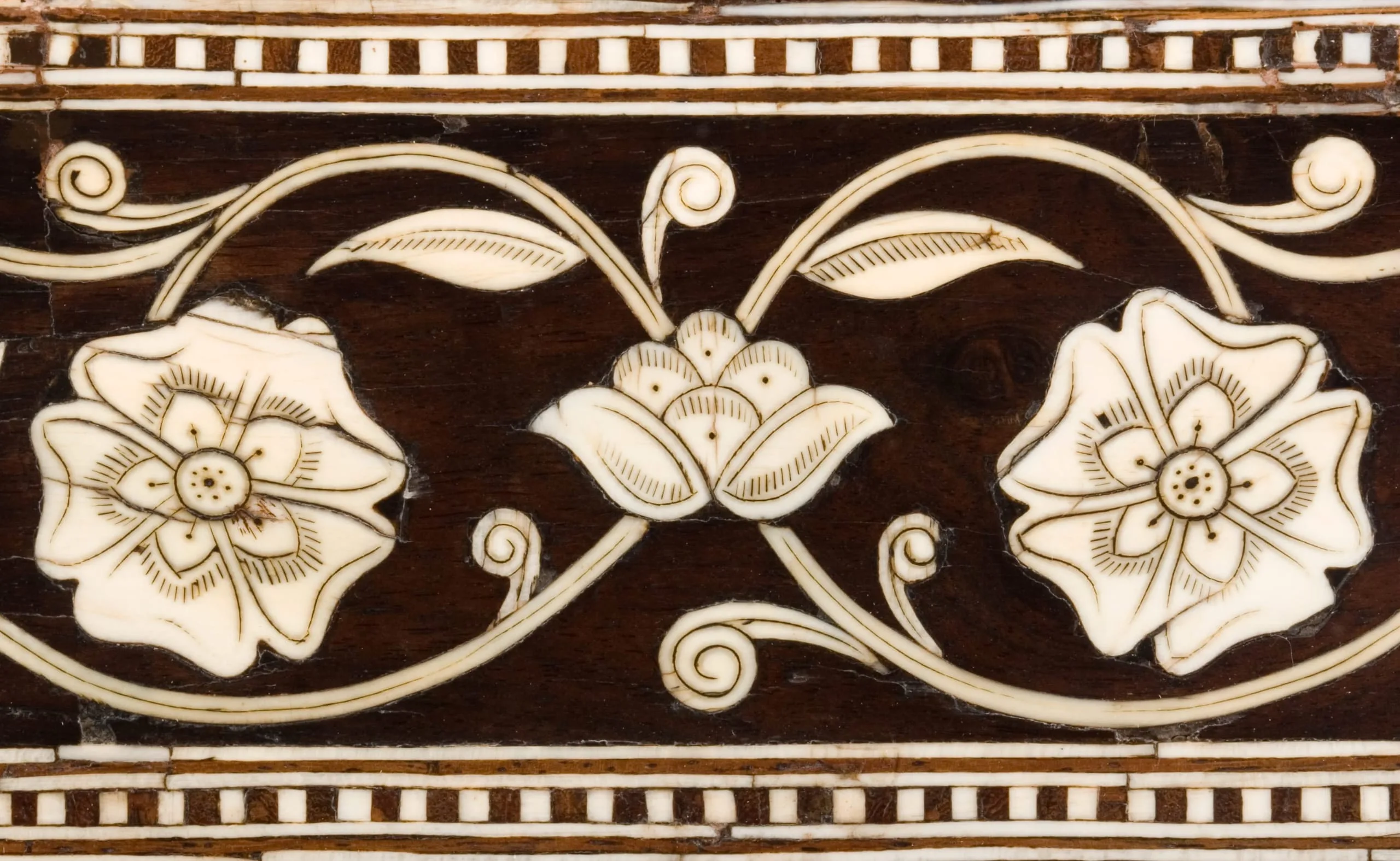
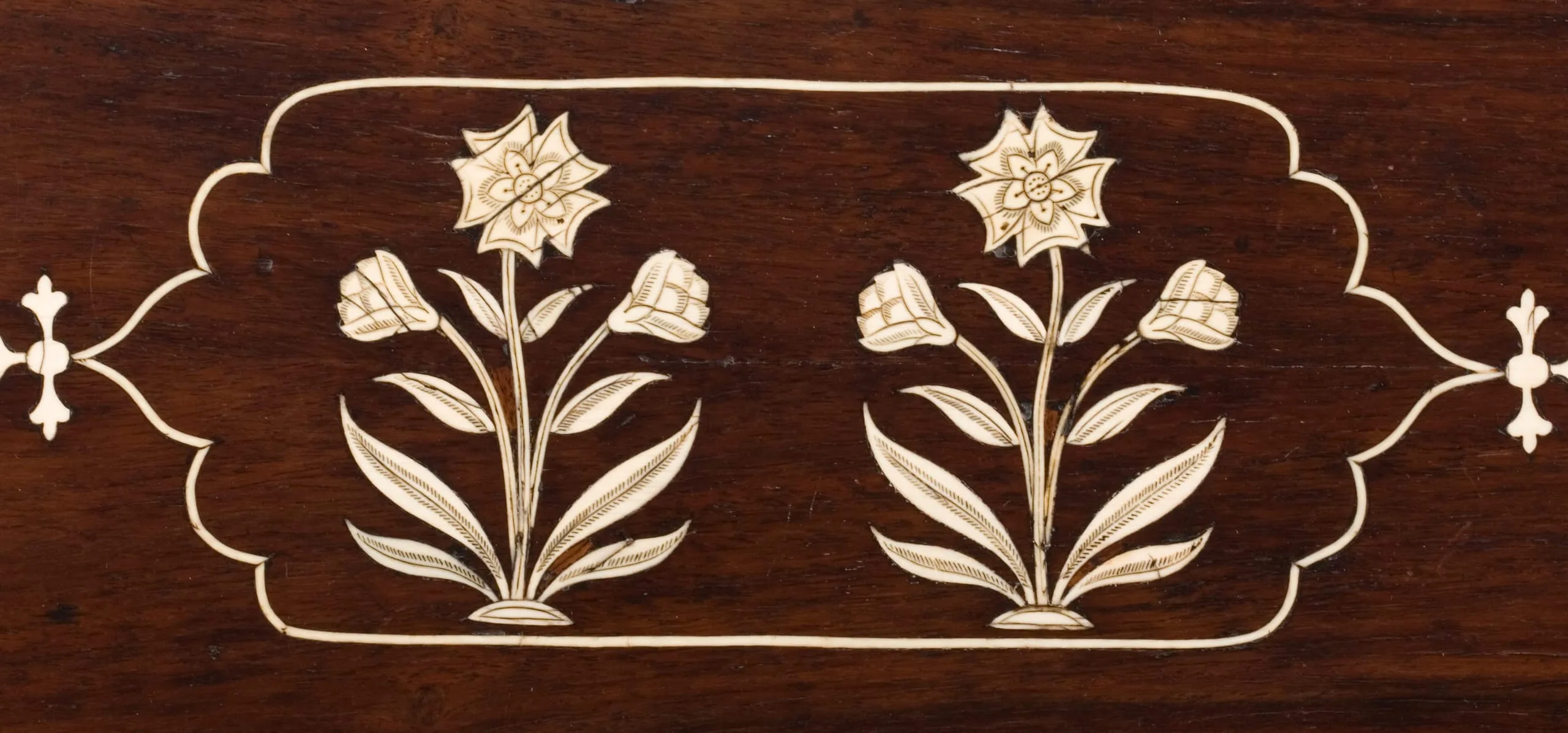
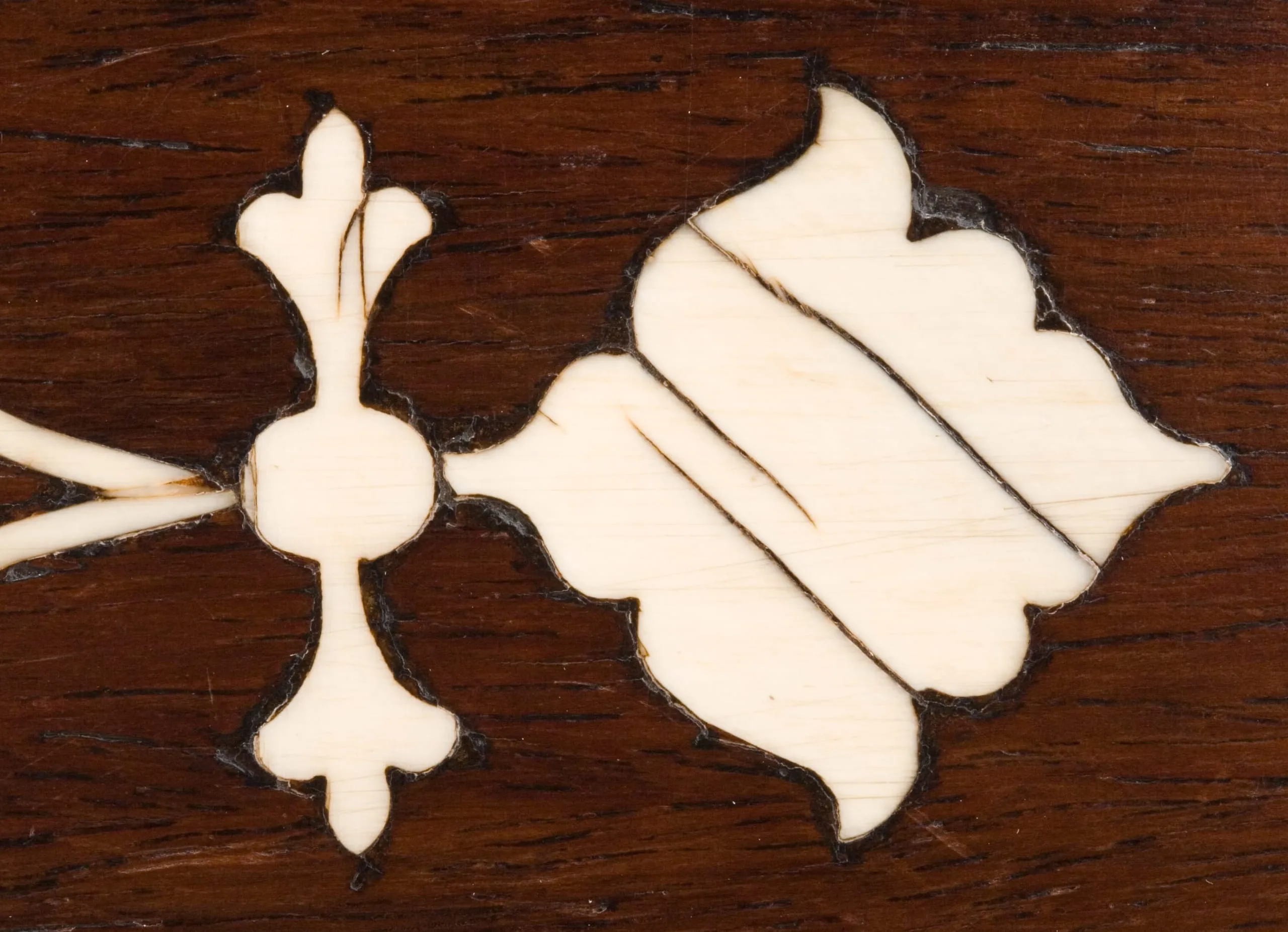
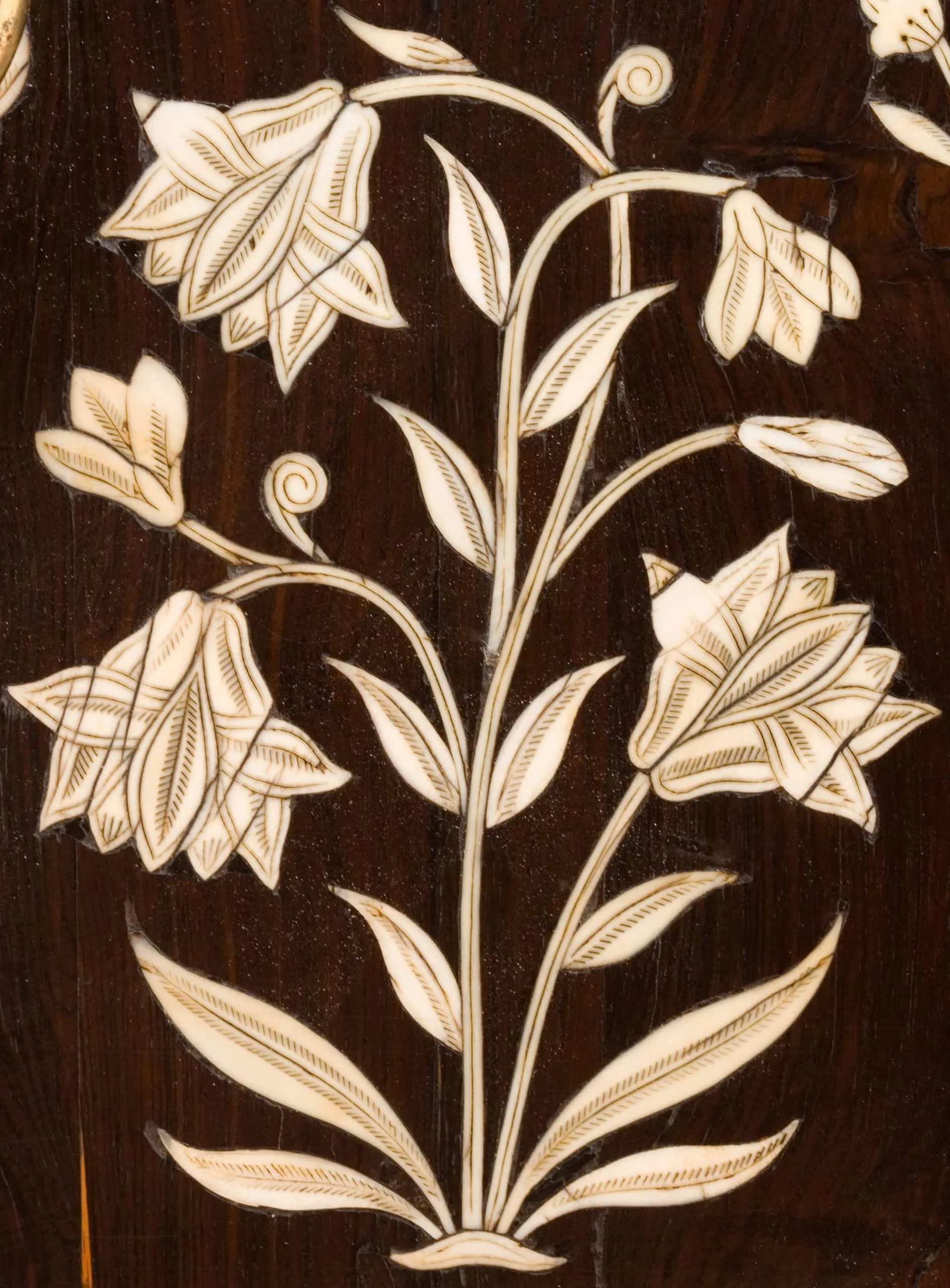
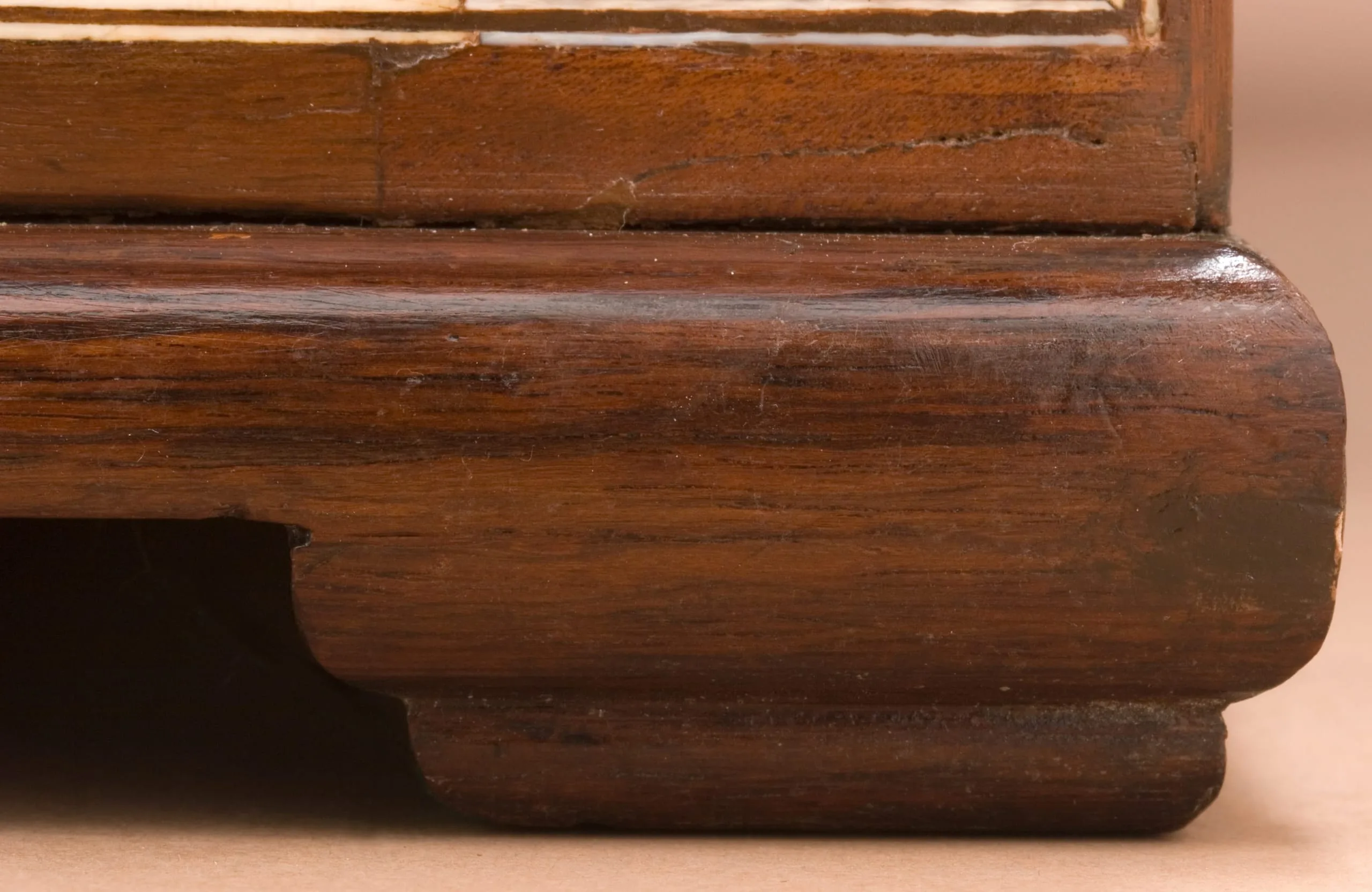
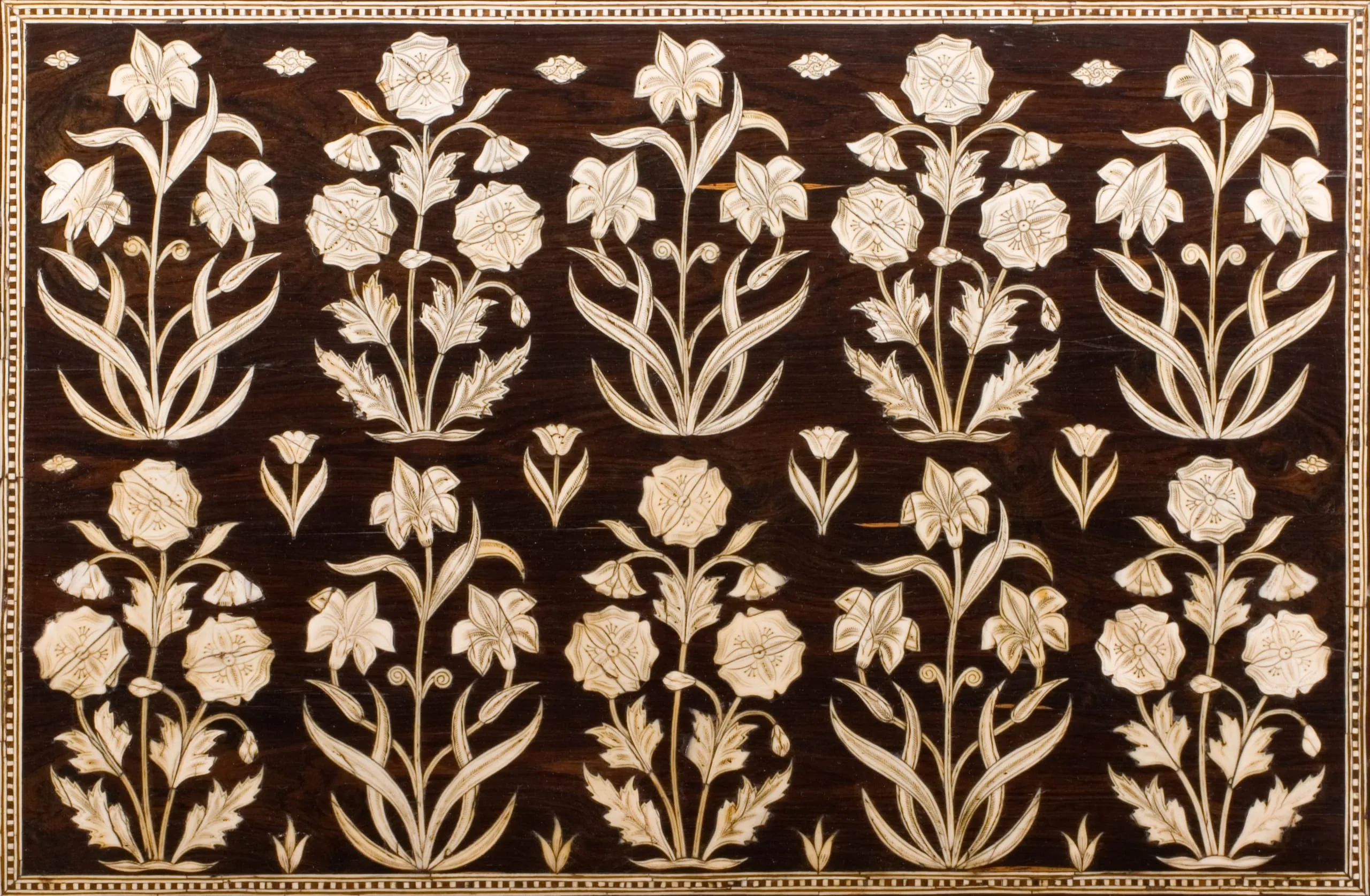
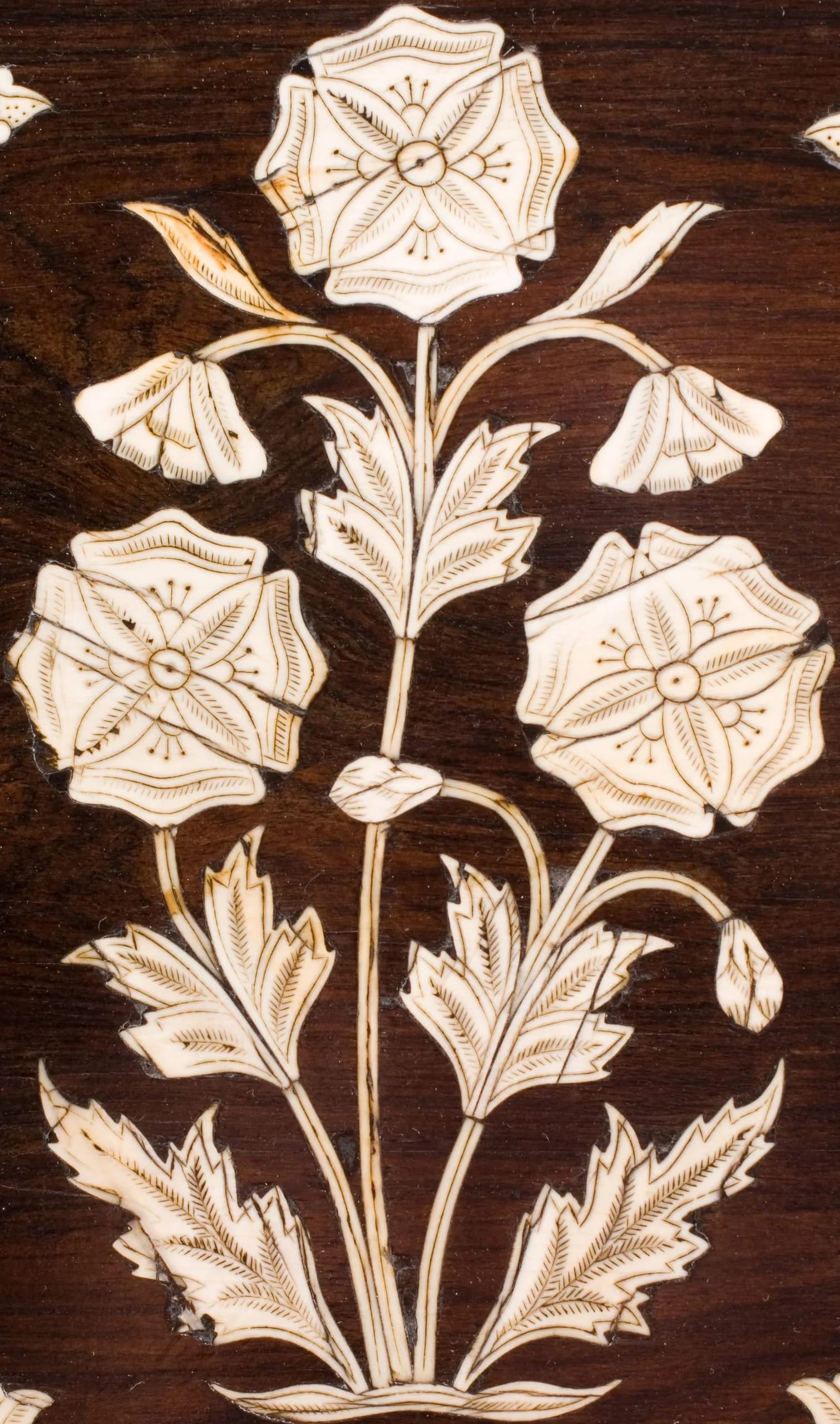
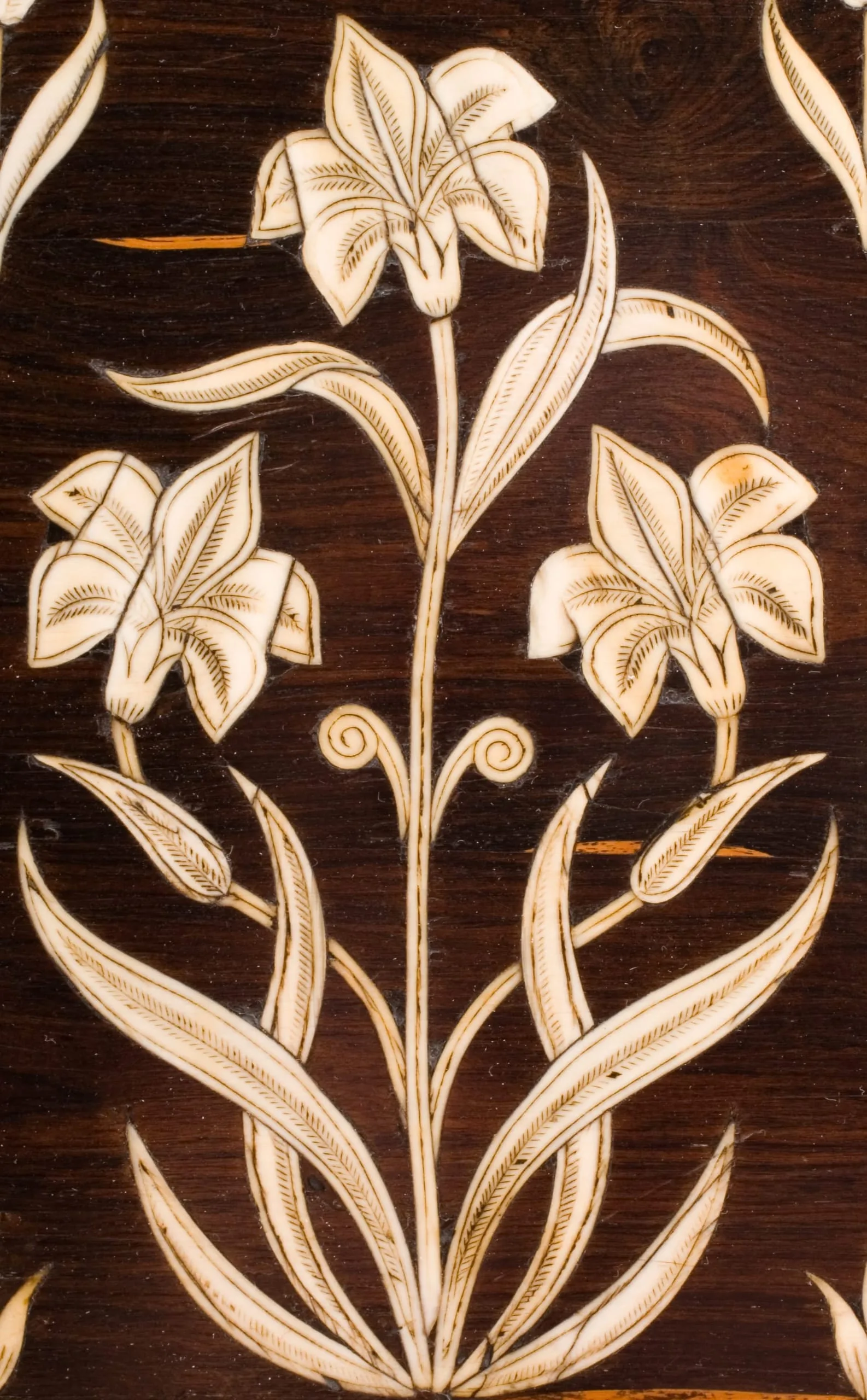
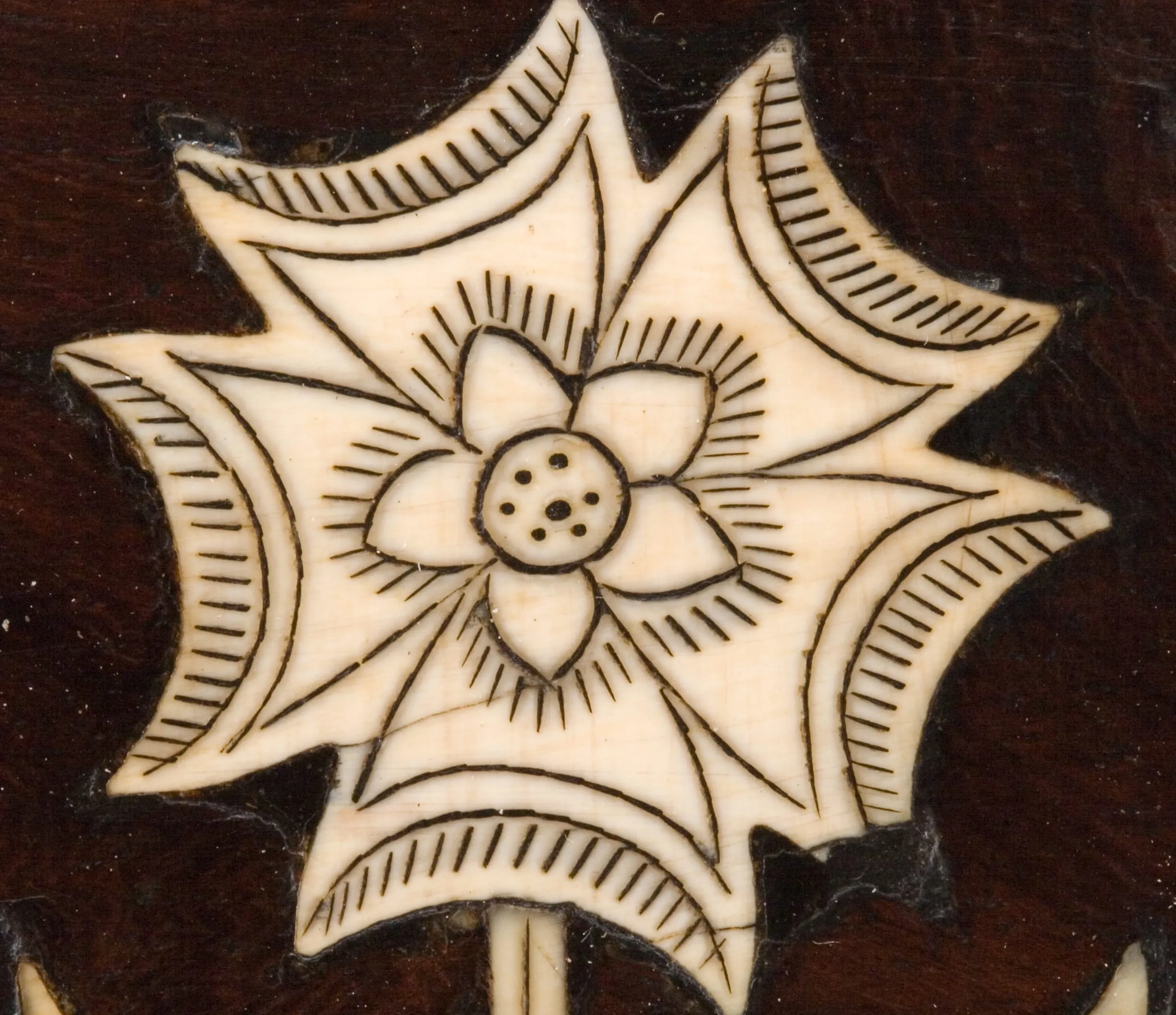
This exquisite rosewood cabinet epitomizes a classic European furniture type known as a fall-front cabinet, in which the front cover, hinged at the bottom, opens to reveal its interior drawers for stationery and valuables. The cabinet’s sumptuous decoration is a verdant garden of inlaid ivory lilies, poppies, tulips, fantastical composite flowering plants, and blossoming vines. To delineate the stamens and petals of the flowers and the veins of the leaves, the ivory was incised with fine lines that were then filled with molten black lac.
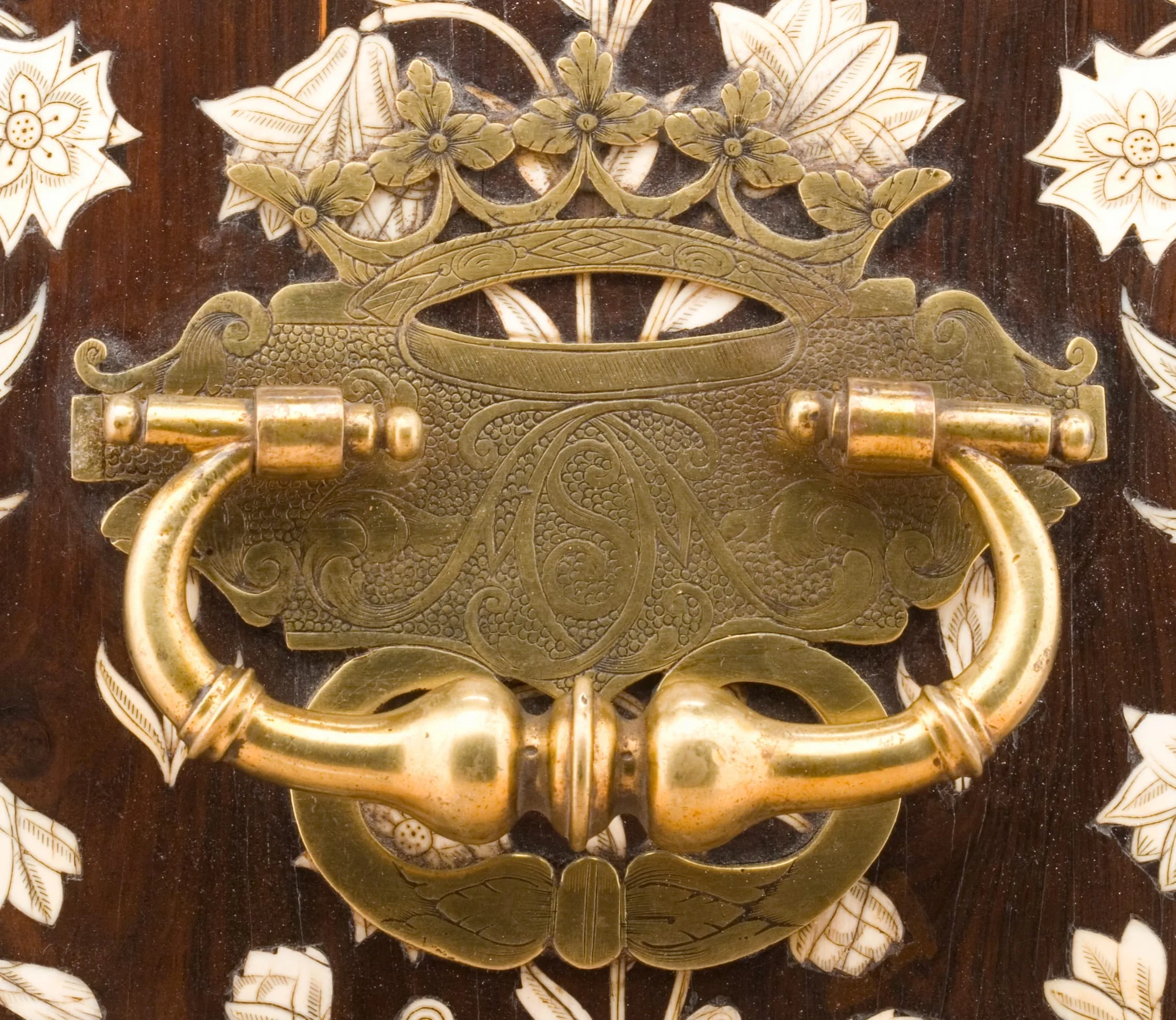
Attributed to c. 1650–70, the cabinet was made in one of several centers of production and commerce located along the western coast of the great Mughal Empire, which today is comprised of the modern Indian state of Gujarat and the present-day Pakistani province of Sindh. In the 18th or 19th century, the cabinet was exported to Europe, where it was fitted with European brass handles and monogrammed Art Nouveau-style backing plates.
Although the basic form of South Asian fall-front cabinets derives from the European furniture tradition, their decoration is distinctly Indian and features a variety of inlay techniques, ranging from micro-mosaic work to fine marquetry in exotic woods and ivory. The cabinets’ primary imagery, usually demarcated within central panels, consists of floral and/or figurative motifs that were tailored specifically to the intended local or foreign market designation. Botanical decoration was preferred by the Mughal royalty and nobility, whereas hunting and genre scenes were favored by European clientele. The heightened naturalism of this cabinet’s luxuriant blossoms and graceful leaves, which is contrasted and emphasized by their formality of presentation, represents the Mughal aesthetic at its most refined expression. The cabinet’s exuberant floral imagery parallels that of other Mughal masterpieces, especially the sublime Taj Mahal (1632-1643), which is enriched with a dazzling profusion of flowers inlaid in precious stones.