- Title
- Lota
- Date Made
- 19th century
- Medium
- Tinned brass, repoussé and chased
- Dimensions
- Diameter: 5 3/4 in. (14.61 cm); Height: 5 3/4 in. (14.61 cm)
- Accession Number
- M.2006.167.2
- Curatorial Notes
The lota or water vessel has an ancient and ubiquitous heritage throughout South Asia. Made of brass, copper, earthenware, glass, or plastic in modern times, it is typically bulbous or spherical in shape, with or without a flat bottom or a spout. The neck is constricted for grasping and the mouth is wide to facilitate pouring. Large lotas are generally used for transporting or storing water. Smaller lotas are used for pouring water in ritual or mundane cleansing.
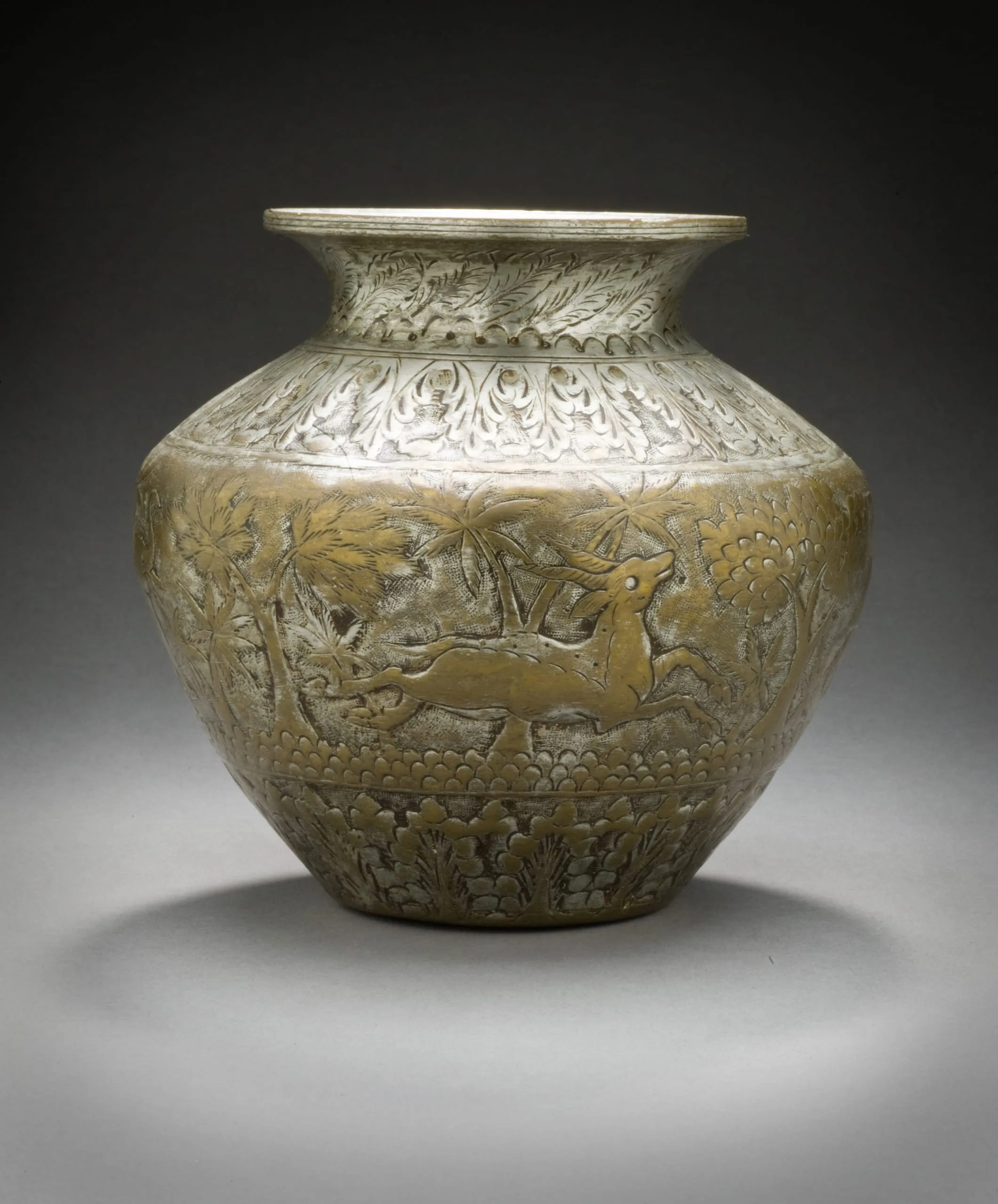
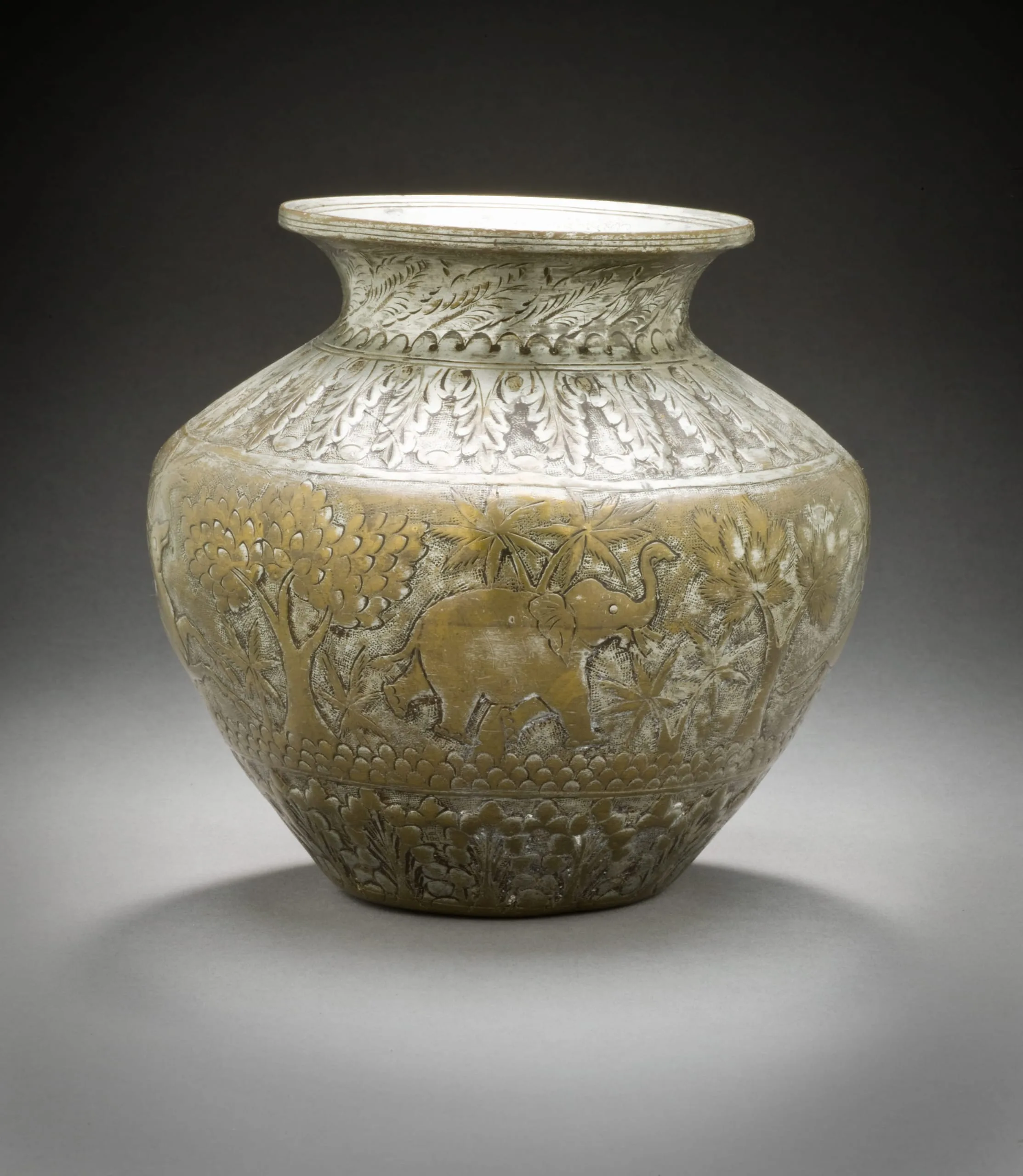
This tinned brass lota is fashioned in the traditional bulbous shape with a flat bottom. It has a prominent decorative band around its waist depicting an unusually animated forest scene with an elephant and an antelope running amidst the lush foliage of palm trees and indeterminate deciduous trees. Each animal is repeated on the opposing side of the vessel. The neck and shoulders are enlivened with large borders of stylized acanthus leaves and bead molding. The base border is a row of overlapping trees with oversize leaves. The inner lip has a name inscribed in stippled Devanagari script, Sheikh Muhammad, who was likely the maker or owner.