- Title
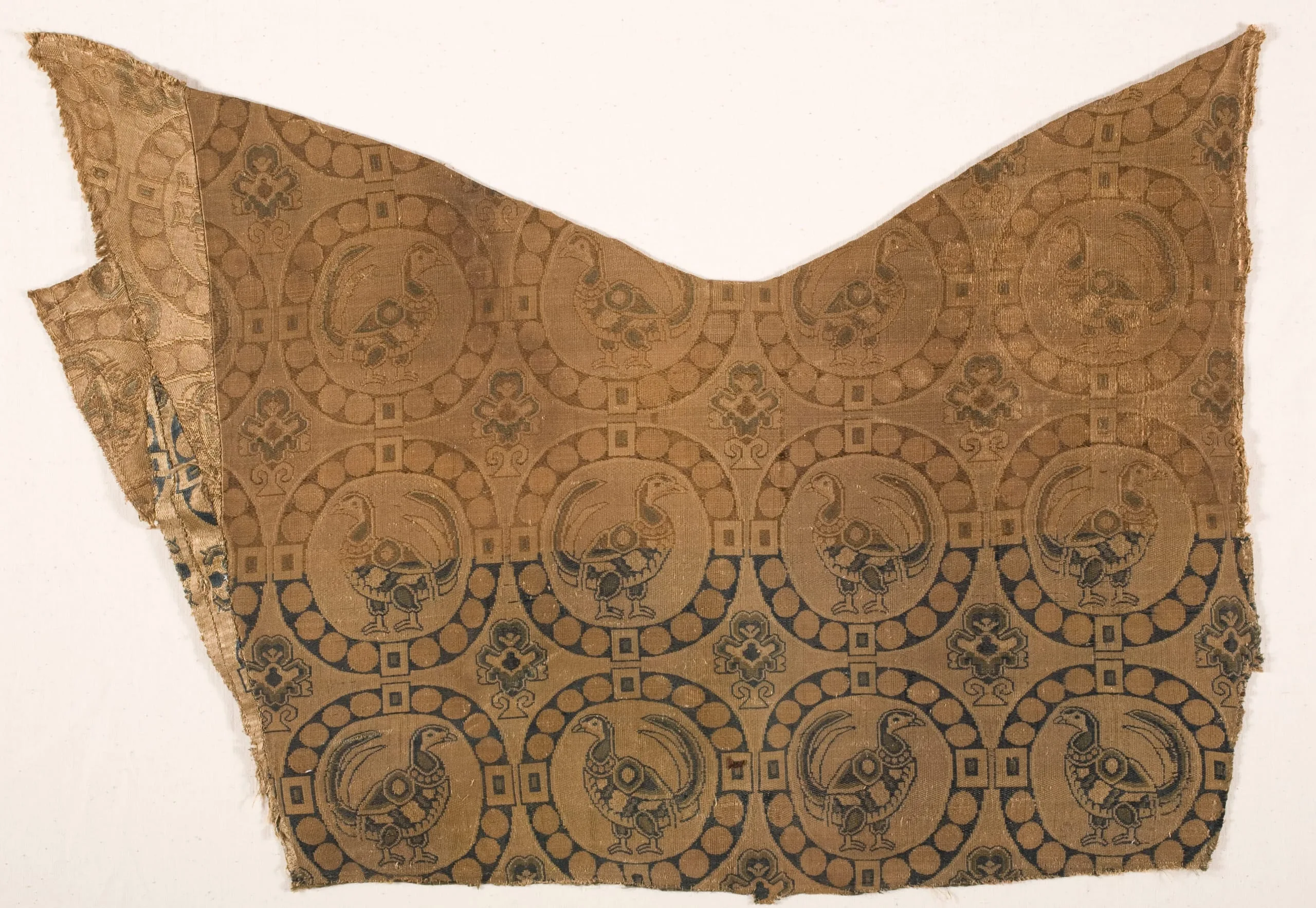
- Textile Fragment with Pheasant in Pearl Roundels
- Date Made
- 680-900 A.D.
- Medium
- Silk weft-faced compound twill (samite)
- Dimensions
- 15 1/2 × 20 3/4 in. (39.37 × 52.71 cm)
- Accession Number
- M.2007.32.2
- Curatorial Notes
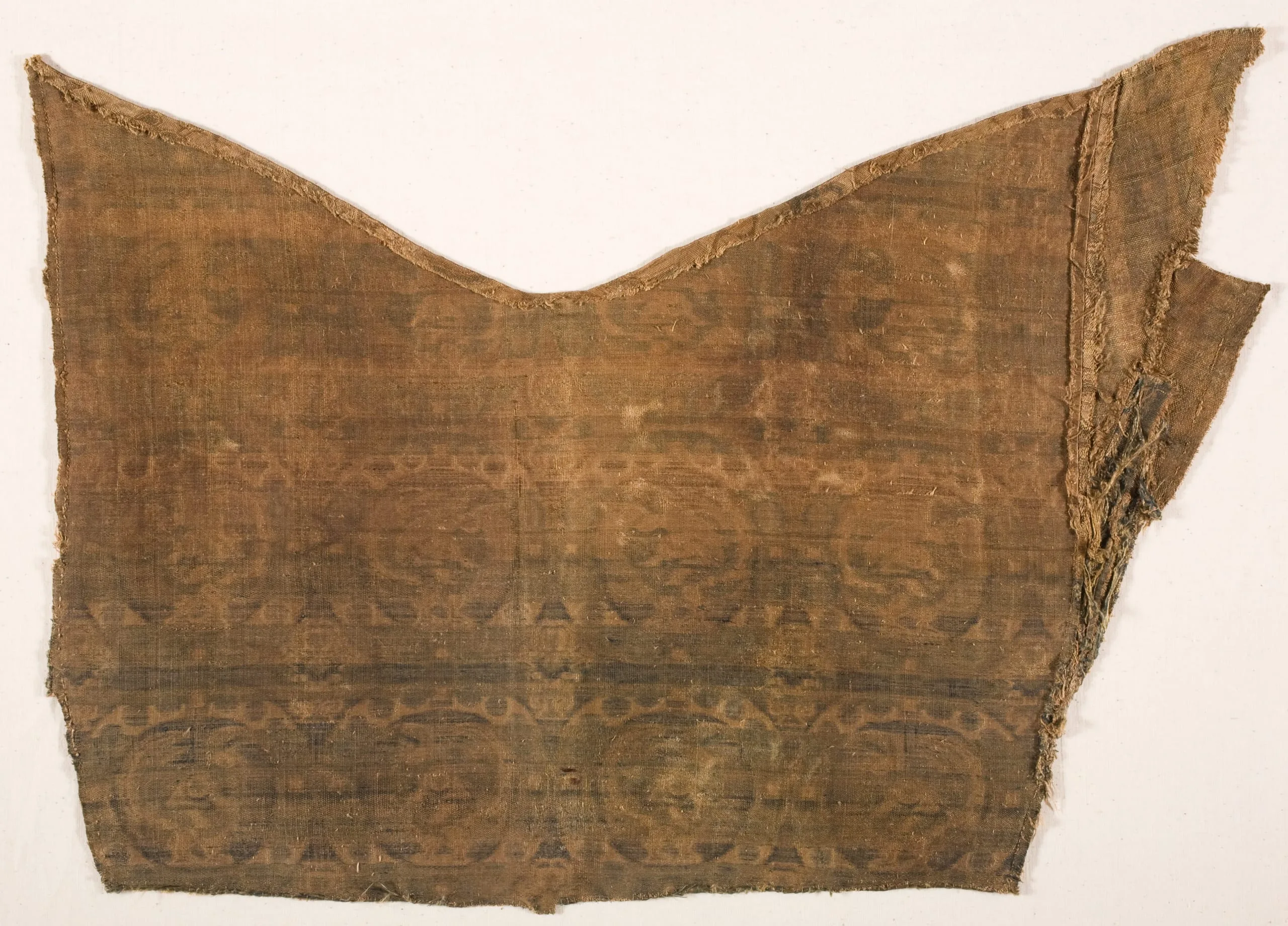
The commercial network known as the Silk Road connected a vast expanse of Asia, fostering mercantile, social, and artistic exchange. Textiles were among the most important and portable of goods to be traded, and were so highly valued that they were sometimes used as currency. The repeating design of this silk samite fragment, which features a fantastically patterned pheasant in pearl roundels, is based on late Sasanian textiles from Iran and points to the transmission of motifs between the diverse cultures that came into contact along the trade routes. Silk textiles were particularly prized and were frequently cut down and reused, which likely explains the odd shape of this fragment.
2024
- Selected Bibliography
- Cooke, Edward S., Jr. Global Objects: Toward a Connected Art History. Princeton, NJ: Princeton University Press, 2022.