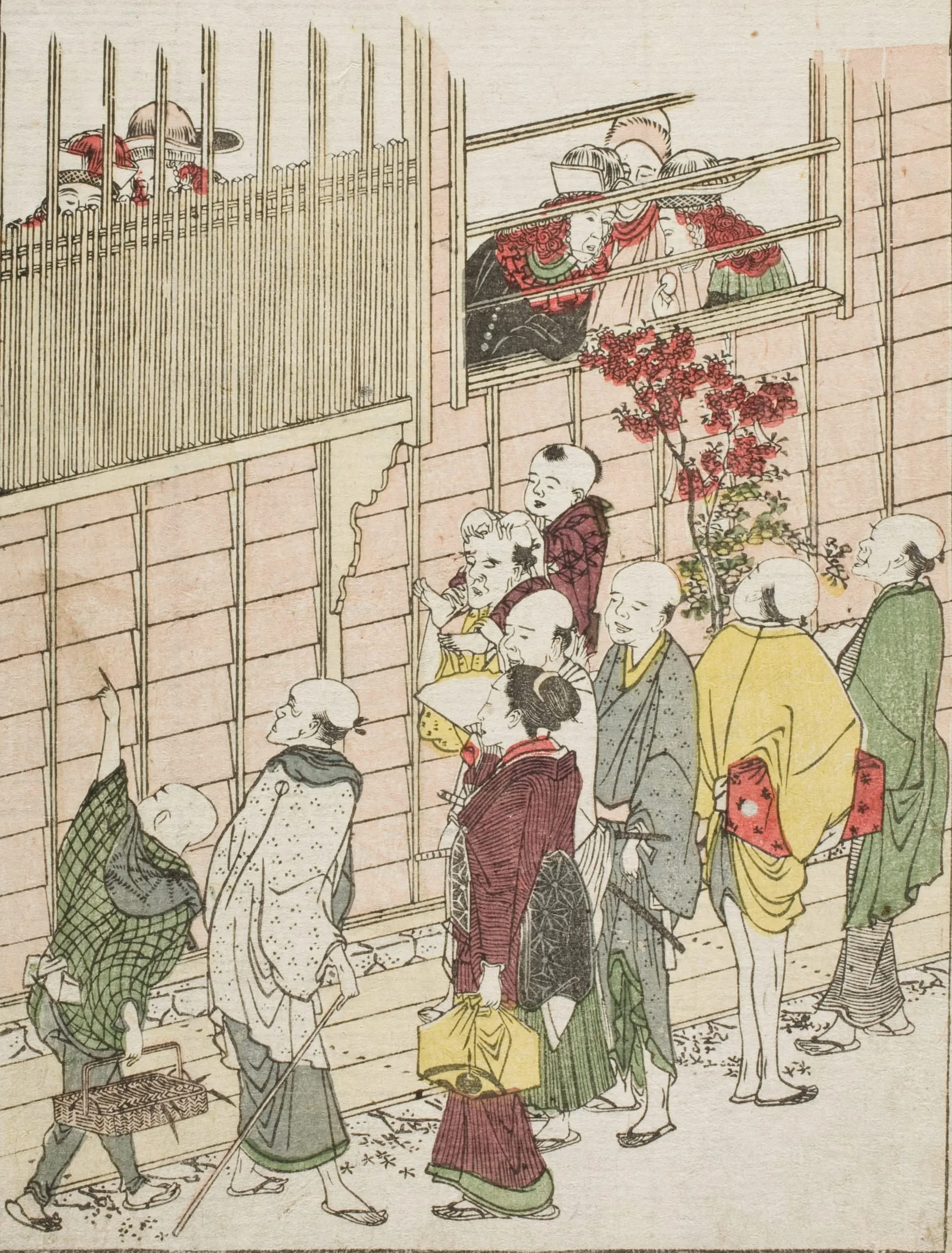
Starting in 1634, in exchange for permission to trade in Japan, representatives of the Dutch East India Company were required to make an annual journey to pay tribute to the shogun’s court in Edo. The Japanese were fascinated by the Dutch—their physical features, clothing, furnishings, and behaviors—and curious onlookers would line the roads that the Dutch traveled on their trip from Nagasaki to Edo. Once there, however, the Dutch were largely confined to the second floor of the Nagasakiya Inn, in the heart of the city, and their movements were closely monitored.
In Hokusai’s print, passersby on the street stop in front of the inn hoping to catch a glimpse of the strange foreigners. The illustration repeats the characteristic features of the Dutch found in most artworks of the time, such as the long, curly red hair; various types of headwear; wide ruffled collars; and buttons running down the front of coats. This image originally appeared in the 1799 book Azuma asobi (Pleasures of the East), which included twenty-nine woodblock prints and hundreds of kyōka poems. In 1801 and 1802, the images were reprinted in a new three-volume set, Ehon azuma asobi (Illustrated Pleasures of the East). This page is from one of these revised editions, where the images were printed in color and the poems omitted.
2024