- Title
- Dinar
- Date Made
- Sasanian Period, reign of Yazdigird II (438–457)
- Medium
- Gold
- Dimensions
- Weight: 4.01 g
1/4 × 1/2 in. (0.64 × 1.27 cm)
- Accession Number
- M.2006.142
- Curatorial Notes
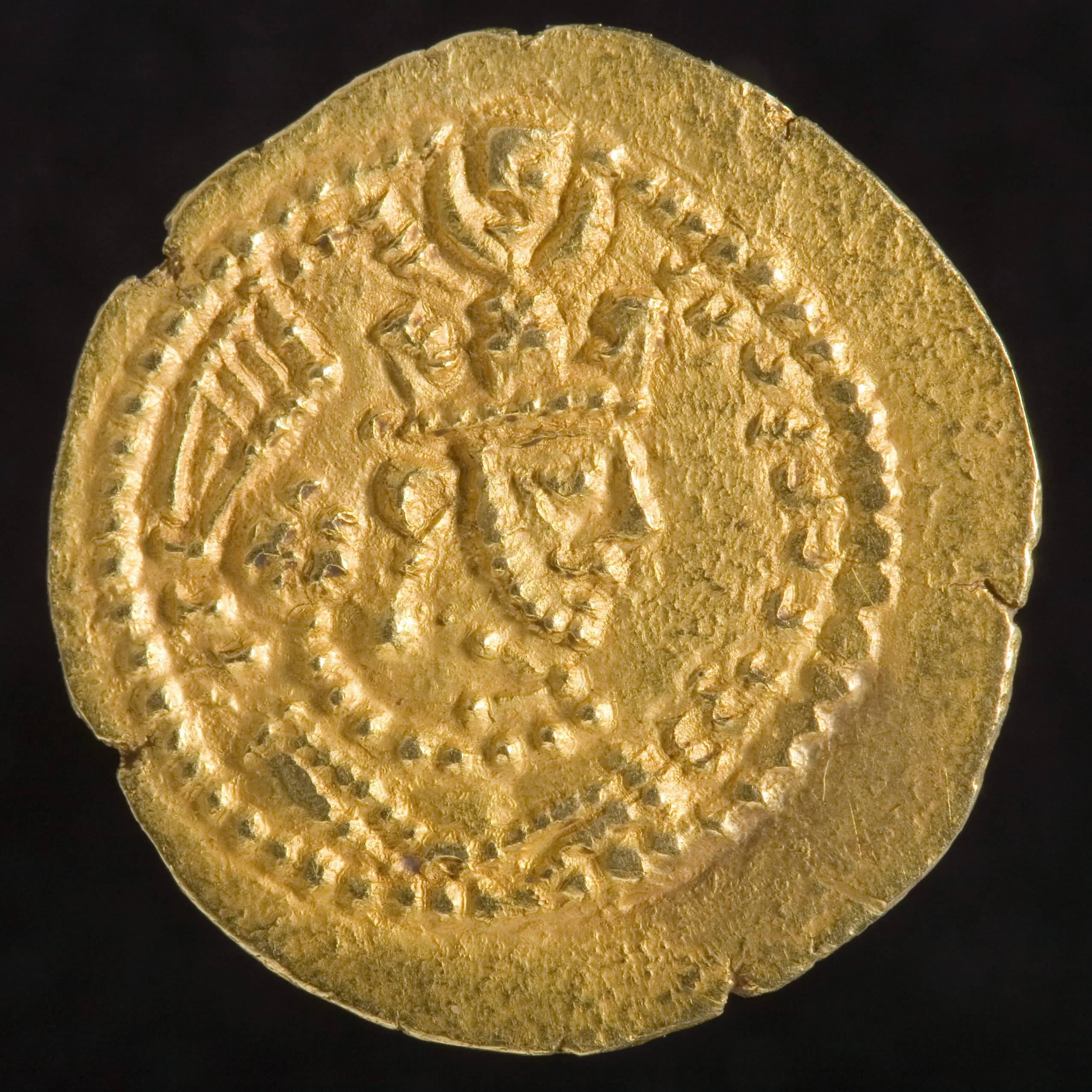
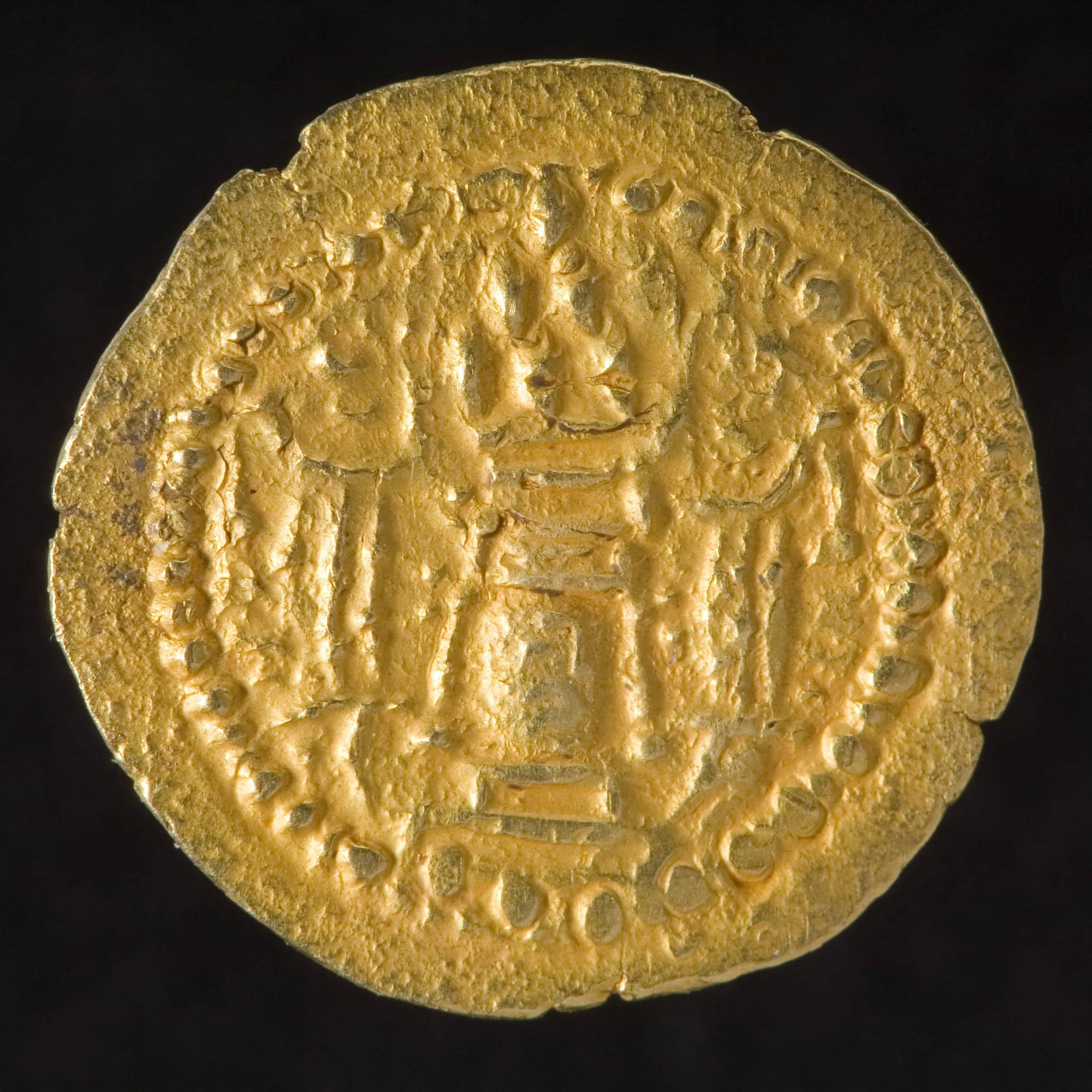
Apart from their monetary function, coins from the Sasanian dynasty in Iran were symbols of the legitimacy, faith, power, and prestige that accrued to the rulers in whose names they were struck. Such gold dinars and silver drachms were often works of art in their own right, while their inscriptions, designs, and possible archaeological contexts often provide key art-historical information. This rare coin follows a type associated with the reign of Yazdigird II (438−57). Such gold dinars functioned more as ceremonial objects than actual currency. Instead, silver drachms were the main denomination of money in the Sasanian period (see M.2002.1.448). As is typical of Sasanian coinage, whether gold or silver, the obverse here depicts a bust of the king with a crenelated crown surmounted by a crescent and paired wings. On the reverse is a fire altar with two attendants, a symbolic scene in the Zoroastrian religion practiced by the Sasanians.
2024
- Selected Bibliography
- Mousavi, Ali. Ancient Near Eastern art at the Los Angeles County Museum of Art. Los Angeles: Los Angeles County Museum of Art, 2012.