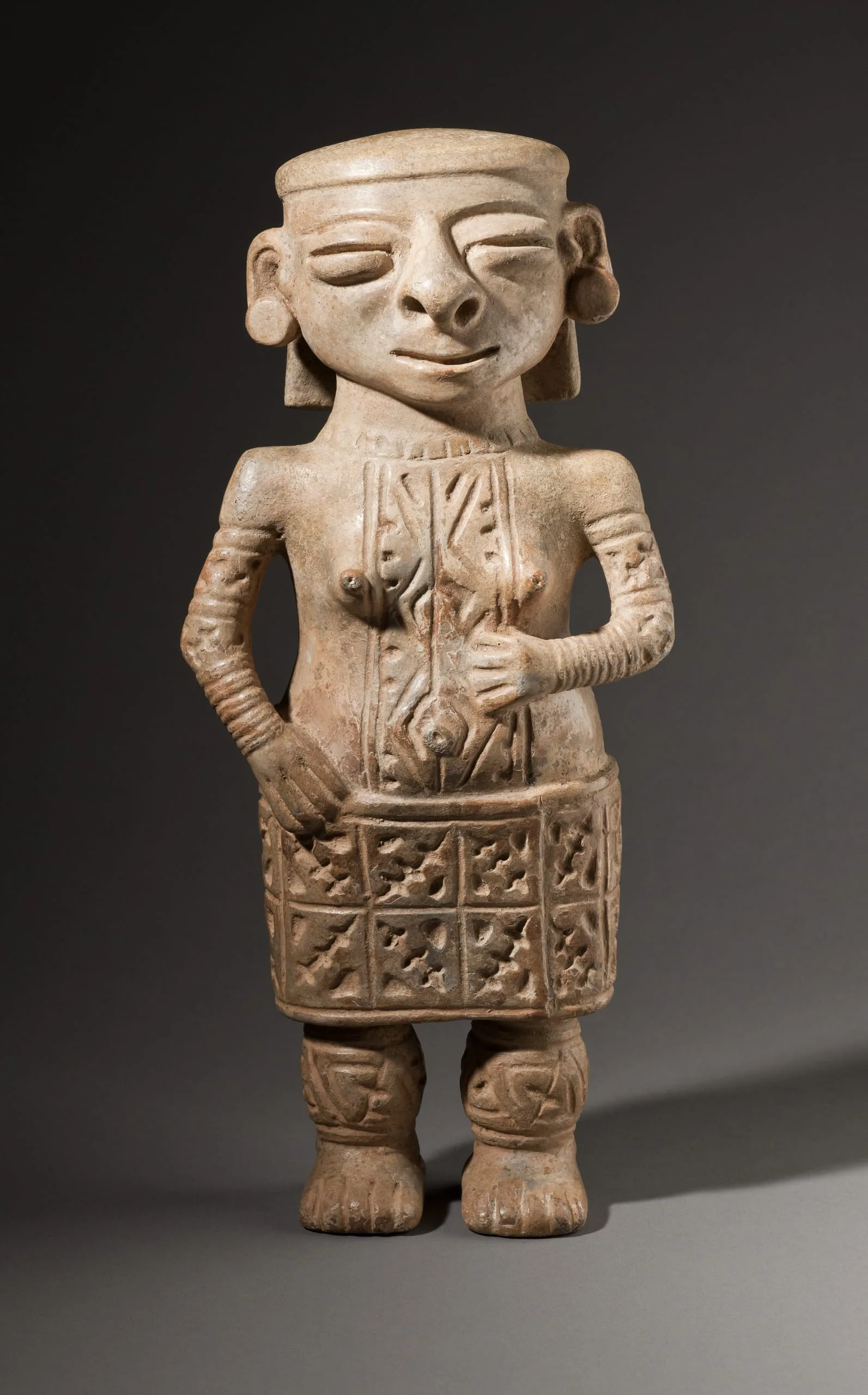
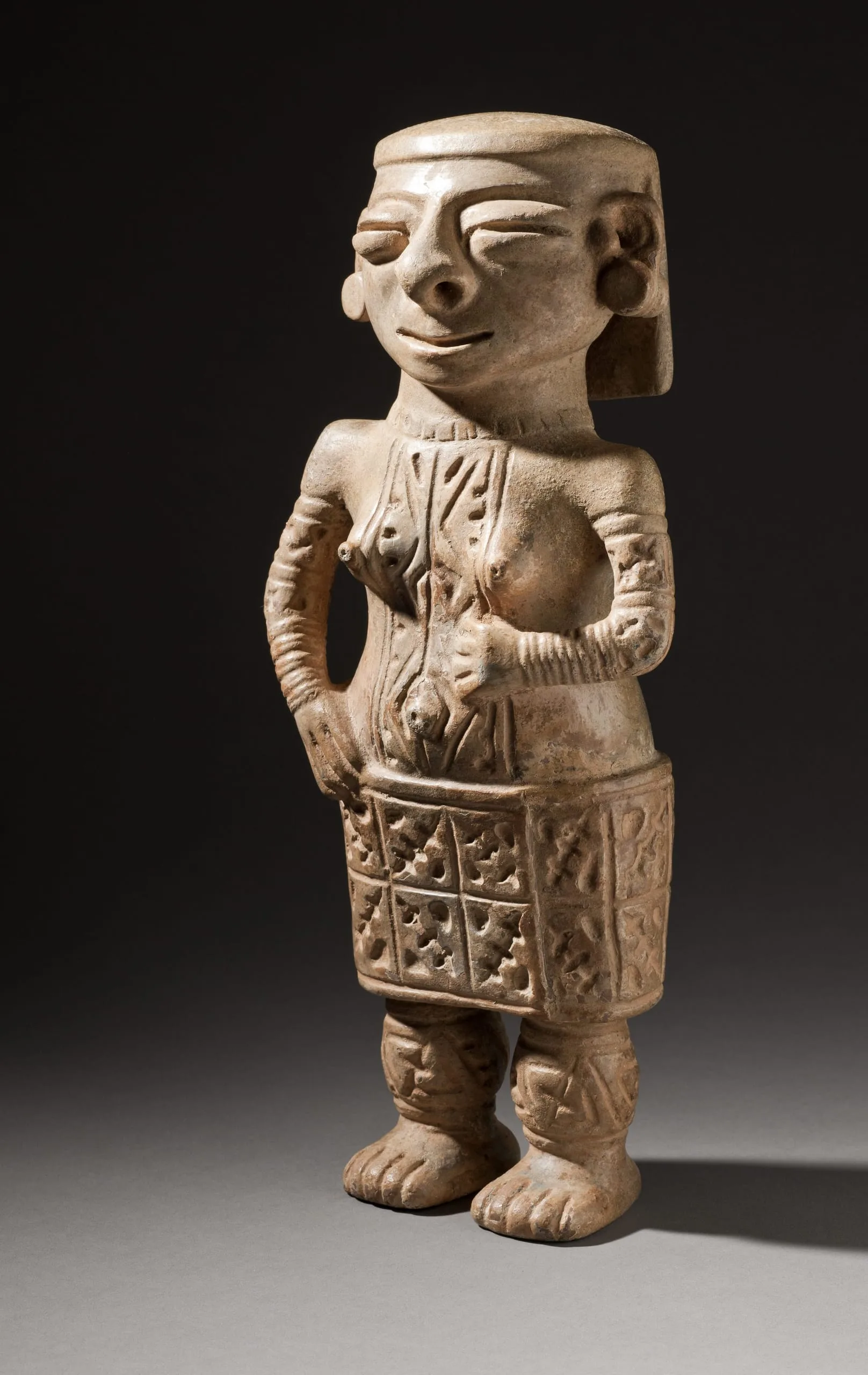
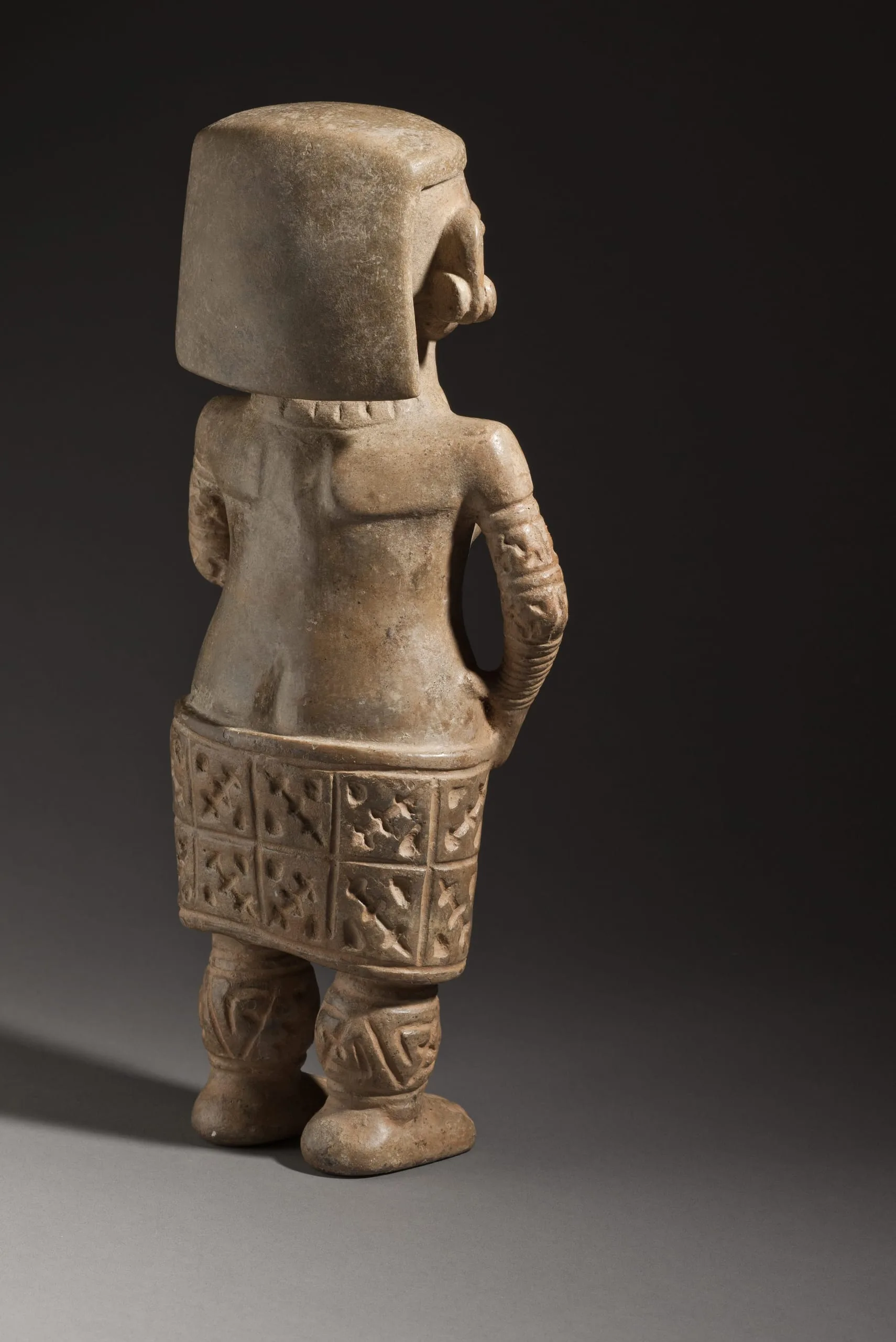
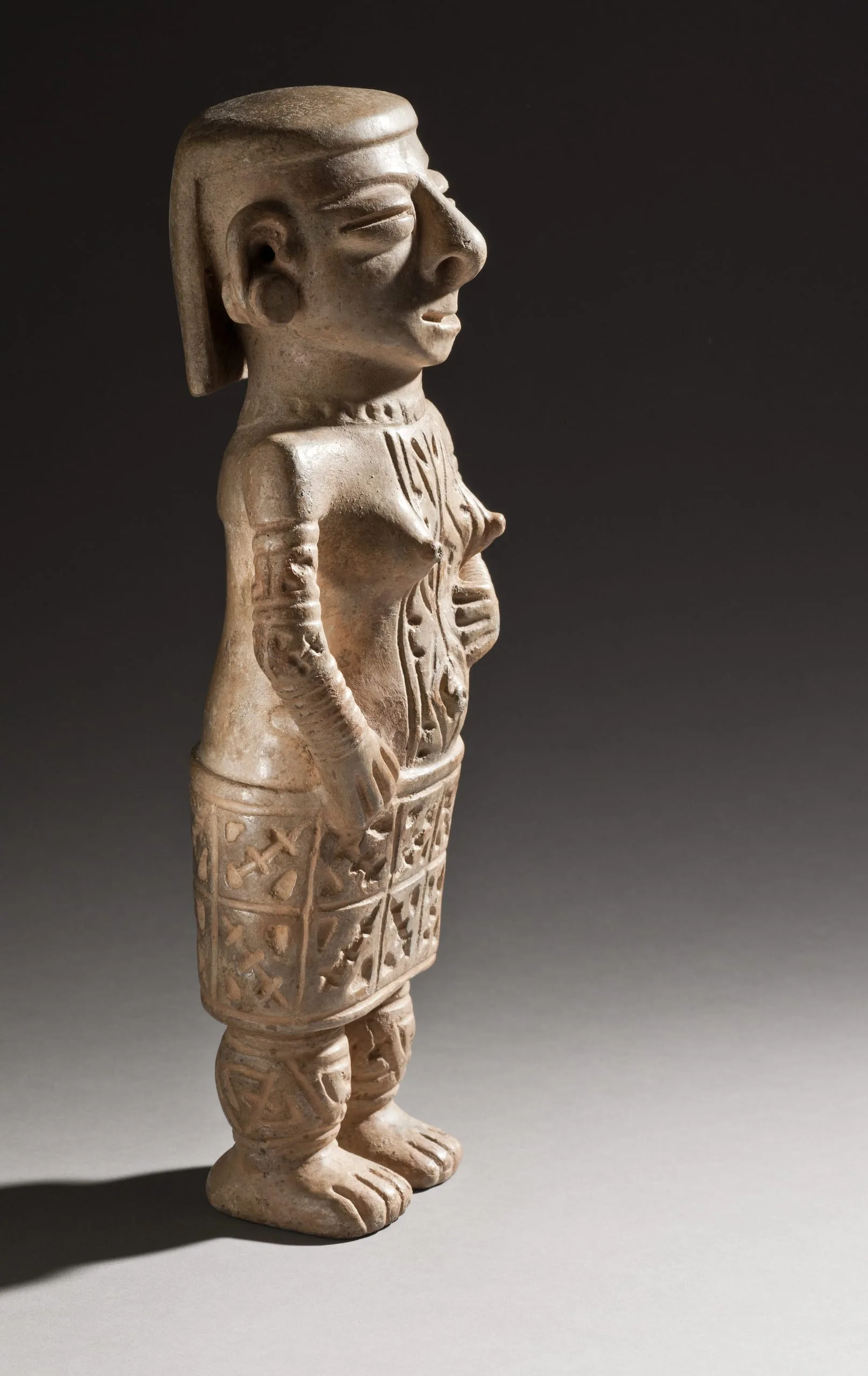
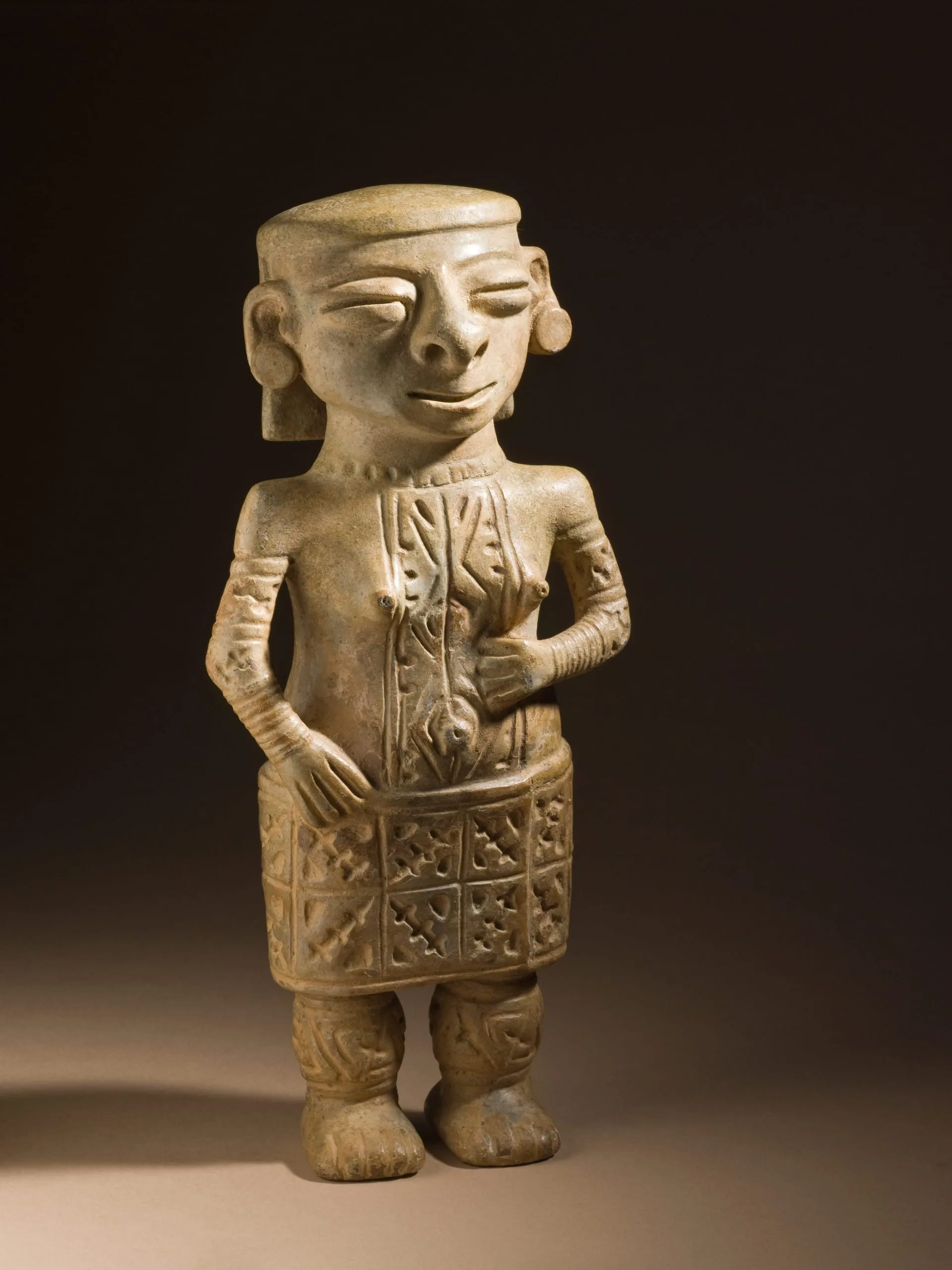
Ceramic sculptures from the Zenú culture are almost always of women, although the way in which they are depicted varies enormously over the vast time and region in which the Zenú flourished. This elegant example wears a patterned skirt, earspools, a necklace, and decorations all over her arms, legs, and torso. She represents a particular style known as Betancí, after the location where it has been found.
Very little is known about how these ceramic female effigies were used or who they represent (see also M.2007.146.621 and .622). They are often interpreted in the context of reports by Spanish chroniclers about a female ruler called Toto/Tota who presided over Finzenú, a large town and cemetery where elites were laid to rest. The majesty of this cacica (male: cacique) is described in various documents and testimonies from the sixteenth and seventeenth centuries, including the incredible fact that her feet were not to touch the ground and that she walked on the backs of men and women in her retinue. Clearly, women could hold high political authority within Zenú society, but leadership roles were not exclusively female as other provinces were governed by male chiefs. Thus, while matrilineal principles likely influenced Zenú social organization, leadership was not strictly tied to gender.