LACMA

ShopMembershipMyLACMATickets
LACMA
Los Angeles County Museum of Art
5905 Wilshire Blvd.
Los Angeles, CA 90036
info@lacma.org
(323) 857-6000
Sign up to receive emails
Subscribe
© Museum Associates 2026
  • About LACMA
  • Jobs
  • Building LACMA
  • Host An Event
  • Unframed
  • Press
  • FAQs
  • Log in to MyLACMA
  • Privacy Policy
© Museum Associates 2026
Collections

DinarA.H. 440/1048 A.D.

On view:
Geffen Galleries
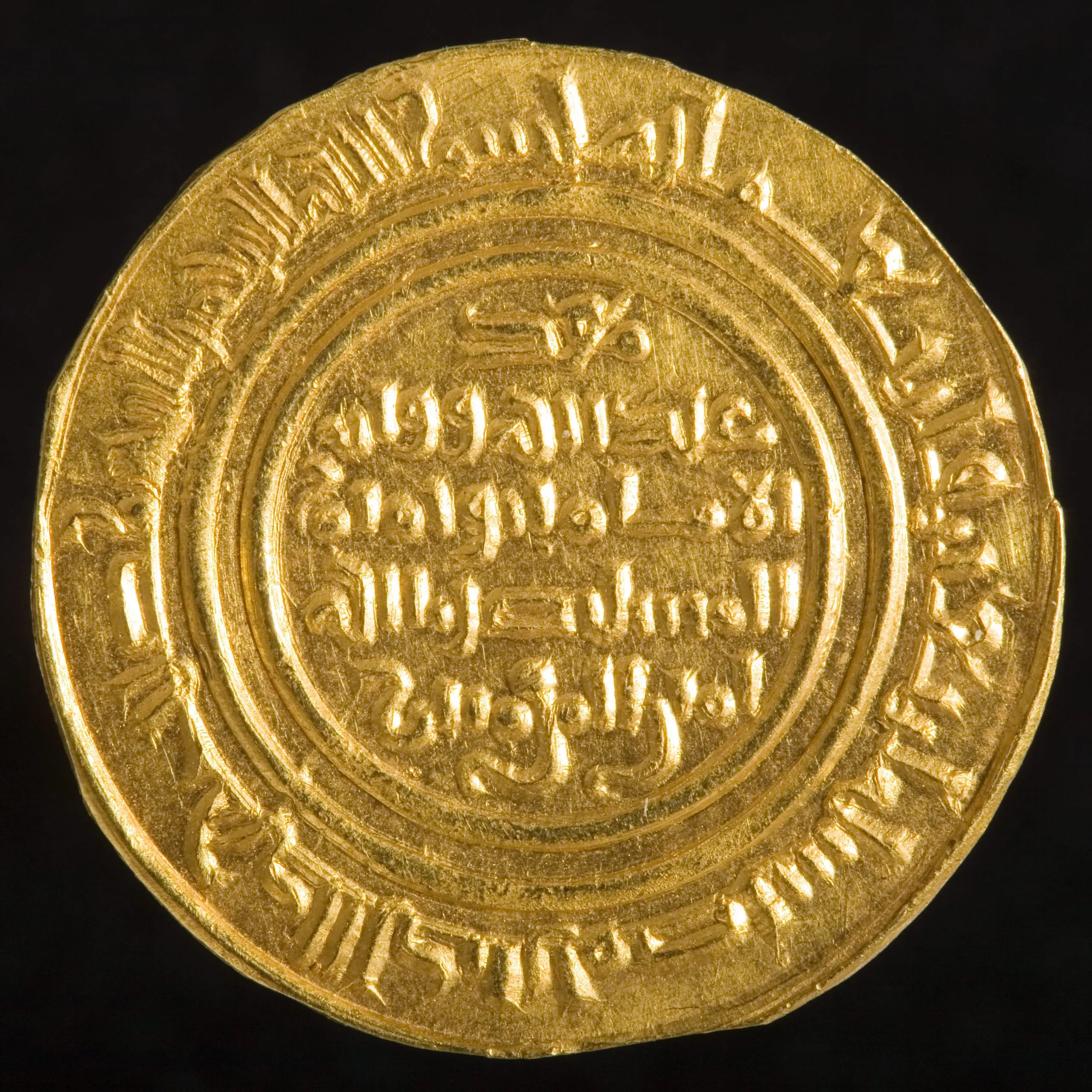
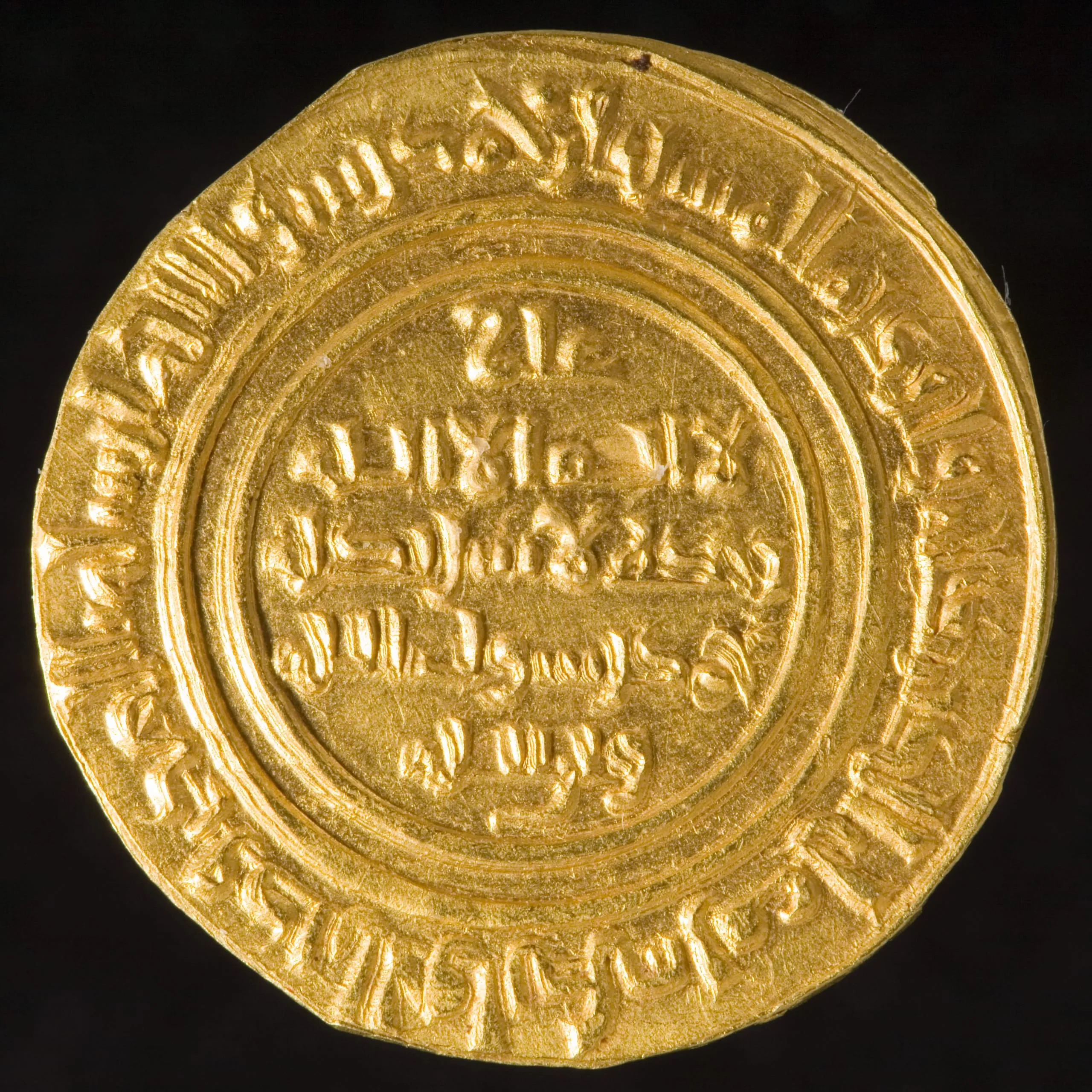
Gold coin with concentric circular bands of raised Arabic script in Kufic style, struck metal with irregular hand-minted edge, against a black background
Gold dinar coin against a black background, with raised Arabic script arranged in concentric circular bands around a central field of multi-line Arabic inscription.
Title
Dinar
Place Made
Egypt
Date Made
A.H. 440/1048 A.D.
Period
Fatimid (909-1171)
Medium
Gold
Dimensions
Diameter: 7/8 in. (2.22 cm); Weight: 0.14 oz (3.89 g)
Credit Line
Purchased with funds provided by the Joan Palevsky Bequest
Accession Number
M.2006.143.7
Classification
Tools and Equipment
Collecting Area
Art of the Middle East: Islamic
Curatorial Notes

Apart from their monetary function, coins struck for Muslim caliphs and kings were symbols of the legitimacy, faith, power, and prestige that accrued to the dynasts in whose names they were minted. By the 690s, the sole markings on most Islamic coins consisted of writing, including the Muslim profession of faith, or shahada, the date and place of issue, and the name of the ruler. Their purely epigraphic content distinguished them from Byzantine and Sasanian coins (see M.2002.1.448), on which a human portrait appears as a symbol of the government’s authority, as with many coins familiar to us today.

This coin states that it was struck in AH 440 (1048 CE) in the name of the Fatimid caliph al-Mustansir Billah (r. 1036−94). As is typical of the coinage of this dynasty, the obverse provides a variant on the shahada in keeping with the Shi‘a faith of the Fatimids. Gold dinars such as this were mostly reserved for state-level transactions, including the payment of taxes, reflecting the economic and political power of the Fatimid caliphate in Egypt and Syria during this period. The comparatively humbler copper fals was used in day-to-day commerce.
Selected Bibliography
  • Lo Terrenal y lo Divino: Arte Islámico siglos VII al XIX Colección del Museo de Arte del Condado de Los Ángeles. Santiago: Centro Cultural La Moneda, 2015.