LACMA

ShopMembershipMyLACMATickets
LACMA
Los Angeles County Museum of Art
5905 Wilshire Blvd.
Los Angeles, CA 90036
info@lacma.org
(323) 857-6000
Sign up to receive emails
Subscribe
© Museum Associates 2025
  • About LACMA
  • Jobs
  • Building LACMA
  • Host An Event
  • Unframed
  • Press
  • FAQs
  • Log in to MyLACMA
  • Privacy Policy
© Museum Associates 2025
Collections

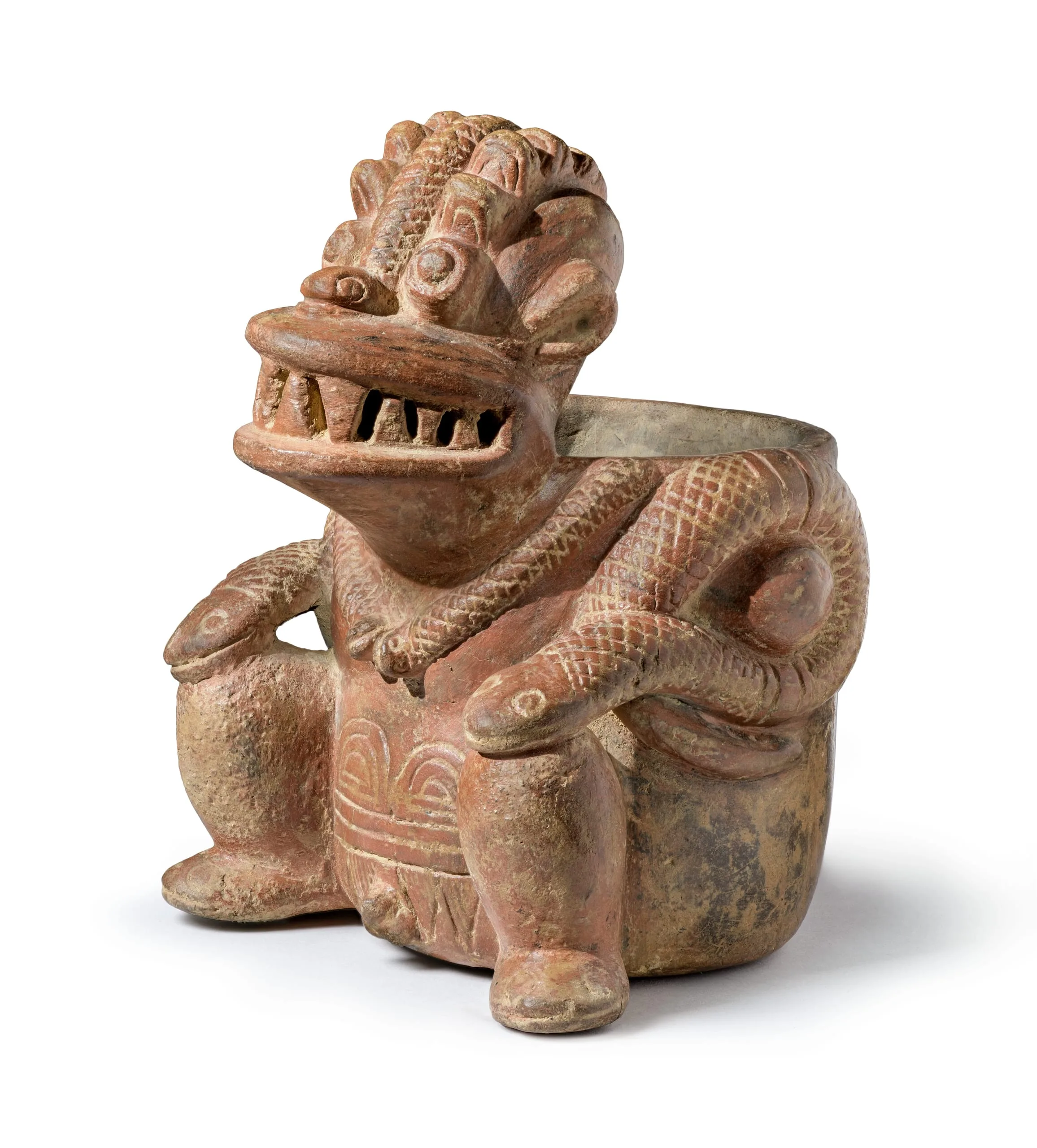
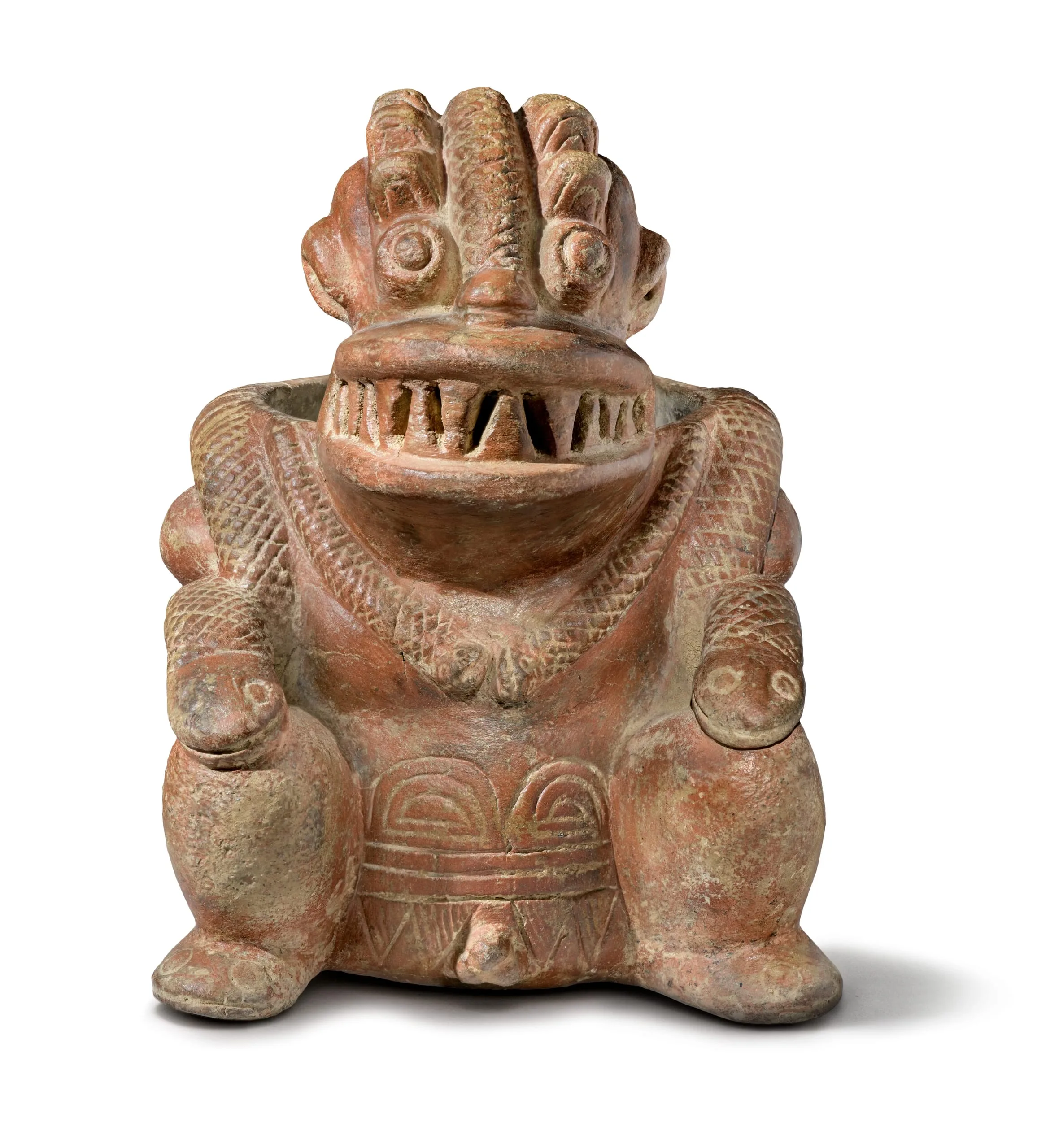
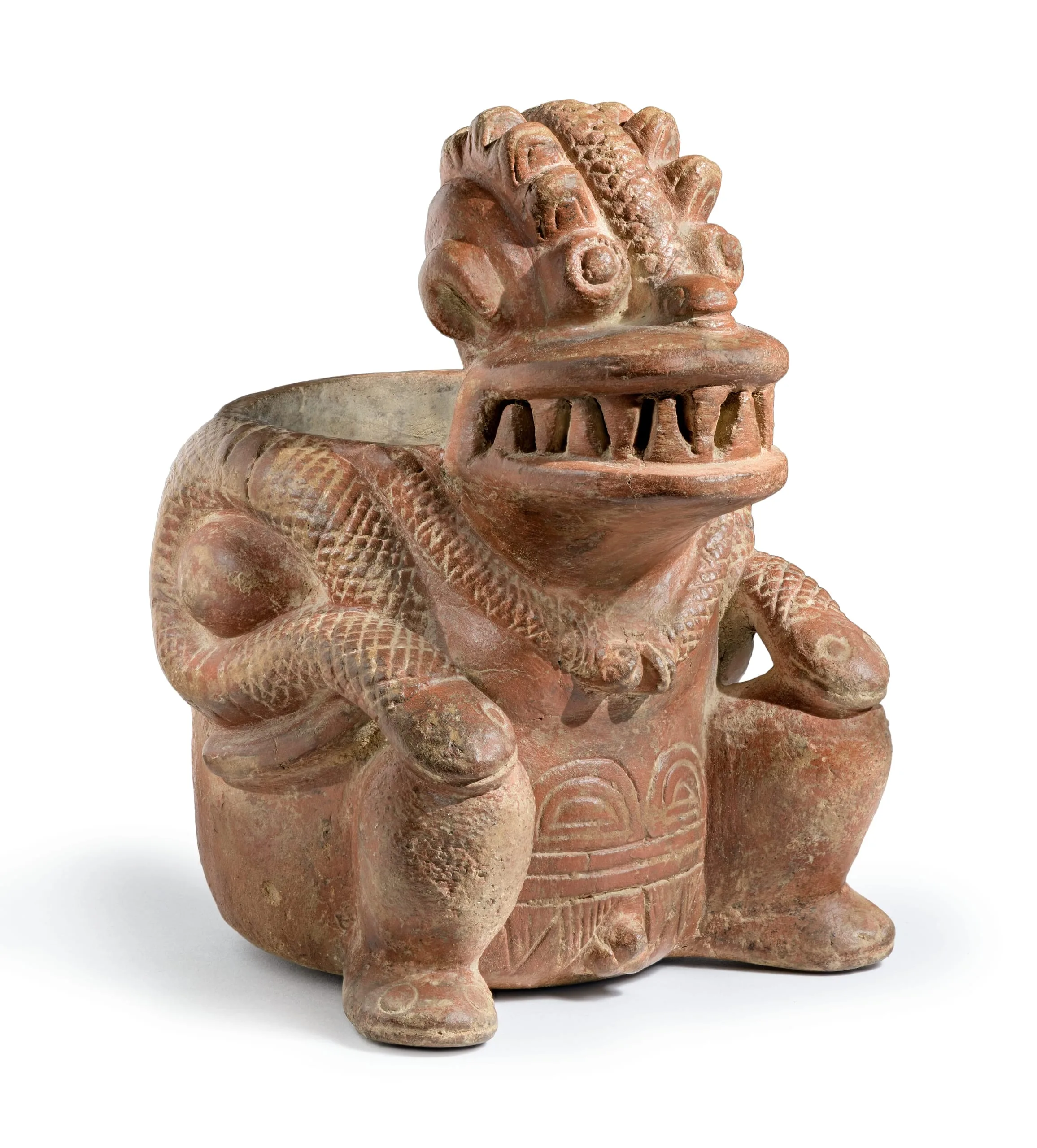
Basket-Carrier ("Canastero") with Fangs and Serpents1500 BCE–100 CE

On view:
Geffen Galleries, Ancestral Ceramics from Panama and Colombia
Terracotta ceramic vessel modeled as a seated humanoid creature with a wide-open, toothed mouth forming the vessel opening, incised scale and geometric surface decoration, holding small figures in each hand
Ceramic effigy vessel in reddish-brown earthenware, depicting a crouching supernatural figure with a fanged open mouth, scaled body, and clawed hands, with incised geometric and curvilinear patterns on the torso; hollow interior visible at the top.
Ceramic effigy vessel in reddish-brown clay, depicting a seated supernatural figure with a fanged open mouth, scaled skin texture, and a cylindrical vessel cavity in the torso; incised and modeled surface details throughout.
Title
Basket-Carrier ("Canastero") with Fangs and Serpents
Culture
Calima Ilama
Place Made
Colombia, Calima Region (Ilama Period)
Date Made
1500 BCE–100 CE
Medium
Slip-painted earthenware
Dimensions
6 × 4 1/2 × 5 in. (15.24 × 11.43 × 12.7 cm)
Credit Line
The Muñoz Kramer Collection, gift of Jorge G. and Nelly de Muñoz and Camilla Chandler Frost
Accession Number
M.2007.146.8
Classification
Ceramics
Collecting Area
Art of the Ancient Americas
Curatorial Notes

Made more than 2,000 years ago in the Western Cordillera of Colombia, this small sculpture is an outstanding example of the fantastical figurative ceramics created by potters of the Calima Ilama tradition. Although approximating a basket-carrier (hence the term canastero, from the Spanish canasta, meaning basket), this figure is barely anthropomorphic, sporting an oversized snout filled with large teeth, and arms, feet, a nose, and a necklace transformed into serpents.

The Ilama tradition forms the earliest phase of the long-lived Calima culture. Traces of dwellings, cemeteries, roads, and agricultural fields with raised ridges and drainage canals testify to a continuous occupation from 1500 BCE through to the sixteenth century. People of this period practiced shifting cultivation, growing crops such as corn, cassava, beans, and vegetables, cultivating land until its nutrients were depleted and then relocating to new sites. The road system, as well as frequent representation of canasteros, suggest that the movement of goods was important and that a substantial trade network was well established by the first millennium BCE. However, the supernatural or hybrid aspects of many canasteros indicate that, rather than merely depicting traders, they had a far greater symbolic function: these fierce creatures likely were meant to protect or empower whatever was contained in the vessel.

Although it appears to be intact, this piece has undergone significant interventions in modern times, prior to entering LACMA’s collection.

Julia Burtenshaw

2022

Selected Bibliography

Schrimpff, Marianne Cardale, ed. Calima and Malagana: Art and Archaeology in Southwestern Colombia. Pro Calima Foundation, 2005.

Unpacking the Universe: The Making of an Exhibition, Los Angeles County Museum of Art, 2022, https://www.youtube.com/playlist?list=PLJy-HLfC3xxCue9_kM1GRNcnPEaNvi_aW.
Selected Bibliography
  • Burtenshaw, Julia, Héctor García Botero, Diana Magaloni, and María Alicia Uribe Villegas. The Portable Universe = El Universo en tus Manos: Thought and Splendor of Indigenous Colombia. Los Angeles: Los Angeles County Museum of Art, 2022.