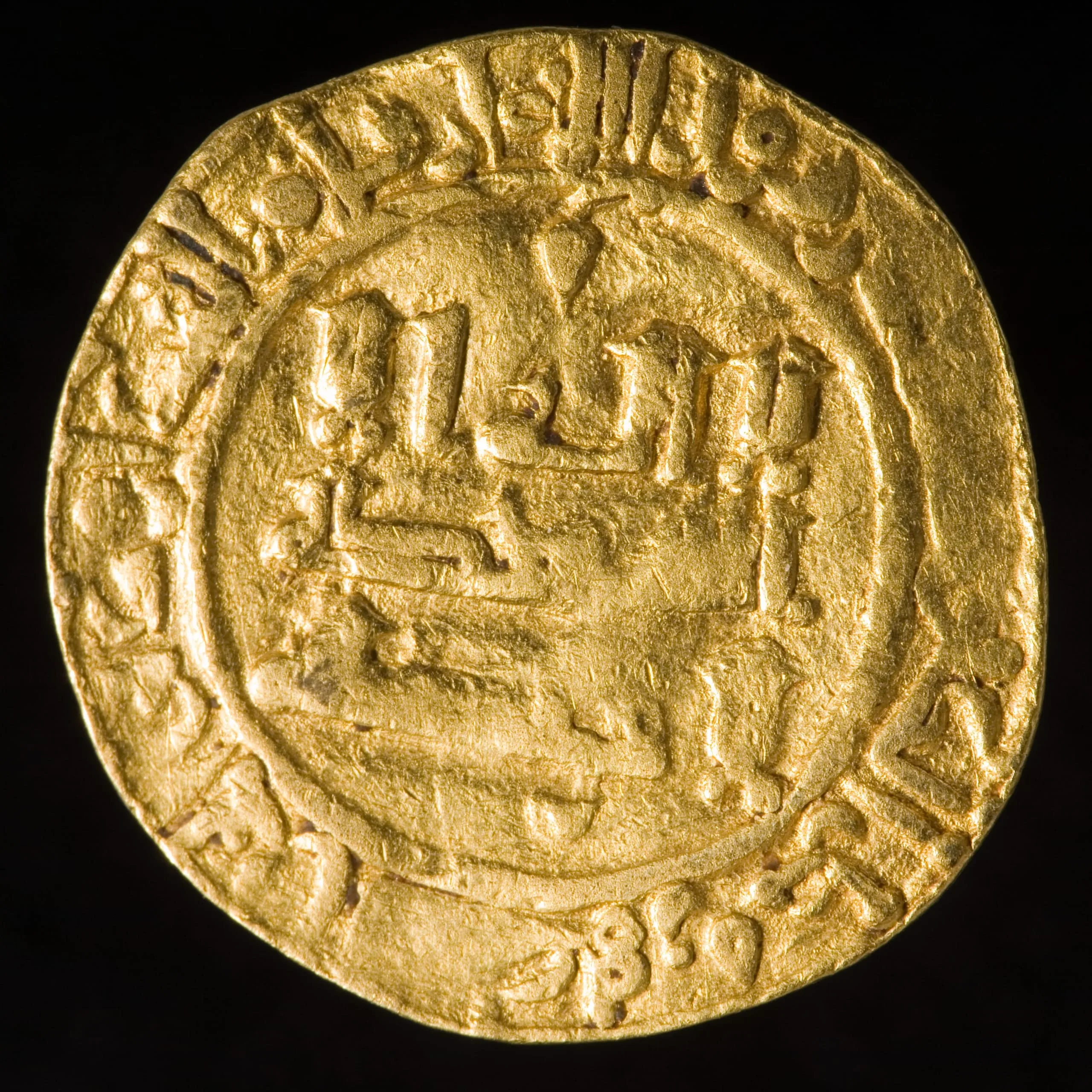
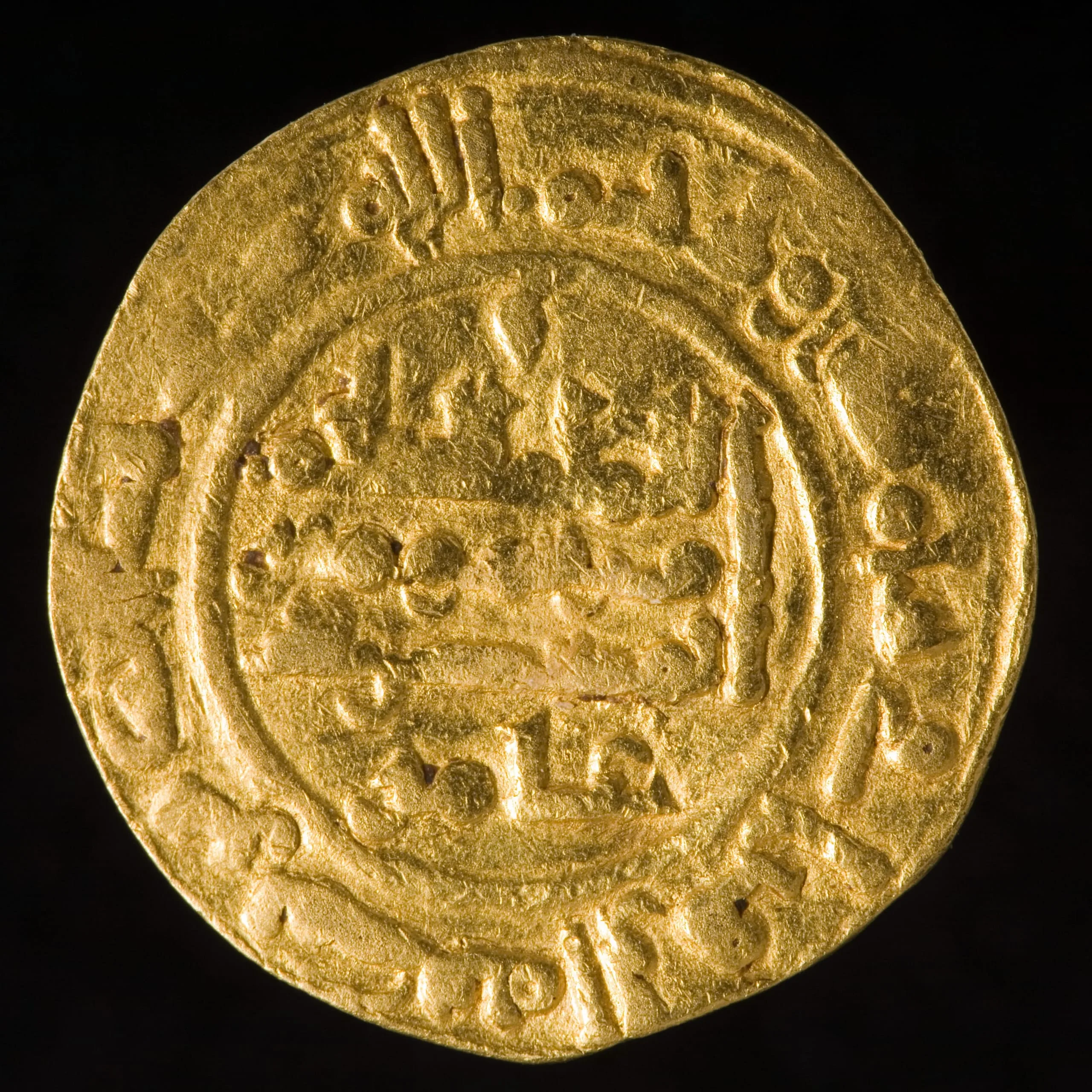
Apart from their monetary function, coins struck for Muslim caliphs and kings were symbols of the legitimacy, faith, power, and prestige that accrued to the dynasts in whose names they were minted. By the 690s, the sole markings on most Islamic coins consisted of writing, including the Muslim profession of faith, or shahada, the date and place of issue, and the name of the ruler. Their purely epigraphic content distinguished them from Byzantine and Sasanian coins (see M.2002.1.448), on which a human portrait appears as a symbol of the government’s authority, as with many coins familiar to us today.
This coin states that it was struck in AH 360 (970 CE) in the name of al-Hakam II (r. 961−76), at his capital Madinat al-Zahra. Gold dinars such as this were mostly reserved for state-level transactions, including the payment of taxes, reflecting the economic and political power of the Caliphate of Córdoba during this period. The comparatively humbler copper fals was used in day-to-day commerce.