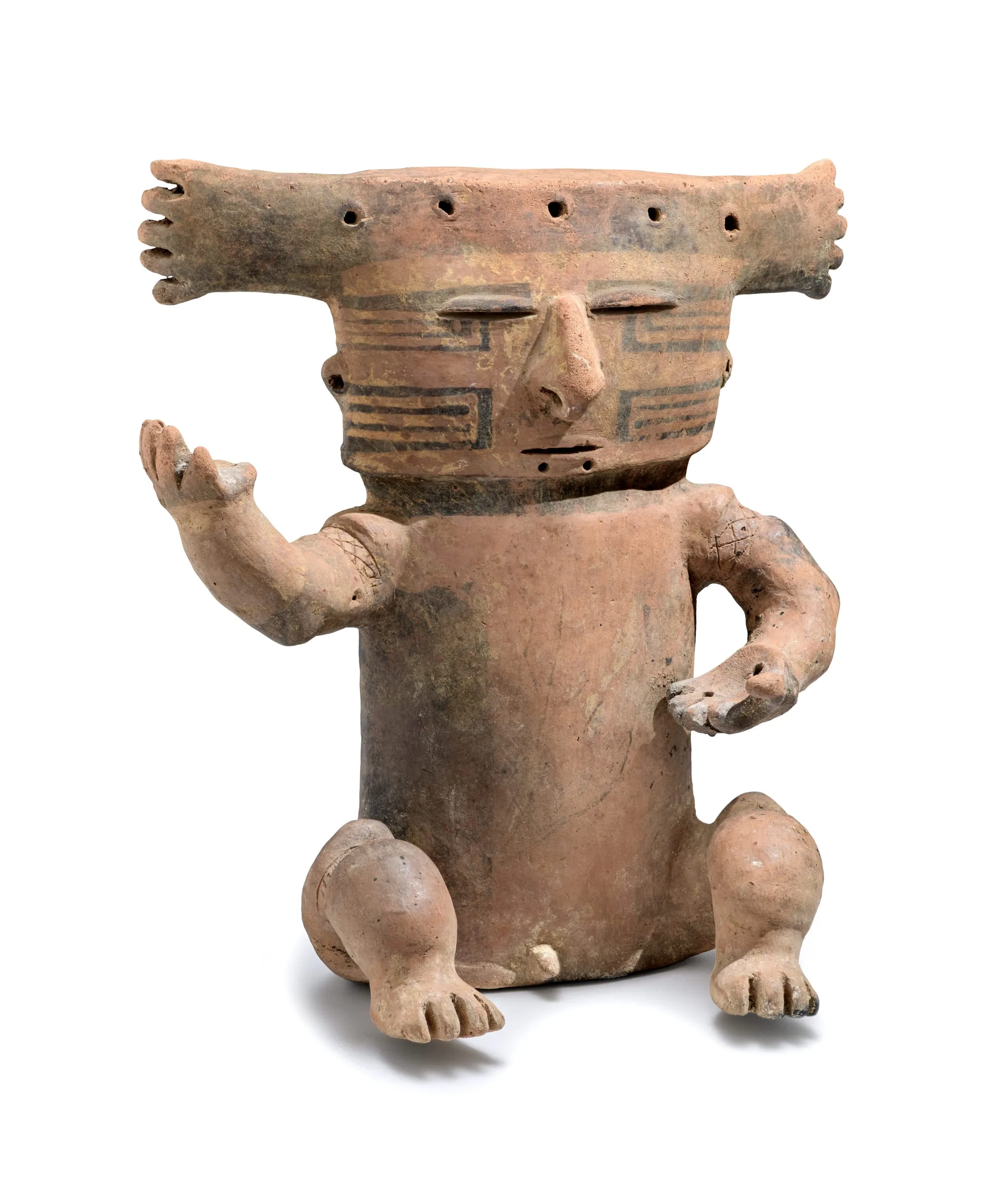
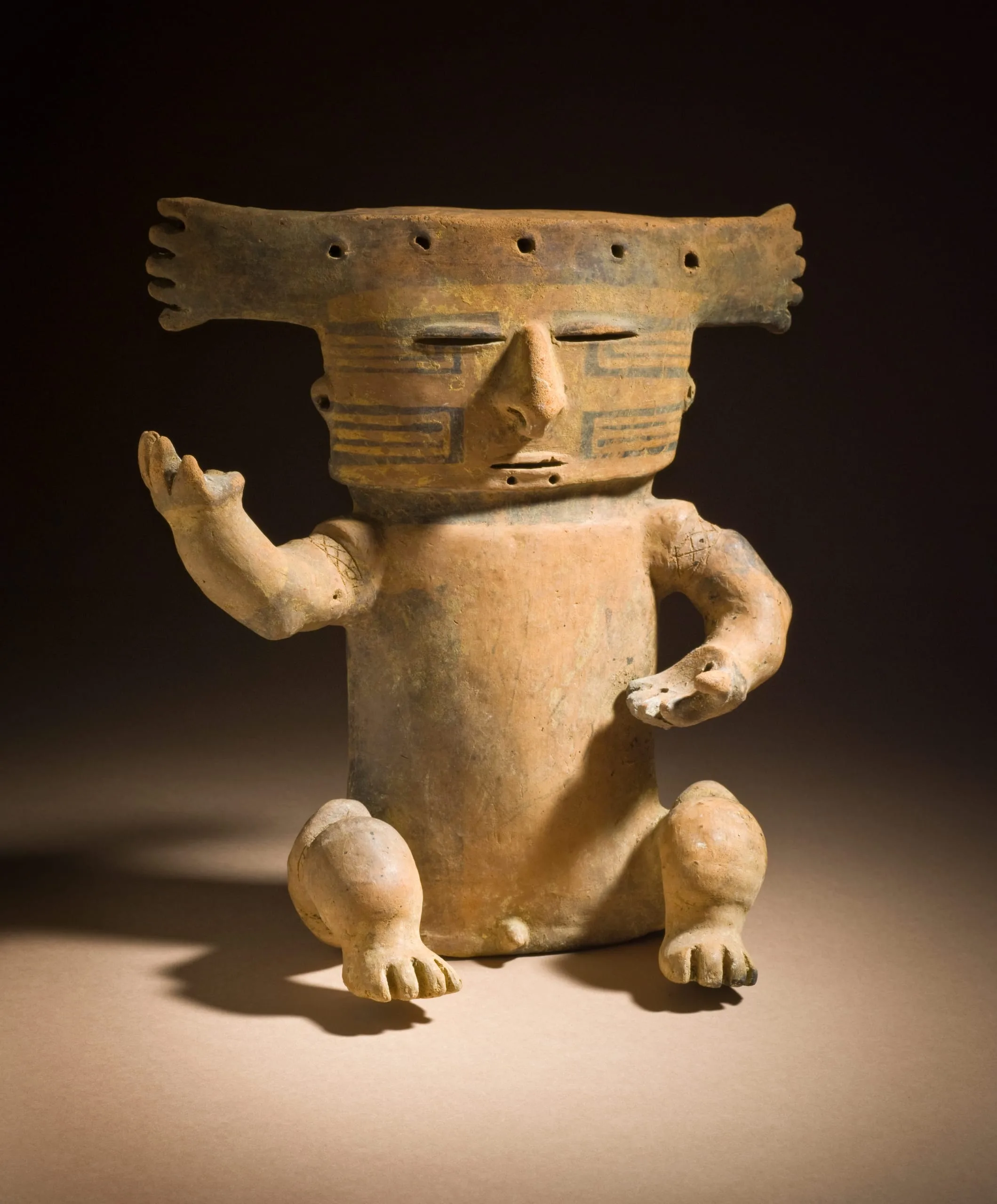
This tomb guardian from the Middle Cauca Valley, although now missing his feather and metal adornments, still cuts an impressive figure. Works such as this, also called slab figures (see M.2007.146.268), were placed deep into the earth in shaft tombs, often in pairs (one male, one female—see M.2007.146.271, .272), and seem to have served as protectors of the deceased.
For the Indigenous peoples of the Americas, a seated position generally denotes high rank, wisdom, stability, and balance. Our figure’s crouching posture appears ritualistic, with arms held just-so and eyes closed as if in contemplation or trance (see also M.2007.146.296). The raised right hand, seen in many Middle Cauca figures from this period, resembles a gesture used by religious mediators in Anserma, western Colombia, who cure by means of passing their right hand over the patient. An X-ray of this piece (pictured below) shows two small ceramic balls in the cavity of the torso that create a rattling sound when agitated. Gourd rattles are used by Tukano people to ward off evil by virtue of the reverberating echo they produce. Sound animates this figure into an active being that can “speak.” This was not a static sculpture but an interactive agent that revealed its full self only when moved.
The holes in his forehead and chin probably once held real feathers, mimicking a type of feather headdress still worn by Indigenous Colombians today. His nose and ears would have been adorned with rings made of a gold-copper alloy (tumbaga; see M.2007.146.276). Some of the body decoration remains sharp, especially the black facial paint and the incising on the upper arms and legs, which probably represent ligatures. Among Indigenous people of South America, bodypainting plays a number of crucial roles in transforming individuals into social beings, and in protecting them from harmful spirits or energies. Patterns painted on the skin are thought to ward off harm, and even heal. Additionally, for many groups, the human body requires alteration to become a true social person. Patterns and adornments signal social status and identity, and mark important life events and rites of passage. Nowadays, bodypaint also symbolizes cultural resistance and resurgence in the face of external threats to territory, autonomy, and way of life.
Anthony J. Meyer and Julia Burtenshaw
2025
Selected Bibliography
Forthcoming article by Anthony J. Meyer
X-ray of M.2007.146.5