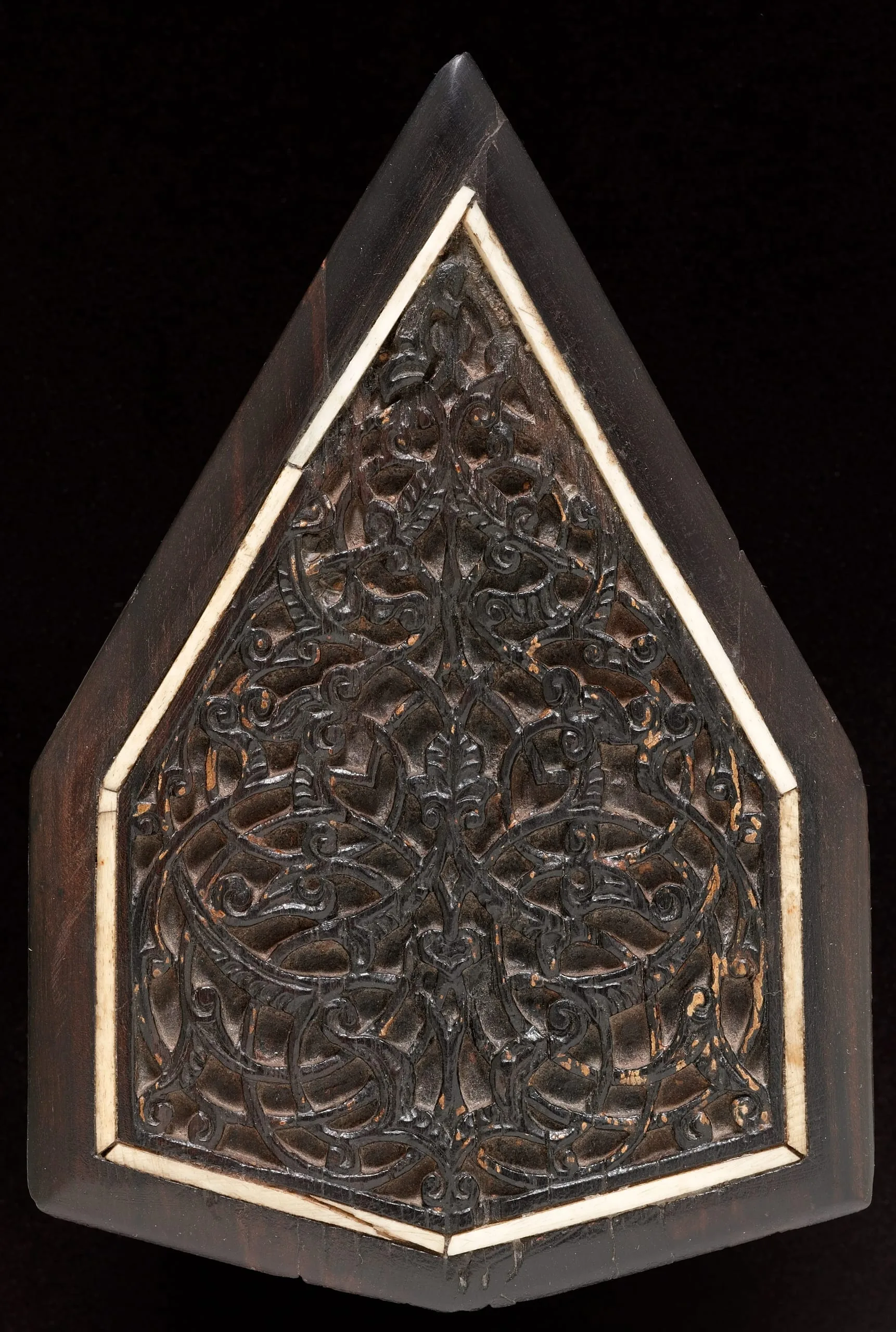
- Title
- Panel
- Date Made
- circa 1340
- Medium
- Ebony, inlaid with bone
- Dimensions
- 6 7/8 × 5 3/4 in. (17.46 × 14.61 cm)
- Accession Number
- M.2006.140
- Curatorial Notes
Carved wood inlaid with bone, often itself carved, is one of the glories of Islamic furniture and furnishings associated with later medieval Egypt and Syria during the reign of the Mamluk dynasty (1250−1517). This lovely hexagonal panel probably comes from one of the elaborately detailed minbars, or pulpits, produced under the Mamluks for one of the many religious institutions they built in their capital, Cairo. Indeed, this panel has been associated with the minbar from the mosque of al-Nasfi Qaisun (1329) in Cairo, now lost but still largely intact in the 1860s, when it was recorded in a drawing. Related single panels are in the British Museum, London, while several forming a larger section are in the State Hermitage Museum, Saint Petersburg.
2025