LACMA

ShopMembershipMyLACMATickets
LACMA
Los Angeles County Museum of Art
5905 Wilshire Blvd.
Los Angeles, CA 90036
info@lacma.org
(323) 857-6000
Sign up to receive emails
Subscribe
© Museum Associates 2026
  • About LACMA
  • Jobs
  • Building LACMA
  • Host An Event
  • Unframed
  • Press
  • FAQs
  • Log in to MyLACMA
  • Privacy Policy
© Museum Associates 2026
Collections

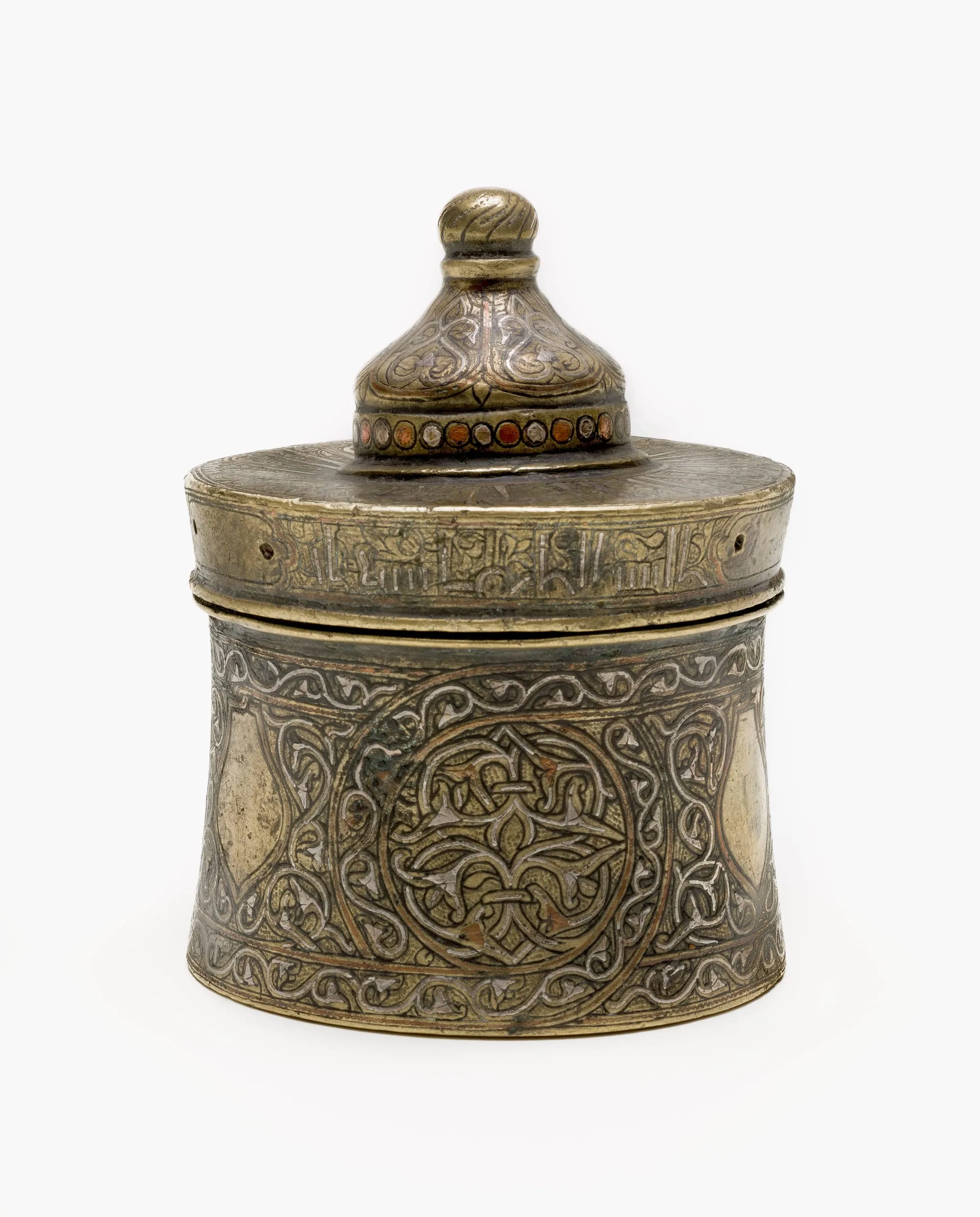
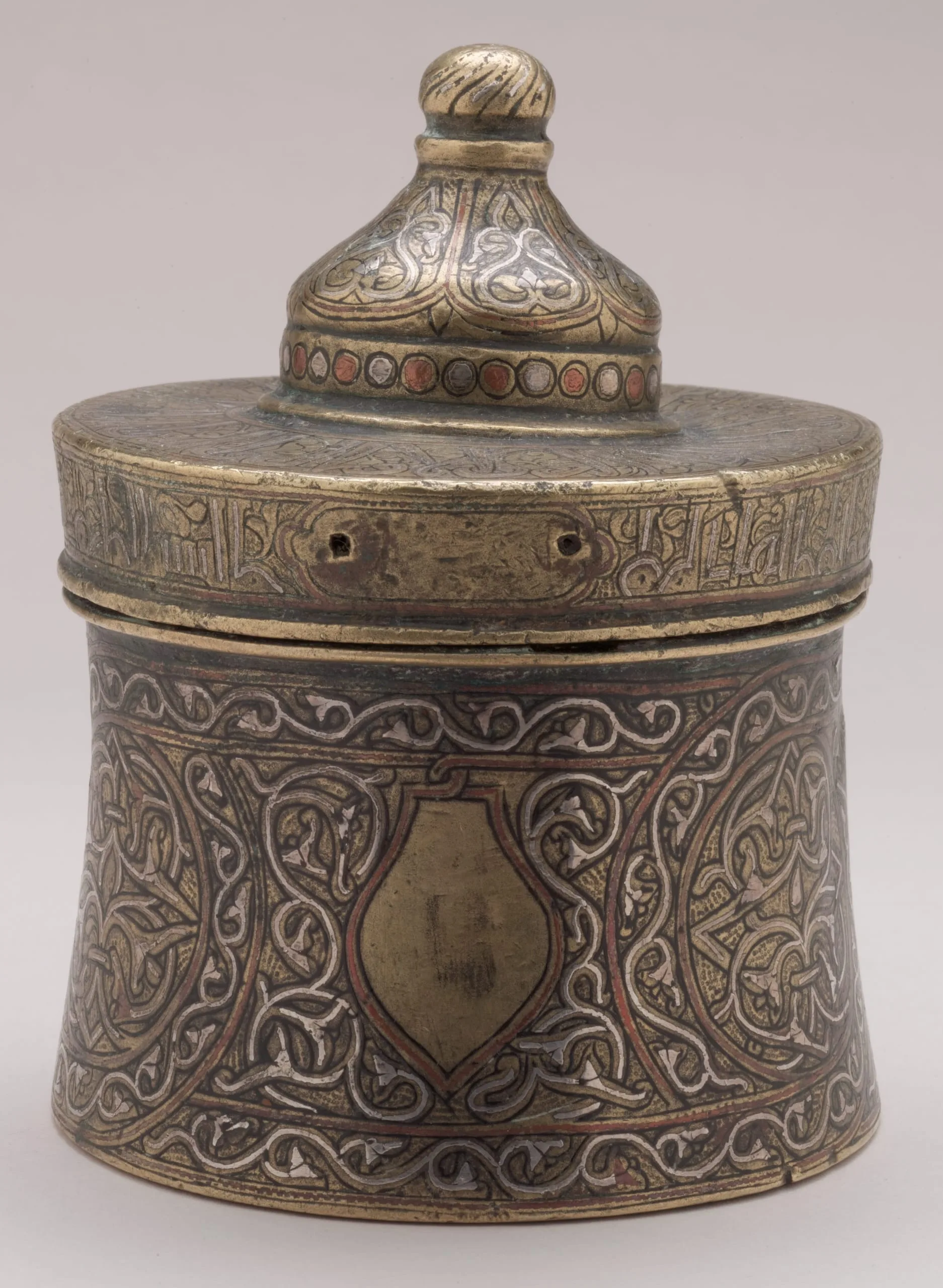
Inkwelllate 12th-early 13th century

On view:
Geffen Galleries, Art of the Word, Word as Art
Small cylindrical brass vessel with domed finial lid, covered in engraved arabesques and a band of Arabic or Persian script, with amber-orange stones set below the finial
Cylindrical metal box with domed lid and knob finial, densely covered in silver and copper inlaid arabesque scrollwork and interlacing vine patterns; a shield-shaped cartouche on the body and a band of Arabic script encircling the lid edge.
Title
Inkwell
Place Made
Iran or Afghanistan
Date Made
late 12th-early 13th century
Medium
Bronze, cast, incised and inlaid with copper and silver
Dimensions
a) Lid height: 2 1/2 in. (6.35 cm); a) Lid diameter: 3 1/2 in. (8.89 cm); b) Base height: 2 3/4 in. (6.99 cm); b) Base diameter: 3 5/8 in. (9.21 cm); Overall height: 5 in. (12.7 cm); Overall diameter: 3 5/8 in. (9.21 cm)
Credit Line
Purchased with funds provided by the Joan Palevsky Bequest
Accession Number
M.2006.138.2a-b
Classification
Metal
Collecting Area
Art of the Middle East: Islamic
Curatorial Notes

Many calligraphy tools were designed for portability and are indicative of the mobile nature of the craft, which did not require a special studio but did demand good light and a comfortable place to sit or stand. In the case of this inkwell, a chain was run through now-missing loops on the lid and body so the well could be carried on the wrist or a belt. Ink was stored in a wad of raw silk or wool within the well to prevent it from spilling in transport. The inkwell is decorated with copper and silver inlay in a manner typical of the eastern Iranian province of Khurasan, while around the sides of the lid is an Arabic inscription expressing good wishes to its unnamed owner.
Selected Bibliography
  • Lo Terrenal y lo Divino: Arte Islámico siglos VII al XIX Colección del Museo de Arte del Condado de Los Ángeles. Santiago: Centro Cultural La Moneda, 2015.

  • Komaroff, Linda. Beauty and Identity: Islamic Art from the Los Angeles County Museum of Art. Los Angeles: Los Angeles County Museum of Art, 2016.

Related Unframed

Alison Saar's Monument to Those Lost and Those Who Have Survived
  • February 9, 2024
  • Sajji Lazarus