LACMA

ShopMembershipMyLACMATickets
LACMA
Los Angeles County Museum of Art
5905 Wilshire Blvd.
Los Angeles, CA 90036
info@lacma.org
(323) 857-6000
Sign up to receive emails
Subscribe
© Museum Associates 2025

Museum Hours

Monday

11 am–6 pm

Tuesday

11 am–6 pm

Wednesday

Closed

Thursday

11 am–6 pm

Friday

11 am–8 pm

Saturday

10 am–7 pm

Sunday

10 am–7 pm


  • About LACMA
  • Jobs
  • Building LACMA
  • Host An Event
  • Unframed
  • Press
  • FAQs
  • Log in to MyLACMA
  • Privacy Policy
© Museum Associates 2025
Collections

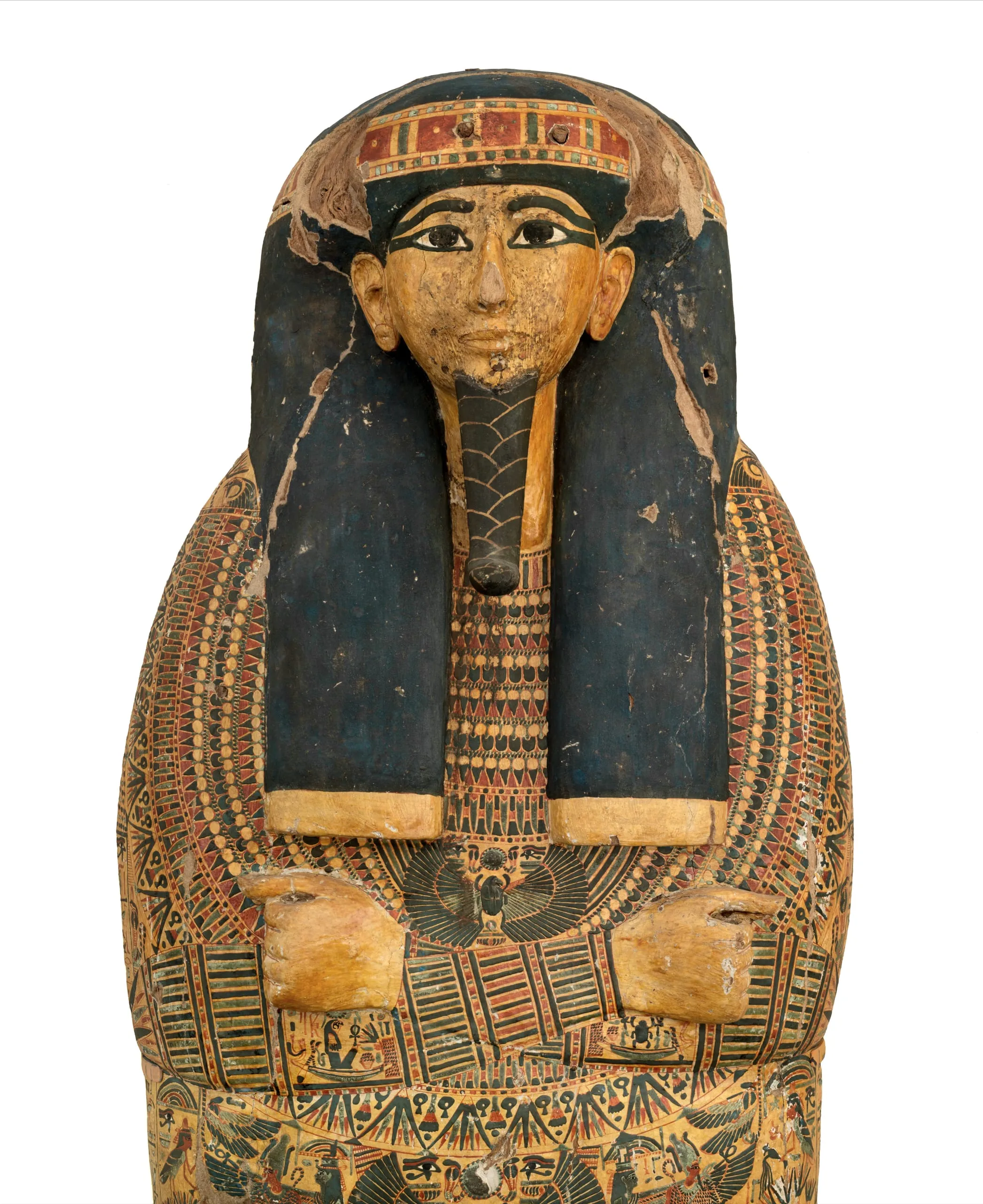
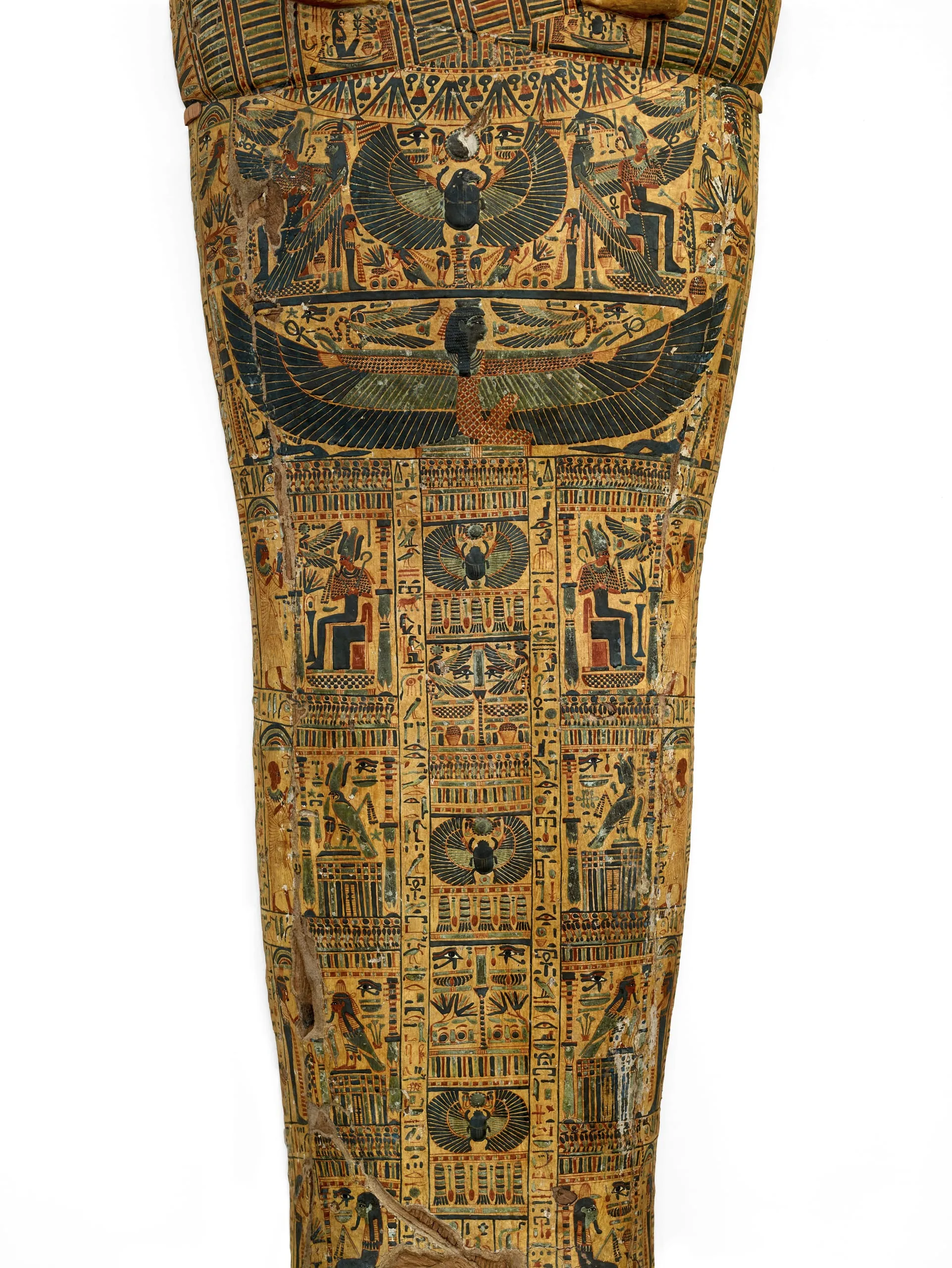
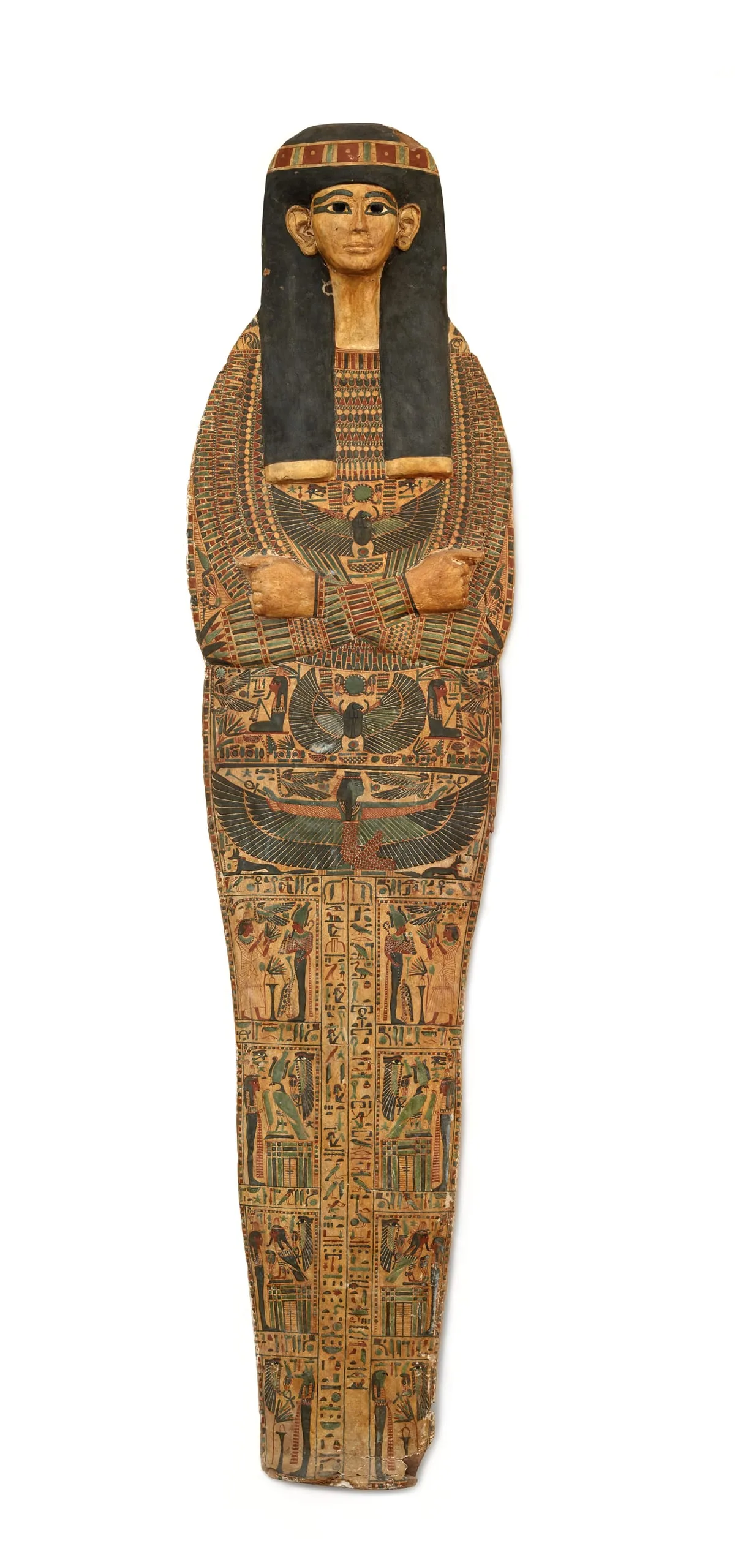
Coffinmid-21st Dynasty (about 1000 - 968 BCE)

On view:
Geffen Galleries, Life and Afterlife: Imagery of Early Egypt
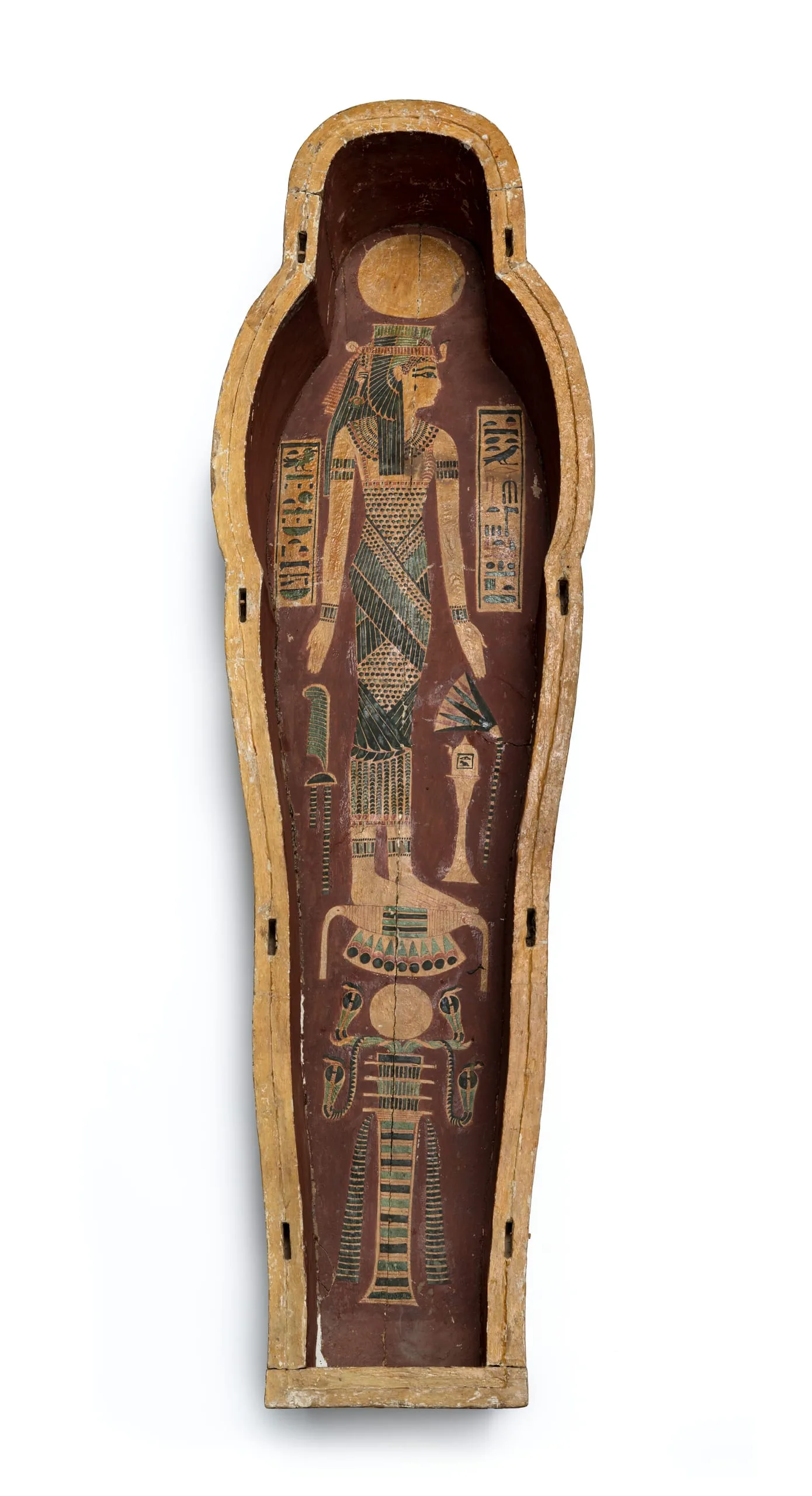
Anthropoid Egyptian coffin lid viewed from above, showing painted interior with a standing winged deity figure, hieroglyphic columns, and smaller divine figures on a deep red ground
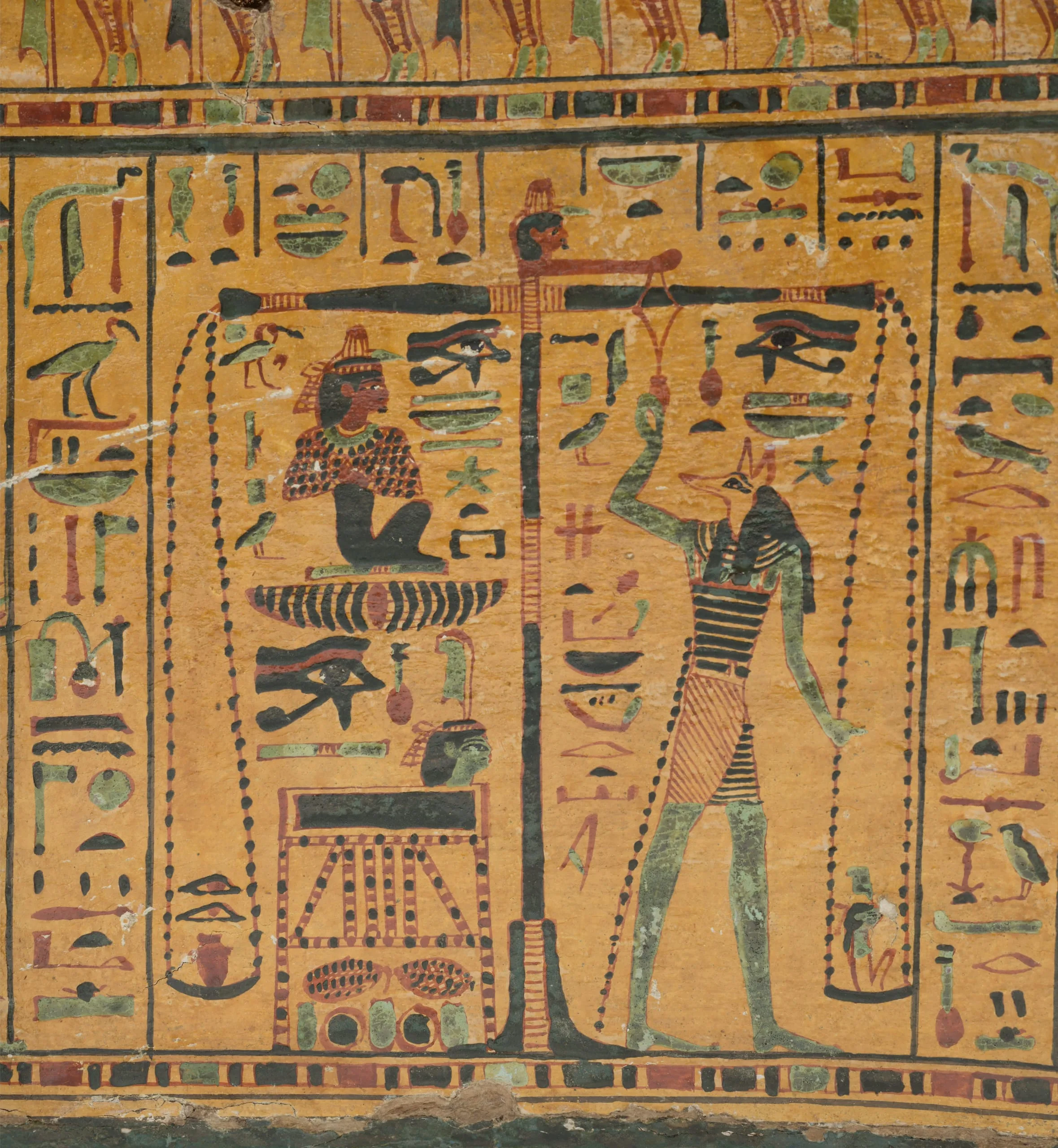
Painted Egyptian funerary panel on ochre ground, depicting two figures flanking a central djed pillar hung with beaded strands: a seated figure in elaborate collar and headdress at left, and a standing jackal-headed figure at right with arms raised, wearing striped kilt. Rows of hieroglyphs in green, red, and black fill the surrounding registers, with a wedjat eye and canopic chest below.
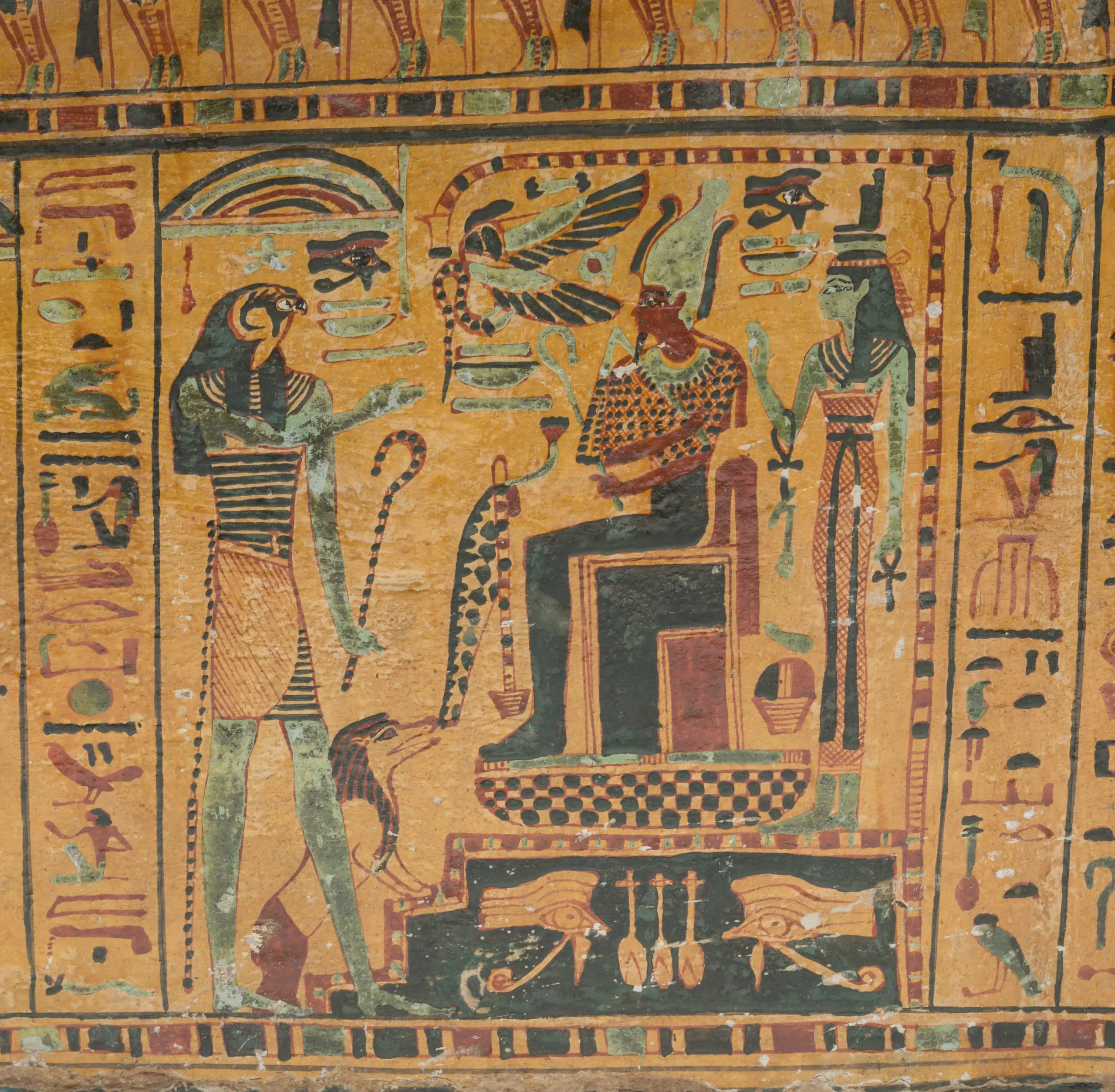
Painted Egyptian coffin panel with ochre background, depicting a falcon-headed figure at left facing a seated deity with a winged scarab above, attended by a standing figure at right holding an ankh; columns of hieroglyphs flank both sides, with wedjat eyes and a checkered platform below.
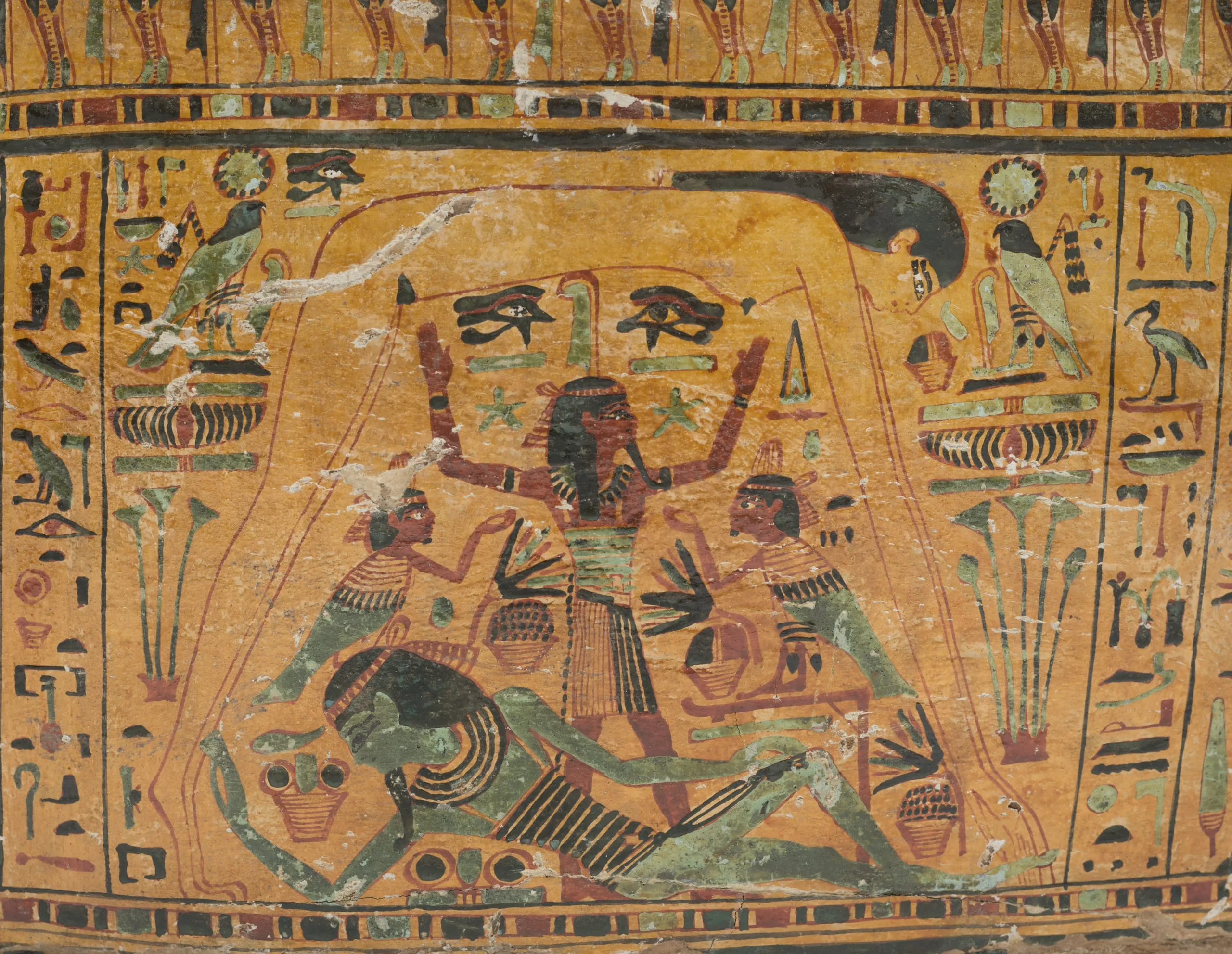
Painted Egyptian funerary panel on an ochre ground, depicting a central winged figure with arms raised flanked by two kneeling figures, above a recumbent figure in profile; bordered by columns of hieroglyphic text and registers of deity figures in green, red, and black pigments.
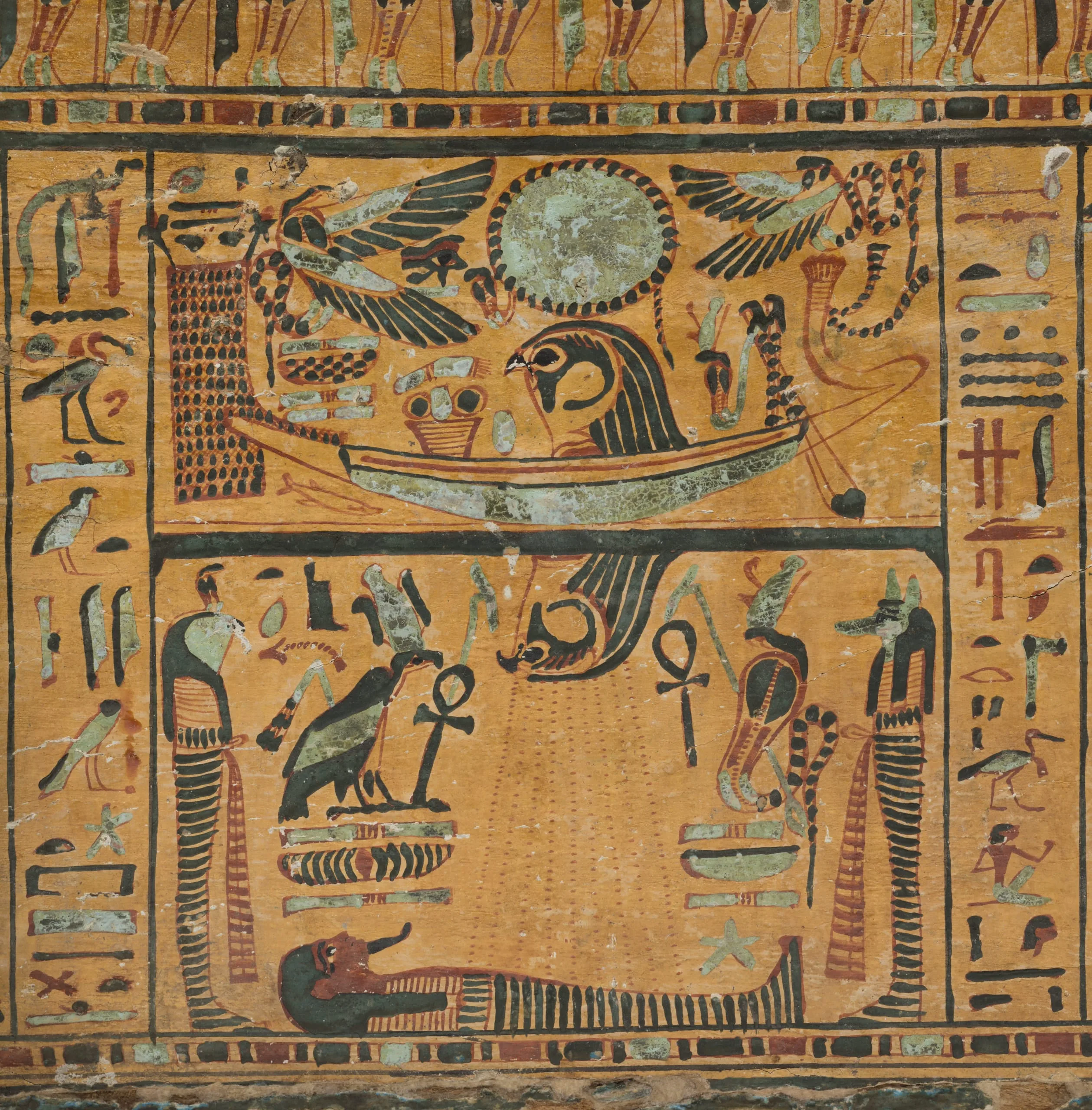
Painted Egyptian funerary panel on an ochre ground, divided into two registers bordered by columns of hieroglyphs. Upper register depicts a solar barque carrying a falcon-headed figure with a sun disk, flanked by winged figures. Lower register shows standing deity figures with animal heads, ankh symbols, and a recumbent figure at bottom center, rendered in black, green, red, and white pigments.
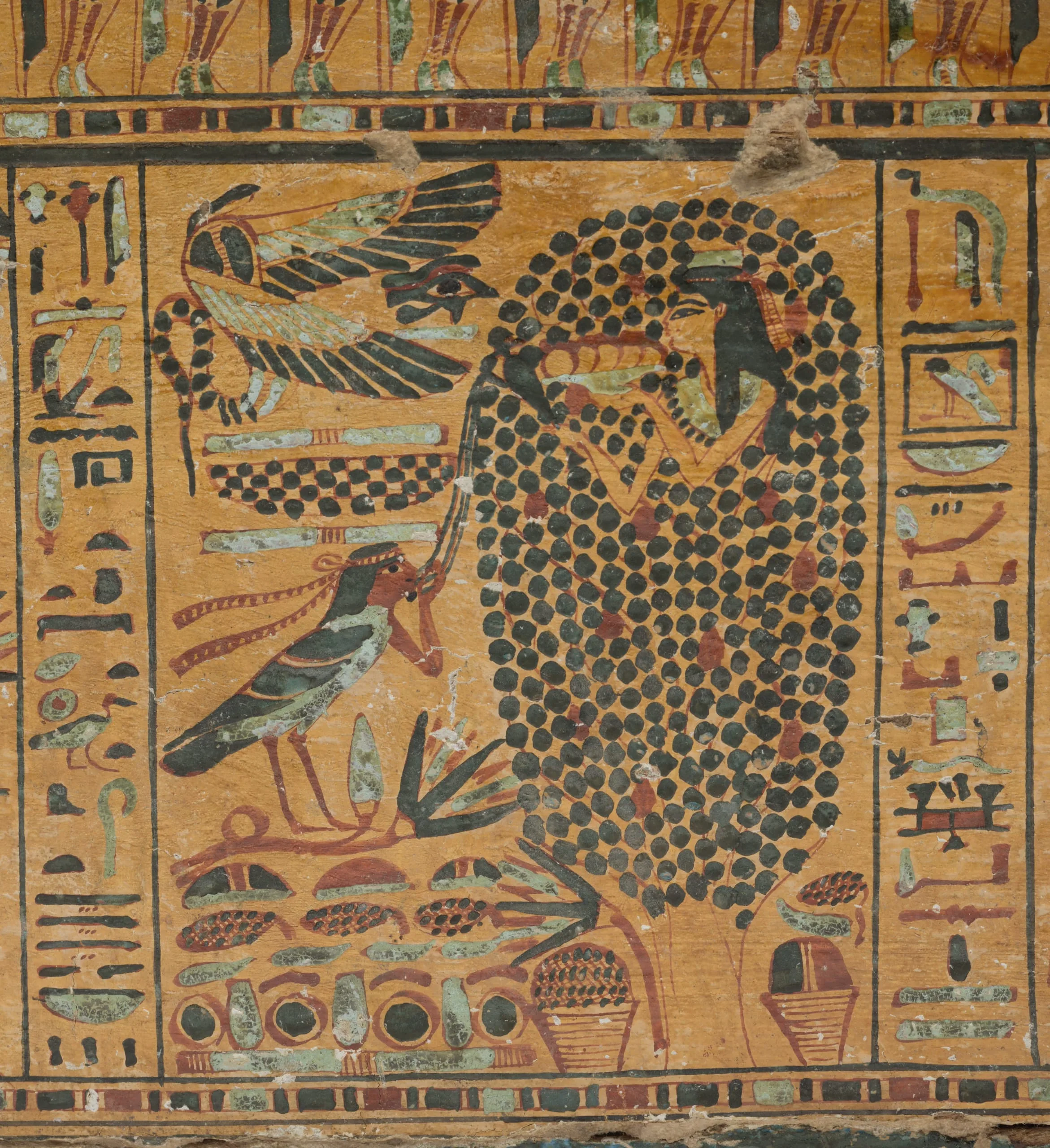
Painted Egyptian coffin panel on ochre ground, depicting a large sycamore fig tree rendered as a dense cluster of dark green dots, with a human figure emerging from the trunk offering to a ba-bird below; a winged figure with an Eye of Horus hovers above. Hieroglyphic columns border both sides. Offerings including baskets and produce arranged along the bottom register.
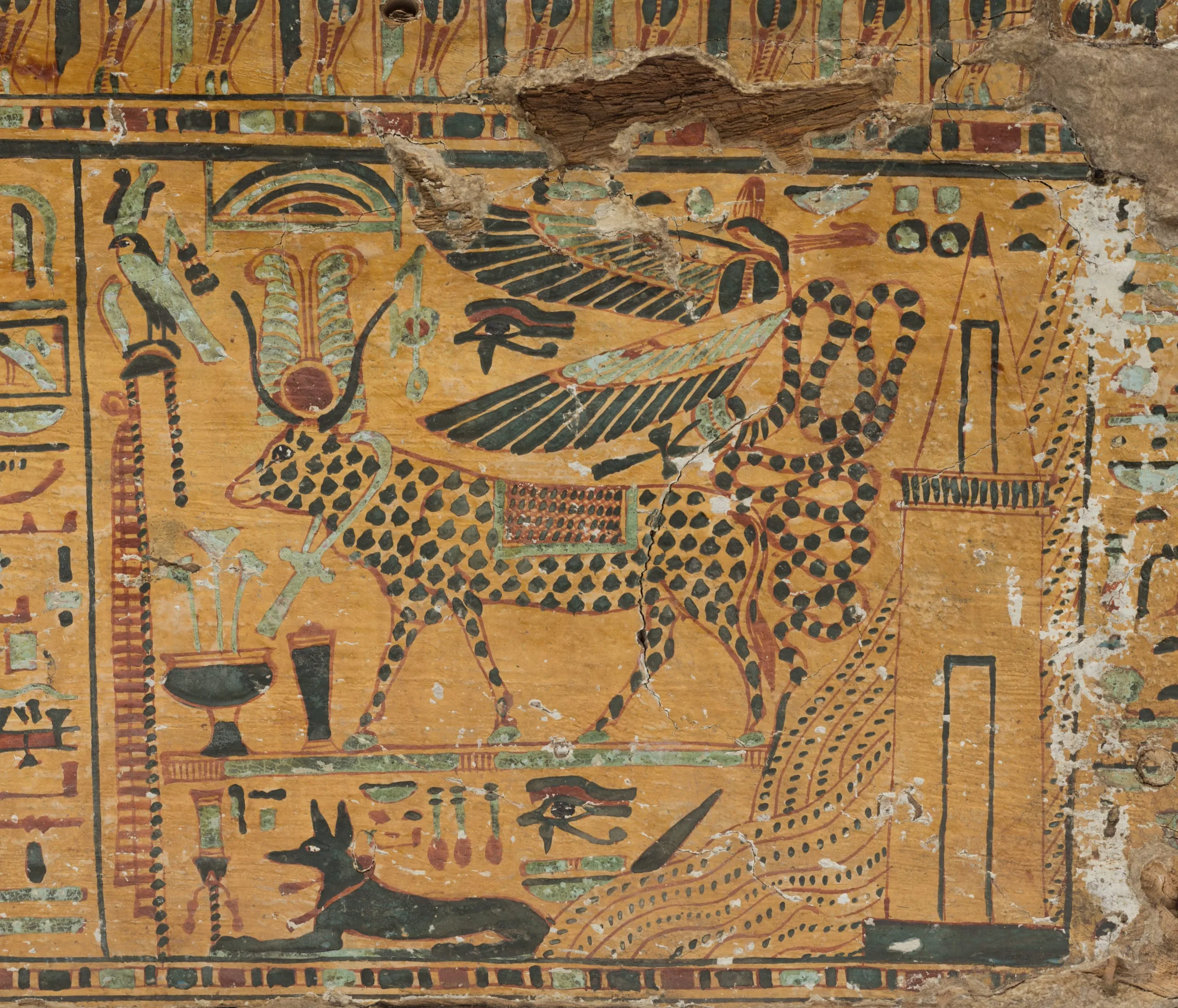
Painted Egyptian coffin panel on an ochre ground, depicting a spotted sacred cow with solar disk and horns, accompanied by a winged serpent, a seated jackal-headed figure, and hieroglyphic registers in green, black, and red. Surface shows areas of flaking and loss.
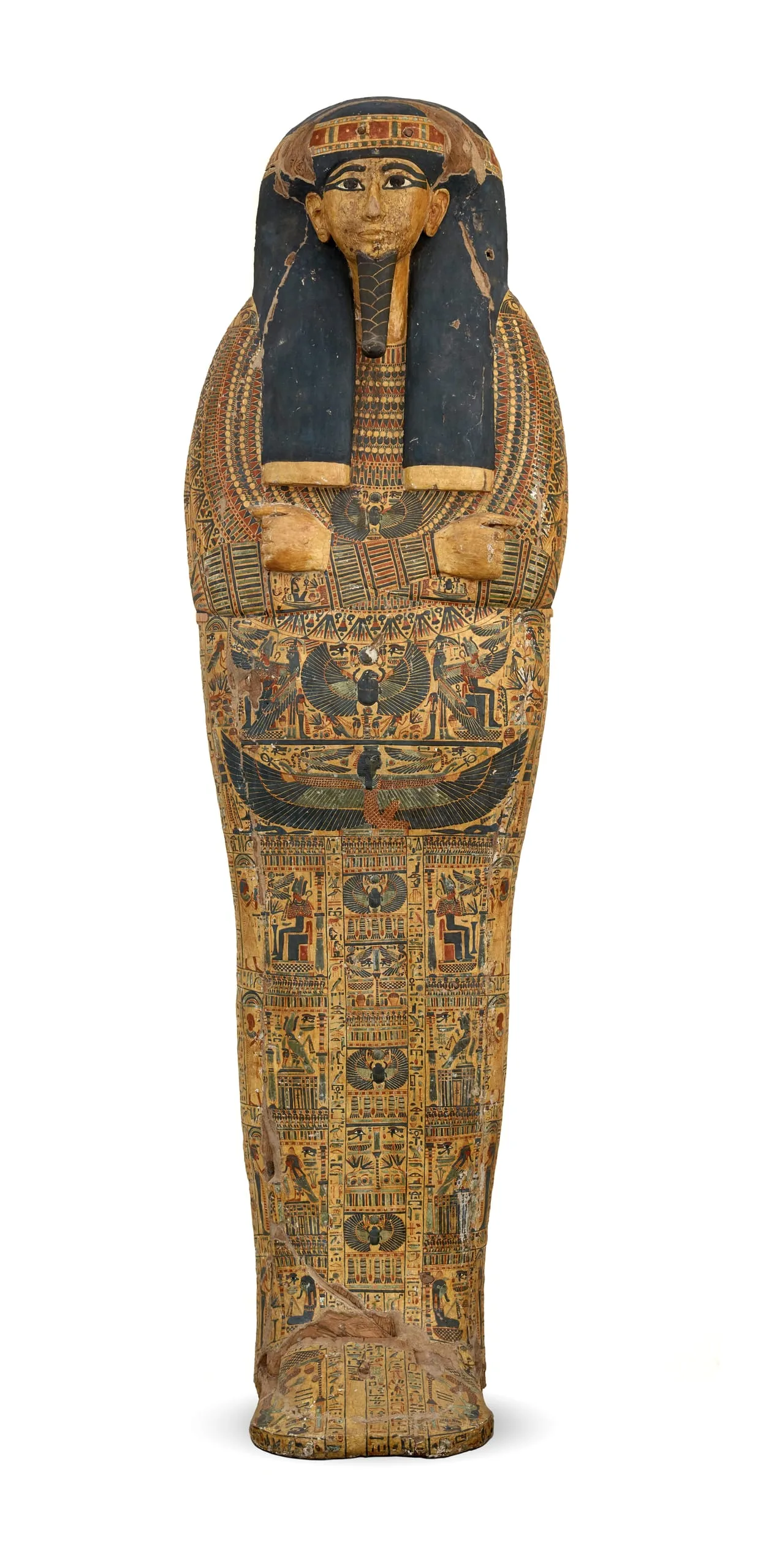
Painted wooden mummy coffin with a carved face wearing a striped blue-and-gold nemes headdress, hands crossed at the chest, and a body covered in dense polychrome registers depicting winged figures, hieroglyphic text columns, and Egyptian deities in red, blue, black, and gold.
Painted wooden anthropoid coffin lid, upper portion, with a human face framed by a dark blue striated wig and striped headdress. Polychrome decoration includes a broad collar of concentric bands, crossed hands at the chest, and densely painted registers of Egyptian hieroglyphs and figures in red, green, gold, and black.
Painted wooden coffin, lower section, densely decorated with Egyptian hieroglyphs and figural registers in blue, green, red, and black on a golden ground; winged scarab and spread-winged figures at top, with columns of hieroglyphic text and seated deities arranged in horizontal bands below.
Painted wooden mummy coffin lid with a sculpted human face wearing a striped nemes headdress and broad collar. The body is decorated with polychrome registers of hieroglyphic inscriptions, winged figures, and standing deities in red, green, blue, and gold against a warm ochre ground.
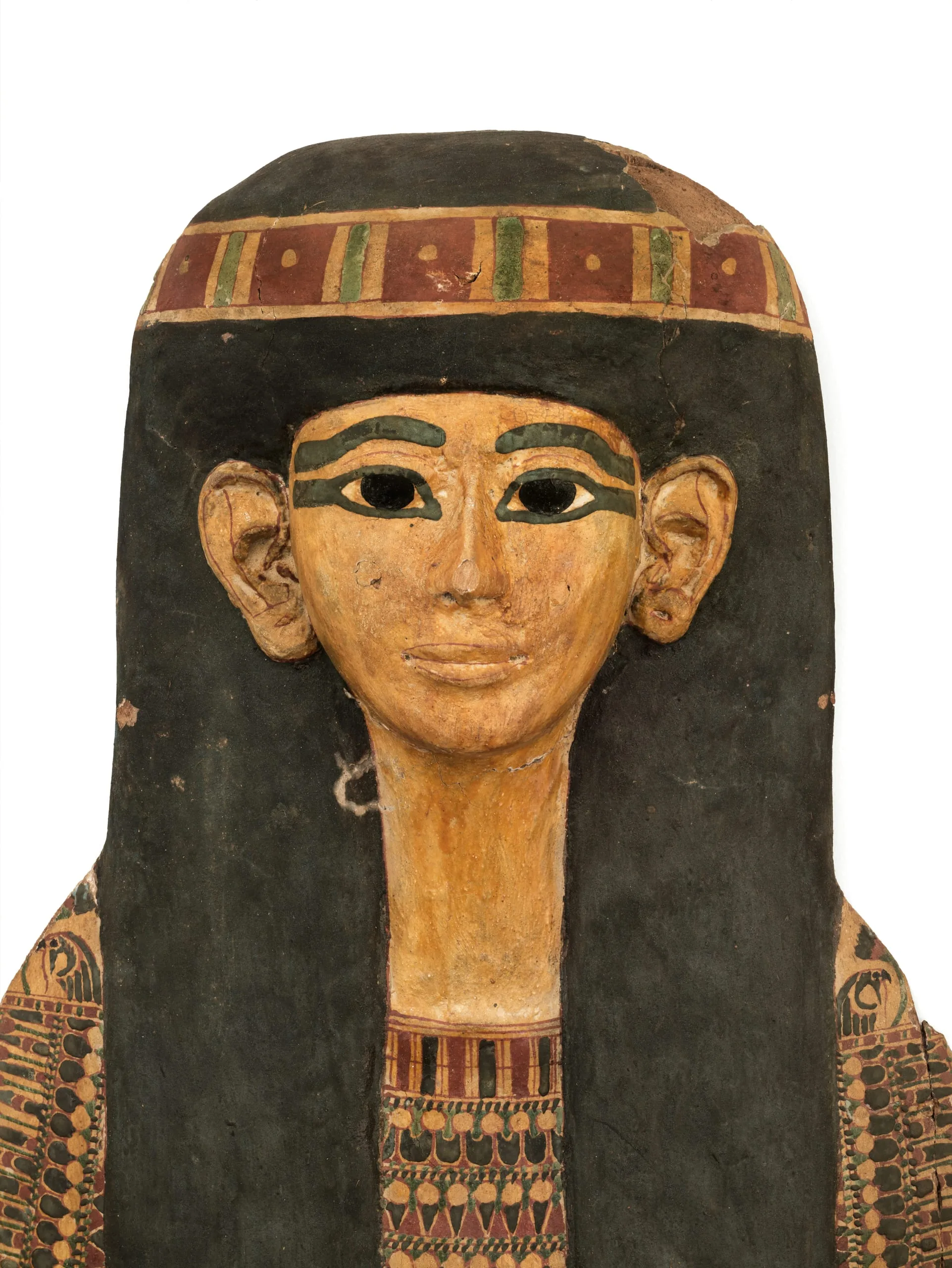
Painted cartonnage mummy mask with gilded face, dark striped nemes headdress with red and green banded diadem, and green-outlined eyes with kohl markings; broad collar with geometric and figural painted decoration visible at lower edge.
Title
Coffin
Place Made
Egypt, likely Thebes
Date Made
mid-21st Dynasty (about 1000 - 968 BCE)
Medium
Wood, gesso, polychrome and yellow varnish
Dimensions
Base: 73 3/4 x 21 1/2 x 13 in. (187.33 x 54.61 x 33.02 cm); Outer Lid: 74 1/4 x 21 3/4 x 14 in. (188.59 x 55.24 x 35.56 cm); Inner Lid: 69 1/8 x 16 5/8 x 4 1/4 in. (175.58 x 42.23 x 10.79 cm)
Credit Line
Purchased with funds provided by Mr. and Mrs. John Jewett Garland
Accession Number
M.47.3a-c
Classification
Furnishings
Collecting Area
Egyptian Art
Curatorial Notes
This sarcophagus, or coffin, including a base, lid, and mummy board, dates to the middle of the Twenty-first Dynasty (c. 1000-968 BC). The high priests of Amun at Thebes assumed rule over Egypt in the Twenty-first Dynasty, and a number of changes took place in funerary customs. Beginning during the Old Kingdom (2687-2191 BC), tombs were built of permanent materials and the interior walls of the tombs were decorated with scenes of daily life and funerary rituals. They were also inscribed with texts to further ensure that the deceased would travel from life into the afterlife, as well as to provide sustenance for the deceased in the afterlife. During the Twenty-first Dynasty, burials were made in plain underground chambers or rock crevices, and the surface of the coffin served as the replacement surface for the ornate scenes and texts previously found on the walls of the tombs.
This type of sarcophagus is known as an anthropoid coffin. It is made of sycamore wood and shaped in the form of a human outline. The head, hands, and feet are modeled in high relief. The figure's plaited beard, also a reference to the god Osiris, most likely identifies it as a male's coffin. The space in the inscription on the lid's footboard that would have been reserved for the name of the coffin's owner has been left blank, leaving his identity a mystery.
The sarcophagus and the process of mummification were central to ancient Egyptians' beliefs about the afterlife. According to Egyptian belief, the sun god Re descends into the underworld when the sun sets. Protective deities help him overcome the dangers threatening to impede his path to rebirth at dawn. The Egyptians believed that in the afterlife, the pharaohs became one with Re and were likewise reborn with him at sunrise. While only the pharaohs journeyed with Re through the nighttime hours, all Egyptians faced the same dangers on their journey to the afterlife. Instructions for the elaborate preparations necessary to safe passage from life into the afterlife were found in the Book of the Dead.
When a ruler or a well-to-do Egyptian died, his or her body was embalmed and wrapped in linen in order to keep the deceased looking as much like the living body as possible, enabling the person's spirit (ka) to recognize and return to the body for the afterlife. This process, called mummification, associated the deceased with Osiris, the god of the underworld. As a precaution against the disintegration of the deceased's face, a substitute face was provided by depicting the face of the deceased on the coffin and also representing it on the inner lid (the mummy board). The other images on this sarcophagus are from the Book of the Dead. A number of deities are shown assisting the deceased on his or her voyage. By depicting images from the Book of the Dead in tombs, on papyri (paper made from the papyrus plant), and on sarcophagi, the Egyptians believed they could help produce the desired result-a successful voyage to the afterlife.