LACMA

ShopMembershipMyLACMATickets
LACMA
Los Angeles County Museum of Art
5905 Wilshire Blvd.
Los Angeles, CA 90036
info@lacma.org
(323) 857-6000
Sign up to receive emails
Subscribe
© Museum Associates 2025

Museum Hours

Monday

11 am–6 pm

Tuesday

11 am–6 pm

Wednesday

Closed

Thursday

11 am–6 pm

Friday

11 am–8 pm

Saturday

10 am–7 pm

Sunday

10 am–7 pm


  • About LACMA
  • Jobs
  • Building LACMA
  • Host An Event
  • Unframed
  • Press
  • FAQs
  • Log in to MyLACMA
  • Privacy Policy
© Museum Associates 2025
Collections

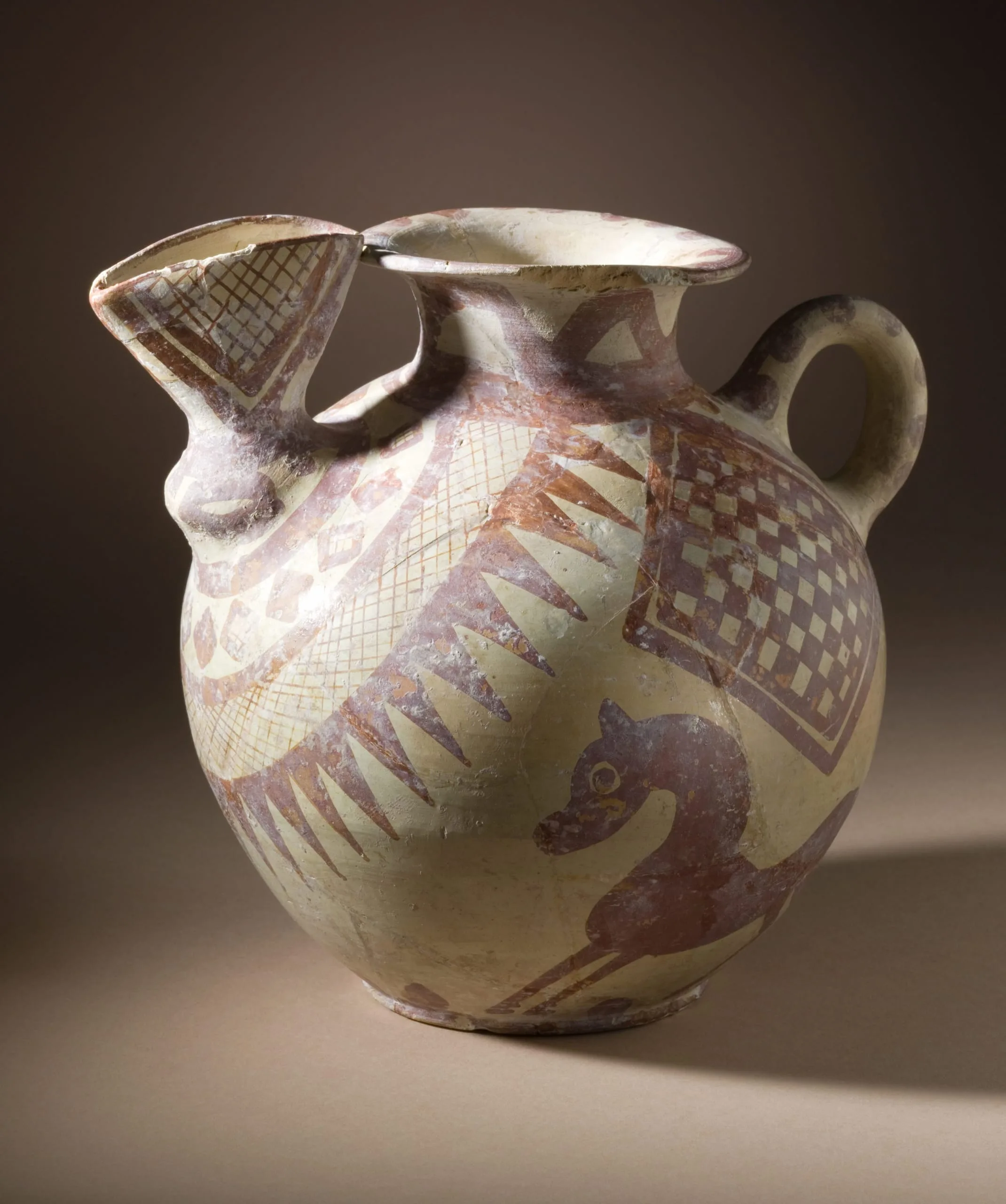
Bridge-spouted Painted Vasecirca 800-600 B.C.

Not on view
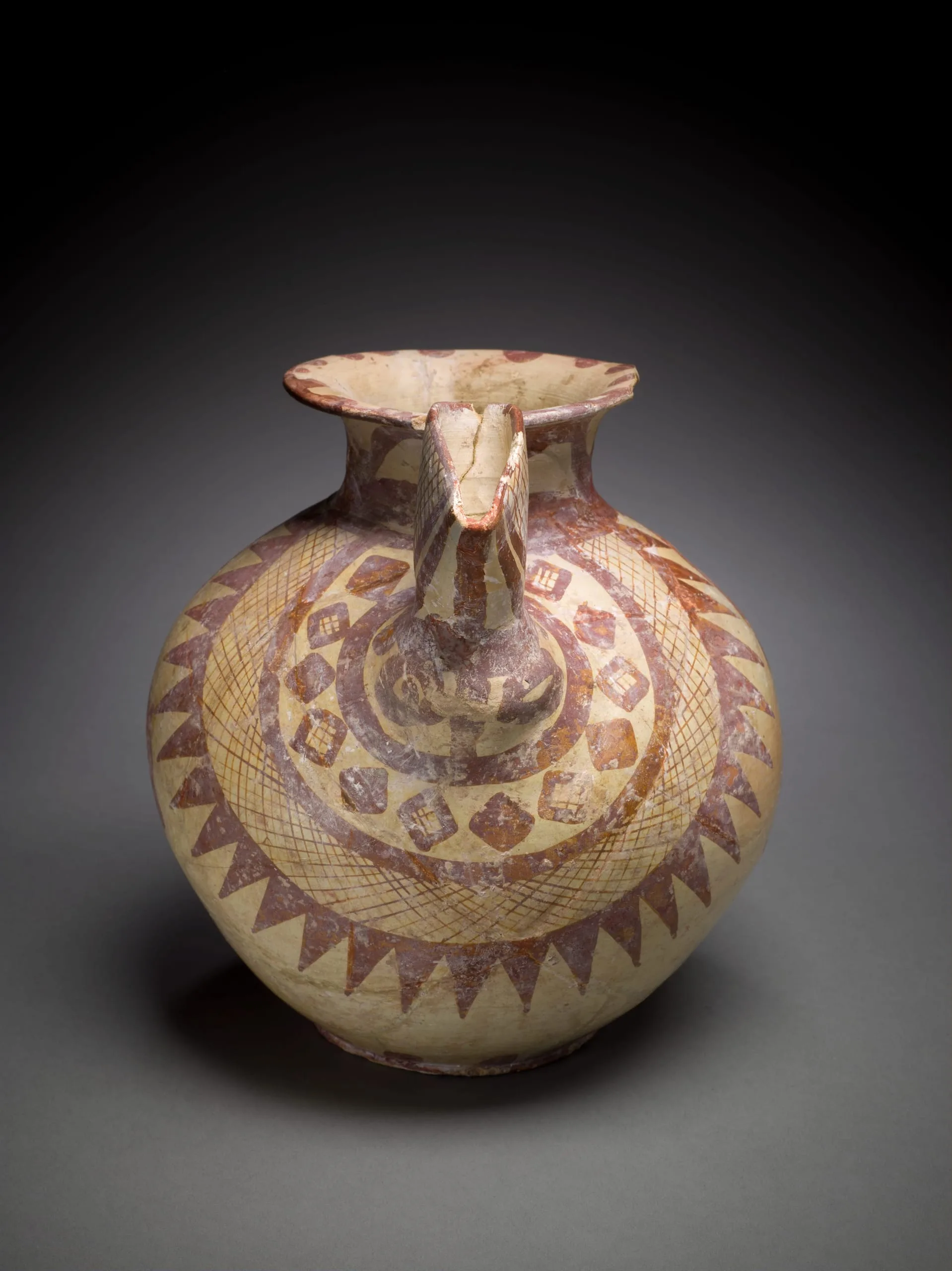
Ceramic vessel with a globular body, wide flaring mouth, and a sculptural animal head at the neck, decorated with concentric geometric bands in reddish-brown and plum pigments
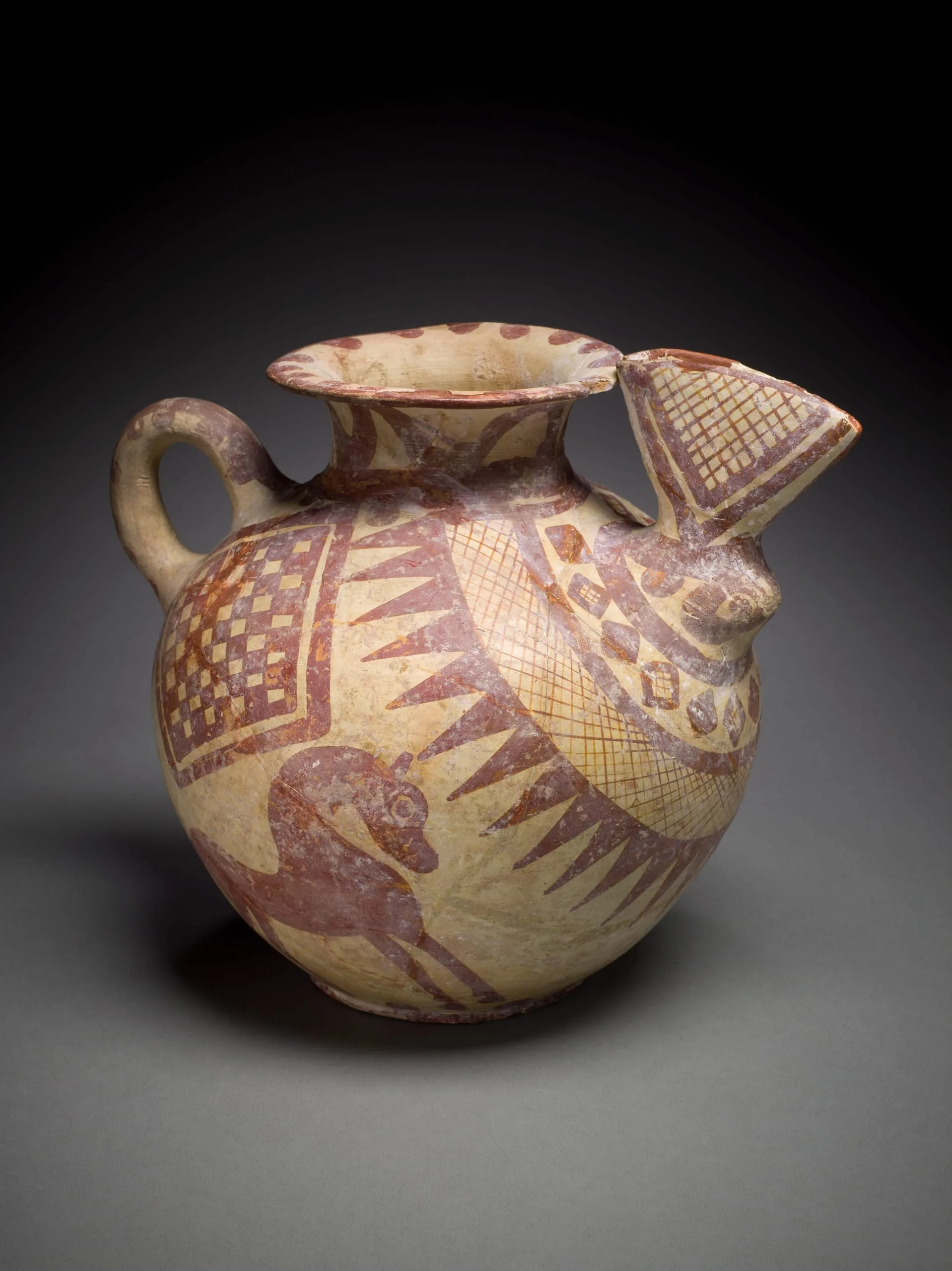
Ceramic jug with globular body, trefoil spout, and loop handle, decorated in reddish-brown and purple paint with a large bird figure, a quadruped animal, and checkerboard and hatched geometric patterns on a pale ground; partially reconstructed with visible repair at the spout.
Ceramic vessel with globular body, flared neck, loop handle, and a modeled animal-head spout. Decorated in reddish-brown paint on cream slip with geometric patterns—checkerboard, diagonal hatching, and radiating triangles—alongside a painted quadruped figure.
Title
Bridge-spouted Painted Vase
Place Made
Central Iran, Tepe Sialk
Date Made
circa 800-600 B.C.
Medium
Buff ware, creamslip, reddish-orange painted decoration
Dimensions
7 7/8 × 7 7/8 × 6 in. (20 × 20 × 15.24 cm)
Credit Line
Gift of Mr. and Mrs. William T. Sesnon Jr.
Accession Number
M.47.2.2
Classification
Furnishings
Collecting Area
Art of the Middle East: Ancient
Curatorial Notes
LACMA possesses a number of outstanding painted vessels from Tepe Sialk’s Cemetery B, near Kashan, in central Iran. These beak-spouted or bridge-spouted vessels best reflect the art of the early Iranians on the Iranian plateau. When newcomers arrived at the town of Sialk during this period, they leveled the existing mound and built a fortified mansion on stone foundations. Their dead were buried in a graveyard away from the town, now called Cemetery B, where some two hundred tombs have been excavated. The date of this cemetery, according to the objects found in the graves, is estimated to be from 800 to 700 BC. The tombs contained a notable series of painted vessels, which appear to have been a luxury funerary ware of the period. The prominent characteristic of this pottery is the decorative motif of horses and elegantly standing ibexes, which was new to the art of the painted ceramics on the Iranian plateau.
Selected Bibliography
  • Mousavi, Ali. Ancient Near Eastern art at the Los Angeles County Museum of Art. Los Angeles: Los Angeles County Museum of Art, 2012.