LACMA

ShopMembershipMyLACMATickets
LACMA
Los Angeles County Museum of Art
5905 Wilshire Blvd.
Los Angeles, CA 90036
info@lacma.org
(323) 857-6000
Sign up to receive emails
Subscribe
© Museum Associates 2025

Museum Hours

Monday

11 am–6 pm

Tuesday

11 am–6 pm

Wednesday

Closed

Thursday

11 am–6 pm

Friday

11 am–8 pm

Saturday

10 am–7 pm

Sunday

10 am–7 pm


  • About LACMA
  • Jobs
  • Building LACMA
  • Host An Event
  • Unframed
  • Press
  • FAQs
  • Log in to MyLACMA
  • Privacy Policy
© Museum Associates 2025
Collections

Unknown
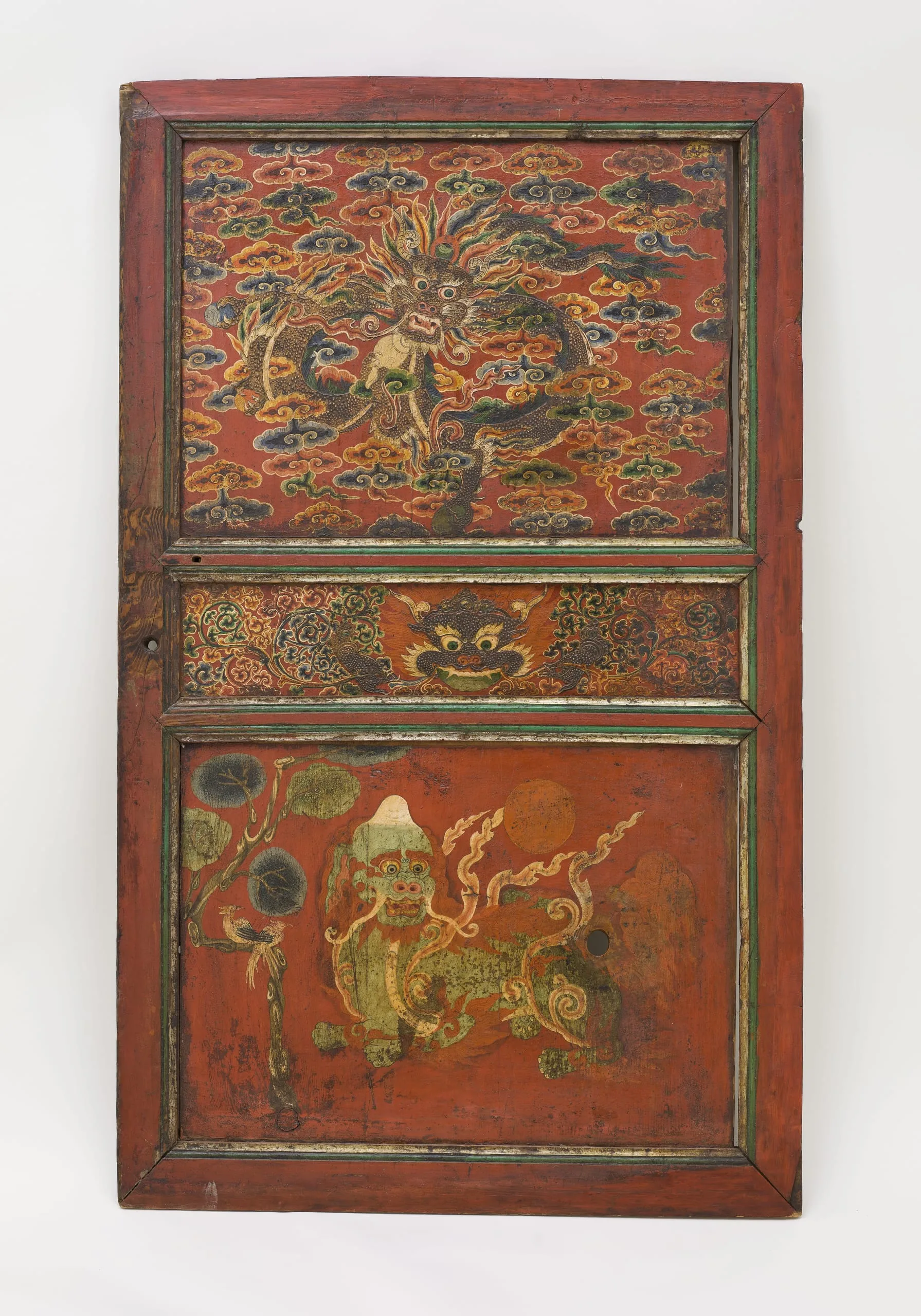
Door with Snow Lion and Dragon19th-20th century

On view:
Geffen Galleries, Pan-Asian Buddhist Art
Painted wooden panel with three registers on a vermilion ground: a coiling dragon among multicolored clouds, a guardian mask on scrolling foliage, and a seated deity figure with lotus plant
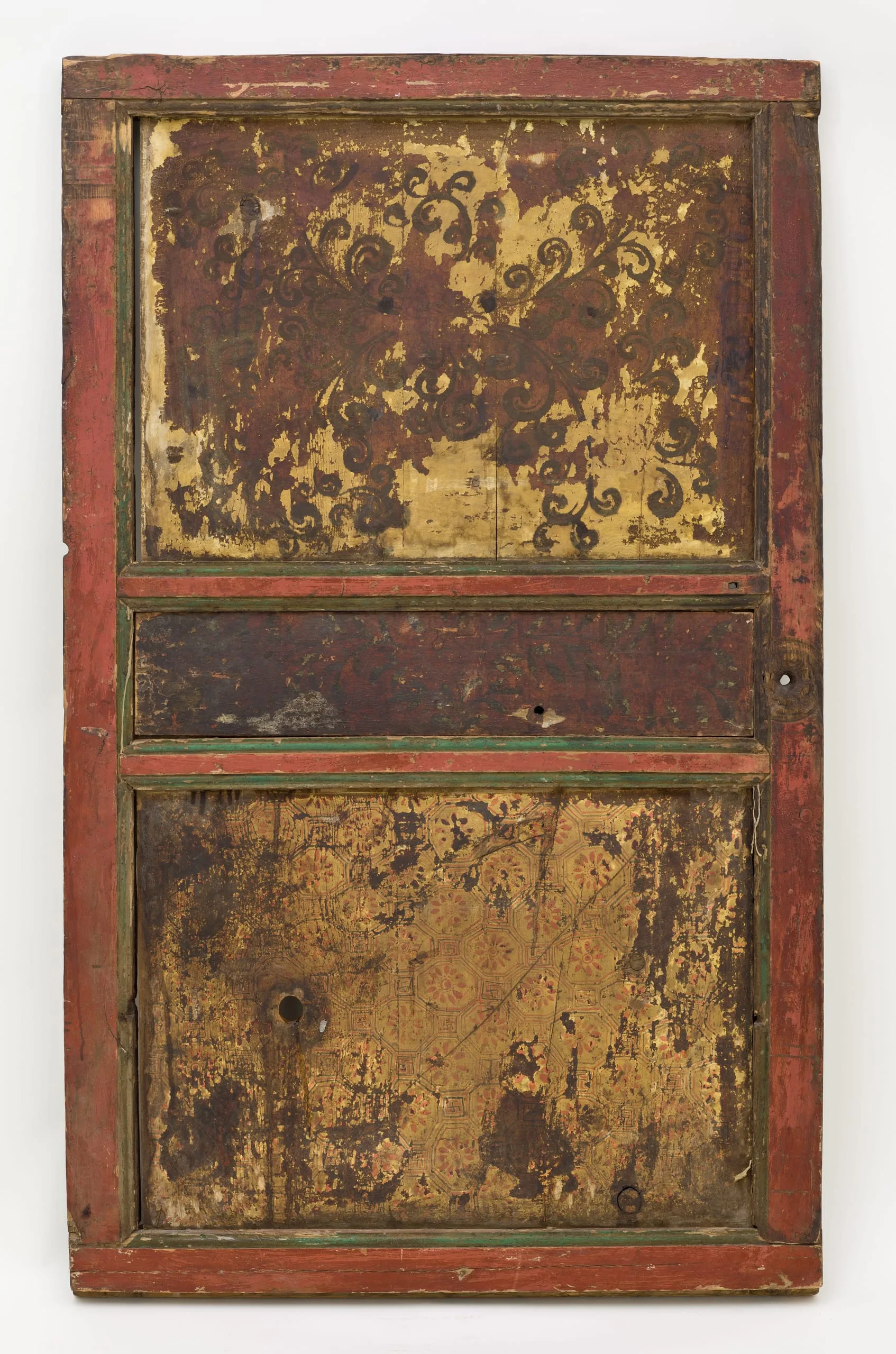
Painted wooden panel with red-lacquered frame divided into three horizontal sections; upper and lower panels decorated with gilt scrolling floral patterns on dark ground, paint heavily worn and flaking throughout.
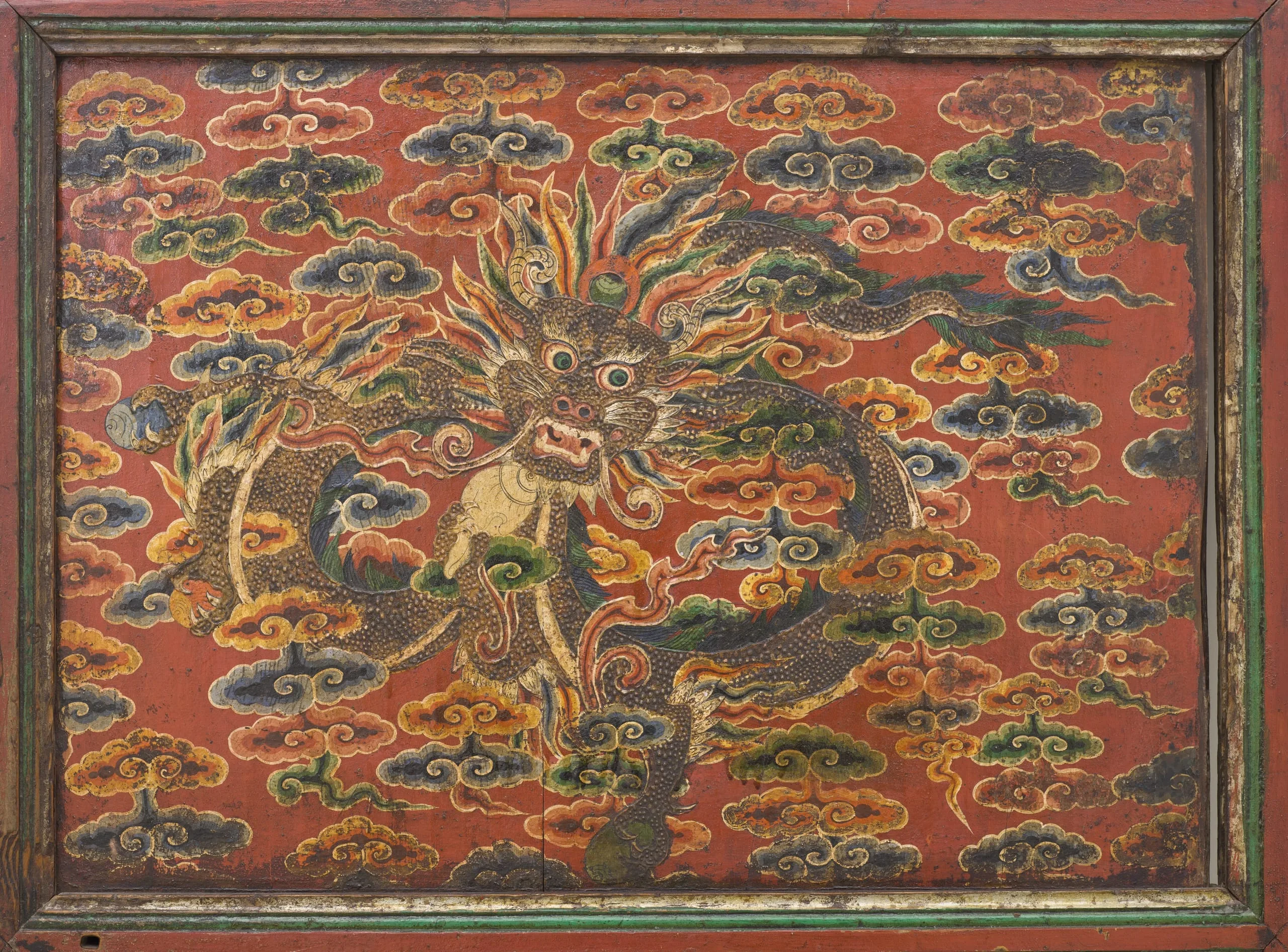
Painted wooden panel with a dragon depicted in frontal view against a red background, surrounded by swirling clouds in blue, green, gold, and orange; polychrome pigments with detailed scale patterning throughout.
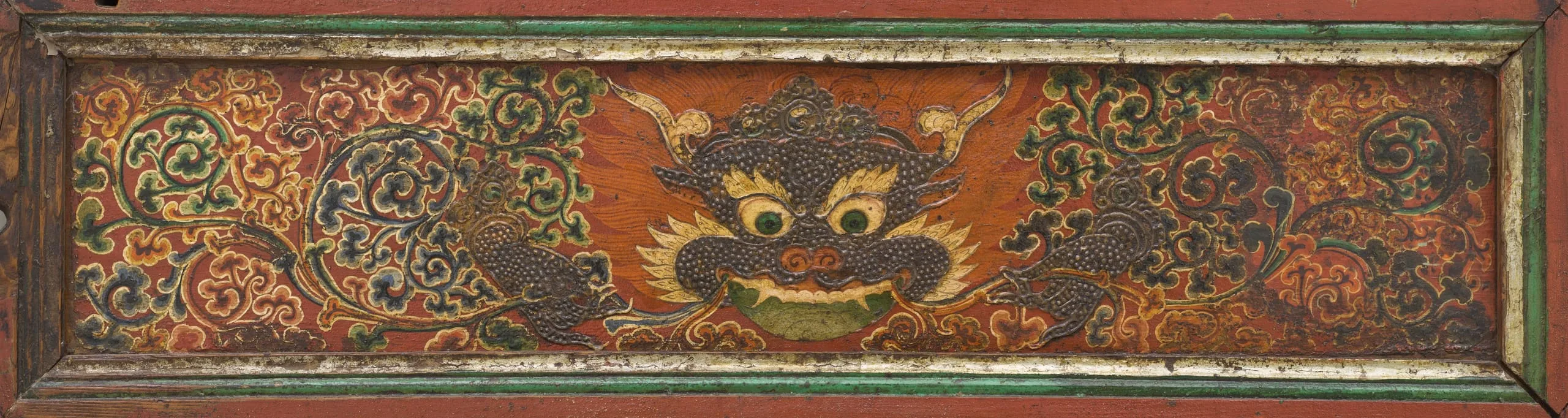
Painted wooden panel with red ground, depicting a frontal demon or protective deity face at center with bulging eyes and bared teeth, flanked by symmetrical scrolling floral and cloud motifs in green, gold, and blue, with raised relief detailing; Tibetan decorative style.
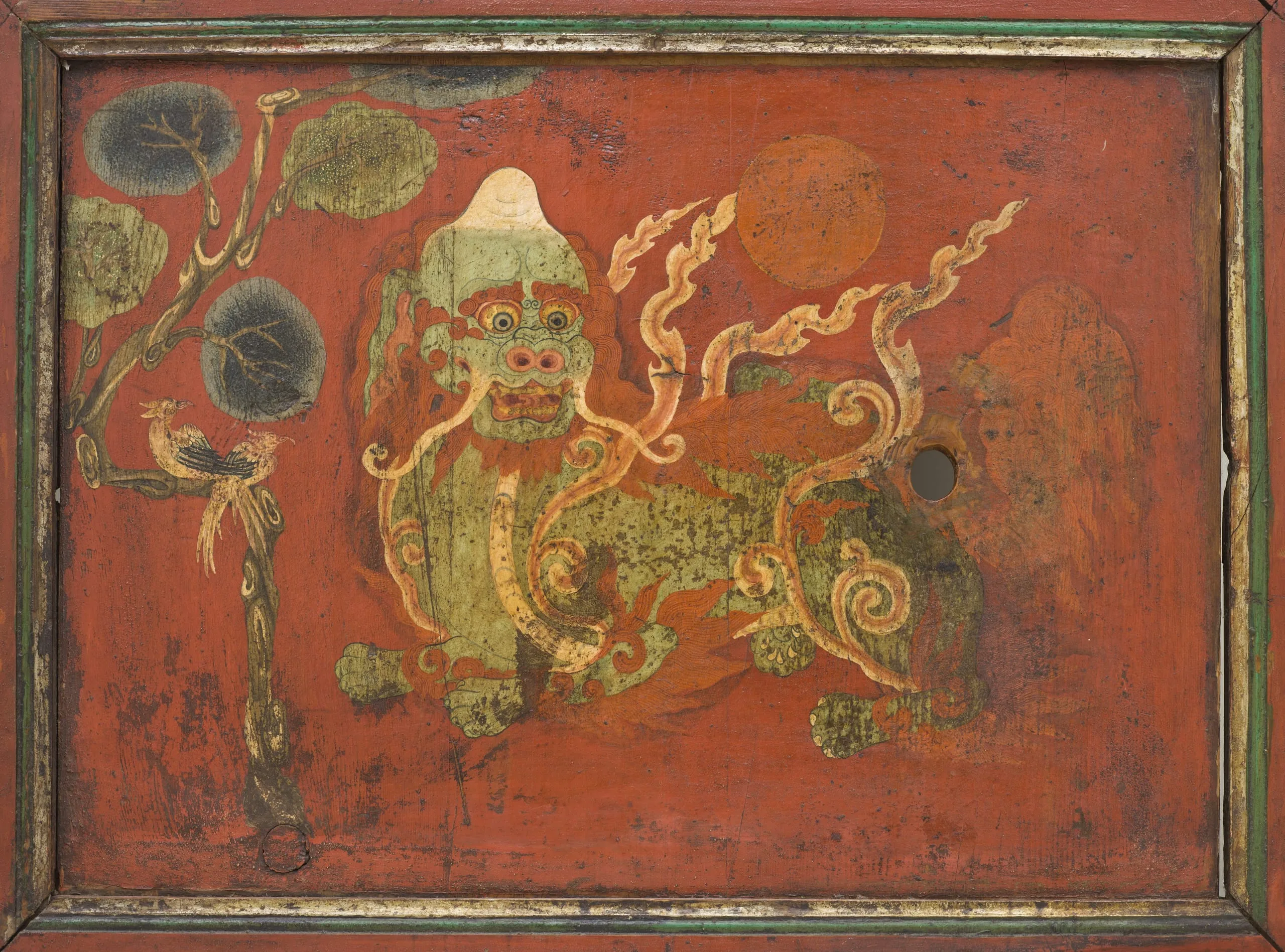
Painted wooden panel with red ground depicting a green and gold mythical lion-like creature with flame-like appendages, facing forward with bulging eyes; a bird perches on a branch with blue foliage at left, and an orange sun disk at upper right; aged and flaking paint surface.
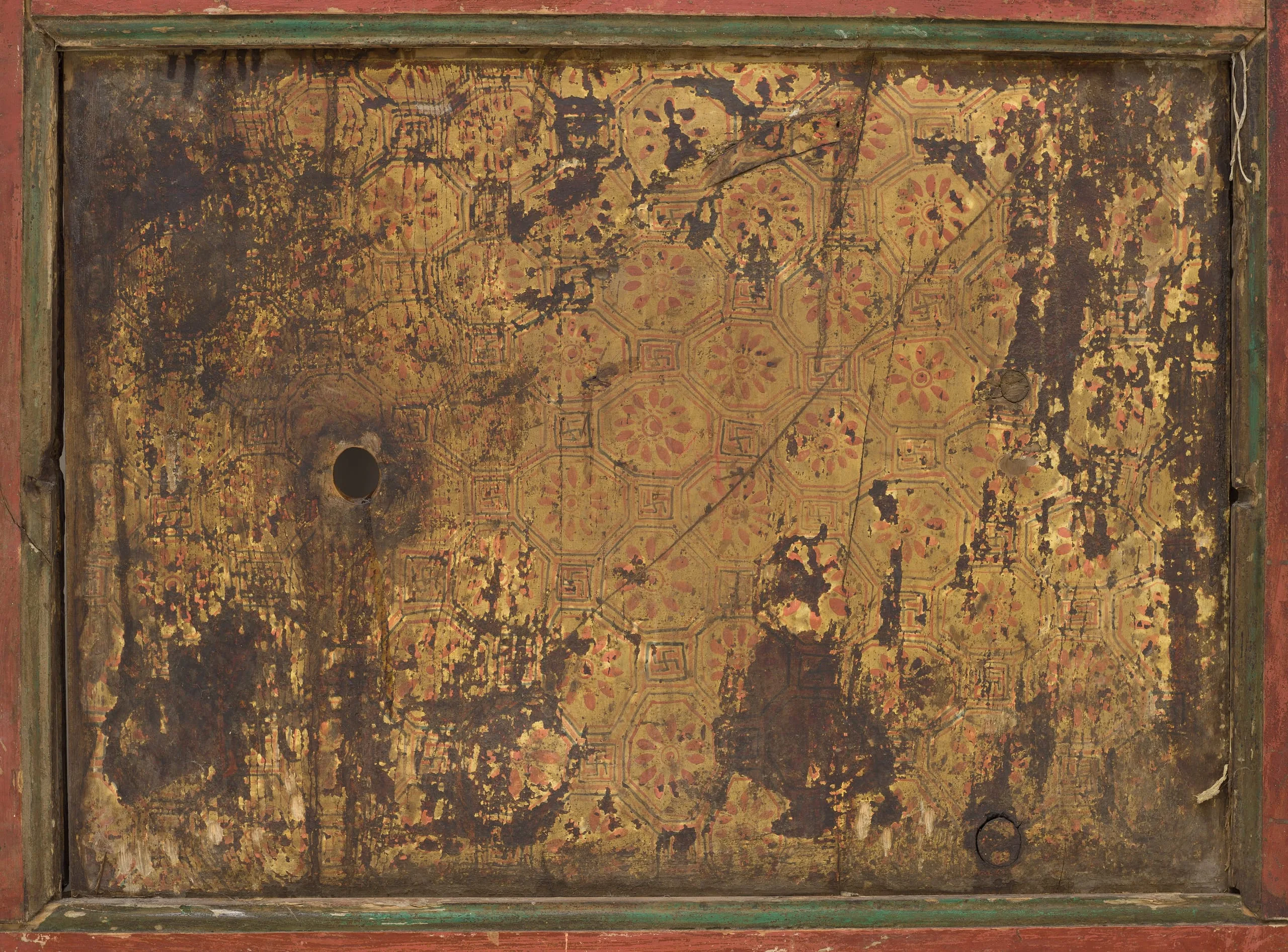
Wooden panel with heavily worn gilt surface, decorated with a repeating pattern of octagonal frames enclosing rosette motifs in red and gold; significant paint loss reveals dark ground beneath; set in a red and green painted border.
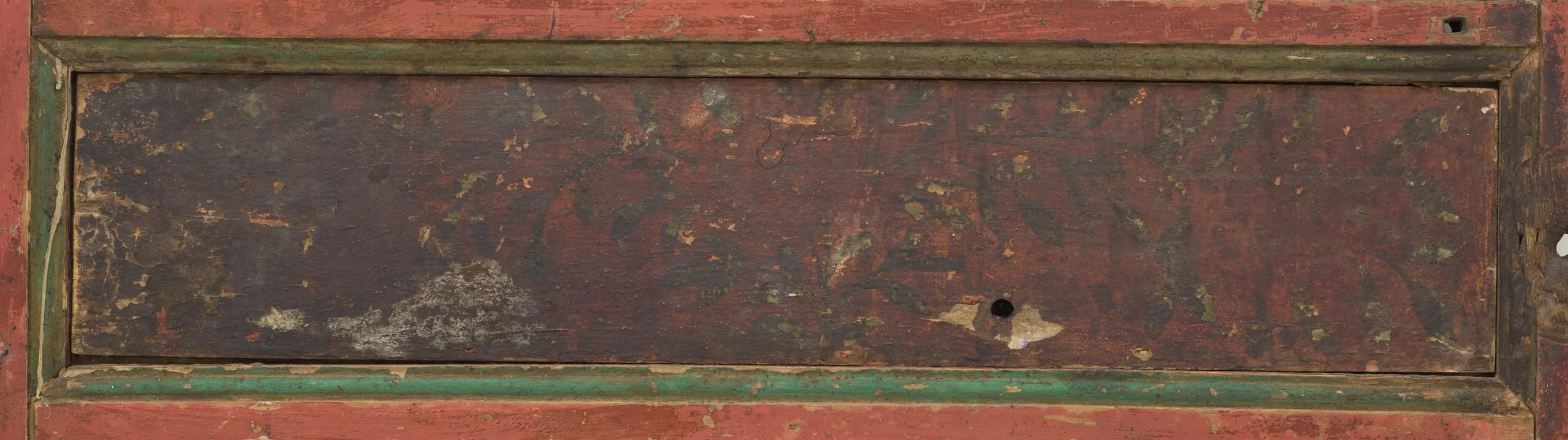
Reverse of a painted panel, showing a rectangular wooden support with heavily worn and flaking dark reddish-brown paint, framed by a green-painted border.
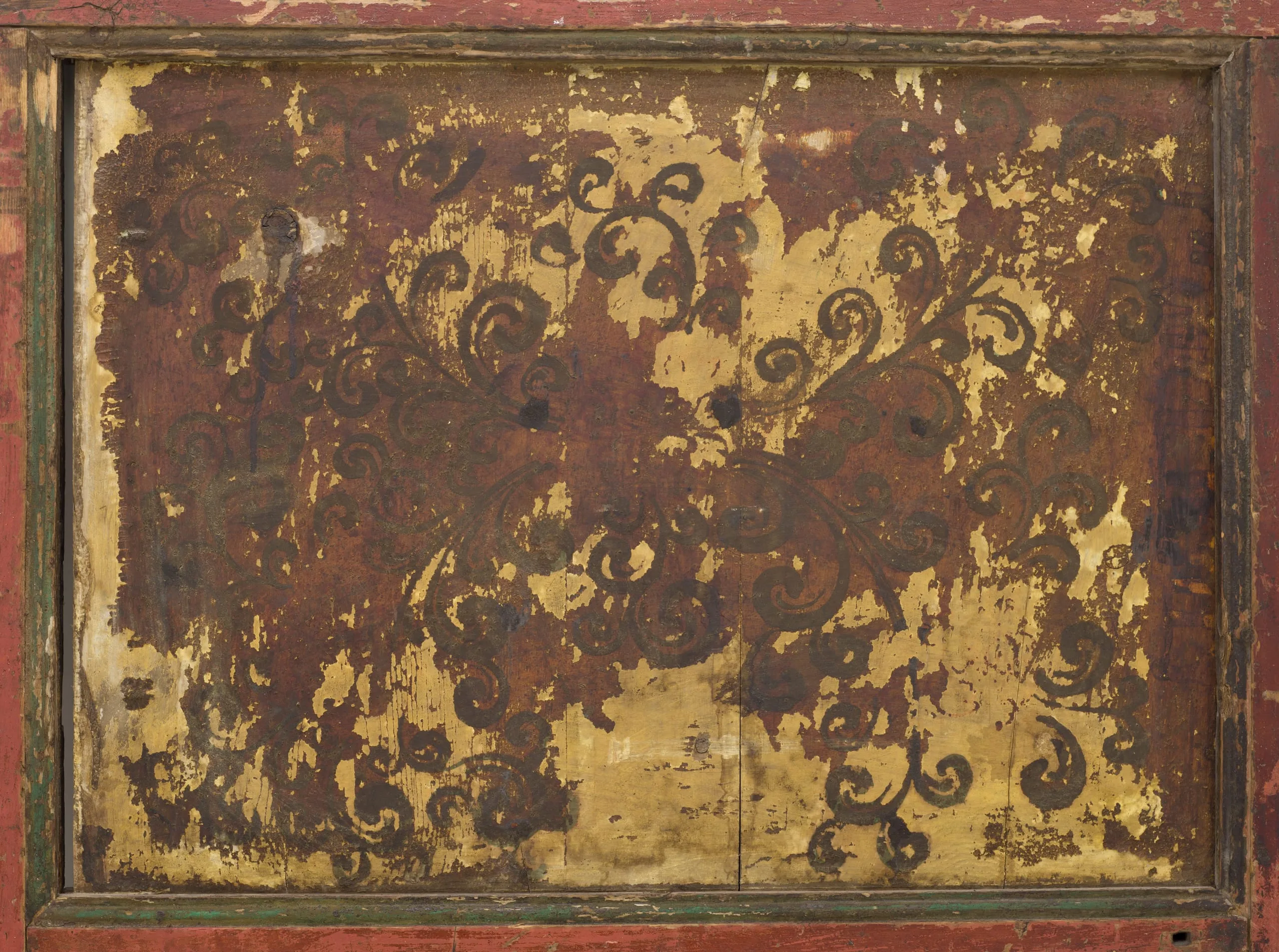
Painted wooden panel with a red-bordered frame, decorated with repeating dark scroll and tendril motifs against a gold and deep red ground, with extensive flaking and wear revealing the aged lacquered surface beneath.
Artist or Maker
Unknown
Title
Door with Snow Lion and Dragon
Place Made
Eastern Tibet, Kham region, Kathok or Dzongsar Monastery (?)
Date Made
19th-20th century
Medium
Wood with mineral pigments, gesso, and gilding
Dimensions
65 1/2 x 39 1/2 x 1 7/8 in. (166.37 x 100.33 x 4.76 cm)
Credit Line
Gift of Ruth Sutherlin Hayward and Robert W. Hayward in honor of their parents, Berniece and William Vere Sutherlin and Donna and William B. Hayward, and in the spirit of those who make pilgrimage to Mount Kailash as an offering for compassion and peace
Accession Number
M.2006.62.1
Classification
Paintings
Collecting Area
South and Southeast Asian Art
Curatorial Notes

This adorned monastery door is thought to be from either the renowned Kathok Monastery, a Nyingma monastery founded in the Kham region in 1159, or the Dzongsar Monastery, a Sakya monastery founded in 746, destroyed during the Chinese invasion of Tibet in 1958, and rebuilt in 1983.

The brilliantly painted door enhanced with raised gesso (kyungbur) and gilding is divided into two main panels with a smaller dividing panel. The upper panel is embellished with a bearded dragon with streaming locks of hair and holding a conch shell and sacred jewels. It is flying through dense multicolored cloud banks. The dividing panel is graced with a mythical animal, the zipac, which is a Tibetan apotropaic symbol resembling the Indian "Face of Glory" (kirttimukha) and the Chinese gluttonous creature (taotie). Its paws are outstretched in a seizing gesture. It is set against the field of scrolling foliage. The lower panel depicts an ancient legendary creature of Tibet, the snow lion (Tibetan: gangs seng ge). It was a powerful guardian symbol of the Imperial Tibetan Empire (618–842) prior to the introduction of Buddhism in Tibet in the 7th century. It is a national emblem of Tibet and in Buddhist belief symbolizes fearless joy and spiritual purity and transformation. This snow lion unusually has a cranial protuberance symbolizing transcendental wisdom (ushnisha) in the snow-covered hemispherical form of the sacred Mount Kailash. In Buddhist cosmological thought, Mount Kailash is regarded as Mount Meru, the cosmic world-mountain connecting heaven and earth. It is a major Buddhist pilgrimage site. It is flanked on the left by a pair of birds perched on a tree trunk, a common motif in Chinese painting. On the right is an orange mountain and above is an orange Sun. A knothole below the snow lion’s tail is worn by the fingers of many devotees seeking blessings. The painted decoration on the back of the door is heavily abraded, but features a scrolling pattern in the upper panel, a flowering plant in the dividing panel, and a tortoise shell diaper pattern in the lower panel.

See David Kamansky, ed., Wooden Wonders: Tibetan Furniture in Secular and Religious Life (Pasadena: Pacific Asia Museum and Chicago: Serindia Publications, 2004), pp. 326-327, no. 147.