LACMA

ShopMembershipMyLACMATickets
LACMA
Los Angeles County Museum of Art
5905 Wilshire Blvd.
Los Angeles, CA 90036
info@lacma.org
(323) 857-6000
Sign up to receive emails
Subscribe
© Museum Associates 2025

Museum Hours

Monday

11 am–6 pm

Tuesday

11 am–6 pm

Wednesday

Closed

Thursday

11 am–6 pm

Friday

11 am–8 pm

Saturday

10 am–7 pm

Sunday

10 am–7 pm


  • About LACMA
  • Jobs
  • Building LACMA
  • Host An Event
  • Unframed
  • Press
  • FAQs
  • Log in to MyLACMA
  • Privacy Policy
© Museum Associates 2025
Collections

Hélio Oiticica
Nas quebradas (Penetrable)1979

Not on view
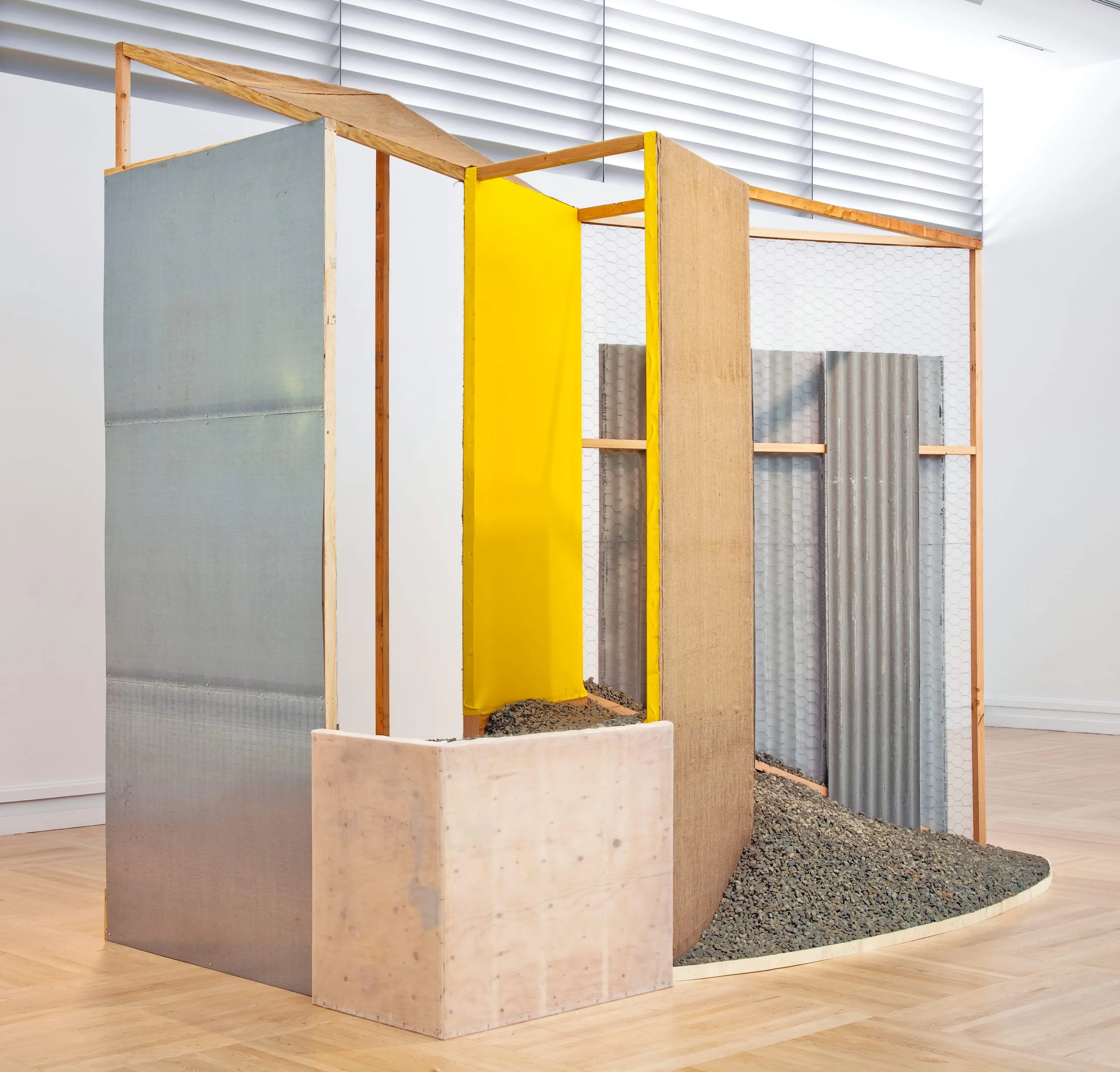
Large-scale sculpture of an unfinished room-like structure with lumber framing, metallic sheet panels, a cadmium-yellow interior wall, corrugated metal sheets, a concrete base block, and a mound of loose gravel spilling onto a wood gallery floor
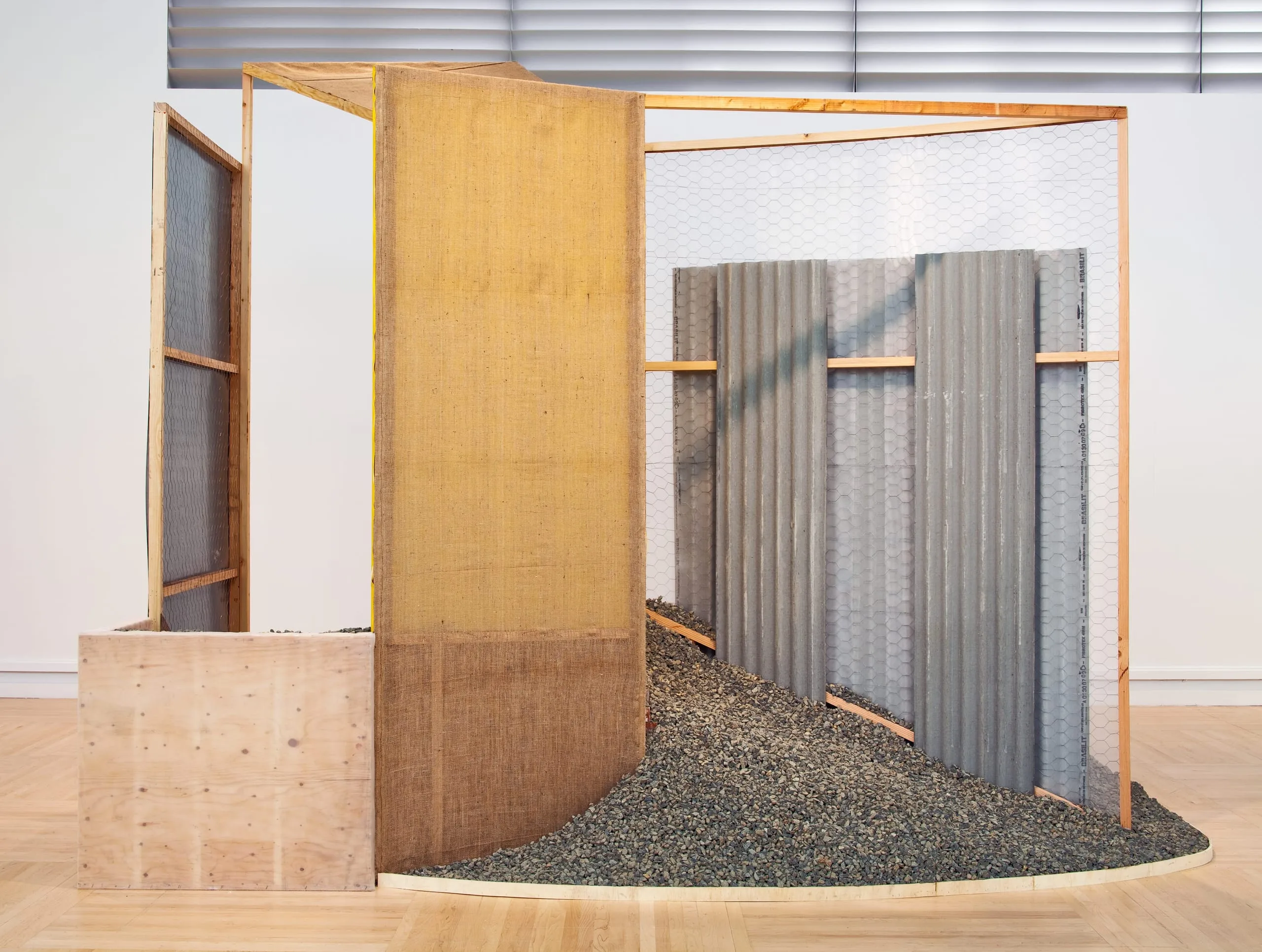
Large-scale mixed-media installation combining raw wood framing, yellow burlap panels, corrugated metal sheets, wire mesh, and a mound of gray gravel contained within a circular boundary on a gallery floor.
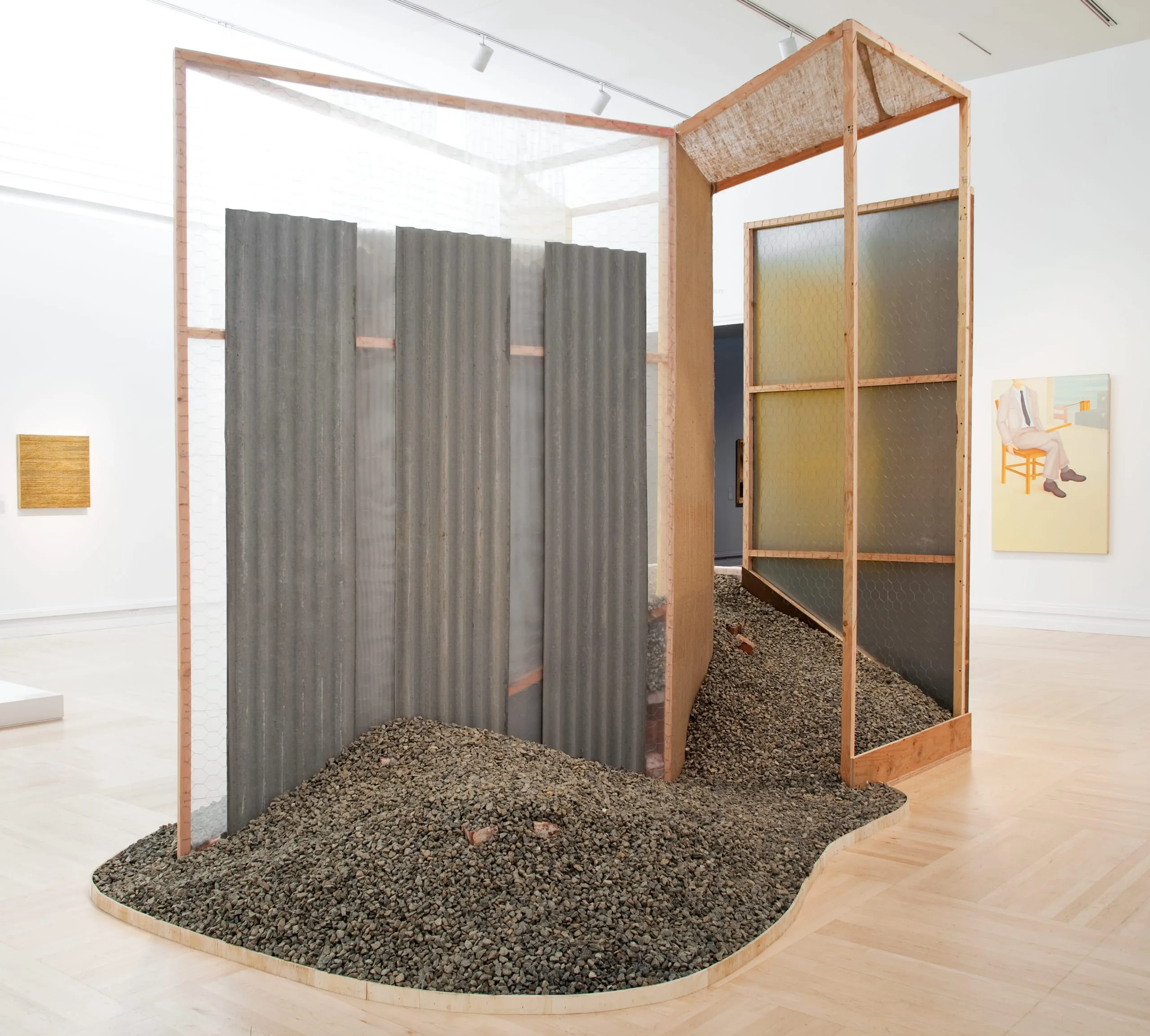
Large-scale installation with a wooden skeletal frame resembling a partial structure, incorporating corrugated metal panels and translucent resin or glass panes, set within a curvilinear mound of loose gravel on a gallery floor.
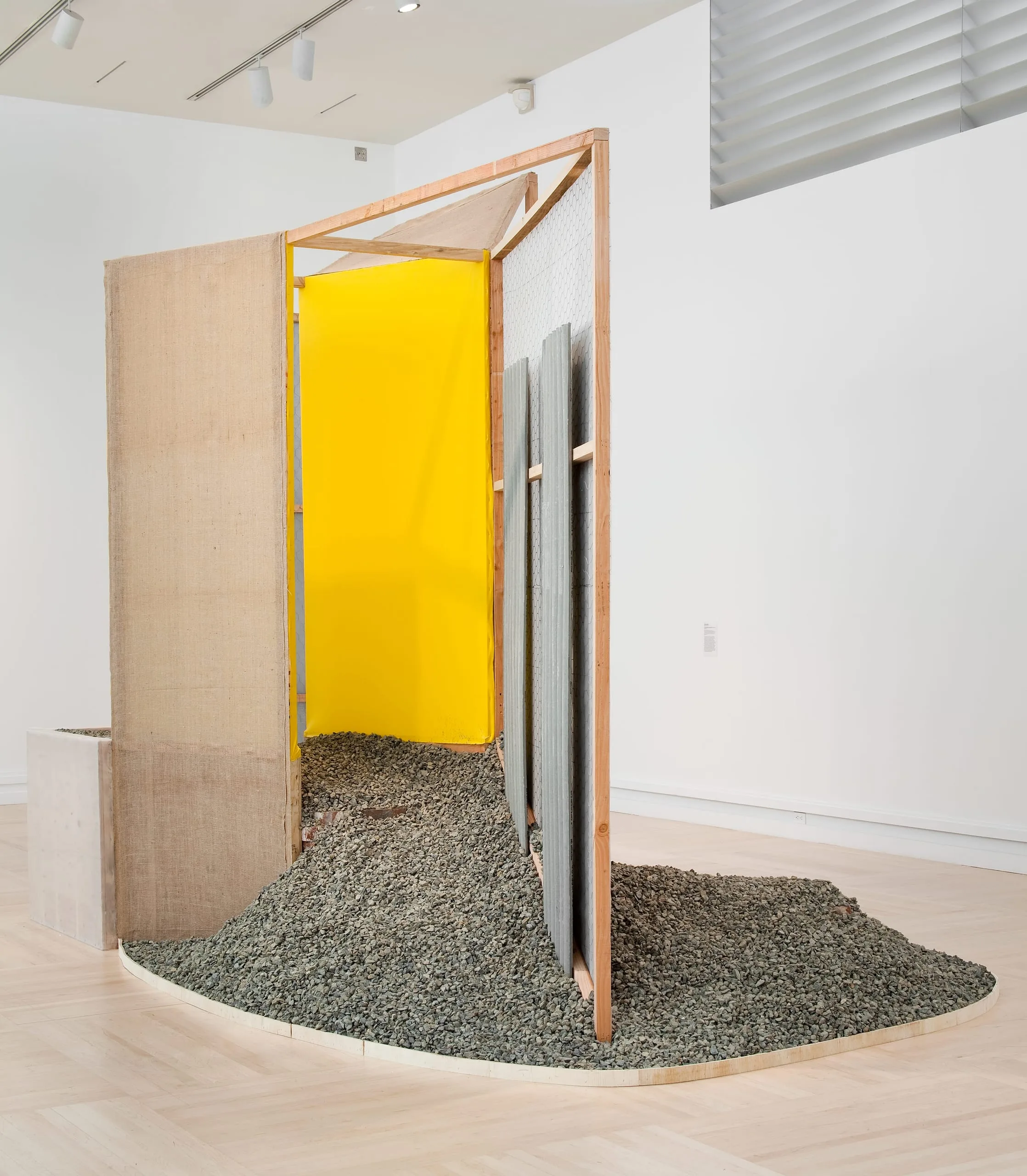
Large-scale installation with a wooden-framed enclosure of plywood panels, open at the front to reveal a vivid yellow interior surface and leaning corrugated gray panels, set within a mound of gray gravel spread across a gallery floor.
Artist or Maker
Hélio Oiticica
Brazil, active United States, New York, New York City 1970-1978, 1937-1980
Title
Nas quebradas (Penetrable)
Date Made
1979
Medium
Wood, brick, and gravel
Dimensions
Dimensions variable
Credit Line
Purchased with funds provided by the Modern and Contemporary Art Council, JoAnn Busuttil, the American Art Deaccession Fund and anonymous donors
Accession Number
M.2005.62.5
Classification
Installation Art
Collecting Area
Latin American Art
Curatorial Notes
Hélio Oiticica is one of the most important Brazilian artists of his generation. Profoundly interested in color and space, he invented in 1960 his series of Penetrables, chromatic and dynamic environments meant to be experienced by the viewer who penetrates them. After moving to a favela (shantytown) in Rio de Janeiro in 1964, where he became a lead samba dancer, Oiticica made ephemeral three-dimensional installations based on the housing of those communities. These architecturally scaled structures are intended to be traversed bodily and experienced by all the senses. Ilona Katzew, 2008