LACMA

ShopMembershipMyLACMATickets
LACMA
Los Angeles County Museum of Art
5905 Wilshire Blvd.
Los Angeles, CA 90036
info@lacma.org
(323) 857-6000
Sign up to receive emails
Subscribe
© Museum Associates 2025

Museum Hours

Monday

11 am–6 pm

Tuesday

11 am–6 pm

Wednesday

Closed

Thursday

11 am–6 pm

Friday

11 am–8 pm

Saturday

10 am–7 pm

Sunday

10 am–7 pm


  • About LACMA
  • Jobs
  • Building LACMA
  • Host An Event
  • Unframed
  • Press
  • FAQs
  • Log in to MyLACMA
  • Privacy Policy
© Museum Associates 2025
Collections

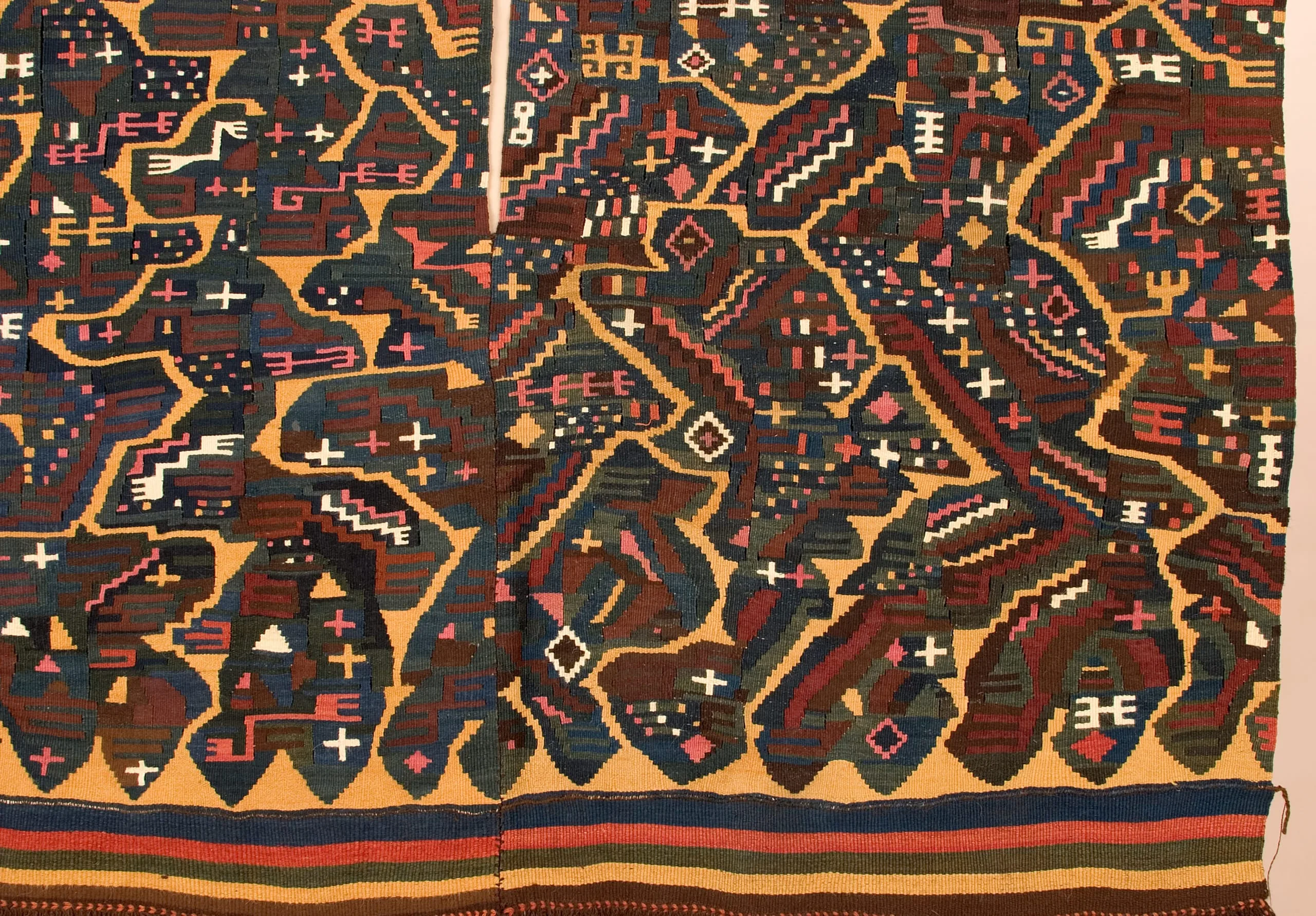
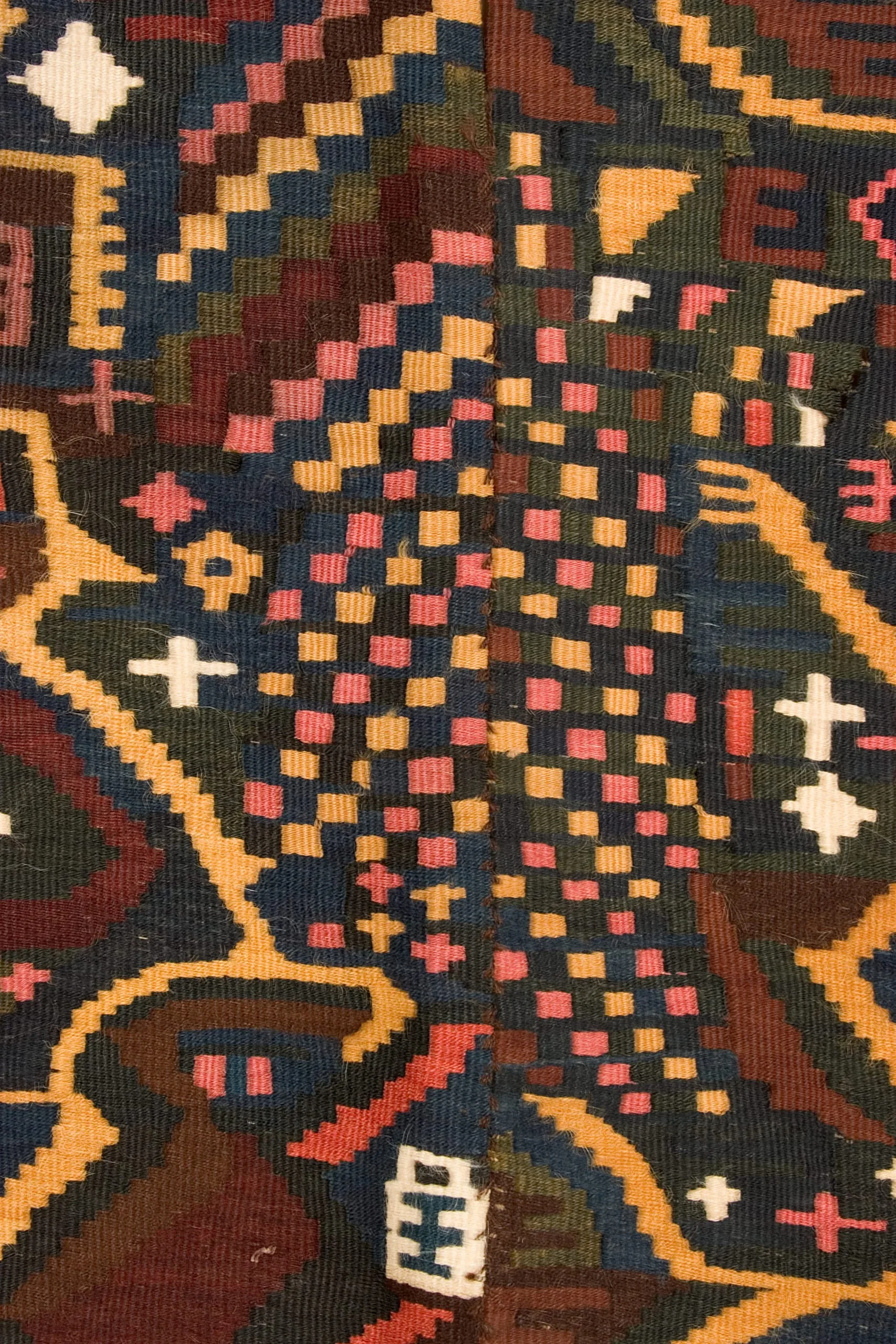
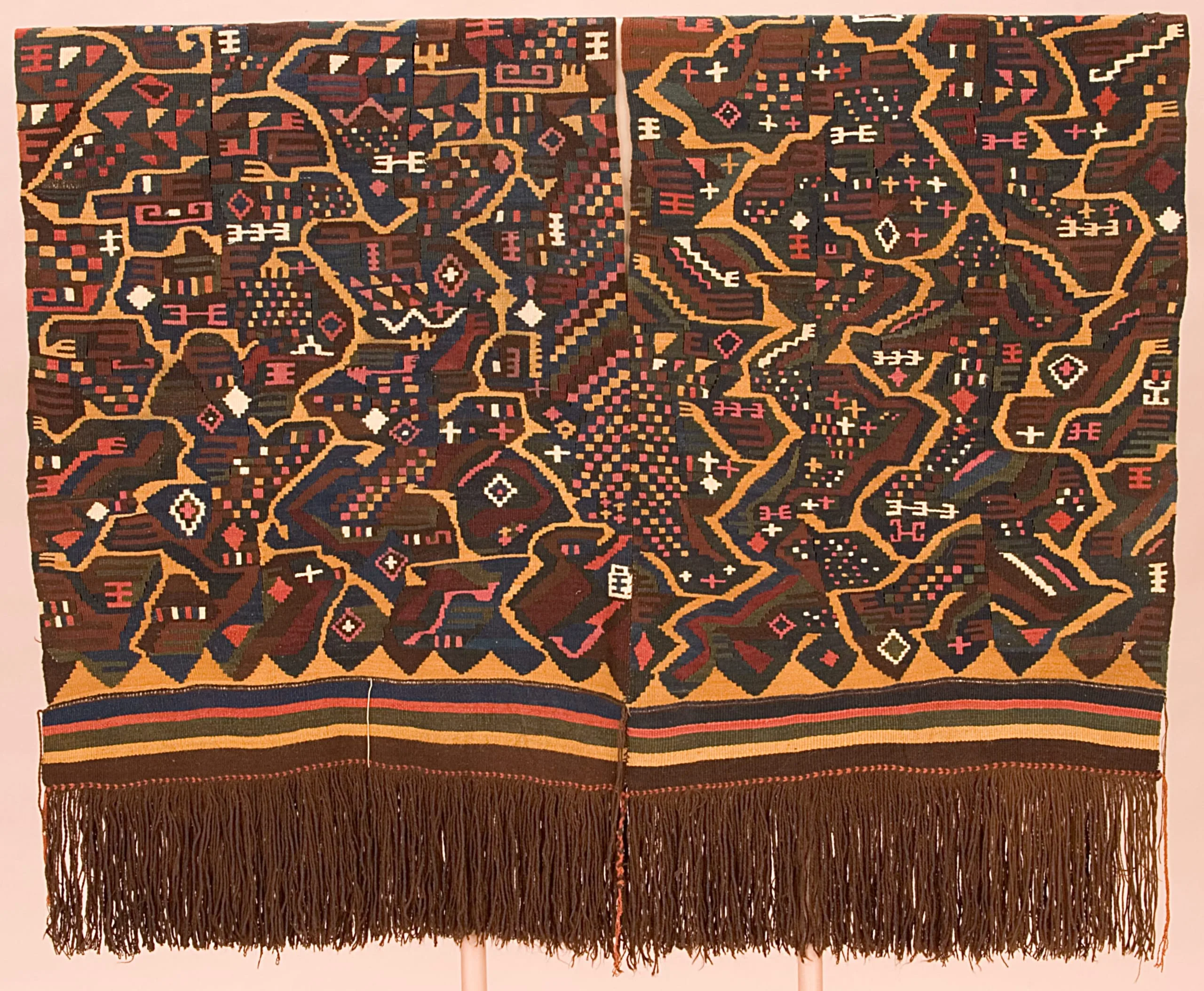
Man's Tunic500-700

Not on view
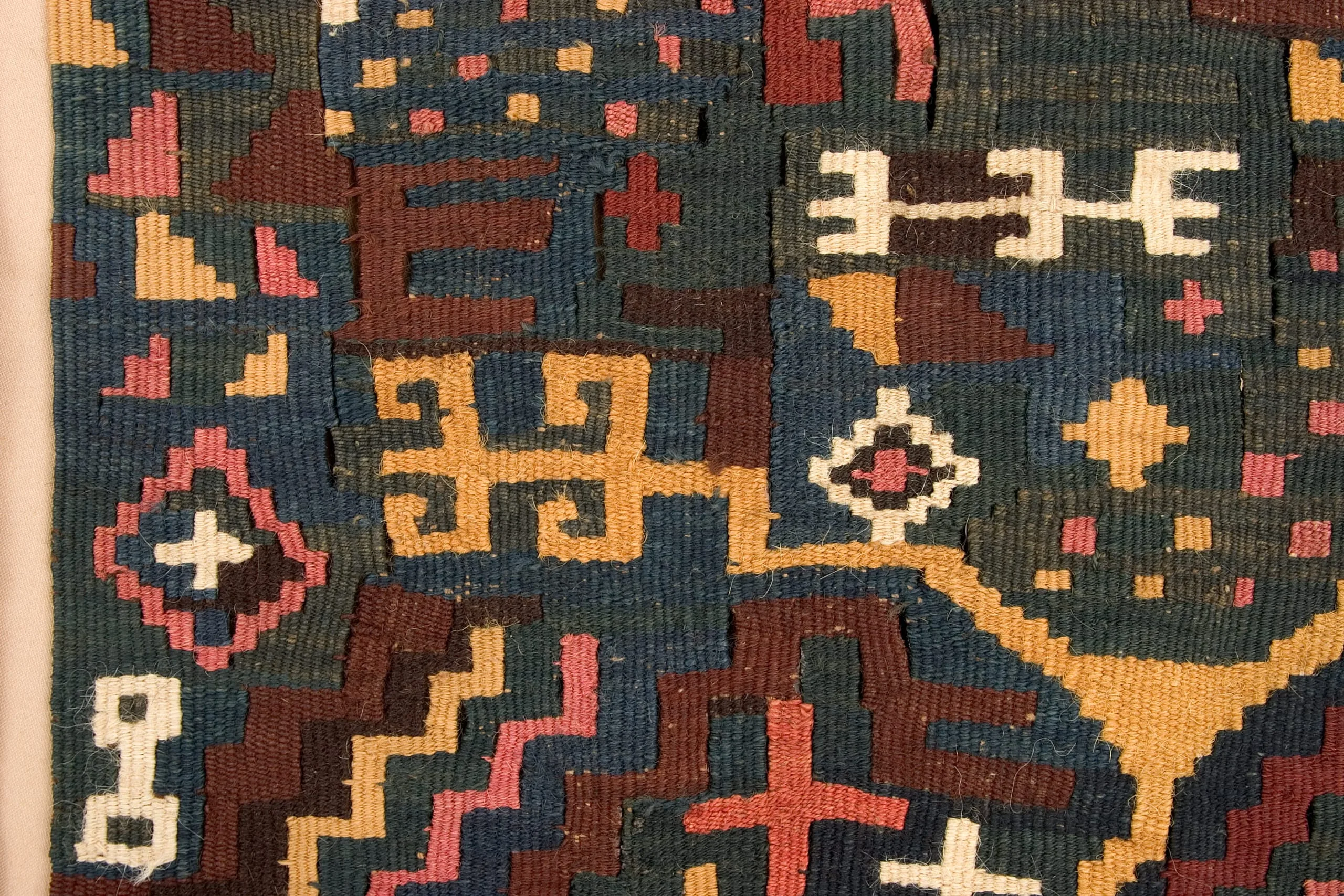
Handwoven textile in two joined panels, dense allover geometric patterning in dark brown, amber, navy, and red, with a striped border and long dark fringe along the bottom edge
Woven textile with a dense, all-over pattern of interlocking zoomorphic and geometric motifs in dark navy, burgundy, pink, white, and gold on a warm yellow ground, with a striped border along the bottom edge.
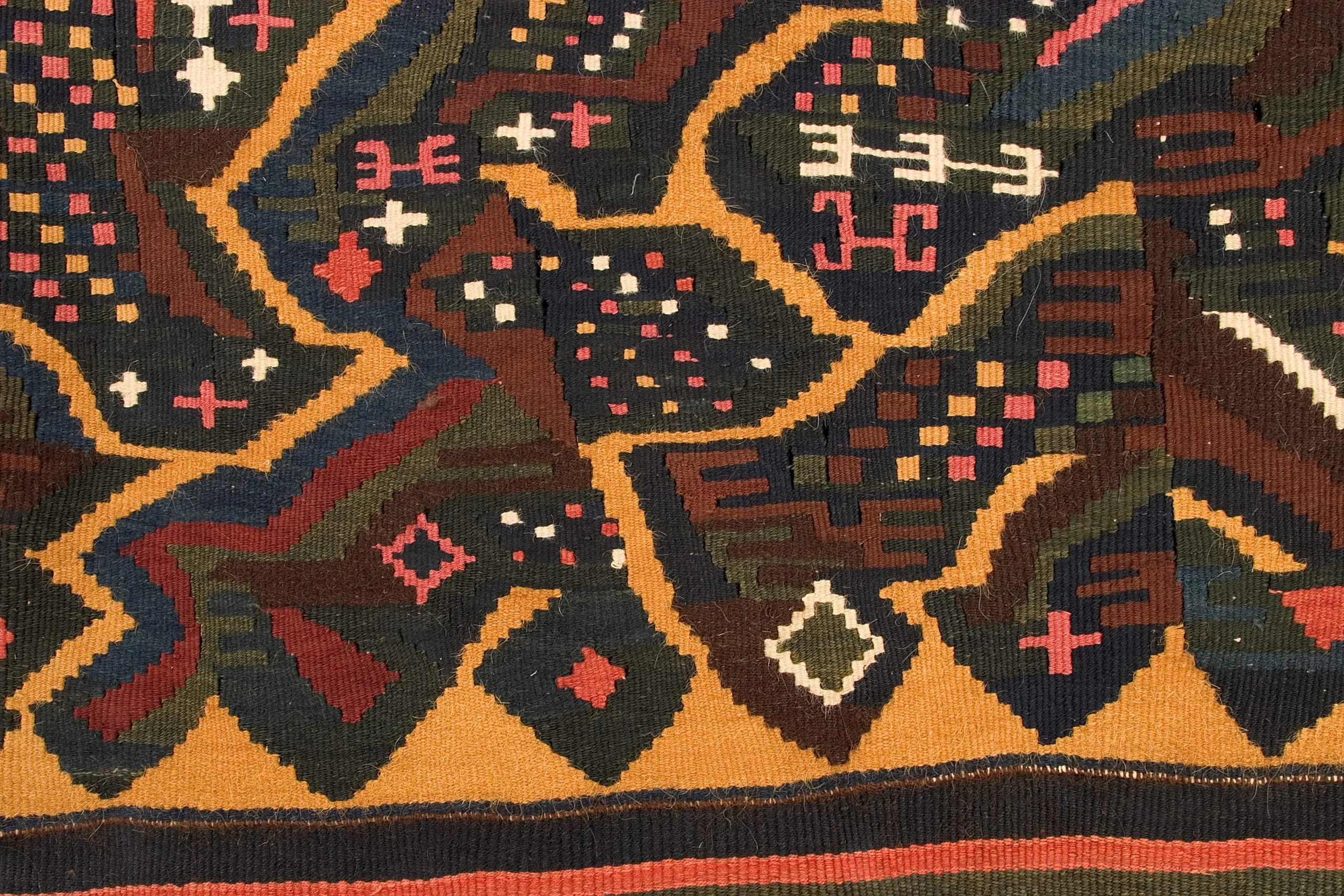
Flatwoven textile fragment with a saffron-yellow ground, featuring large dark medallion forms in navy, dark green, and brown, filled with small cross, diamond, and hook-shaped motifs in pink, white, red, and green; striped border visible at lower edge.
Woven textile fragment with interlocking geometric motifs in deep brown, olive green, gold, red, and white, including stepped diamonds, cross shapes, and zigzag bands in a dense overall pattern.
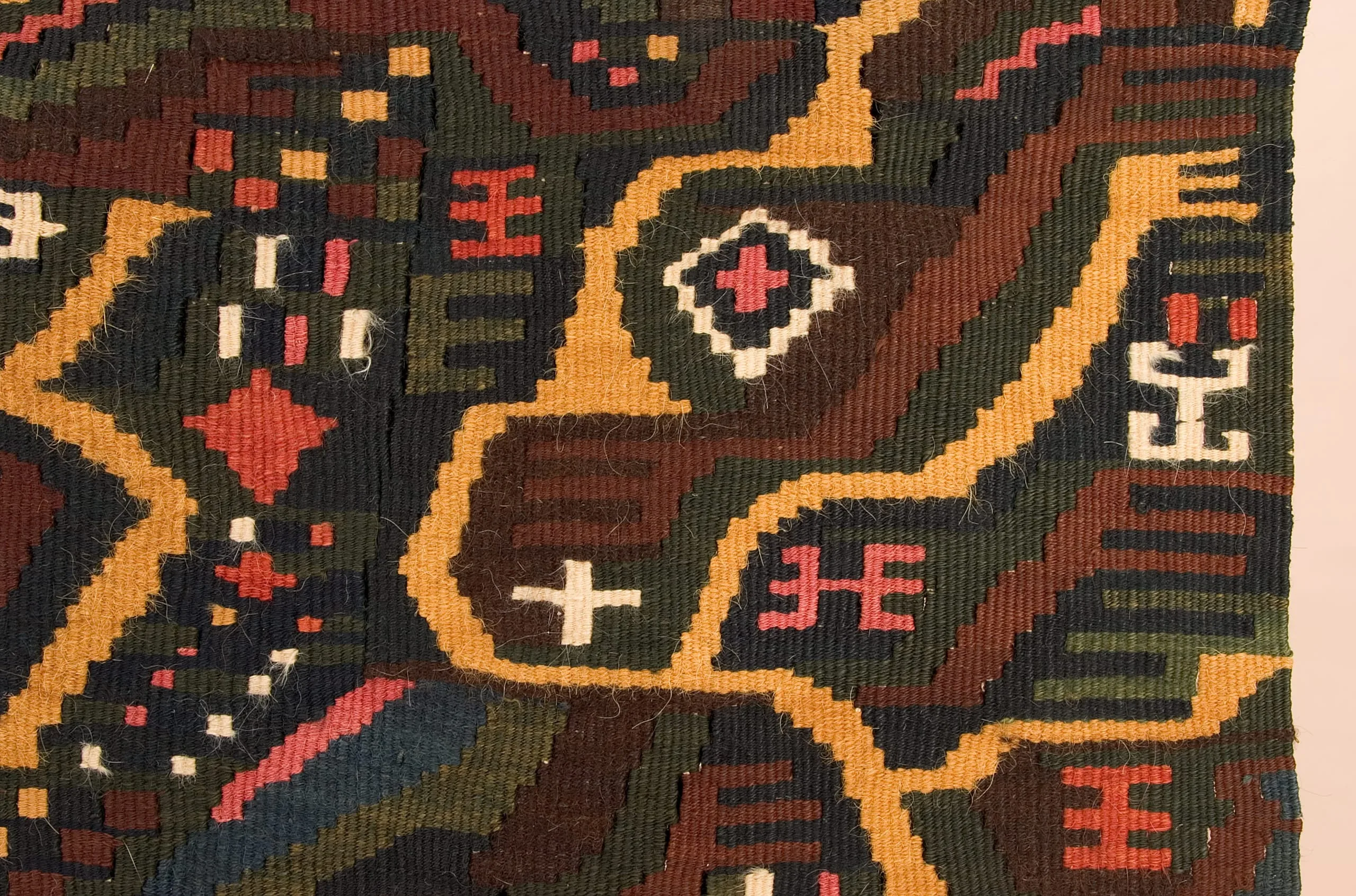
Woven textile fragment with interlocking geometric motifs in deep brown, dark green, and golden yellow, scattered with small crosses, diamond shapes, and stepped forms in red, white, pink, and orange; fine tapestry weave with densely packed weft.
Flat-woven textile with dense geometric patterning in navy, gold, rose, dark green, and white, featuring checkered fields, cross motifs, and sinuous curvilinear border elements; the fabric is slightly gathered, creating soft folds across the center.
Flatwoven kilim textile fragment with geometric patterning in navy blue, gold, dark brown, rose, and cream, featuring stepped diamond medallions, hooked motifs, and interlocking angular forms in weft-faced weave.
Woven textile fragment with interlocked tapestry weave, featuring a stylized frontal figure with outstretched arms rendered in gold, dark brown, red, blue, and green, surrounded by geometric stepped and checkered patterns.
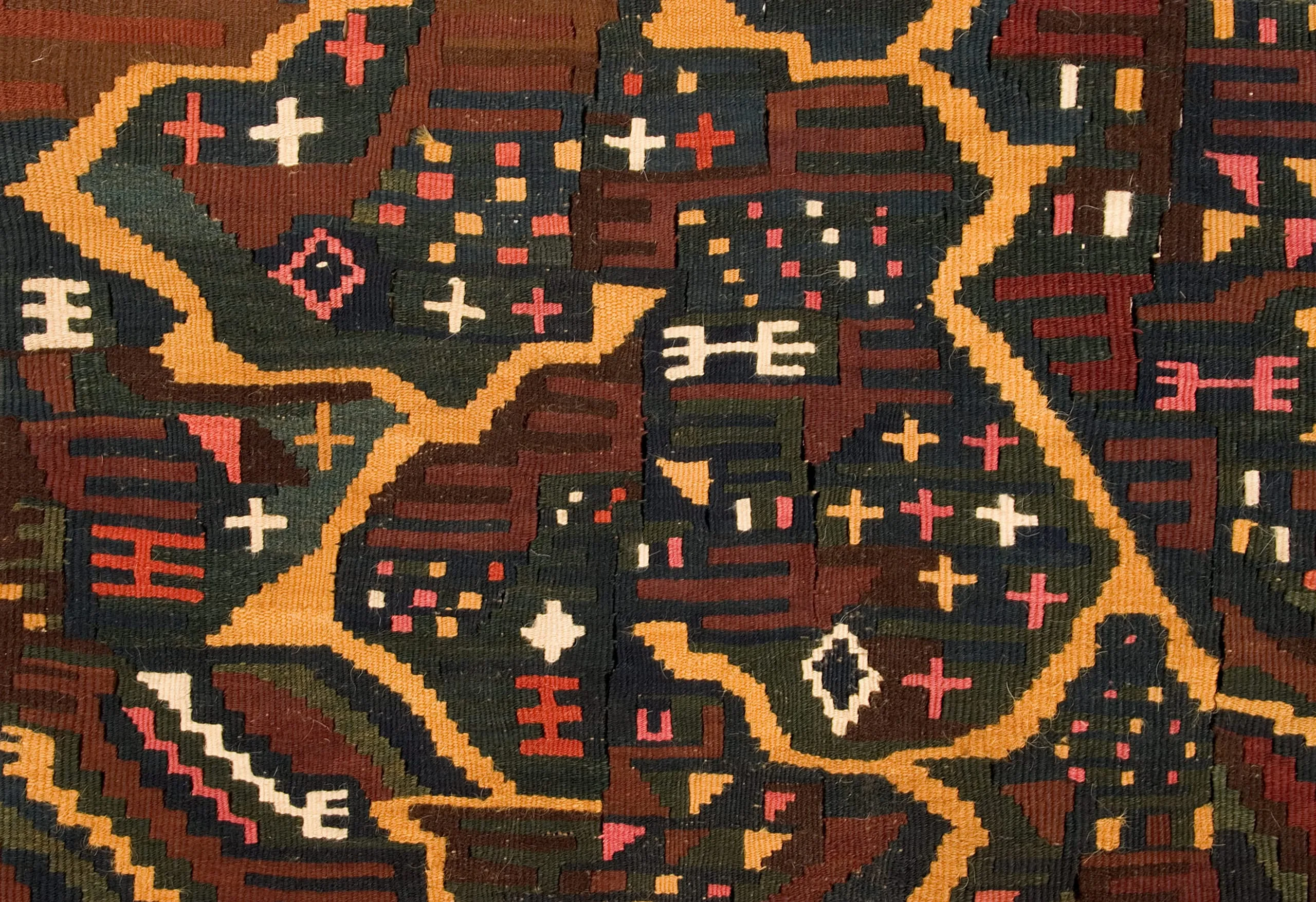
Woven textile fragment with repeating geometric and zoomorphic motifs on a deep navy ground, with gold, dark red, pink, and white cross, comb, and stepped shapes arranged across interlocking curvilinear panels.
Textile fragment with flat-woven tapestry technique, featuring geometric and stepped motifs in deep blue, gold, dark red, pink, and white on a teal ground.
Title
Man's Tunic
Culture
Nasca
Place Made
Peru, South Coast
Date Made
500-700
Medium
Camelid fiber and cotton slit tapestry weave with fringe
Dimensions
including fringe: 42 3/4 × 51 3/4 in. (108.59 × 131.45 cm)
Credit Line
Purchased with funds provided by Camilla Chandler Frost, Mary and Robert Looker, the Costume Council, Christopher V. Walker, Dee and Bill Grinnell, Gerald Oppenheimer Family Foundation, Lynda and Stewart Resnick, Kathy and Frank Baxter, Irene Christopher, and Mechas and Greg Grinnell through the 2005 Collectors Committee
Accession Number
M.2005.31
Classification
Costumes
Collecting Area
Costume and Textiles
Curatorial Notes
Some of the most visually striking textiles in ancient Peru were created more than 1,500 years ago by the Nasca people, the same people who created one of the twentieth century's most fascinating enigmas-the Nasca lines. Massive linear patterns etched onto the barren plain (and still visible today) reflect the ritual imagery so skillfully conceived by Nasca weavers. The lines had religious and practical functions, but textiles formed the substance of the social fabric: More important than gold, cloth was the capital of all tribute, taxation, and religious ceremony.
The desperate demand for survival on the arid desert coast of Peru was reflected in the art of the ancient Nasca culture. Appeasing the gods of nature was imperative in its pantheistic and polytheistic universe. Ceramic and textile artists portrayed kaleidoscopic supernatural creatures in human, animal and composite form with myriad limbs and tails-snaking out, intersecting and permeating background space, acting as visual metaphors for society's belief in the interconnection of every layer and aspect of nature.
Early textiles from about A.D. 100 to 400 depicted supernaturals as boisterously unbridled in color and form, yet visually cohesive. As the culture progressed from 500 to 700, however, textiles demonstrated a strong trend toward abstraction, fragmentation and abbreviation, featuring a single part of an image as a surrogate for the whole. The tunic proposed for Collectors Committee acquisition manifests this tendency with explosively dynamic lines and patterns, a proliferation of surrogate symbols and complex chromatic relationships.
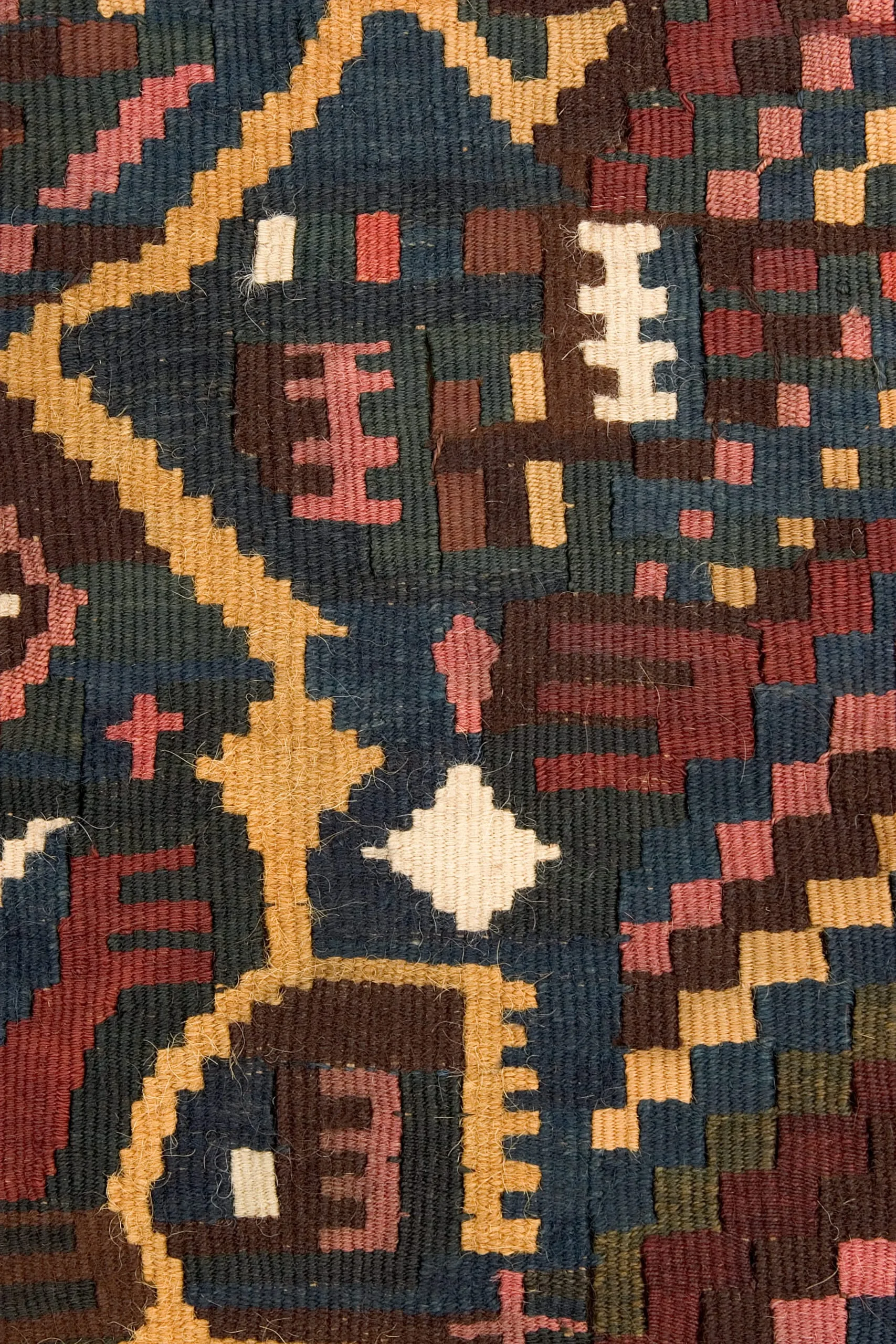
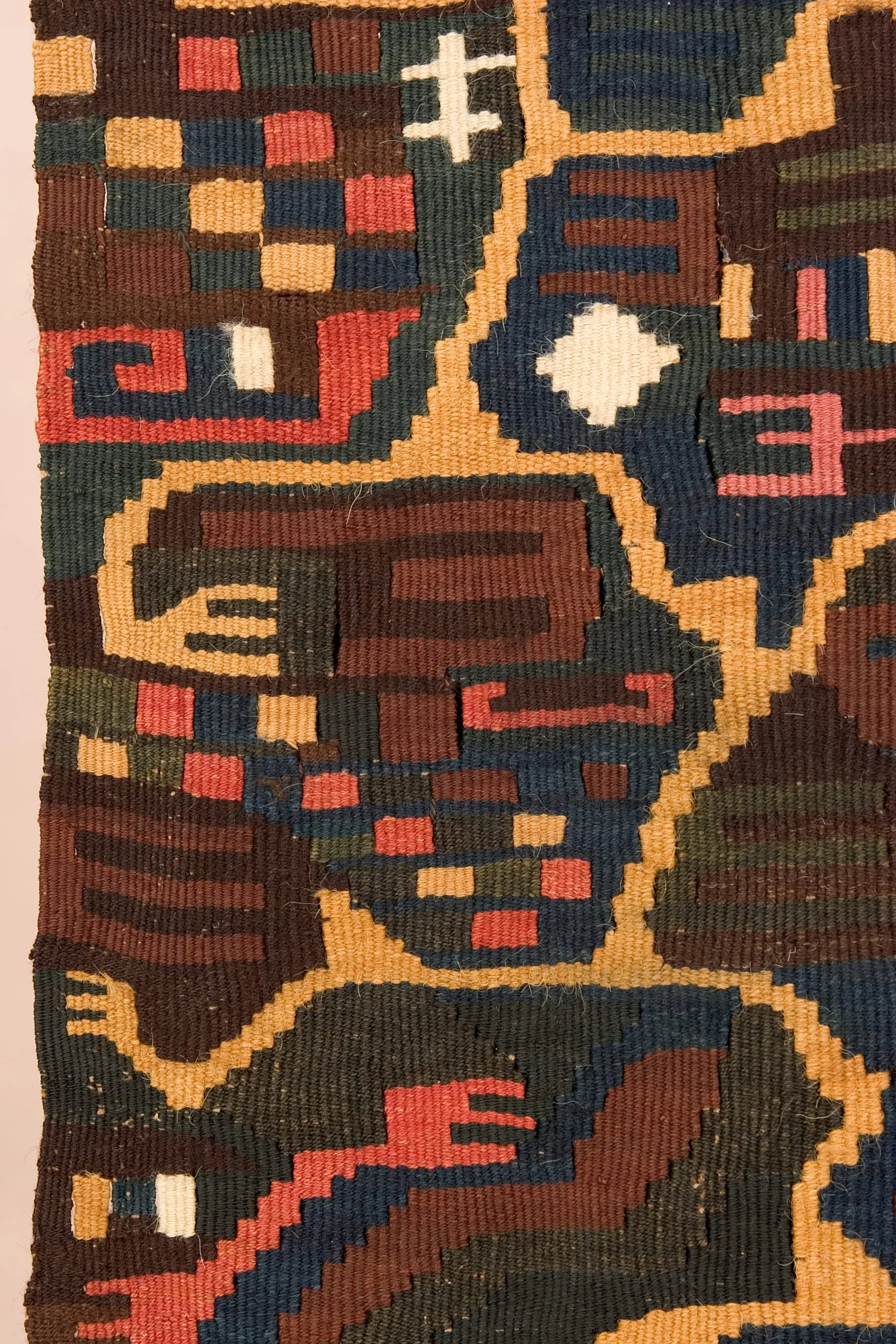
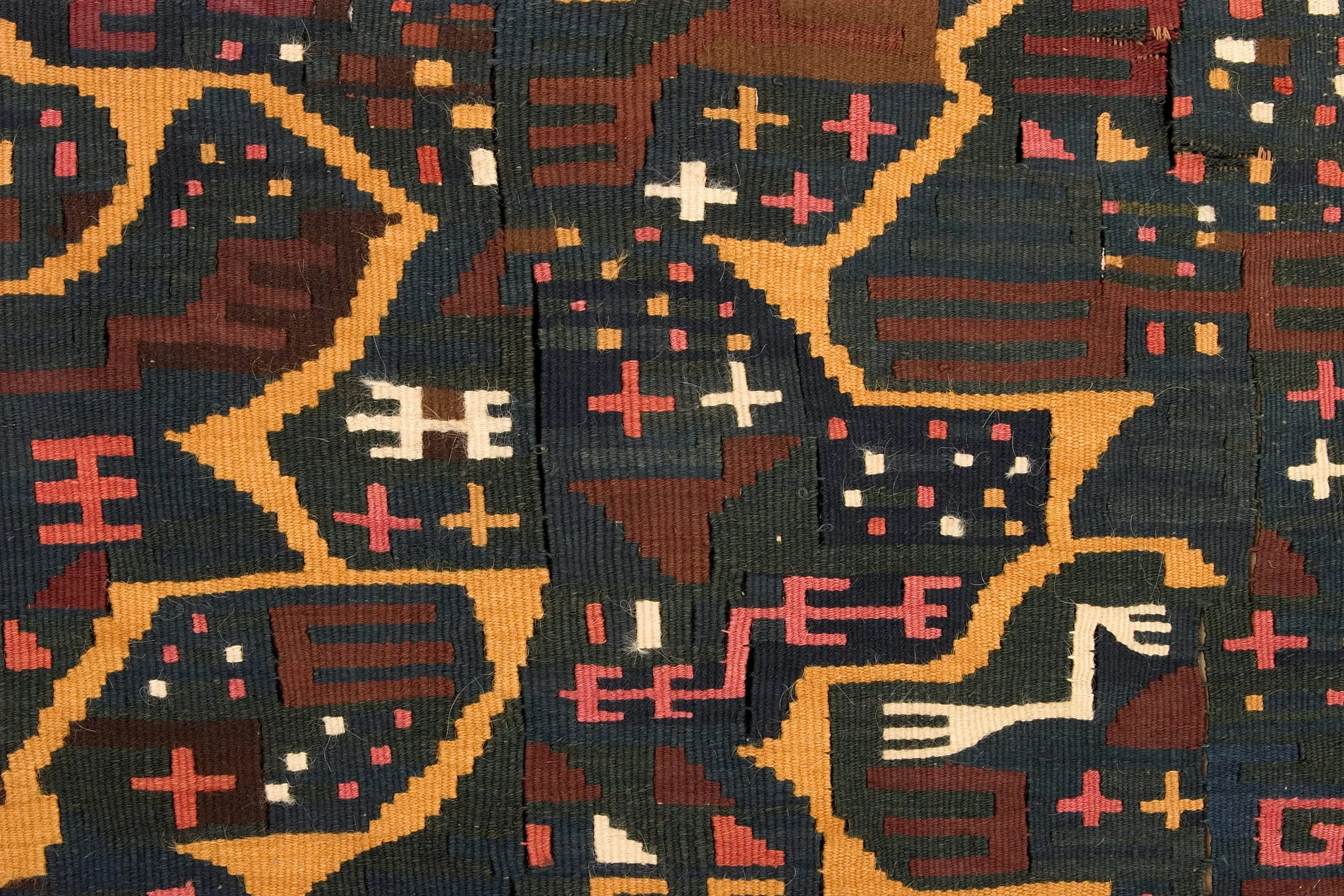
The tunic's most significant pattern, a three-pronged trident or pitchfork-like form, might be an emblem for Nasca underground water canals, but is more likely an abstraction of the clawed paw of the feline-an enduring totem in Pre-Columbian iconography. Symbolizing nature's raw predatory force, the feline recurs frequently in the Peruvian textile vocabulary. The "paw" tracks back and forth in a dynamic gold zigzag, traversing fields of iconic designs traditional to all Nasca textiles. But behind the bright colors, creating a stable support for the chaotic brilliance of gold, pink and white, is a matrix of interlocking "paws" woven in a remarkably subtle combination of rich and somber hues. The repetition of this religious symbol in multiple chromatic layers connects the wearer of this monumental garment to his universe.
Selected Bibliography
  • Gifts from Mary and Robert Looker, Los Angeles County Museum of Art, December 2017. Los Angeles: Los Angeles County Museum of Art, 2017.