- Title
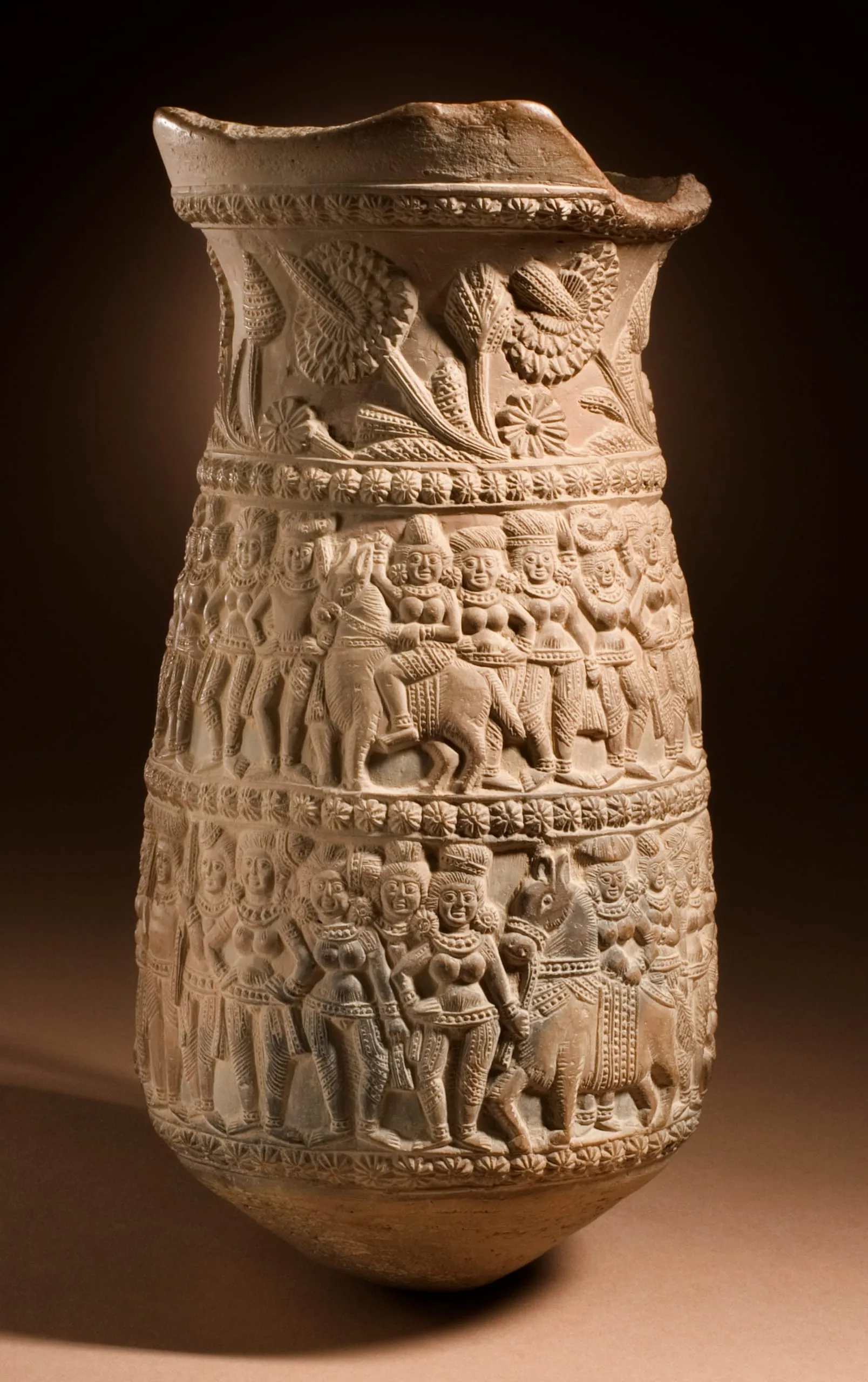
- Vase with Processional Scenes
- Date Made
- circa 100 BCE
- Medium
- Buff colored, low-fired ceramic
- Dimensions
- Height: 10 1/4 in. (26.04 cm); Diameter: 5 1/4 in. (13.34 cm)
- Accession Number
- M.2005.155
- Curatorial Notes
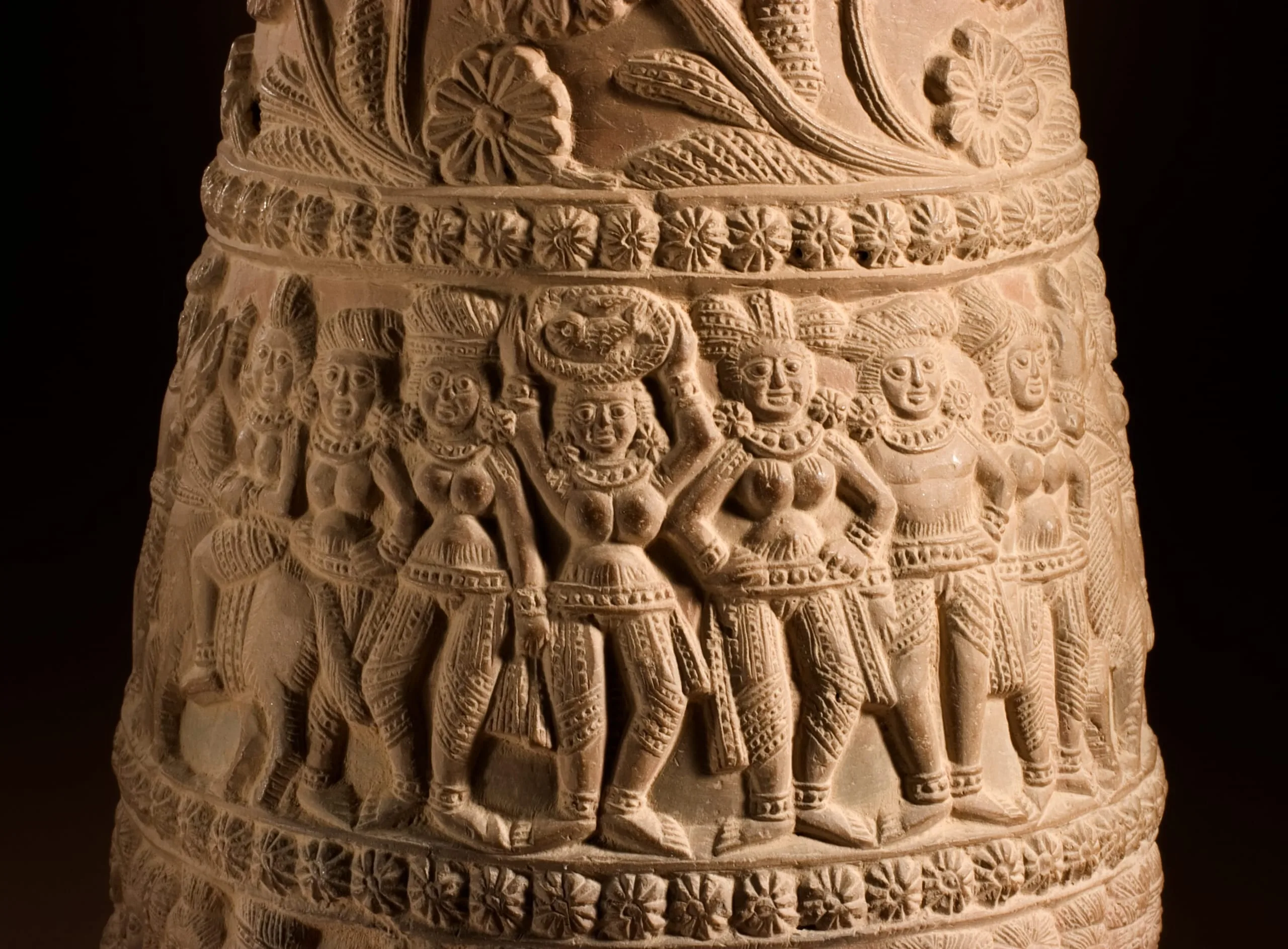
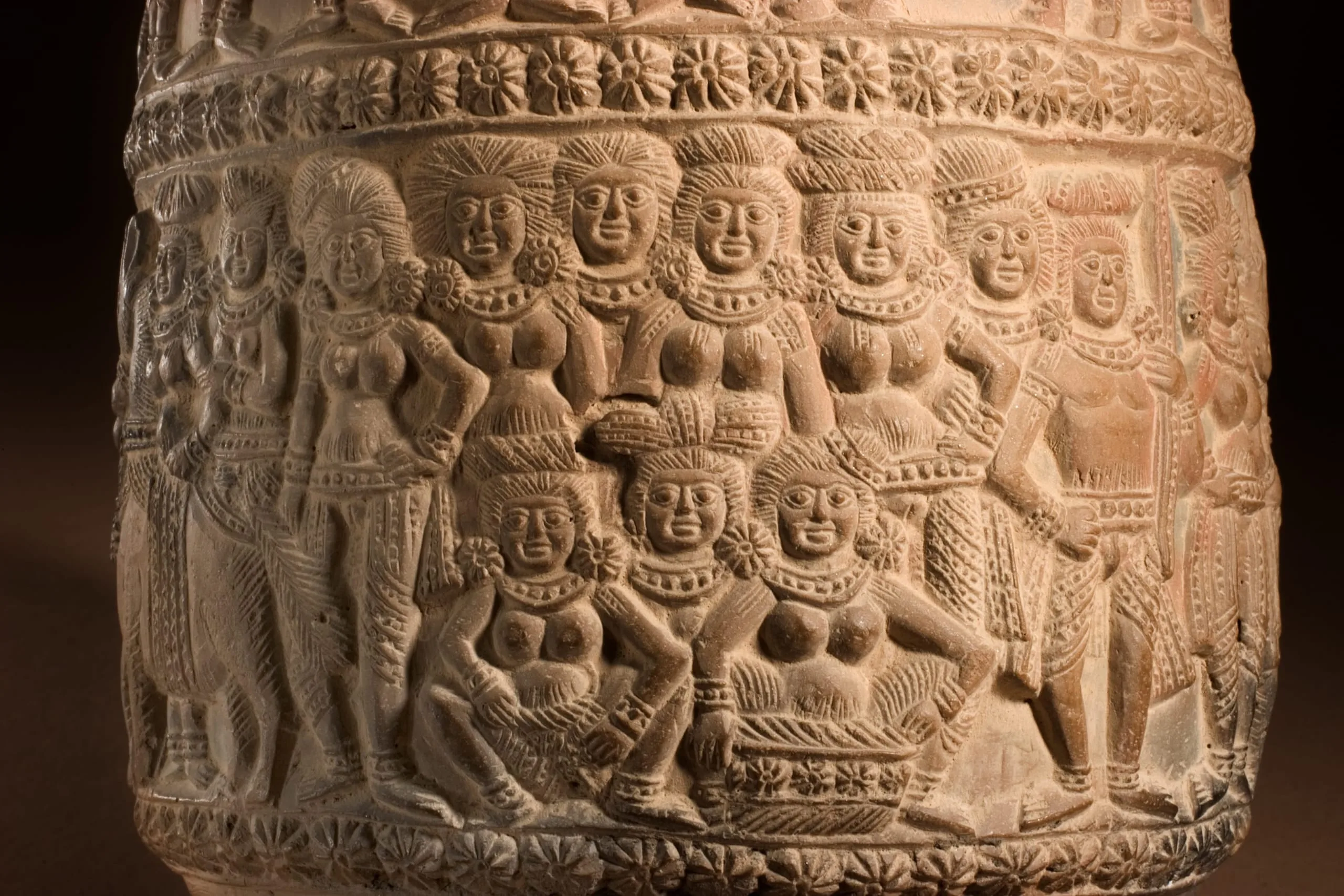
The ancient capital and important urban center of Chandraketugarh and its environs, located approximately 25 miles northeast of Kolkata (Calcutta) in the Ganges River delta, has yielded an abundance of artistically accomplished pottery of diverse object types and ceramic wares. Buff-colored low-fired earthenware was prevalent. Numerous sculptures, relief plaques, and ornate vases were produced. They are decorated primarily with images of sophisticated women and fertility goddesses richly adorned with elaborate hairstyles, intricately patterned textiles, and an abundance of jewelry.
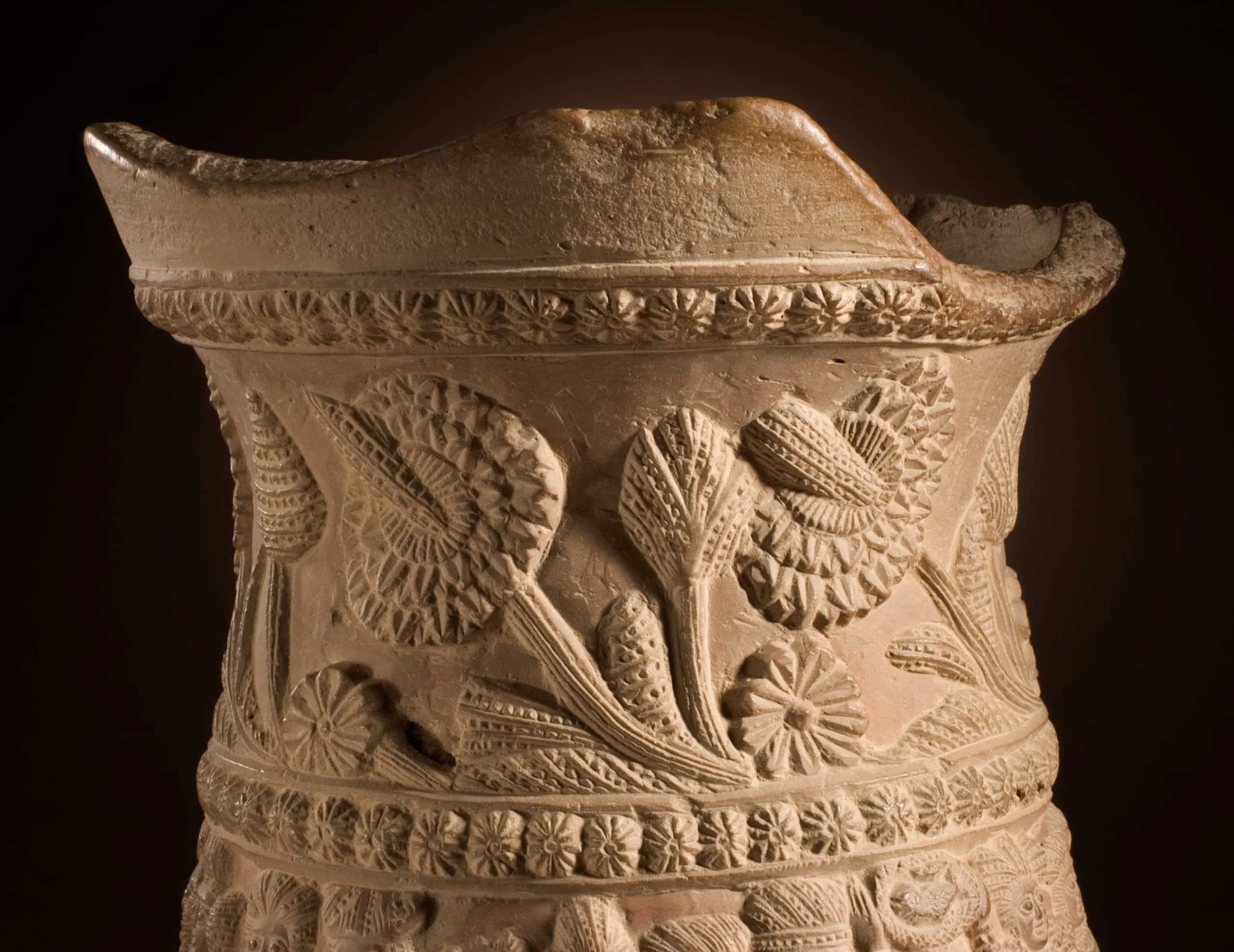
The Vase with Processional Scenes has three horizontal registers demarcated by flowerhead borders. The upper register has a scrolling band of exuberant chrysanthemum-like flowers with large conical flowerheads. The middle and bottom registers are likely processional scenes with numerous ornately attired women standing in various postures. Seated women, male figures, and horses are also occasionally represented. A jar with similar decoration is in the Metropolitan Museum of Art, New York (2003.588).