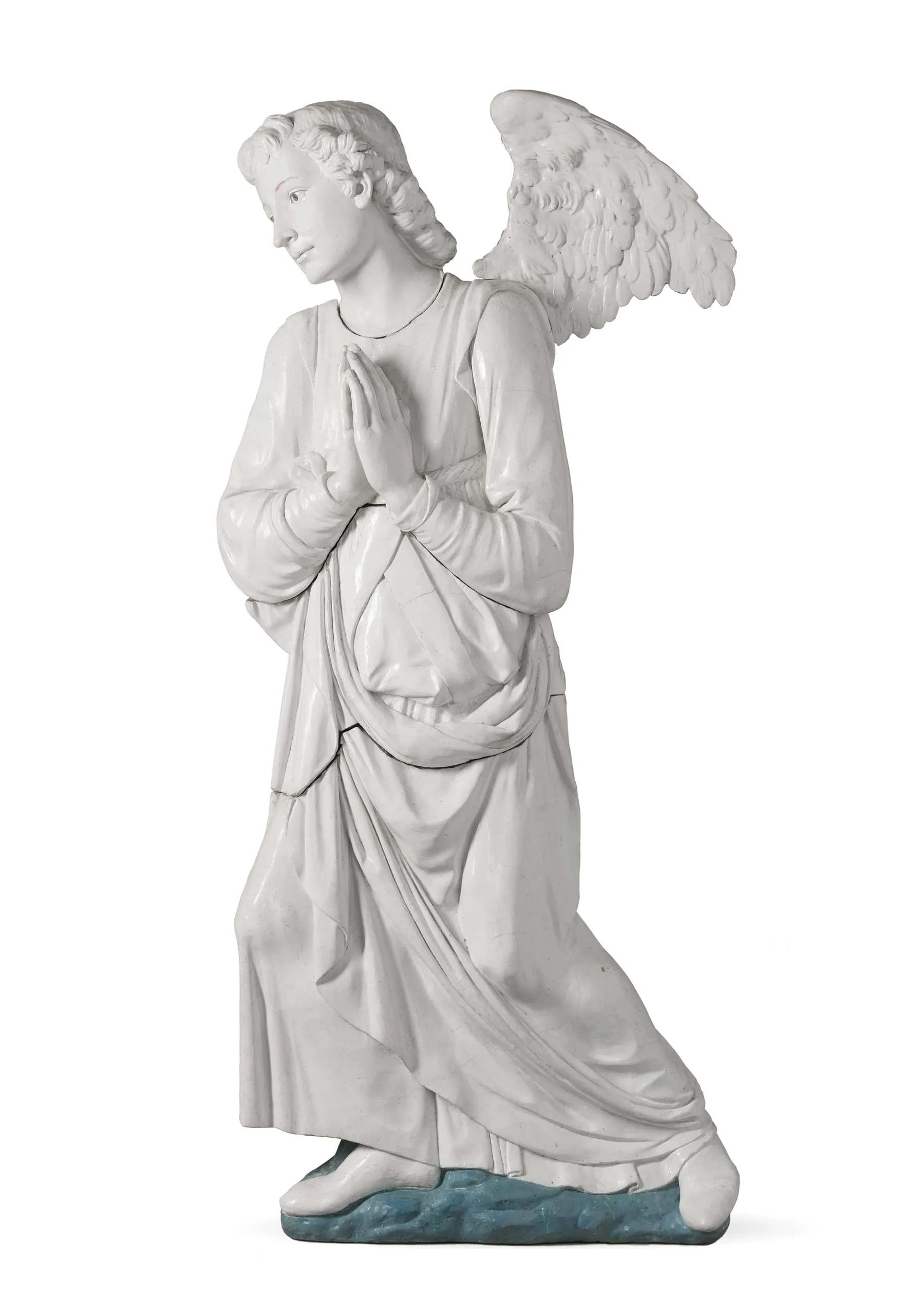
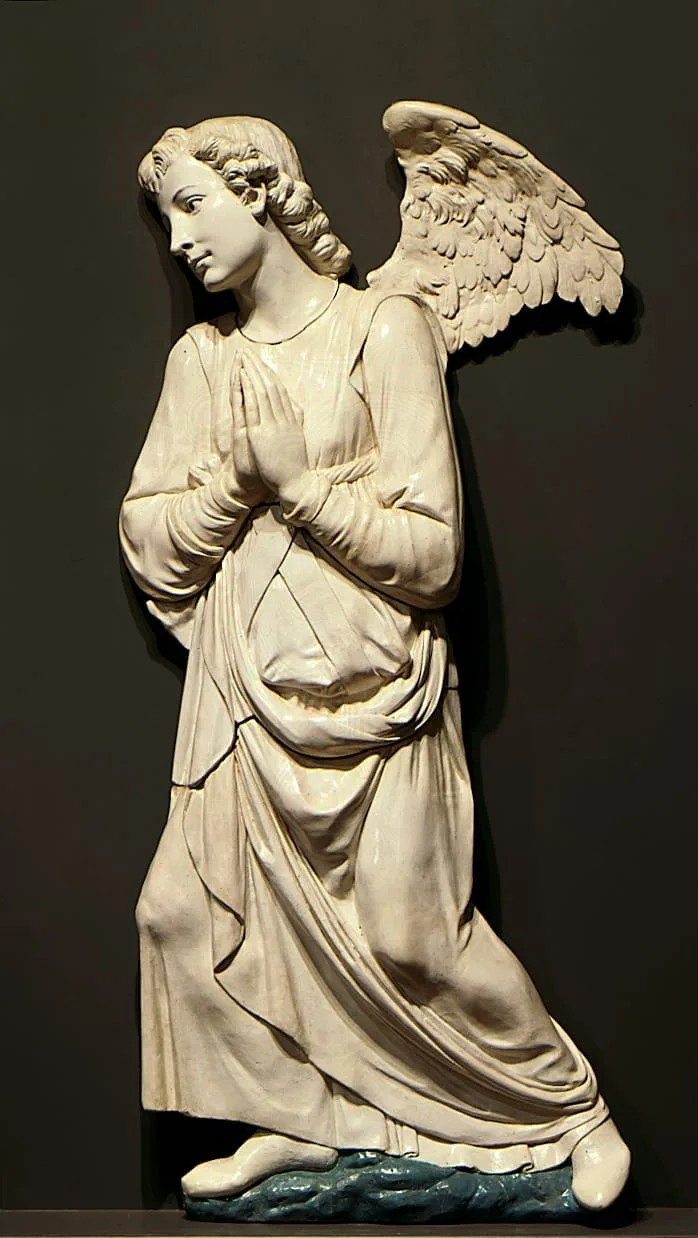
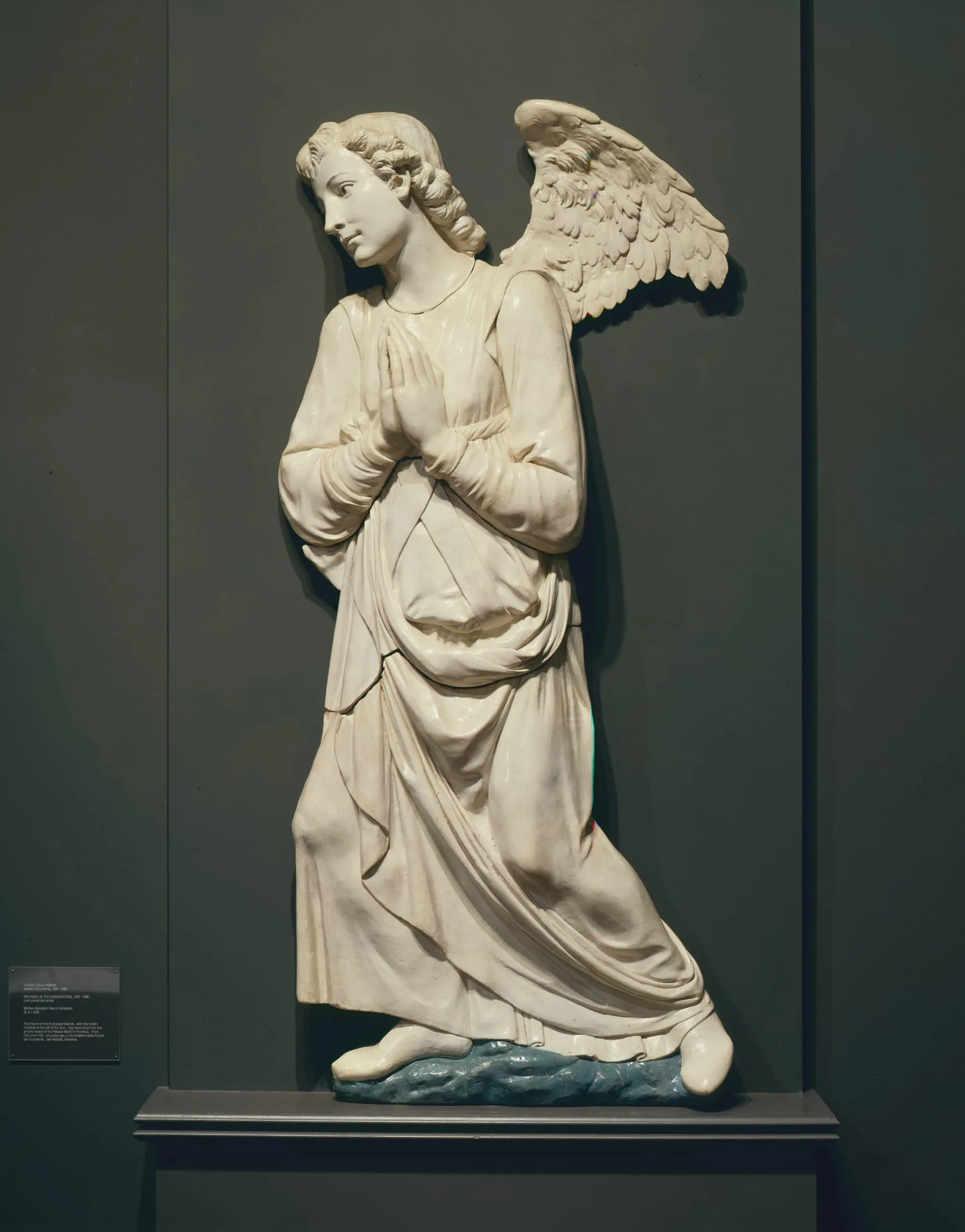
In fifteenth-century Florence, Luca della Robbia pioneered an art-making technique in which the surface of a terracotta sculpture was coated and fired with a white glaze, painted with bright pigments, then underwent a second firing. This innovation, which became a hallmark of the della Robbia family studio, elevated glazed terracotta beyond its use in functional objects into the realm of high art. Terracotta offered practical advantages over stone: it was more colorful, less expensive, and lighter than marble, making it easier to transport. These characteristics allowed the della Robbia studio to produce a range of works, from small-scale pieces for private patrons to larger church altarpieces and architectural decorations. The workshop’s production continued into the sixteenth century under the leadership of Luca’s nephew, Andrea della Robbia, to whom The Archangel Gabriel and its companion, The Virgin of the Annunciation (M.47.8.1a), are attributed. Mary’s downcast eyes and her hand placed across her chest suggest her acceptance of the Incarnation with humility. Gabriel’s wide stance and bent legs evoke the sudden stop of his flight and the urgency of his divine message that Mary will bear the Son of God.
These figures, rediscovered in the small Florentine church of San Niccolò, were likely created for a private chapel in the Palazzo Bardi in Florence. There, they were probably displayed at a distance from each other, perhaps flanking an altarpiece, portal, or window. The set was recorded in Bocchi and Cinelli’s 1677 guidebook Le bellezze della città di Firenze.