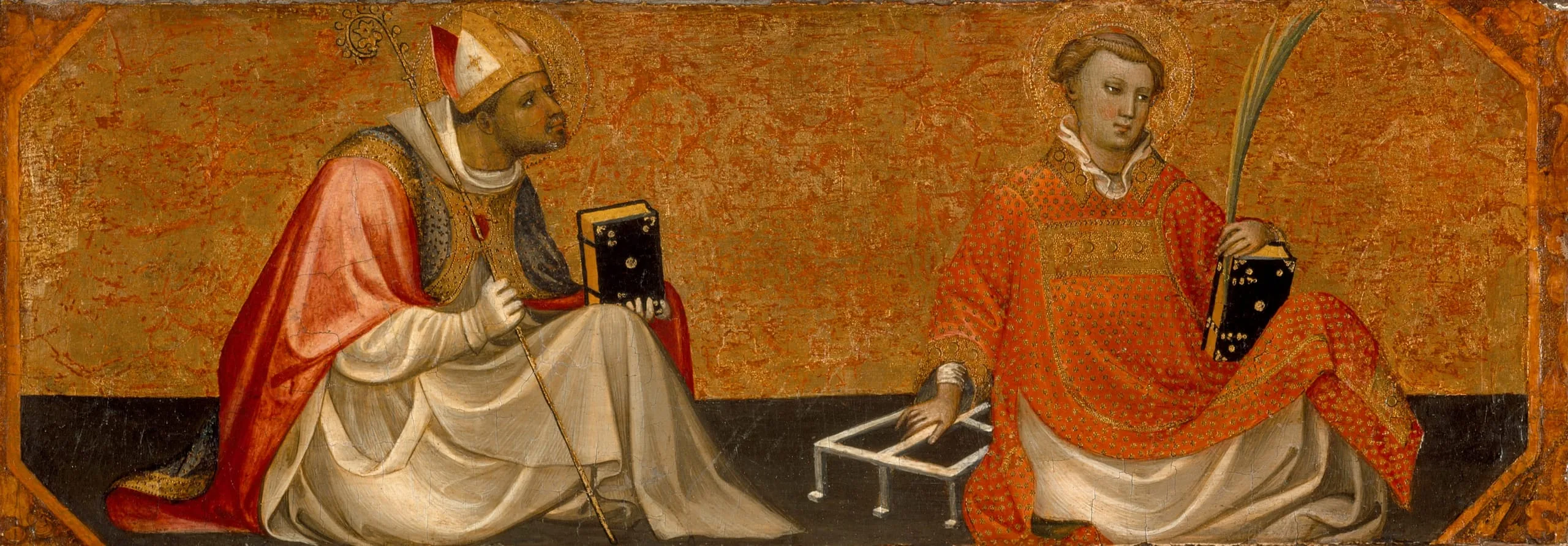
Sometimes only a fragment survives from a larger composition. This small painting is one of two related pieces in LACMA’s collection, the other featuring two saints, probably Stephen and Bruno (AC1996.137.1). Both fragments once formed part of a predella, the bottom register designed to support a larger altarpiece. Although these paintings have long been removed from their original viewing context, the saints’ iconography offers clues. Both panels contain references to the Carthusian order, a Catholic sect that emphasized contemplation and monasticism. Here, the bishop’s status is signaled by his mitre (hat), red cape, and crozier staff, and his white robe suggests that he is a Carthusian. Scholar Cornelia Syre identifies him as either Hugh of Lincoln or Hugh of Grenoble, both prominent Carthusian bishop saints. He sits next to Saint Lawrence, identifiable by his iron grate and palm of martyrdom. According to his hagiography, he was grilled alive but miraculously felt no pain, defiantly exclaiming during his torture, “Look, wretch, you have me well done on one side, turn me over and eat!” Lawrence was also the patron saint of the Certosa di Firenze (Florence Charterhouse), a monastic institution in Galluzzo, near Florence, leading scholars to hypothesize that this commission was intended for that monastery. Starnina completed several ecclesiastical projects throughout Florence and its environs, including an altarpiece for the Chapel of the Virgin Mary in the Certosa.
Constructed with multiple panels showing religious scenes and framed by elaborate architecture, polyptych altarpieces were fundamental to church decoration. The central piece of the predella from which LACMA’s panel derives, now in a private collection, is larger than its companions and depicts an angel supporting the dead Christ, his arms spread wide and wounds exposed. Mourning figures of the Virgin Mary and John the Evangelist flank Christ. Both side panels were once in the collection of Ernest Tross; he donated this one to LACMA in 1947 and sold the other about a decade later. A generous gift by the Ahmanson Foundation in 1996 reunited the two panels.
2024